New 9mm Or Old 7.65mm?

Browsing through the “new arrivals” at Collectors, I stumbled across not one but two older Lugers.  If you haven’t watched Othias and Mae’s take on this splendid old piece — and shame on you if you haven’t — go there now and spend a worthwhile hour learning about the Pistole 08.

The first one that caught my eye is a “Swiss”-type Model 1900 Luger, issued to the Swiss police, and was the first Luger to be adopted by anyone.
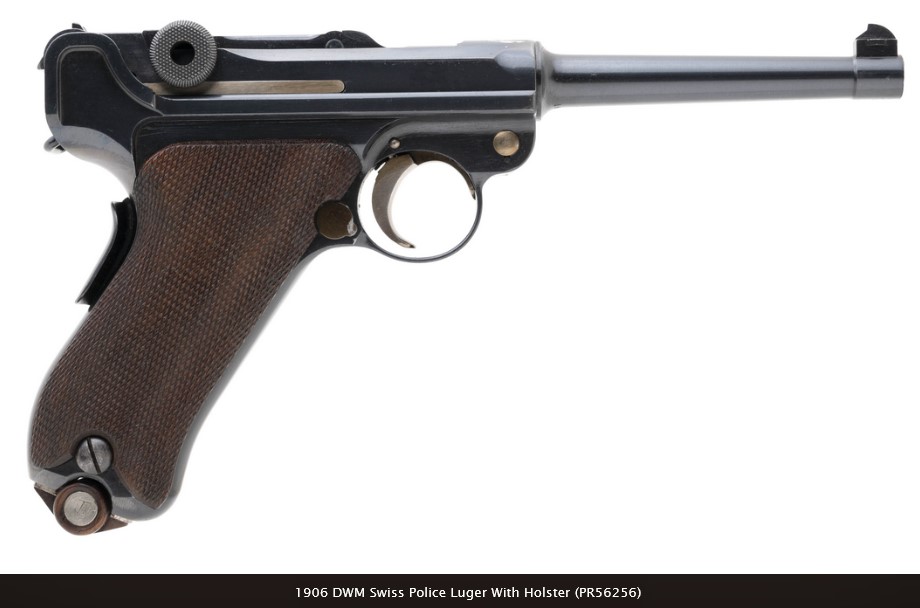
What interests me is that firstly, we know that this little beauty was well-looked after for at least the first 50 years of its life because it was used by a 1.) Swiss 2.) policeman, and I bet that since its arrival in the U.S. some fifty-odd years ago, it’s been just as carefully maintained.  As its price (just under $3,000) would indicate, this is like to be a cherry, and scarce withal because the Swiss ordered only a few thousand of them.  Only later did those 1900 Police models (chambered in 7.65x21mm Parabellum / .30 Luger) get replaced by the P.08 in 9mm Parabellum, which means that this particular model spent most of its life in Switzerland locked in a cabinet somewhere as surplus (the Swiss never sold off their older-model Lugers to civilians until they opened them up for export in 1959).

The second of the Lugers is a “commercial” (i.e. private) piece:
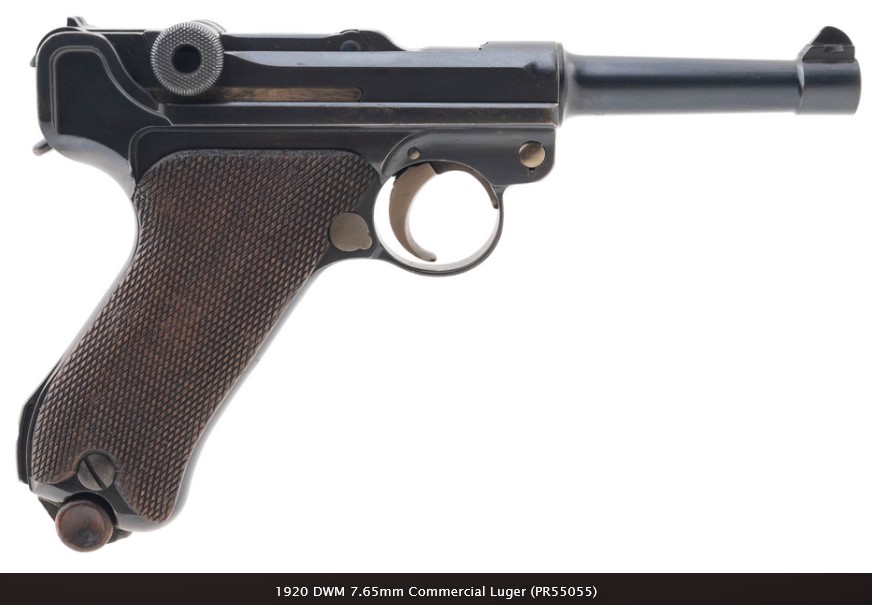
Note that the Swiss model can be distinguished from the commercial one by the added grip safety (which was part of the Swiss list of requirements).  As with all such guns, we can’t be sure of this one’s condition because we don’t know how owners have handled the thing (and its price, under $2,000, reflects both that and its non-rarity, as they were produced in the tens of thousands).  Unlike most of the Lugers out there today, this particular one is also chambered in 7.65mm Parabellum.

…which of course is going to raise the question:  “Hey Kim, if you think the 115gr 9mmP  is a useless Europellet, why do you like the smaller 93g .30 Luger cartridge so much?”  and it’s a valid question.

Simple answer:  it’s more fun to shoot, and makes no claim to being an effective self-defense cartridge. It used to be thought of that way, back in the very early 1900s when the cartridge was first released, but the Euros hadn’t yet been exposed to the .357 Magnum or even the .45 ACP.  (For some reason, Euros have always preferred inadequate cartridges in their handguns.  No, I don’t know why either.)

More importantly, I actually used to own a Luger chambered in 7.65mm, sold it under extreme duress, and I can truthfully say that of the many hundreds of centerfire pistols I’ve fired in my lifetime, that Luger ranks #3 in the “fun gun” category.  (#1 is the 1905 Colt in .32 ACP, and #2 is the SIG Sauer P230, also in .32 ACP.)  I still wish I’d kept it.

Fun guns are those that you do not shoot for practice, e.g. self-defense or competition, but on those occasions when you just shoot at cans or something, and you don’t want to shoot .22 LR (it can happen), or you just feel like shooting a different gun.

And boy, is that Luger ever different.

Ammo cost is surprisingly low.  Prvi Partizan (bless their little Balkan hearts) make the .30 Luger, and the retail thereof is about 60 cents/round.  Sellier&Bellot 9mmP compares at 35 cents, but then again you’re going to shoot your Europellets in the thousands versus the .30 Lugers by the dozen.

Another point of query might be shooting a pistol with the severe grip angle/rake of the Luger (and Ruger .22 pistols) compared to my favorite style of the 1911:
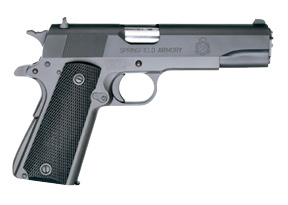
The Luger grip doesn’t require familiarity — it is, after all, more of a curio than a “functional” gun.

All that said, if I had the dough right now I’d be talking about that Swiss beauty as a recent acquisition rather than as an object of desire.
This Just In

…from Collectors:

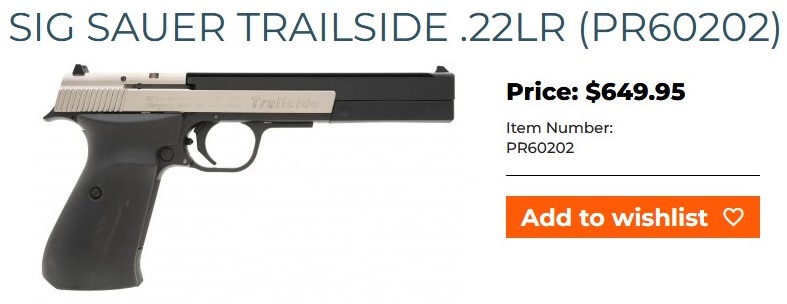
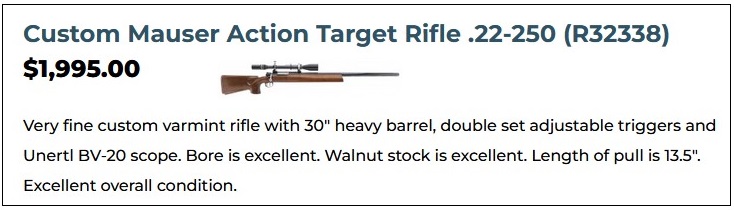
It’s not often that Collectors offers a real price bargain — they’re not a discount outlet, by definition — but this most certainly is.

Of all the .22 pistols ever made, the Trailside is the one I’ve lusted after the most.  I’ve fired a couple, and each one left me speechless with its match trigger and astounding accuracy.  Add Swiss-watch mechanical action and you have, I think, quite possibly the best .22 pistol you can get.  And yes, I offered to buy each one from its owner, and both just laughed merrily as they pried their guns from my envious fingers and put them away.

And here’s the point:  yeah, $650 is a lot for a .22 — but have you seen the price of .22 pistols recently?  Others, of considerably less quality, are selling for about the same nowadays, which makes this a steal at the price.

Aaaargh.  Want.

Missed It By THIS Much

Apparently, yesterday was International Orgasm Day or something equally stupid.

Needless to say, I missed it, just as I’ve missed so many of its namesakes.

Nowadays, of course, I’m more likely to have a Supreme Moment by looking at pictures of things like this: 

…or this:

…rather than this:

In truth, though, what would really get the old juices running would be… ummmm… how can I put this delicately, or in a manner which wouldn’t cause the fuzz to show up at my door…

A deep pit full of dead Socialists?

Something like that.

No Argument Here

Some Dude On The Internet gives his opinions on and ranks the 5 Most Accurate Poodleshooters, and having fired all but one of them, I can only agree — which must be the first time I’ve ever agreed with pretty much any YouTuber on this kind of topic when it comes to guns.

The rankings:

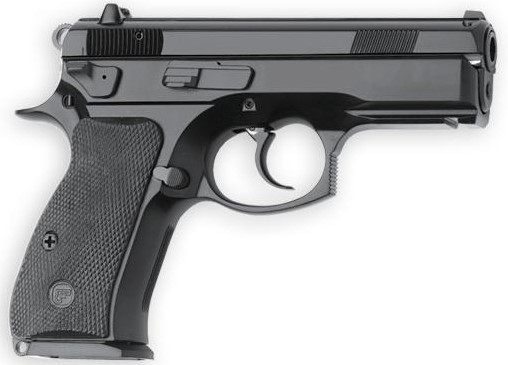
5. CZ 75 SP-01 (I prefer the original 75 B, but it’s really a moot point)

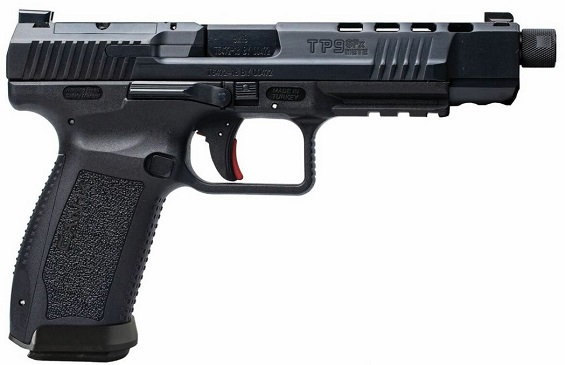
4. CANIK TP9 SFX (haven’t shot this one yet, but I’m Willing To Learn)

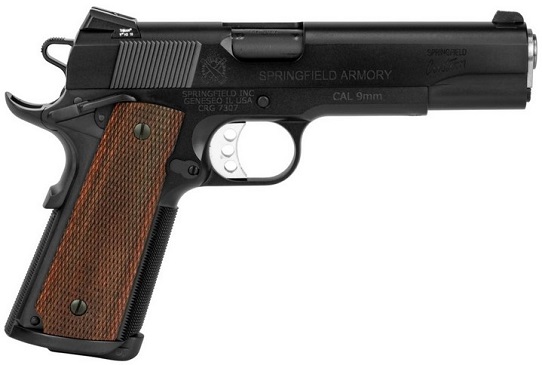
3. SPRINGFIELD TACTICAL RESPONSE 1911 (1911, ’nuff said.  Shows what I know;  I wasn’t aware that Springfield even made this model in 9mm…)

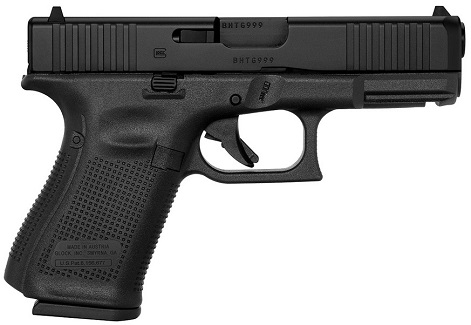
2. GLOCK 19 (actually, I shoot the silly plastic Glock 17 more accurately than just about any other poodleshooter, but whatever)

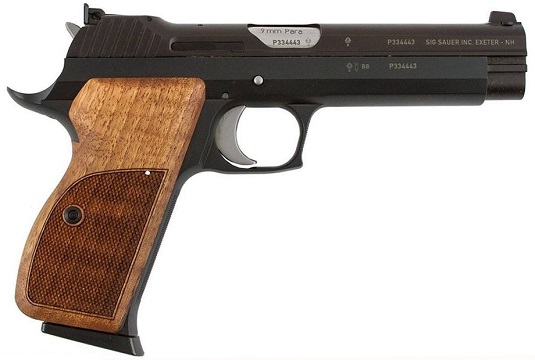
1. SIG SAUER P210 TARGET (I’ve only ever shot this once — actually, it was an older P210-6, but I’m sure the new one (P210-9) is just as good.  Even I was capable of 2″ groups at 15 yds, for 200 rounds of 115gr FMJ.  And yeah, it’s spendy, just as Swiss watches cost more than Thai watches).

For me, the SIG is the ONLY one of these that could replace the Browning High Power, with the CZ 75 and Springfield a distant 2a and 2b.

Gratuitous Gun Pic: BSA-Martini Cadet

Before I talk about the gun, I want to talk a little about something that was once the only option, then fell by the wayside, and now is practiced by only a few hardy people:  hunting with a single-shot rifle.

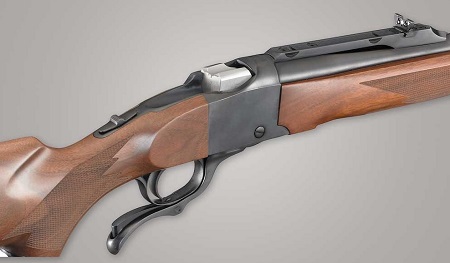
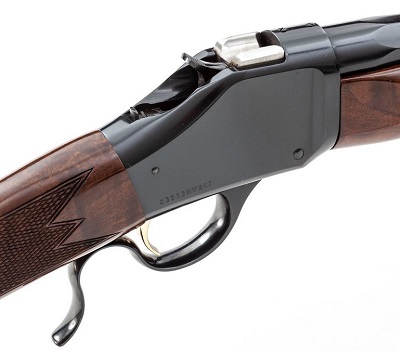
To see that this type of hunting has not disappeared altogether, one only has to see the perpetual fascination for single-shot rifles in sales of guns such as the Ruger #1 (with its derivation of the Farquharson action), and the Winchester / Browning 1885 High Wall (with its “falling block” action).


I cannot describe the satisfaction one gets in working these exquisite actions.  Mr. Free Market, after our most recent Schutzenfest, confessed to me that of all the dozen-odd different rifles he fired, the one that gave him the most shooting satisfaction was my 1885 High Wall in .45-70 Govt.  Yeah, that one-at-a-time thing feels so cumbersome compared to the slick semi-auto and even bolt-action rifles of today — but there it is:  a single rifle is the bee’s knees, and certainly if that’s what you’ve just used to fell a deer, buffalo or bear, your chest swells with pride — and so it should.

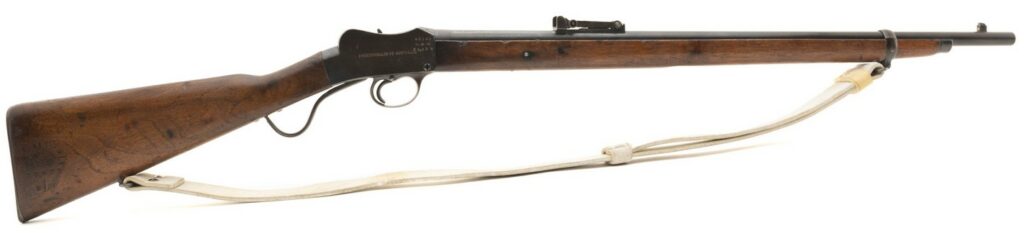
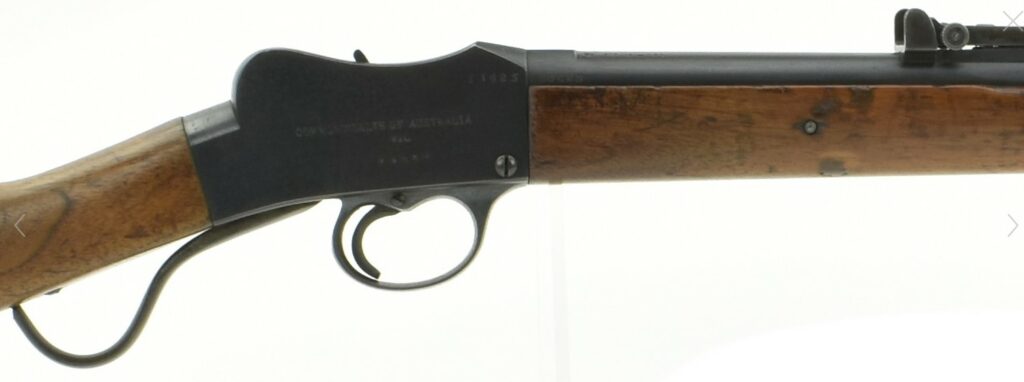
So with that said, allow me to present to you the venerable BSA-Martini Cadet rifle:

This is hardly an unknown gun:  the old BSA has been used as a training rifle since the Stone Age, and is most commonly found in .22 caliber.  (It’s what we used back at St. John’s College for our musketry classes, and was capable of astounding accuracy — far more than I for one could achieve.)

The BSA Martinis were also chambered for the silly .310 Greener (“Rook”) cartridge, which is a decent training caliber, but useful for nothing else except hunting rooks.  Luckily, a large percentage of these rifles have been rechambered for other .30 cartridges such as the .32-20 and even the .357 Mag.  The action handles the heavier loads with ease, and the rifle’s lighter weight makes carrying in the field less problematic than with its heavier cousins.

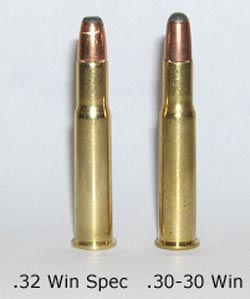
Which brings us to today’s rifle, which is chambered for the wonderful and very much underappreciated cartridge, the Winchester .32 Special.  Most often compared to the .30-30 (.30 WCF), the .32 Win Spec is perhaps best described as the .30-30 on steroids.  One acquaintance told me of a black bear taken with a single shot in Pennsylvania, fired out of a Marlin 94 lever action with a 20″ barrel.

Now take that same bullet and fire it through the BSA-Martini’s 28″ heavy barrel… and I think you can all see where I’m going with this one.

Just practice, and get really good — because you only get one shot.