Unrequested & Unnecessary

I see with some displeasure that Hollywood has made a sequel to The Devil Wears Prada, which is one of my favorite movies, but for all the wrong reasons.  (Cliff Notes:  it exposes how vacuous, self-important and thoroughly unnecessary the so-called fashion “industry” really is.  Ditto The Player, which does the same for the movie business.)

On that note, let’s play a little game.  Assume that Hollywood / Netflix / Amazon / whoever is going to make a sequel to a well-known classic movie.  Feel free to comment on which movie they’d pick, and how inappropriately they’d cast the thing.

Here are a couple-three suggestions, just to prod the creative juices:

  • Casablanca 2, starring Tyler Perry as Rick and Rebel Wilson as Ilsa;
  • Thelma & Louise 2, starring Gwyneth Paltrow as Thelma and Whoopi Goldberg as Louise;
  • Butch Cassidy & The Sundance Kid 2, starring Rob Schneider as Butch and Don Cheadle as Sundance.

Yes, I know how T&L and BC ended.  The premise for both is:  They Survived!  (Yeah, I know, ridiculous.  So are most sequels.)

Dabney, John & Lucy

I have to admit that I am drawn to actors and actresses who have a problem finding starring work because studio bosses (and for that matter writers, producers and even directors) can’t figure out quite what to do with them.  The reason for this is that they seem to be able to play only dark characters — which is also the reason I rather enjoy their work.

The above statement is probably a little obscure, so let me explain it by focusing on three of these people who to my mind exemplify the problem.  All are brilliant actors, all have the ability to take over any scene (at the expense of whoever is playing the scene with them), and they all do it without really wanting to, I think.  Here’s the first.

Dabney Coleman played so many roles in his long career that you’d think that he had no problem getting work.  And he didn’t, provided that it wasn’t as the star of his own show, or the leading man in a movie.  His dark, sardonic nature and biting, sarcastic manner of speaking always had me howling with laughter.  A simple example was when he played a TV spokesman for 7-11, back in the 1980s.  I still remember one commercial where he was “interviewing” some moron, who was spouting all sorts of twaddle, and when the speech ended, Dabney (with his typical comedic timing) waited for just one second, and said, “I bet your mother is very proud of you.”  He also played a brilliant bad guy, whether the Agency boss in The Man With One Red Shoe, the Hugh Hefner-type smut tycoon in Dragnet, or the evil boss in 9 To 5.  Yet his own TV shows (Slap Maxwell and Buffalo Bill) weren’t hits — which was criminal, because they were both beyond-words brilliant — because I think that to the average viewer, Dabney was unlikable — even though on real life, he was apparently anything but.  Every single person who ever worked with him had nothing but good things to say about Dabney Coleman.

The same is more or less true for John Larroquette, who, if you look at his screen credits,  has been truly successful.  Like Dabney Coleman, though, John has always been something of a dark character, even when playing straight comedy (e.g. Night Court).  I think I first saw him as Kim Basinger’s psychotic ex-boyfriend in Blind Date (which still ranks as one of the best comedies ever filmed, mostly because of Larroquette’s brilliant, insane performance);  and ever since then, I’ve loved watching him do his stuff.  Yet his best performance was not comedic.  That came when he played a recovering alcoholic running the night shift in a city bus station in The John Larroquette Show.  This was a classic example where a good actor is let down by bad writing.  The show ran for over eighty episodes, and while his costar Liz Torres scooped up award after award, Larroquette himself was only ever nominated a couple of times:  proof, if any was needed, that his unquestioned talent wasn’t apparent to most people.

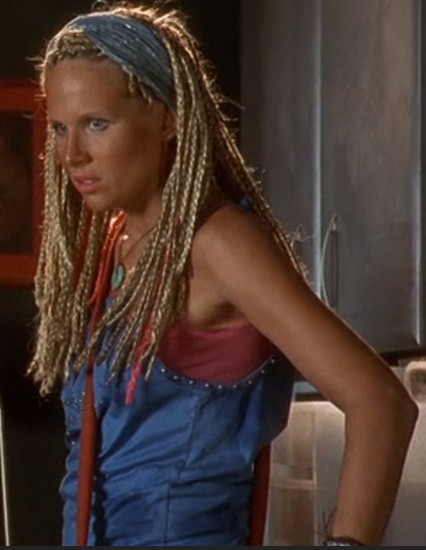
Finally, we come to Lucy Punch, the aptly-named Brit actress who leaves me openmouthed with astonishment whenever I see her perform.  I first saw her in the wonderful Doc Martin TV show, playing the very eccentric — and rather sinister — receptionist for the hemophobic Cornish doctor.  She only lasted a few episodes before being replaced by the equally- eccentric, but definitely not sinister Kathleen Parkinson, and I think that may be why she was replaced:  Lucy always looked on the verge of murdering someone with an axe, and that’s not really the kind of character you want in a soft, cuddly sitcom.

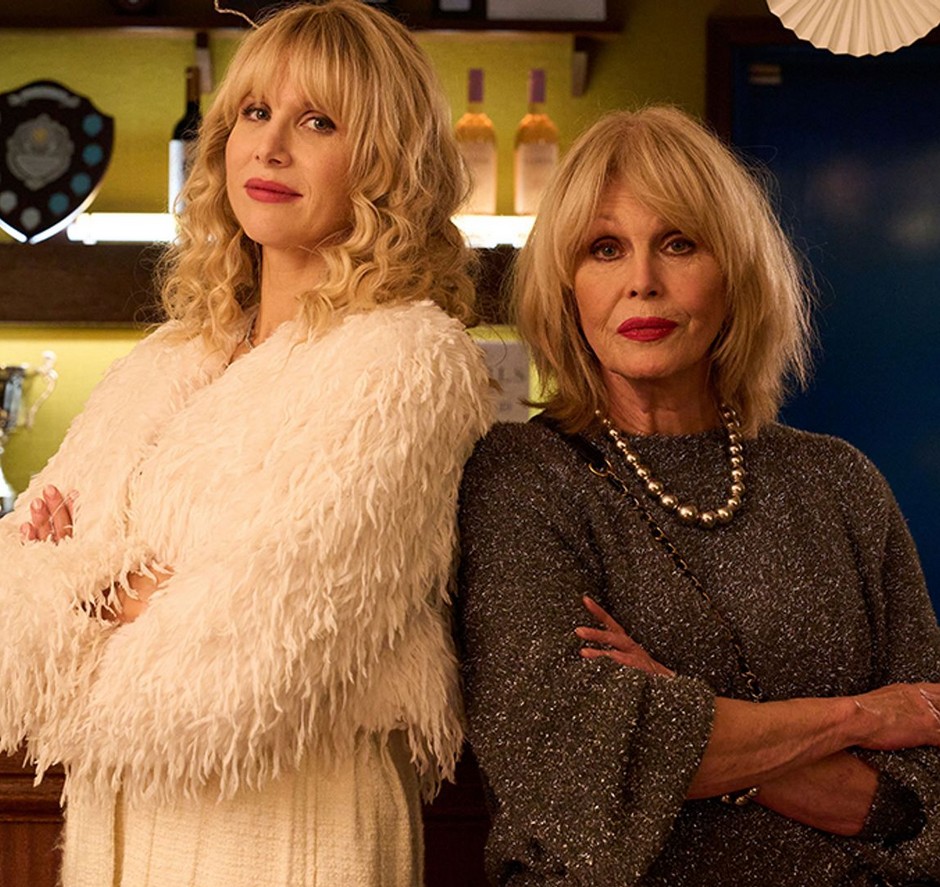
Then I saw her playing that psychotic character in Dinner For Schmucks… and the vision of Lucy attacking Paul Rudd’s Porsche 911 with an axe remains with me to this day.  (The similarities between John Larroquette playing an obsessive psychotic ex-partner, and Lucy more or less reprising that role have not escaped me, either.  The difference, though, was that Larroquette was funny, whereas Lucy was pure evil.)  She’s since appeared in the Brit TV show Motherland, and she was so good that her character was spun off into her own show Amandaland.  I haven’t seen either show yet because they’re not being streamed on Netflix or Amazon Prime, but I guess I’ll just have to be patient.  (Oh, and just the thought of Joanna Lumley playing Amanda’s mother in the latter show… have mercy.)

Anyway, I guess that loving these wonderful, but rather twisted actors says something about me, but I couldn’t be bothered with thinking about that.

Long Time… Gone

I have been a fan of Formula One racing since my early teens, which makes me older than just about everyone involved in running F1 today.

Just recently, I had a problem with my AppleTV account and couldn’t change the payment method — no need for details, but it’s a fucking nightmare and would be easier if I just created a new account.  Why am I subscribing to AppleTV, you ask?  Well, late last year F1 told me that their own website (F1.com) would no longer be streaming races because they’d sold the broadcast rights to AppleTV.  Fair enough:  it’s their absolute right to do so, and the AppleTV sub was actually cheaper than the F1 sub;  so that, coupled with my desire to watch the Slow Horses TV series (read the books, loved them), I made the change even though once I’d watched all the episodes, I found that AppleTV doesn’t have much worth watching anyway.  But there was always the F1 racing, which (did I already mention? I’ve loved since my early teens) so what the hell.

Of course, the modern F1 is no longer the F1 I used to love.  Gone were the earsplitting roar and howls of V6- and V12 car engines, and in their place came hybrid engines, using pathetic little 1500cc turbo motors with laptop batteries to “boost” performance because Green Is Mighty and Internal Combustion Engines Are Evil, or some such nonsense.

Then this season saw new rules (a.k.a. the “formula” in the product description), which made the cars even MOAR BATTERY, except of course that batteries when used to propel cars at 300mph run out of spark within yards not miles, so we were greeted with the spectacle of the world’s finest drivers and the world’s most accomplished engineers becoming software managers.  Put in plain terms, cars would overtake other cars, and then immediately lose their position because their batteries were drained whilst their competitors had recharged theirs so could take back the position:  repeat ad nauseam.  Not only was the spectacle unsatisfying, it became outright dangerous, as was seen in the last race where a driver with a full battery was about to move to overtake, but the car in front suddenly lost 25mph because his battery had just gone flat.  At a closing speed of 275mph, no human reactions are quick enough to address that impending crash — but amazingly, young Ollie Bearman’s were almost that quick and he pulled off the track to avoid a massive collision.  Unfortunately, his car’s battery was still in flat-out mode, and Bearman hit the barrier head-on with a force of 50 Gs.  How he survived is a miracle;  how his electric motor didn’t catch fire and turn him extra-crispy is a credit to the engineers who built the car.  Nor did his car crumple like a newspaper and turn his skeleton into soup.

Of course, the F1 organization recognized all this for the disaster it is, and have hurriedly put through a massive rules change.  They were fortunate in that next two Grand Prix races in Saudi Arabian peninsula had been canceled because Trump’s merry war on Iran had resulted in the latter sending missiles raining on the Gulf states — and nobody wanted to see battery-powered race cars having to take action to avoid incoming SCUDs, let alone their competitors’ cars, and F1 audiences in the stands deciding that watching electric go-karts play swapalongs would not be sufficient spectacle to keep them from being turned into hamburger by the aforementioned missiles.  So F1 caught a break, and having three weeks before the next race (Miami GP), changed a whole bunch of rules, making the thing even more complex than before.  (Please watch this video — it’s less than ten minutes long — to see the absolute clusterfuck that F1 racing has become.)

Why am I telling you all this?  Because after sixty-odd years of F1 fandom, I’ve decided that enough is enough.  I’m not interested in watching what F1 has become, I don’t like what F1’s owners, the foul Liberty Media, have created — four races in the Saudi Peninsula?  WTF? — and even worse, losing various countries’ Grand Prix races because European organizers can’t match those of the oil-rich Arabs.  I mean, the entire Grand Prix concept began in France, and there’s no room on the calendar for a French GP?  WTFF?

So I’m walking away.  I would say that I’ll content myself by watching the “highlights” videos on EeewChoob, but honestly, I don’t think there will be any highlights worth watching, anymore.

Here’s a thought:  throw away the stupid hybrid engines and go back to racing with real engines, the aforementioned V6 and V8 monsters, let the drivers race these cars to the utmost limit of mechanical and human performance, and make F1 watchable again.  Like it was in, say, 1975.  (And yes I know, the cars were deathtraps.  I’m not suggesting throwing out the entire car, just the stupid engines.)

I know, I know:  “You can’t stop progress, Kim;  you can’t go back to the old ways.”

And don’t suggest I try to follow other motor racing types, either.  Once you’ve watched Formula 1, all other car types resemble tortoises and hippos racing.  Even Le Mans, which I watch every year, all 24 hours at a time if there’s no highlights video, doesn’t begin to compare.

I think I’ll start watching horse racing instead.  That is, until Liberty Media buys them out, makes the owners strap rockets to their horses’ asses “to improve the spectacle”, and gets fifty racing tracks built in Saudi Arabia to host the new F1 Horse Racing Circuit, doing away with Belmont, Saratoga, Aintree and Epson in the process.

And speaking of horses’ asses:  so long, F1/Liberty Media — and AppleTV.  Neither of you is worth the trouble of supporting anymore.

Wrong 10

Yeah I know, it’s another piece of A.I. garbage, masquerading as thoughtful critique, but this take on the 10 greatest heist movies gets it wrong.

To save you the time of watching the video, with its fake voice and faker conviction, here’s its list:

10 – Oceans 11 (no argument;  the first and best of the Oceans franchise, and far better than the original Rat Pack version)
9 – The Italian Job (with Michael Caine;  also no argument)
8 – Inception (nope;  it’s not a heist movie, but sci-fi)
7 – Rififi (no argument)
6 – Inside Man (no argument)
5 – The Sting (nope, it’s not a heist movie;  it’s a sting, just as the title suggests)
4 – Reservoir Dogs (nope, it’s not a heist, just as the “narrator” suggests)
3 – Heat (no argument)
2 – The Town (haven’t seen it yet, so no comment)
1 – Goodfellas (nope;  it’s not  even remotely a heist movie)

You see, there’s a framing problem, here.  The definition of a “heist” movie is that it’s about criminals stealing stuff from an institution, not from people.  It has to be about the actual robbery, in other words, and not about the aftermath (Reservoir Dogs) or just an aside to the plot (Goodfellas), or about robbing an individual (The Sting, Inception).  That’s not to say that the above are not good movies — they’re all absolutely brilliant — but they’re not about heists, according to my definition.

So if we delete the unqualified, it leaves four spots open on the list.  Here are my modest suggestions for inclusion, in chronological order:

The Lavender Hill Mob (1951, Alec Guinness)
Charley Varrick (1973, Walter Matthau)
Thief (1981, James Caan)
The Score (2001, Robert De Niro, Ed Norton)
Heist (2001, Gene Hackman)
…and we could add either or both of the Thomas Crown Affair movies, with absolutely no argument from me.  Even Snatch could conceivably be included, as it begins with arguably the funniest robbery ever filmed.

To be frank, though, heist (or “caper”) movies are not my favorite genre, so there may be others that are worthy but that I haven’t seen, so feel free to add your own suggestions in Comments.

Afterthought:  I suspect that not many have seen Jules Dassin’s Rififi, but I would earnestly recommend that you do so.  When the entire spectacular heist is filmed without dialogue or music, you have to know… so that poxy A.I. list got at least one thing right.

Talent, Gone

I see with immense sadness that writer Len Deighton has died.  Granted, the man had a long and fruitful life and career, but that doesn’t stop it from sucking.

While Deighton was best known for his espionage novels like The Ipcress Files and Funeral In Berlin (both made into memorable movies starring Michael Caine), my personal favorite was actually a WWII novel, Bomber, which if you haven’t read before, you should.  Be warned:  it is an absolutely heartrending story.

R.I.P.