Here we go: metal theft on a grand scale.
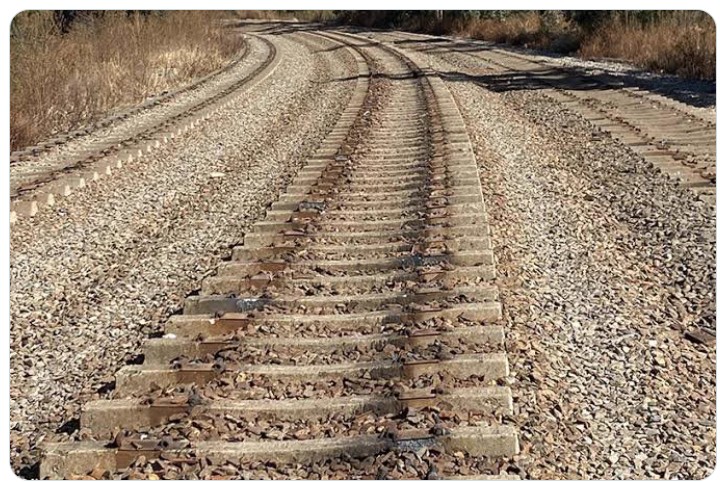
Speechless.

Sent to me by someone who lives there:

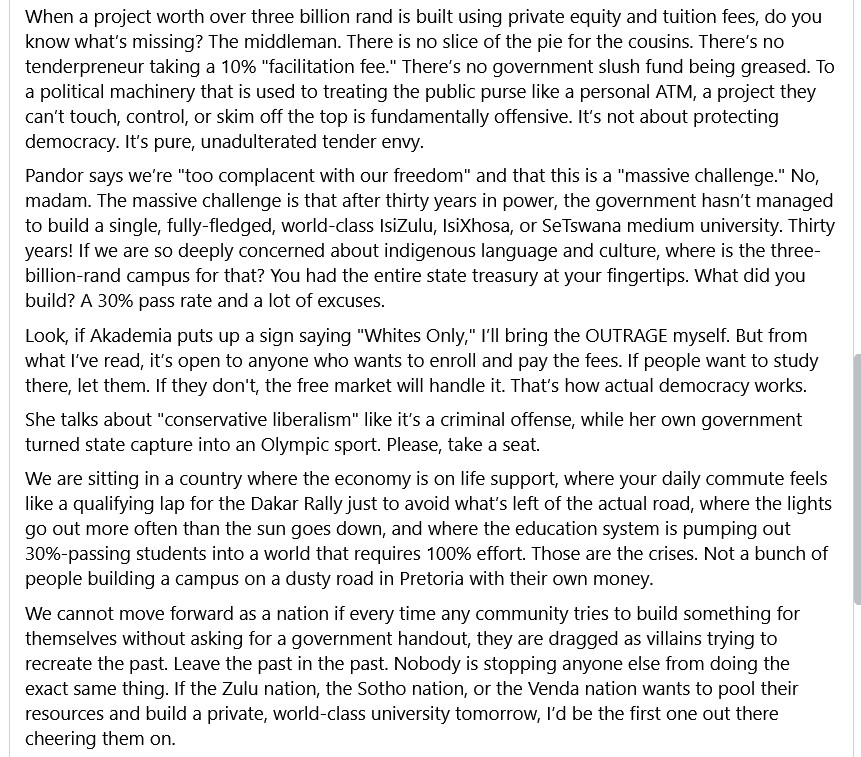

Akademia to be closed down by the SA government in 3…2…1…
I already knew most of this story, and I used it as a basis for my (still-unfinished!) novel, Skeleton Coast. Take an hour out of your busy life, and find out all about the most savage land in the world. I’ve been there many times, sometimes with the South African Army, a few times on business and as a tourist, and only once to hunt. So I’ve really only brushed on it, but it still continues to leave a mark in my memory.
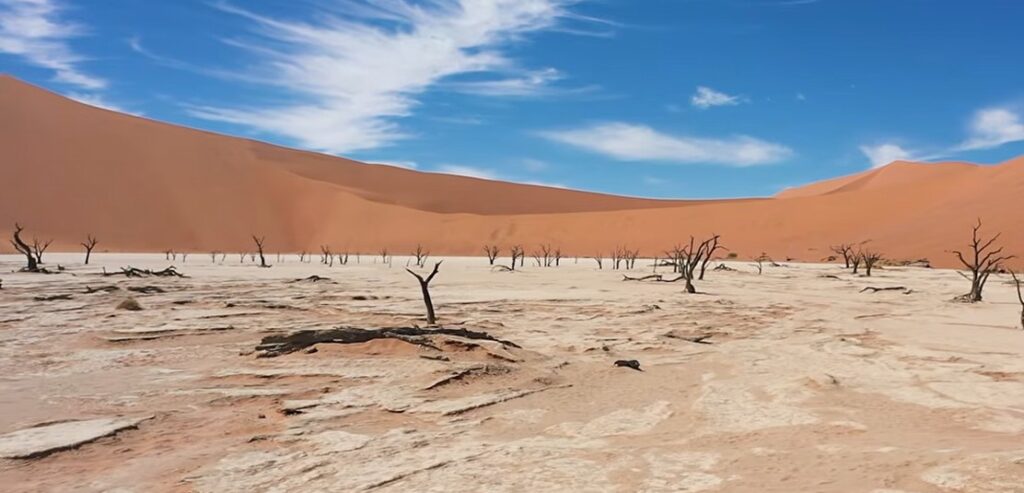
It’s an absorbing show, and I recommend it wholeheartedly. Unlike several of the videos on that channel, it’s light on commentary and long on observation. And historically, it’s quite accurate.
Yer welcome.
Shocking moment ferocious leopard barges into booze shop and attacks terrified worker who scrambles behind counter
And the leopard wasn’t even old enough to drink.
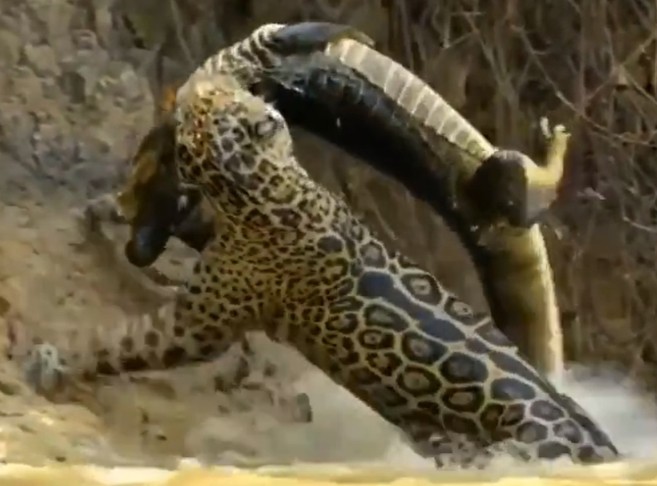
Jokes aside, both men were really lucky to survive. Fucking leopards are the assholes of the predator world: they enjoy killing more than U.S. Marines do, and if put into an enclosure with (say) a flock of sheep or goats, will kill and kill and kill until they’re tired — and only then will they schlep one of the carcasses off to a nearby tree for their dinner.
And what do leopards kill? Everything that moves, even other predators.
Reader Brian H. sends me this pic and asks: “Seriously, which one is you?”
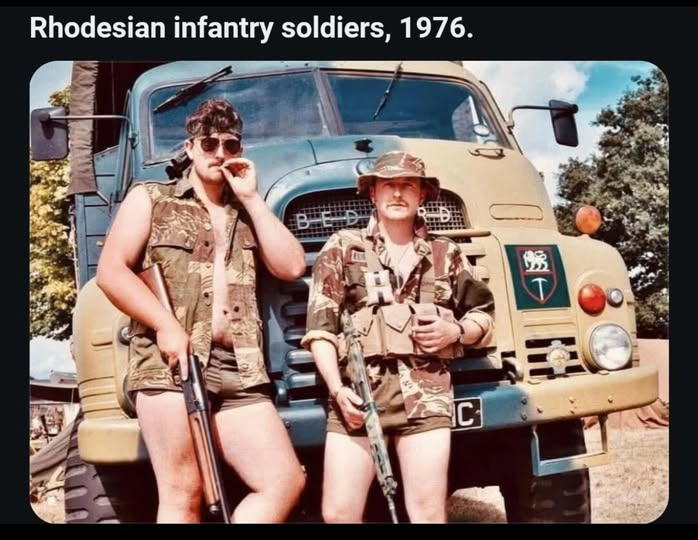
Seriously, neither could possibly be me:
But I’m flattered that you think I would have been in the Rhodesian Light Infantry (RLI). Those guys were maniacs.
This whole Iranian adventure has been framed in terms of its being “regime change” for Iran, and I don’t care.
Frankly, I’m uneasy with the entire concept of “regime change” as a foreign policy goal, because if history has taught us anything — especially in the Middle East — it’s that most of these noble efforts are pretty much doomed to failure, because the entire premise is faulty. Changing a regime is no guarantee that the next regime will be any better than the previous one.
Here’s the unalterable fact: democratic capitalism, as a concept and guiding socio-political principle, doesn’t work outside the confines of Western civilization, and by “Western civilization” I mean pretty much the United States. This is because Western civilization cannot coexist within a nation along with lunatic and highly-flawed political systems like Marxism and/or lunatic medieval social systems like Islam.
One only has to see how the UK, to use but one example, has been undermined by the baleful effects of both the above — Marxism as a home-grown poison (hello, Labour Party) and Islam as an imported poison (hello, untrammeled Muslim immigration).
And that’s within a nation which pretty much gave birth to democratic capitalism. (They did, too; we just perfected it.) Now try to see how well democratic capitalism has worked in other countries which have never had that system as a bedrock principle — Iraq, Syria, Egypt, China, the whole of Africa etc. — and all you’ll find is a constant and comprehensive list of failures. You can change regimes, by all means: but the plain fact of the matter is that democratic capitalism is probably going to fail as the “new” regime will pretty much be just a (watered-down at best) copy of earlier regimes, none of which have espoused democratic capitalism. They’ll be kleptocracies like all the African shitholes, or neo-Communist like Vietnam, or military juntas like [insert South American country of choice here]. (Augusto Pinochet’s Chilean junta, by the way, was very much the exception.)
So I’m simply regarding the destruction of the current Iranian Islamic regime as a side-benefit of the whole exercise.
What we should be stating, in no uncertain terms, is that any regime which exports terrorism or socio-political poisons like Islam or Marxism are on notice that the United States may, at our own discretion, pound these regimes back into rubble rather than allow them to subvert peace and prosperity — the two are very much linked — in the names of their respective ideologies. “Regime change” is very much a subset of that goal, and not its primary purpose. (SecWar Pete Hegseth, at least, has the right of it.)
That the United States should be hesitant, indeed resistant to the idea of allowing said poisons into our own country should most definitely be a guiding principle and not government policy. The noble sentiment on the base of the Statue of Liberty should not only not be taken as government policy, but should also contain the codicil:
“And don’t try to change our country to be more like yours of origin because we’ll toss you out if you do.”
The essence of what I’m saying is that we should not be beguiled into changing our own regime from democratic capitalism into any flavor or subset of the above excrescences.
You may argue with me on any of the above, but you’d be wrong.