Not Generated There

The Divine Sarah points to this article, which is about using A.I. to write something coherent instead of:

Often I’ll write a paragraph and think, “This sentence is terrible.” Not grammatically terrible, structurally terrible. Like it wandered into traffic and got hit by two semicolons.

So I’ll ask AI to smooth it out. Sometimes I use its suggestion. Sometimes I hate its suggestion. Sometimes its suggestion gives me an idea that turns into something completely different.

It’s less “robot writes article” and more “robot sits in the corner saying, ‘Have you considered not writing that sentence like you’re being chased by bees?’”

That’s useful.

There have also been articles that were difficult for me to write.

You know the kind. The ones where your brain is running at about eighty miles an hour while your fingers are trying to steer through tears and frustration, and what comes out looks less like prose than a transcript of someone arguing with a smoke detector.

Those articles were mine.

Yeah, well.  Now I have a confession to make.

I’ve never used A.I. to write anything — hell, I don’t even know how to access the thing.  Everything that you have read on these pages for the past twenty-odd years was conceived, written and edited by me.  The only time I’ve resorted to technology is when I’ve used Spelchek to make sure that in my haste to get something down, I’ve put “i” before “e” all over the place.  But to use something to check my style or flow?  That’s part of writing, and that’s what I do.

That’s not going to change.

Don’t get me wrong;  I’ll often write something, then when re-reading it, think, “What the hell have you done here?” and set about fixing it.  It’s time-consuming and often exhausting, but it has to be done.

Of course it’s easier to use A.I. to help you write something.  Those of you who have followed my train of thought on the topic, however, will know full well the contempt I feel for using technology to make one’s life “easier”, at the expense of losing control and (perhaps) becoming part of the Machine/Hivemind in the process.

Also, I think that using A.I. is cheating.  When you read something written by someone, that reading should give you an insight not only into the topic, but also into the mind of the writer.  Otherwise, you might as well just give your thoughts to a panel of writers, speechwriters and PR people and say “Here.  Do something with this,” and then publish it under your name.

Which is kinda what you’re doing when you get A.I. to write something for you.

And if you can’t write something without this:

Often I’ll write a paragraph and think, “This sentence is terrible.” Not grammatically terrible, structurally terrible. Like it wandered into traffic and got hit by two semicolons.

…then you need to learn how to write and edit your own stuff.  It’s hard — really hard, ask me how I know this — and often you’ll fail.  In which case it’s time for a rewrite, or a visit to the trashcan.

Mark Twain used to read his daily output to his wife and daughters, because he found that not only could they spot problems in his writing, but the very act of reading something out loud highlighted mistakes and missteps.  He was lucky;  most of us don’t have that sounding-board, and we have to rely on our own devices, skills and indeed patience to get the damn thing right — which is what I do.

And at the end of it all, when that piece of writing is finished, I can look at it with if not pride then at least satisfaction, and say:  “Look wot I done.”

Which is what makes it all worthwhile.  Writing is not a collaborative activity:  PR releases and corporate statements are.

Thanks, but I’ll stick to doing it all on my own.  My Loyal Readers deserve no less.

A.I. delenda est.
Shooting The Bolt

I must confess, looking back at my posts over the past few weeks, that I’m not batting up to my usual standards.  For one thing, the news and current affairs just suck.  If one doesn’t want to write about the Iran war (and I don’t) or talk about current political affairs (Swalwell’s resignation in disgrace, and not a moment too soon either) which I couldn’t be arsed to do either, then what’s left is guns ‘n  roses  Righteous Shootings, broads (see below) cars and music.

And on that last topic, I have to confess too that writing the Memoirs each week does drain Ye Olde Wryting Batterye a great deal, in terms of both time and mental effort.  Never mind;  I think that will all be over in about three weeks’ time, at which point normal service may be resumed.  Or not, I dunno.

My brain hurts.  I need coffee.

Serial Time

…and I’m not talking about Cheerios, either.

Starting tomorrow, I’ll be posting a chapter from my musical memoirs and thereafter a new chapter each Saturday till I’m done.  The period to be covered is from 1965 until 1986.

The story behind this outpouring of self-indulgence is that I recently reconnected with an old buddy from my pro music days, and he shared his (written) memoirs of the times gone by.  While our lives only overlapped on occasion, we became good, if somewhat remote friends — he now lives in Western Oz, poor man — cemented by a shared sense of humor that could best be described as “blacker than Minneapolis at midnight”.  And I think it was he who described our situation as “we played in different bands together, for over five years”.

Font-Wise

Before I read this article about “What Your Choice Of Font Says About You”, I picked my favorite fonts.  (I don’t actually care what anything “says about me”, because the opinions of others are largely irrelevant in my life anyway.)

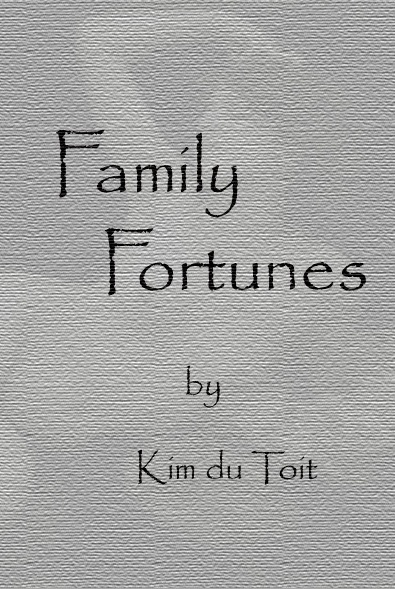
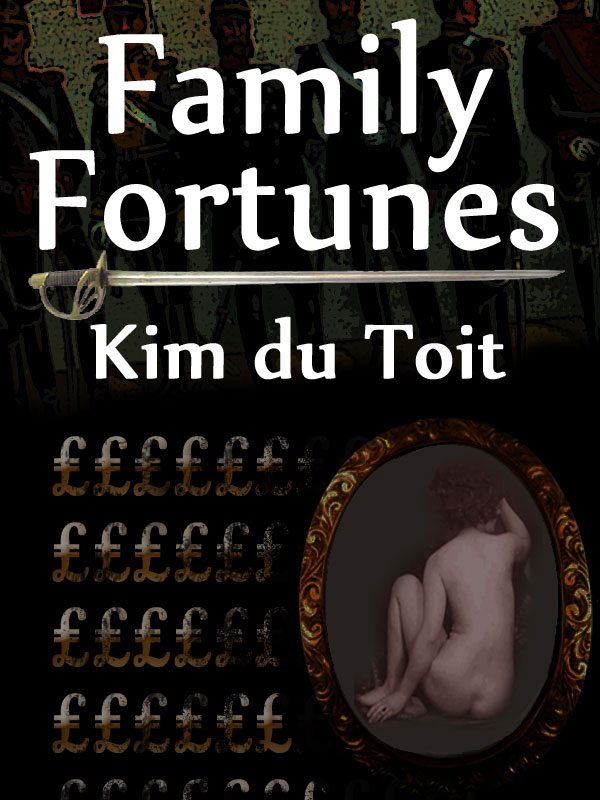
They are:  Times New Roman (or Book Antiqua) for my novels;  Verdana for this blog (although WordPress gives one no choice, I’d probably stick with it anyway because it’s highly legible);  and for some reason, I like Papyrus for my book titles — although I was talked out of it after the first edition of Family Fortunes by my editor.


I was kinda disappointed by that, because I’d designed the first version myself, based as it was on Vienna Days (my first published novel):


…and which I wanted to continue through all my historical novels to come.  But no.  “Not punchy enough” and “Too whimsical” — and out went that design.

I still regret the change, though.

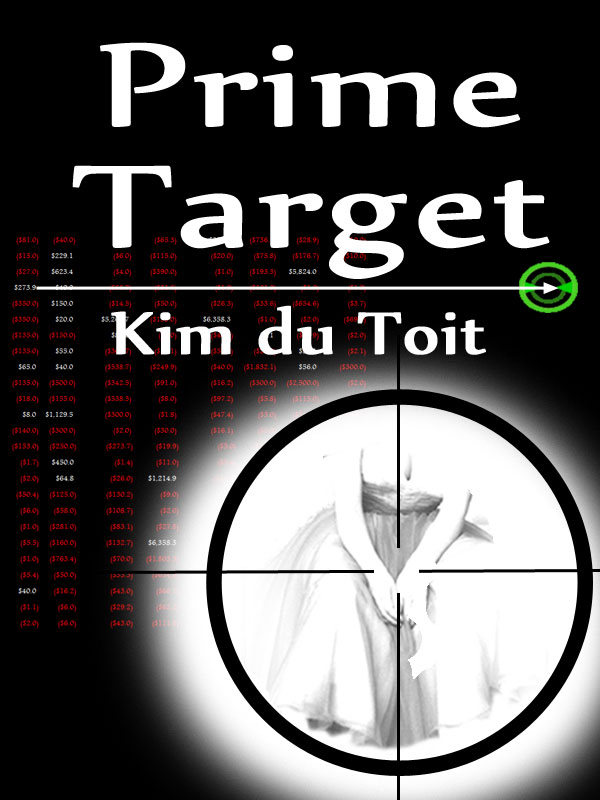
I had intended to have a totally different style for any non-historical works, e.g. Prime Target:


…because that format required a different feel, and I was quite okay with that.  But no:  “All your book covers should have a consistent look”, and as a one-time advertising and marketing executive, I had to agree with that.

It seems that I have digressed completely from the original thrust of this post, sorry.  Allow me to continue.

I find it interesting that a typeface / font should define a generation, but I shouldn’t be, really.  I mean, if I were to use something like:

…it might have worked back in the times of Edmund Blackadder (the latter word being the font’s actual name), but most readers of today would react by closing the book firmly, never to be read again.

Then again, there’s the Edwardian font:

…which might have suited the Victorian tone of Family Fortunes, but the readers’ reaction would probably have been the same.

But I draw the line at Comic Sans MS:

…which, as its very name suggests, should remain relegated to comic books.

And I don’t do comic books — neither writing nor reading.  Anyway:

The results revealed that Times New Roman – a font first designed back in 1931 – remains the most popular font, chosen by 27 per cent of respondents.

1931 is a little recent, for my liking, but as it replaced the handwriting-based Edwardian, it’ll have to do.

Then there’s this little snippet:

The news comes shortly after Microsoft replaced Calibri as its default font for the first time in 17 years.

It should come as no surprise to my Loyal Readers that Calibri is my favorite font for spreadsheets.

[200,000 words of angry anti-Microsoft vitriol deleted]

Then again, as I refuse to use the dreadful MS Excel at all, that change won’t affect me.

Opening That Box

Here’s a good one (via Insty, thankee Squire):

The Washington Post is planning to let amateur writers submit columns — with the help of AI

Well, I’m pretty much an “amateur writer”, but I guess my invitation to participate in said exercise got lost in the mail or something.  Still, I’m ready to pitch in.

And I won’t even need A.I.

However, I will need to do some preparation beforehand, so my Readers are welcome to suggest which topics they’d like to see me cover in the WashPo, in my usual style and manner.

Exemplar

I love Yiddish, because so many of their terms are just wonderful to use as a pithy description of despicable behavior.

Today, we focus on the word chutzpah, which means “effrontery”, “cheek”, “impudence”, “gall” and so much more in the same vein.

For those still unclear on the concept, here’s a wonderful example:

California Gov Gavin Newsom (D) recently traveled to Washington to seek federal aid for addressing the impact of the recent fires.

How is this chutzpah?  Consider the context.

California, which failed to prevent the spread of wildfires in Los Angeles last month and is struggling to repair the damage, is set to spend nearly $10 billion on health care for illegal aliens.

…and even better:

Newsom recently signed $50 million in new spending to fight President Donald Trump’s policies.

I know what I would have said to him, were I the POTUS.

Esn drek aun shtarbn, mamzer.”

For my non-Tribe Readers, that’s “Eat shit and die, you bastard.”