Unrequested & Unnecessary

I see with some displeasure that Hollywood has made a sequel to The Devil Wears Prada, which is one of my favorite movies, but for all the wrong reasons.  (Cliff Notes:  it exposes how vacuous, self-important and thoroughly unnecessary the so-called fashion “industry” really is.  Ditto The Player, which does the same for the movie business.)

On that note, let’s play a little game.  Assume that Hollywood / Netflix / Amazon / whoever is going to make a sequel to a well-known classic movie.  Feel free to comment on which movie they’d pick, and how inappropriately they’d cast the thing.

Here are a couple-three suggestions, just to prod the creative juices:

  • Casablanca 2, starring Tyler Perry as Rick and Rebel Wilson as Ilsa;
  • Thelma & Louise 2, starring Gwyneth Paltrow as Thelma and Whoopi Goldberg as Louise;
  • Butch Cassidy & The Sundance Kid 2, starring Rob Schneider as Butch and Don Cheadle as Sundance.

Yes, I know how T&L and BC ended.  The premise for both is:  They Survived!  (Yeah, I know, ridiculous.  So are most sequels.)

Dabney, John & Lucy

I have to admit that I am drawn to actors and actresses who have a problem finding starring work because studio bosses (and for that matter writers, producers and even directors) can’t figure out quite what to do with them.  The reason for this is that they seem to be able to play only dark characters — which is also the reason I rather enjoy their work.

The above statement is probably a little obscure, so let me explain it by focusing on three of these people who to my mind exemplify the problem.  All are brilliant actors, all have the ability to take over any scene (at the expense of whoever is playing the scene with them), and they all do it without really wanting to, I think.  Here’s the first.

Dabney Coleman played so many roles in his long career that you’d think that he had no problem getting work.  And he didn’t, provided that it wasn’t as the star of his own show, or the leading man in a movie.  His dark, sardonic nature and biting, sarcastic manner of speaking always had me howling with laughter.  A simple example was when he played a TV spokesman for 7-11, back in the 1980s.  I still remember one commercial where he was “interviewing” some moron, who was spouting all sorts of twaddle, and when the speech ended, Dabney (with his typical comedic timing) waited for just one second, and said, “I bet your mother is very proud of you.”  He also played a brilliant bad guy, whether the Agency boss in The Man With One Red Shoe, the Hugh Hefner-type smut tycoon in Dragnet, or the evil boss in 9 To 5.  Yet his own TV shows (Slap Maxwell and Buffalo Bill) weren’t hits — which was criminal, because they were both beyond-words brilliant — because I think that to the average viewer, Dabney was unlikable — even though on real life, he was apparently anything but.  Every single person who ever worked with him had nothing but good things to say about Dabney Coleman.

The same is more or less true for John Larroquette, who, if you look at his screen credits,  has been truly successful.  Like Dabney Coleman, though, John has always been something of a dark character, even when playing straight comedy (e.g. Night Court).  I think I first saw him as Kim Basinger’s psychotic ex-boyfriend in Blind Date (which still ranks as one of the best comedies ever filmed, mostly because of Larroquette’s brilliant, insane performance);  and ever since then, I’ve loved watching him do his stuff.  Yet his best performance was not comedic.  That came when he played a recovering alcoholic running the night shift in a city bus station in The John Larroquette Show.  This was a classic example where a good actor is let down by bad writing.  The show ran for over eighty episodes, and while his costar Liz Torres scooped up award after award, Larroquette himself was only ever nominated a couple of times:  proof, if any was needed, that his unquestioned talent wasn’t apparent to most people.

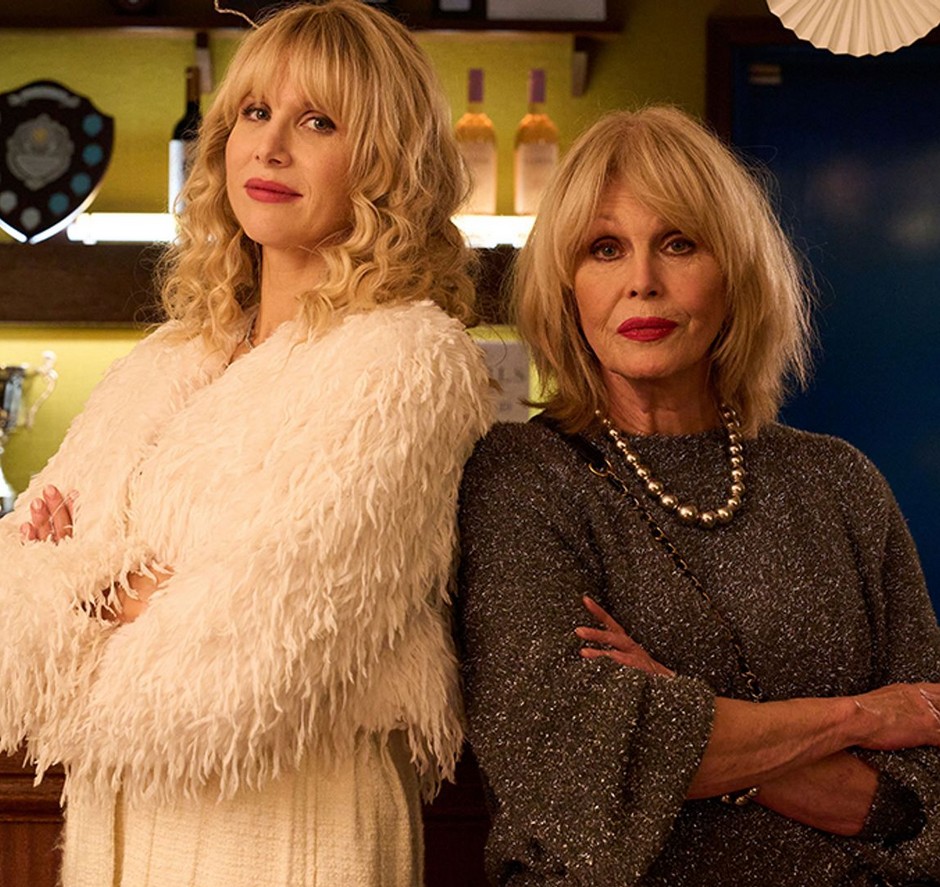
Finally, we come to Lucy Punch, the aptly-named Brit actress who leaves me openmouthed with astonishment whenever I see her perform.  I first saw her in the wonderful Doc Martin TV show, playing the very eccentric — and rather sinister — receptionist for the hemophobic Cornish doctor.  She only lasted a few episodes before being replaced by the equally- eccentric, but definitely not sinister Kathleen Parkinson, and I think that may be why she was replaced:  Lucy always looked on the verge of murdering someone with an axe, and that’s not really the kind of character you want in a soft, cuddly sitcom.

Then I saw her playing that psychotic character in Dinner For Schmucks… and the vision of Lucy attacking Paul Rudd’s Porsche 911 with an axe remains with me to this day.  (The similarities between John Larroquette playing an obsessive psychotic ex-partner, and Lucy more or less reprising that role have not escaped me, either.  The difference, though, was that Larroquette was funny, whereas Lucy was pure evil.)  She’s since appeared in the Brit TV show Motherland, and she was so good that her character was spun off into her own show Amandaland.  I haven’t seen either show yet because they’re not being streamed on Netflix or Amazon Prime, but I guess I’ll just have to be patient.  (Oh, and just the thought of Joanna Lumley playing Amanda’s mother in the latter show… have mercy.)

Anyway, I guess that loving these wonderful, but rather twisted actors says something about me, but I couldn’t be bothered with thinking about that.

Wrong 10

Yeah I know, it’s another piece of A.I. garbage, masquerading as thoughtful critique, but this take on the 10 greatest heist movies gets it wrong.

To save you the time of watching the video, with its fake voice and faker conviction, here’s its list:

10 – Oceans 11 (no argument;  the first and best of the Oceans franchise, and far better than the original Rat Pack version)
9 – The Italian Job (with Michael Caine;  also no argument)
8 – Inception (nope;  it’s not a heist movie, but sci-fi)
7 – Rififi (no argument)
6 – Inside Man (no argument)
5 – The Sting (nope, it’s not a heist movie;  it’s a sting, just as the title suggests)
4 – Reservoir Dogs (nope, it’s not a heist, just as the “narrator” suggests)
3 – Heat (no argument)
2 – The Town (haven’t seen it yet, so no comment)
1 – Goodfellas (nope;  it’s not  even remotely a heist movie)

You see, there’s a framing problem, here.  The definition of a “heist” movie is that it’s about criminals stealing stuff from an institution, not from people.  It has to be about the actual robbery, in other words, and not about the aftermath (Reservoir Dogs) or just an aside to the plot (Goodfellas), or about robbing an individual (The Sting, Inception).  That’s not to say that the above are not good movies — they’re all absolutely brilliant — but they’re not about heists, according to my definition.

So if we delete the unqualified, it leaves four spots open on the list.  Here are my modest suggestions for inclusion, in chronological order:

The Lavender Hill Mob (1951, Alec Guinness)
Charley Varrick (1973, Walter Matthau)
Thief (1981, James Caan)
The Score (2001, Robert De Niro, Ed Norton)
Heist (2001, Gene Hackman)
…and we could add either or both of the Thomas Crown Affair movies, with absolutely no argument from me.  Even Snatch could conceivably be included, as it begins with arguably the funniest robbery ever filmed.

To be frank, though, heist (or “caper”) movies are not my favorite genre, so there may be others that are worthy but that I haven’t seen, so feel free to add your own suggestions in Comments.

Afterthought:  I suspect that not many have seen Jules Dassin’s Rififi, but I would earnestly recommend that you do so.  When the entire spectacular heist is filmed without dialogue or music, you have to know… so that poxy A.I. list got at least one thing right.

Talent, Gone

I see with immense sadness that writer Len Deighton has died.  Granted, the man had a long and fruitful life and career, but that doesn’t stop it from sucking.

While Deighton was best known for his espionage novels like The Ipcress Files and Funeral In Berlin (both made into memorable movies starring Michael Caine), my personal favorite was actually a WWII novel, Bomber, which if you haven’t read before, you should.  Be warned:  it is an absolutely heartrending story.

R.I.P.

Quote Of The Day

Via Insty:

“[Kathleen Kennedy] gambled some of the biggest franchises in Hollywood history on the modern audience. And wow, did she lose big. To paraphrase Chris Gore, she took boy brands that everyone could enjoy and turned them into girl brands that nobody enjoyed. Men felt excluded and disrespected, and women felt patronized and pandered to. The modern audience had failed to show up, and the existing audience was abandoning ship. Kennedy’s greatest gamble had failed, and inevitably it all finally caught up with her.”

Can I be frank here for a moment?  I grant you that the destruction of these comic-book “franchises” leaves me totally unmoved because I have never been in the target audience for these infantile fantasies.  So to Star Wars, Star Trek, all those ur-Nordic fairy tales, Justice League and all the nochschleppers… good bye, fuck off and good riddance.  Ditto to the directors and producers, and indeed likewise to the actors and actresses, all of whom have made billions of dollars from filming this silly, inconsequential oeuvre  of fluff and nonsense.

A pox on all their houses.

Let me add to that the opinion that I will be really, really glad if none of these fantasies see the light of day for a generation or two so that maybe, just maybe some of those bloated production budgets might instead make their way into the production of decent movies with grownup storylines, good acting and productions that don’t rely on the deafening of their audiences.

But I risk being as naïve as the franchises’ audiences if I truly believe that any of this will ever happen.

Thank goodness for my DVD collection, which grows monthly.

Unexpected Pleasure Part 2

I spoke before about reading Stieg Larsson’s The Girl With The Dragon Tattoo novel, the enjoyment I had reading it, and my intention to read the next two (Played with Fire  and Kicked A Hornet’s Nest ).

Well, last week I did just that.  And I enjoyed them both so much that I did something unprecedented:  I re-read the entire trilogy this week, a scant couple of days after finishing the third — and enjoyed the novels as much the second time around as I did the first.  Remarkable.

One or two things come to mind about the novels vs. the TV series argument.  Of course, the TV show is pared down quite a bit, with characters and scenarios cut out of the novels’ plots.  In the main, they make sense;  Erika Berger’s leaving Millennium  magazine to run a large daily newspaper, for example, was completely cut from the Hornet’s Nest  episode, and frankly that wasn’t a wrong decision because it had very little to do with the story’s main arc anyway.

One thing that did strike me — and it’s not altogether a bad thing — is the big difference between Mikael Blomqvist in the novels and in the TV show.  In the novels, he’s much more of a ladies’ man — he beds government agent Monica Figuerola for one:


Monica Figuerola (played by Mirja Turestedt)

…as well as both Harriet and her cousin Cecilia Vanger:


…but none of the three in the TV show — which gives rise to another issue.

Michael Nyqvist (who plays Blomqvist in the TV series) is a brilliant actor — you may remember him as the Russian mob boss bad guy in John Wick, to mention but one of his memorable roles — but to be perfectly honest, in the TV trilogy he’s kinda… too short, pudgy and ugly to play a ladies’ man.


Mikael Blomqvist (played by Michael Nyqvist — I know, it’s kinda confusing)

I know that chicks fall for famous men, and in the Millennium  series he’s certainly a famous journalist in Sweden, but I think it stretches one’s credulity to imagine him shagging his way around Stockholm.  Mercifully, I think, in the TV series he’s a lot more a serious character than a bed toy — he’s in a long-time affair with the married Erika Berger throughout the series:


Erika Berger (played by Lena Endre)

…and of course in the Tattoo  episode he beds the tortured and broken Lisbeth Salander — or rather, she beds him, and then only briefly.


Lisbeth Salander (played by Noomi Rapace)

Those two affairs are quite believable, but to feature Nyqvist as a Warren Beatty-Lothario might have been a terrible piece of miscasting.  And fortunately, we were spared that because, and I stress the point, it didn’t affect the storyline at all.  If anything, I think it made the story a lot stronger.  And having him jump into bed with the cool and businesslike Monica Figuerola might have been fun, but it would have slowed the story down to no good purpose, especially as by that time the tale was building to its wonderful climax.

Now that I’ve read all three novels, of course, all that remains is to re-watch the TV series.  And let me repeat the admonition from my earlier post:  do not watch the Netfux adaptation because in their usual fashion, they mess the thing up completely by cutting even more scenes and characters to the point where the story becomes almost impossible to follow.

Get the director’s cut on DVD, and have a good time.  I certainly plan to.