Good And (Maybe) Better?

I have waxed lyrical before about pistol-caliber semi-automatic carbines, and I remain fond of them, for all sorts of reasons.  However, a couple of recent articles are making me rethink my fondness — not towards total rejection of the concept, but perhaps towards a better option.

I speak firstly of this article, about the TNW Aero Survival Rifle LTE – 9mm:

There’s a lot to like about this:  it uses Glock mags, it has an AR-15 clone action, you can get it in multiple barrel lengths, it breaks down easily for storage, and so on.  (Of course, as it shoots the plentiful 9mm Europellet, practice is cheap too.)

My antipathy towards said cartridge is well known, however, and I would far rather have such a carbine chambered for the .45 ACP — but from what I’ve read about the Aero, it’s going to be offered solely in 9mm.  Fine.  But then we come to the retail price of $650 (street), and about a hundred more for the short-barreled “pistol”.  That makes me wonder whether one couldn’t do better, cartridge-wise, for about the same money.

And right on cue came this article, suggesting that it may be time to reconsider the venerable Ruger Ranch Rifle (Mini-14 or Mini-Thirty):
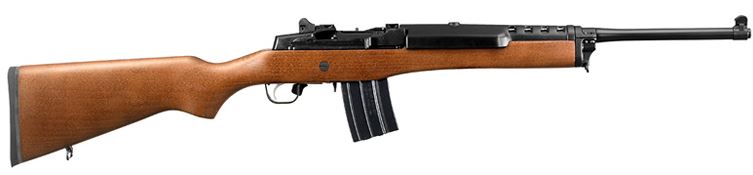
Now my own experience with the Mini-14 has been dismal — it couldn’t hold zero, the hot barrel whipped like a cooked noodle, and the larger magazines (aftermarket, because Bill Ruger thought that nobody should ever need more than 5 rounds) were Jammin’ Central.

But apparently, Ruger has fixed all that — even unto offering 20-round factory magazines — and they’re apparently now manufactured as they should have been made in the first place.

What I’ve always liked about the Ranch Rifles is that they’re not threatening to the gun confiscators, appearance-wise anyway.  (That doesn’t mean that the bastards wouldn’t go after them with similar fervor to the hated AR-15, but there’s less justification for doing so — at least, in the public’s eye.  Yes I know it’s all bullshit — the AR and Mini-14 are functionally identical — but these are the times we live in.)

The Mini-14 retails for just over $800 right now — and given that you’re shooting the 5.56mm poodleshooter instead of the 9mm Europellet, the price difference might be justified.  (You know where I’m going with this, right?  Yup, the Mini Thirty in 7.62x39mm Commie is the one I’d pick, if I was going in this direction.)

All the above assumes that the boys at Ruger have fixed all the old problems with the Ranch Rifle, of course.

If anyone near north Texas has recently bought one of the latest generation of the Ruger Mini (with the 20-round mag) in either caliber, I’d love to give it a little impromptu range test.  I’ll supply the ammo.

Comments, as always, are welcome.
ULD Rifle Reminder #3

(Several people wrote to me and pleaded with me to extend the deadline because of the dreaded Post-Christmas Poverty so common in Western society.  So I have.)

**** Note:  the deadline for entries is now February 29 ****

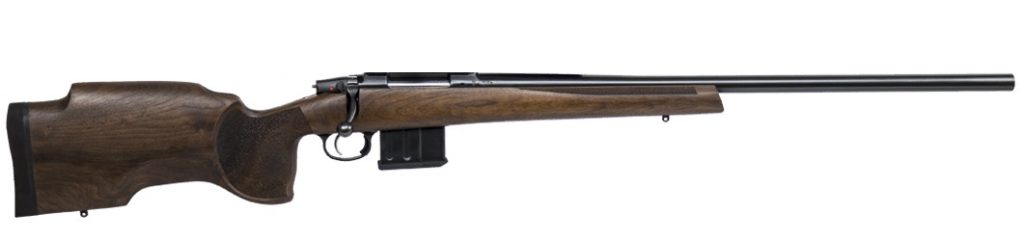
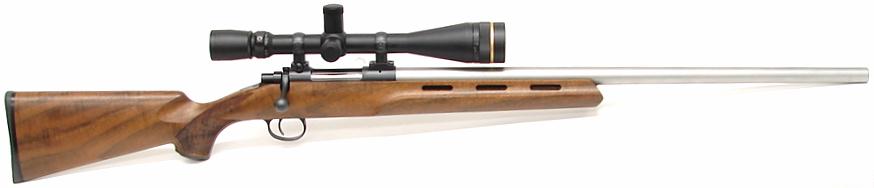
For those who missed this announcement (see here for details), let me remind you that this is a good chance to get a very nice long-distance sniper hunting rifle (such as the example below), for only the cost of a couple boxes of ammo…

May not be the actual rifle selected

(FYI:  from memory, the above rig cost about $2,800 back in 200[x].  We’re not quite halfway there right now, and guns have got more expensive since then.)

We’ve moved from the BB gun with a $10 Chinese scope mounted on it with duct tape, to a halfway-decent rifle, e.g. this second-hand CZ 577 Heavy Barrel in .308 Win:

…except that it will still  only have the $10 Chinese scope mounted on it with duct tape.

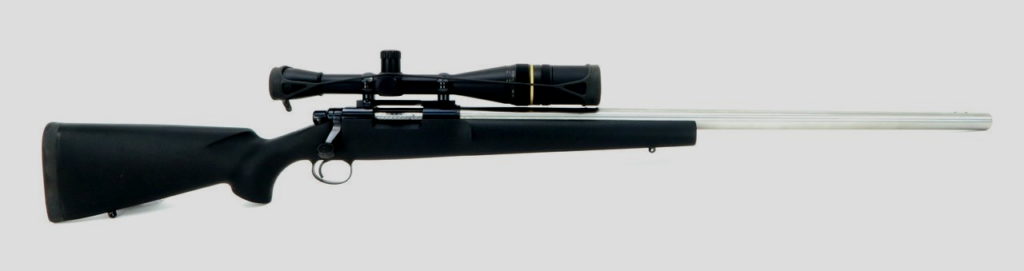
Here’s an idea of what you can get, second-hand, for just over $2,800:  Remington Arms 40-XB KS 7.62x51mm NATO caliber single shot rifle,with heavy stainless barrel, Kevlar stock and a Leupold 24X BR scope.

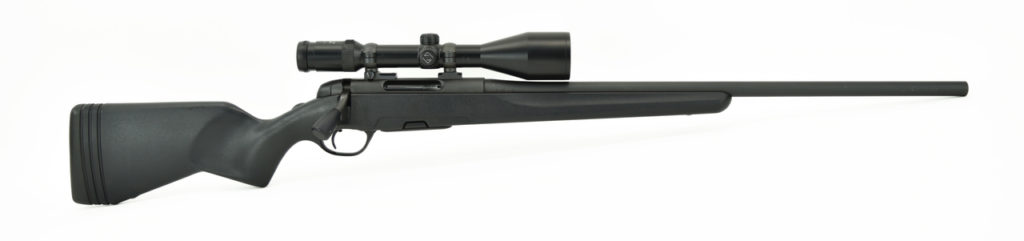
Or else this (also second-hand), for about $2,500:

Steyr Tactical HB .308 Win caliber rifle with Zeiss 3-12×56 scope.

That’s  the kind of rig I’m aiming for.  So you know what to do, those of you who’ve been lollygagging and waiting for Godot:  get out them dusty old checkbooks and send in your entries.

Home Defense Options

Some honchos in the gun world have weighed in with their home defense choices:

Keeping all of this in mind, we sought out a variety of professionals to comment on their particular home-defense guns, and more importantly, why they have those guns — simply telling you they use a 12-gauge isn’t very helpful. You don’t have to be a Special Forces guy or SWAT ninja to consider their rationales, so our hope is that after you read this piece you’ll evaluate the contents of your own nightstand. While there are some brand-names mentioned, think of each configuration as a loose guideline for a given situation and not an internet special, where all the parts and pieces have to match exactly. This is about choosing home-defense equipment, not points on the ‘gram. Still, we’ll disclose all of those parts and pieces, because we dabble in gear nerdery.

Sheesh.  Talk about space-age stuff.

I’m not one of those “heavy hitters”, nor do I get free shit thrown at me by any manufacturers [sob]  so here are my home defense suggestions, based in my own circumstances.

Bedside:
DA revolver in .357 Magnum, because as I’ve said countless times before, your “people in the house, grope in the dark” gun has to be like a fork:  when you pick it up, it has to work simply and without any chance of failure.  My only “accessory” (which I don’t have at the moment) would be one of those laser pointer thingies that are activated by squeezing the grip.

Home defense:
AK-47.  I live in a suburban apartment complex, so there’s little call for any kind of animal varmint reduction.  Human  varmints, however, may be another (albeit remote) situation even in my affluent location, and I prefer an AK over a shotgun because 20 rounds are better than 2 (I don’t have a pump- or semi-auto shotgun, only a side-by-side).  (Also, nothing  says “RUN AWAY!” like the sight of an AK pointed at your midsection.)

Accessories:
Fenix FX-PD35TAC flashlight, because of the 1000-watt beam and the strobe option — which is so disorienting it actually causes nausea at the naughty end.  I carry one of these bad boys in my gilet pocket, and keep another next to the bed.

Sjambok for controlling angry dogs and/or assholes.

That’s it.  I have other options, so to speak, but the above are what I always keep (very) close at hand.  Well, they would  be kept close at hand, except for that unfortunate canoeing incident on the Brazos River a few years back.  This is just my wishlist.

Ratting

Following on from my earlier post about taking care of vermin (actual rats, not politicians, of course), I had this thought.

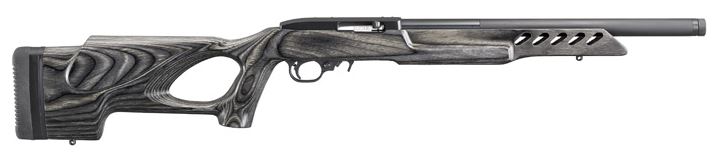
Given my ummm tendencies, I’d rather address the rat problem like this — I mean, why let dogs have all the fun?  I think I’d prefer an inexpensive .22 rifle (semi-auto, for a quick follow-up shot if needed) over an airgun, but I’m open to suggestions.

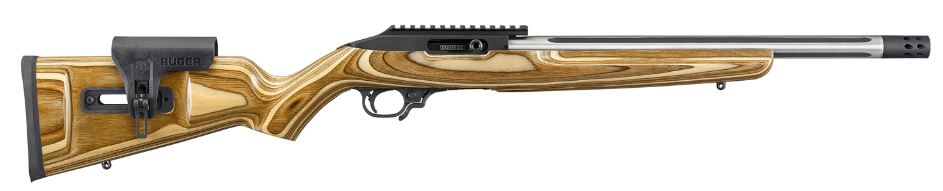
And no post of mine would be complete without at least a brief look at the guns one would consider.  I’m thinking of a heavy barrel semi-auto, like the Ruger 10/22 Competition:

…or the Thompson TC/R22:

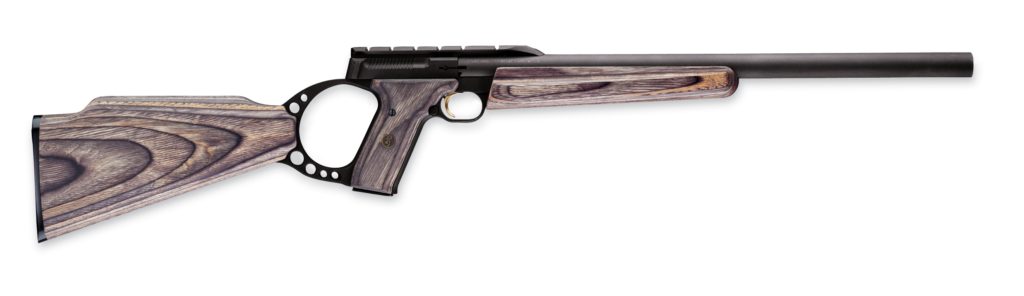
…or a ringer, the Browning Buck Mark FLD Target (which might possibly have the best trigger of the three):

No bad choices there.  But I’d be at a loss for which optics to choose.  Daytime, no problem:  either a red-dot or conventional rimfire scope would work.  But a night-vision  scope?  Never owned one.

Tell me your suggestions, in Comments.  And remember:  I’m a Cheap Bastard, so no $900 EOTech miracles need apply.

A Gun Too Far

Insty sent me to Tami Keel’s thoughtful post  at Shooting Times :

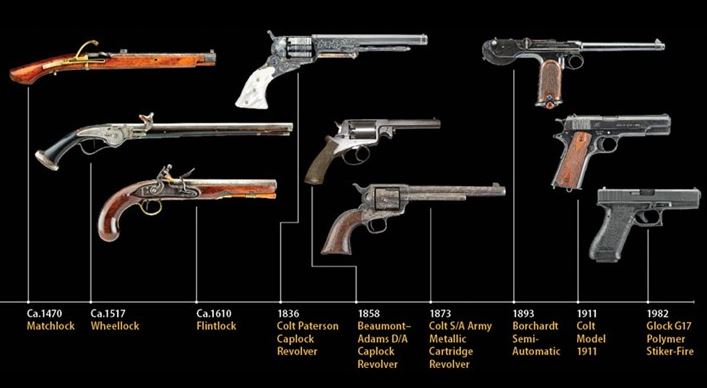
For the last 10 years or so, though, the standard answer to the “What pistol?” question has been a polymer-frame, striker-fired, double-stack pistol chambered in 9 mm. The temptation is definitely there to think of writing “The End of History and the Last Pistol.” But how did we get here, and what could be next?
For the reasons behind the pistol type itself, it comes down to simple cost. There’s nothing more modern about a striker over a hammer. John Moses Browning’s first semi-automatic pistol, the FN Model 1899, was striker-fired. It’s not intrinsically superior mechanically, either. In fact, it has a few downsides. A hammer generally gets better ignition reliability, and a hammer allows the use of lighter recoil springs since the force required to override the hammer provides much of the initial braking force to the recoiling slide.

Frankly, I would have had a different title — and probably, a different emphasis in the piece altogether.  Let me illustrate why.  Here’s the timeline graphic as it appears in the article:

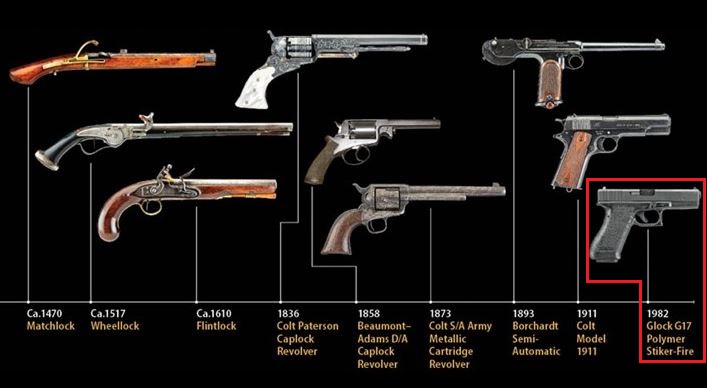
…and here’s my take on the same graphic:

…which would lead to my headline:

Have We Gone A Gun Too Far?

You see, I question the appearance of the Glock G17 on the chart altogether (and I should point out quite emphatically that I’m not  taking a dig at Tami).  It’s not the first striker-fired pistol (as Tami points out), and it’s certainly not the first semi-auto pistol.

But Tami’s next sentence, while correct, gives the game away:

The striker’s big advantage is simplicity, which translates to a less-expensive gun. There’s just no way to produce a hammer-fired ignition system as cheaply as a striker-fired one. Similarly, there’s just no way to chisel a frame out of steel or aluminum as cheaply as one can injection-mold one out of polymer. When it comes to the real world of accountants and budgets, the cheap gun that works just fine is going to displace the more-expensive gun that also works just fine.

All true, and all well and good.  But just making something cheaper  doesn’t warrant a place on the timeline, any more than making a more efficient (and more expensive) double-action revolver than the Beaumont-Adams (e.g. a Colt Python) would merit a similar inclusion.

Just because the Glock is one of the most popular handguns around doesn’t make it a step on the Gun Evolution Ladder, in other words.

Here’s my final thought on the matter.  For decades, we bought our Coca-Cola in glass bottles.  Then glass containers gave way to plastic bottles — which makes a case for a place on the container  timeline, but not one for inclusion on the soft drink  timeline.

I know, I know:  I’m splitting hairs here, and we all know the Glock is the greatest thing since ice cream etc. etc.  Except it isn’t.  It’s a cheap-to-produce plastic container, and its only real benefit is to the accountants.  As for the “cheaper” part, here’s the Gospel according to Bud:

But whatever.  Y’all can carry a Glock (or any of their copycats), with my blessing.  It’s not a horrible pistol;  it’s an affordable, effective and reliable gun.  Me, I’ll stick to my 1911 (which is on the timeline — and justifiably so) and one day, maybe, a Colt Python.

The rest of the article has to do with ammo, but everybody here knows my opinion about the 9mm Europellet.  Likewise, I’ll stick to .45 ACP and .357 Magnum.

And this exchange in the Comments to Insty’s post had me chuckling:

“Plastic crap”…

Past Perfect, Part Deux

Sheriff Jim talks about a “trend” of people reverting to revolvers as self-defense weapons.

Colt has recently made a big splash with the reintroduction of their Python revolver. At the same time, we continue to see and hear from shooters who cleave to their Smith & Wesson J-frame revolvers. And there seems to be continued interest in revolvers manufactured by several other companies. A custom holster maker recently told me that 70 percent of his orders are holsters for revolvers. I am curious if we are seeing a solid trend back to the defensive revolver, or if this is just some sort of fad.
Of course, many of our older shooters have never quit the revolver. They learned to shoot it and shoot it well. In many cases these folks have had revolvers save their lives and it’s pretty hard to quit a gun that you could rely on in those circumstances. Many of these older shooters also passed their love of the revolver on to their children which has affected the choice for many of the younger generation.

Yeah, no prizes for guessing where I fall on this spectrum.  Despite my eternal love affair with the Colt 1911 Government pistol, my bedside gun is and always has been a revolver, because at the end of the day, a revolver is like a fork:  you pick it up, and it works.  No fiddling with safety catches, worrying about popping the mag by mistake, trying to remember if you racked the slide to load it earlier (in my case, that would be “always”) — your revolver is loaded and ready to go, period, end of sentence, end of story (for any goblin on the naughty end of its muzzle).

For me (and, I suspect, a boatload of others of my ilk), there is no “trend”;  the rest of the world is coming back to realize what we’ve known all along:  the more dire the circumstances, the more we need simplicity.

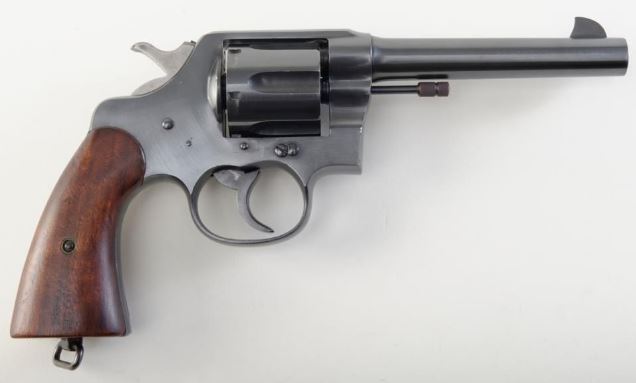
That was my very first bedside gun, back in South Africa:  a Colt 1917 (.45 Long Colt).  I never had to use it in anger, thank goodness, but there’s no doubt it could have handled pretty much any situation short of a regimental banzai attack.

My choice of cartridge may have changed somewhat in the fifty years since then (.45 LC to .357 Magnum), but my philosophy sure as hell hasn’t.