
I had to laugh at this one. Porsche is one of the chief sinners in the “Technik Uber Alles” trend among car manufacturers, the trend whereby letting the engineers loose on car design is seen as more important than giving the customers what they want, at a decent (not insulting) price. We’ll talk about Ferrari later.
But in their drive to make their cars super-whizzbang-wonderful in terms of technical gadgetry (PSM, PDT, PDK whatever), Porsche seems to have missed one of the basic tenets of car design — a feature that has been critical since the first cars were ever built:
The wheels have to stay on the car.
Except for Porsche, it seems:
There are few scenarios more frightening than pushing a 640-horsepower sports car to its limits and having one of its wheels detach, but that’s the risk facing owners of several Porsche sports cars. The German automaker has issued a new recall for multiple 718 and 911 models equipped with centerlock wheels, and the risk is so serious that a Do Not Drive Warning has been put into place until these vehicles can be inspected.
Ironic, really, for a company which prides itself on its faultless engineering.
Here’s the thing. Centerlock wheels have been around since the beginning of time, going back to oxcarts, even. I still recall that mallets were a vital piece of a car’s toolkit right into the 1960s, e.g. for the E-type:
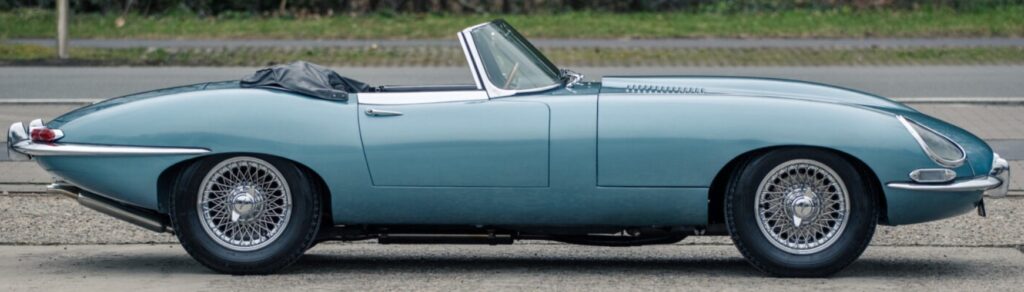
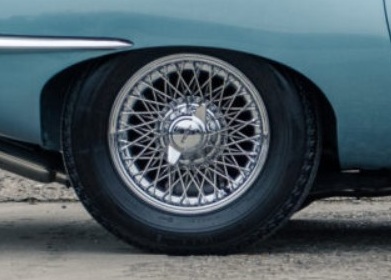 (pretty, innit?)
Then, of course, the trend changed, and wheel nuts became a thing: five, six or more bolts anchoring the wheel to the chassis. The great thing about this was that there was safety in numbers (not to mention in its simplicity): one or two wheel nuts could be “loose” (i.e. finger-tight) without too much consequence.
The problem was that while this was perfectly fine for the consumer market, it was far from ideal in a racing environment, where the time penalty for changing several nuts on a fresh set of tires was burdensome. So back to centerlock we went, not just in racing but in the consumer products — and as an added bonus, car manufacturers began to mess with the design of the tightening process, creating their own customized wrenches so that changing a tire was not something that could be done by the owner on the side of the road, but required a (towed) trip to the dealer.
And now we have this situation, where whatever Porsche has done in this regard is flawed, so that hapless Porsche owners are indeed faced with the prospect of watching themselves being overtaken: not by other cars, but by their own wheels as they detach themselves and go spinning off on their merry way.
On a car that costs anywhere from $100,000 (718) to $300,000 (911).