
And the hits just keep on coming — this time, from Sweet Home Alabama:
The company is Flock Safety, and it runs the largest mass surveillance network in American history, with more than 100,000 cameras by its own count. But don’t be confused; these aren’t run-of-the-mill red light cameras. Every Flock camera photographs every vehicle that passes by, around the clock, whether anyone suspects a crime or not.
On any given Saturday in Alabama, a man can leave his driveway, gas up, run by the gun shop for ammo, shoot all morning at the range, and be home for lunch. He hasn’t broken any law or bothered a soul. And in more of our towns than you’d guess, a camera on a pole photographed his truck at every stop and filed it in a searchable database owned by a private company in Atlanta.
And the record contains far more than your tag number. Each image becomes a searchable record containing the plate, time, location, direction of travel, make, color, body type, and other identifying features. Flock calls this part of their system the “Vehicle Fingerprint,” and their own materials advertise the ability to conduct searches using unique vehicle details, including bumper stickers and decals. That matters in Alabama. A Gadsden flag, Glock sticker, BamaCarry decal, or other Second Amendment message on the back of a truck is not just something another driver sees at a red light. It’s now a searchable data point tied to that vehicle, the owner, and your movement.
These cameras came into Alabama the way kudzu did: quietly, then… boom, everywhere.
And it gets worse:
But here is the craziest part: most of it arrived by consent agenda and contract renewal. The Legislature never voted on a statewide surveillance network. Yet ALEA’s administrative rules let plate reader data sit for five years, the longest of any state, per a 2026 legislative survey, and require every read to feed a statewide registry once ALEA stands it up.
That should stop every gun owner in their tracks. Alabama law, through Act 2024-232, prohibits the government from keeping a list or registry of privately owned firearms or their owners. Gun owners fought hard to secure that protection. Yet today, Flock has effectively created a searchable, five-year archive showing which vehicles with Second Amendment decals park at gun stores on Fridays, attend gun shows, or regularly visit shooting ranges. It may be built from “license plate photos” instead of firearm records, but for all practical purposes, it’s a hard registry of gun owners.
Got the Warm & Fuzzies yet?
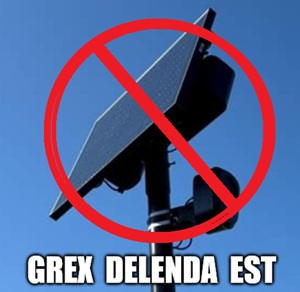
Thanks for continuing to cover Flock; it’s a cancer to freedom. And they’re going to try to slide in the alternatives. Axon, Vigilant (Motorola), VIPR, and bunch of others who do the same are flying below the radar.
It would be a shame if the Flock offices and database locations were to be doxxed as the left likes to do. It would be an utter tragedy if these locations spontaneously combusted due to Climate change as well.
PS email sent
It seems that your problem with Flock is not license plate recognition. Your problem with Flock is all the other functionality built into it, kinda like Wuhan lab know what I mean. Legislate out the other functionality and keep the LPR, which is the criminal catching bit.
Like that’ll ever happen. The LPR is also the camel’s nose that gets everything else into the tent (the database).
I’ll say it again; thanks to cheap RAM chips in now colossal capacity undreamed of in 1978 when RAM was advertised as A FULL 16K OF MEMORY,
privacy is the twenty-first century myth.
Like that’ll ever happen. The LPR is also the camel’s nose that gets everything else into the tent (the database).
I’ll say it again; thanks to cheap RAM chips in now colossal capacity undreamed of in 1978 when RAM was advertised as A FULL 16K OF MEMORY,
privacy is the twenty-first century myth.