Different Wheels

Following yesterday’s rant about modern-day cars and their godless, snooping manufacturers, I want to say this.

One of these days, I’m going to need a new car — the Tiguan’s odometer is nudging 150,000 miles pretty hard, and every time I set off on any kind of trip, I’m apprehensive.

I have no idea how I’m going to afford it without draining our meager savings;  I may have to auction off almost all my guns to a certain group of gun-loving Readers I happen to know, just to defray some of the cost.

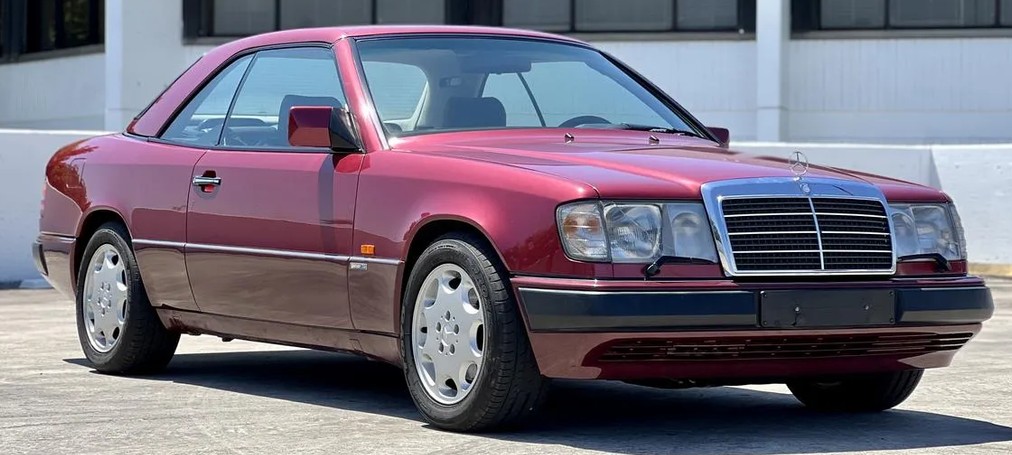
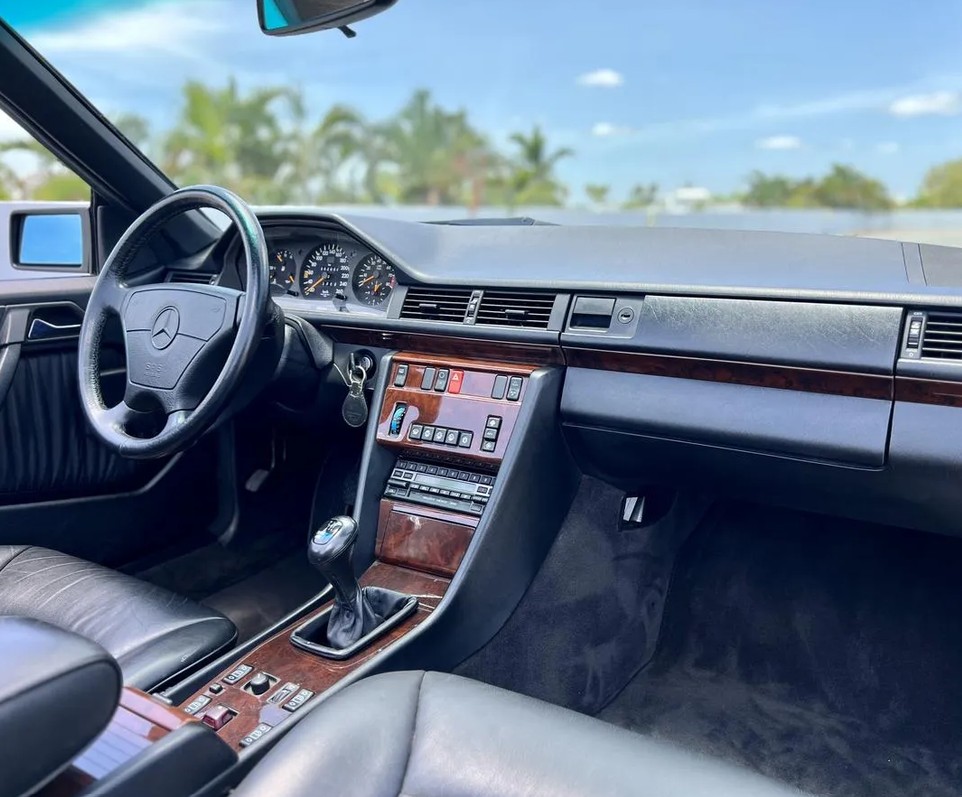
But just so everyone’s clear on the topic:  given all that’s appeared above, there is no way I will ever consider a “new” car — i.e. one made since the mid-1990s — but I’ll aim for one made without too much electronic equipment.  Here’s an example:

1993 Mercedes Benz 300CE ($38,000)

Less than 35,000 miles, that lovely 3.2-liter engine, and a Euro-spec stick shift… oh be still, my beating heart.

Of course, by the time I would actually be in a place to buy this magnificent car, it would be long sold (because duh);  but it should give you an idea of the direction I’m aiming.

There’s another option:  American cars.  But to find one of those that was made before 1995 and hasn’t been hot-rodded to hell and back?  That makes me really nervous.  (And I can’t go with a truck — New Wife is adamant on this.)  Plus, except for the 65 Mustangs, American cars of that era a generally fugly.

I will accept any and all thoughts on the topic.  Be kind, willya?

Little Brother

It’s one thing to have to deal with the Gummint snooping on your every move — literal, and figurative (i.e. your online activities) — but it’s another thing to having GlobalMegaCorp sniffing into your business as well.

Here’s how all this started:

Ruter, the [Norwegian] transit authority that runs public buses across Oslo and Akershus, parked two electric buses inside an isolated facility built into a mountain, the kind of shielded space normally used to keep radio signals from leaking in or out, and let its own security engineers take them apart. One bus came from Yutong, the Chinese manufacturer that has quietly become one of Europe’s largest electric bus suppliers. The other was a three-year-old unit from VDL, a Dutch manufacturer. Ruter chose that pairing deliberately: the two buses sit at opposite ends of how connected a modern transit vehicle can be.

And the findings?

Ruter’s own published findings are blunt about the VDL [Dutch] bus: it has no capability for over-the-air software updates at all. Every change to its systems requires a technician to physically connect a cable. That makes it a hassle to service. It also makes it nearly impossible to hijack remotely, which is exactly why Ruter’s engineers moved past it quickly.

The Yutong [Chinese] bus is the opposite. It receives software and diagnostic updates automatically, the same way a phone downloads a firmware patch overnight, except this particular phone weighs roughly 30,000 pounds and carries dozens of passengers through Oslo traffic. That connection routes through a Romanian SIM card, which gives Yutong direct digital access to the bus’s battery and power management systems. Ruter’s engineers concluded that, in theory, this access could be used to stop the bus or render it inoperable, not through some elaborate hack, but simply because the manufacturer already has a standing door into those systems for legitimate diagnostic and update purposes.

Wile all this is alarming, it’s not really surprising.  We’ve known for ages that the godless ChiCommies have their dirty little ears glued to just about every damn piece of electronic equipment our friends (!) in Silicon Valley have outsourced to their manufacture.

So now we get to the part that makes me start fixing a lunch bucket, scoping out high buildings and cleaning the Mauser.

None of what Ruter found is exotic. It’s the standard architecture of any modern connected vehicle, and American drivers have been living with a version of it for nearly two decades. General Motors’ OnStar system can, at the company’s discretion, send a cellular command to a stolen vehicle that blocks the ignition from restarting once it’s parked, or gradually slows a moving vehicle so police can recover it safely. That is functionally the same category of access Ruter found in the Yutong bus: a persistent, manufacturer-controlled cellular link with authority over propulsion-adjacent systems, built into the vehicle before it ever reaches a customer’s driveway.

So Big Auto are a bunch of snooping smegma-eaters.  We know that, too.

The distinction that actually matters here isn’t whether a manufacturer can reach into a vehicle remotely. Almost every connected car sold today allows that, by design, for updates, diagnostics, and theft recovery. What matters is who holds the authority to use that access, under what legal process, and how many vehicles go dark at once if that access is ever misused, subpoenaed, or compromised.

A single stolen sedan getting slowed to a stop by its own manufacturer is a feature working as intended. An entire transit authority’s bus fleet answering to a remote command from a foreign supplier’s server is a different order of risk entirely, which is exactly why Ruter escalated this to Norway’s national government instead of treating it as an IT ticket.

Now comes the part that has me checking Ye Olde Ammoe Locquer for 8x57mm:

Chinese abuse of this little backdoor activity [sic] is bad, but in the bigger picture, it can be addressed with a carefully-aimed chunk or two of explosive material on the Three Gorges Dam.

What worries me more is that this little pipeline into our cars can also be — and is — at the beck and call of the auto manufacturers, who are only too ready to “share” that data with, say, the insurance industry (hello, fresh revenue stream), and if pressed just a little, with our own Gummint ghouls who infest the alphabet agencies (DHS, NSA, FBI, just to name the three biggest dicks aimed at out collective rectums).

I need to get to the range.  So if you’ll excuse me…

 

The Ultimate Q-Ship

Forgive me a little mansplaining here, but I was recently taken to task because “not everyone has had the education you’ve had, Kim” — leveled at me because I was talking about something that I just assumed everyone already knew, but in this particular case, not.

Anyway, the “Q-ship” concept came from the First World War, when, in an effort to combat the U-boat menace, the Royal Navy took ordinary merchant steamers, and added droppable shields to the desks — “droppable” in that when a U-boat would surface to sink the helpless merchant ship (which is what they often did), the prospective victim would lower the shields to reveal a nasty-looking gun which could easily sink said U-boat, and often did.

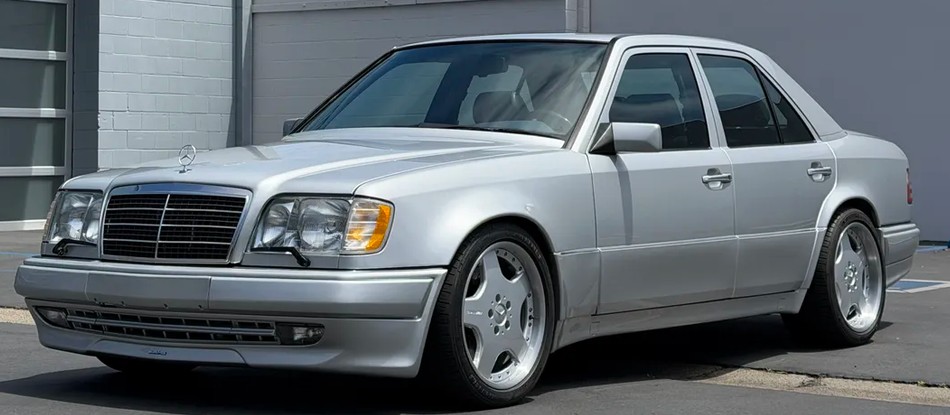
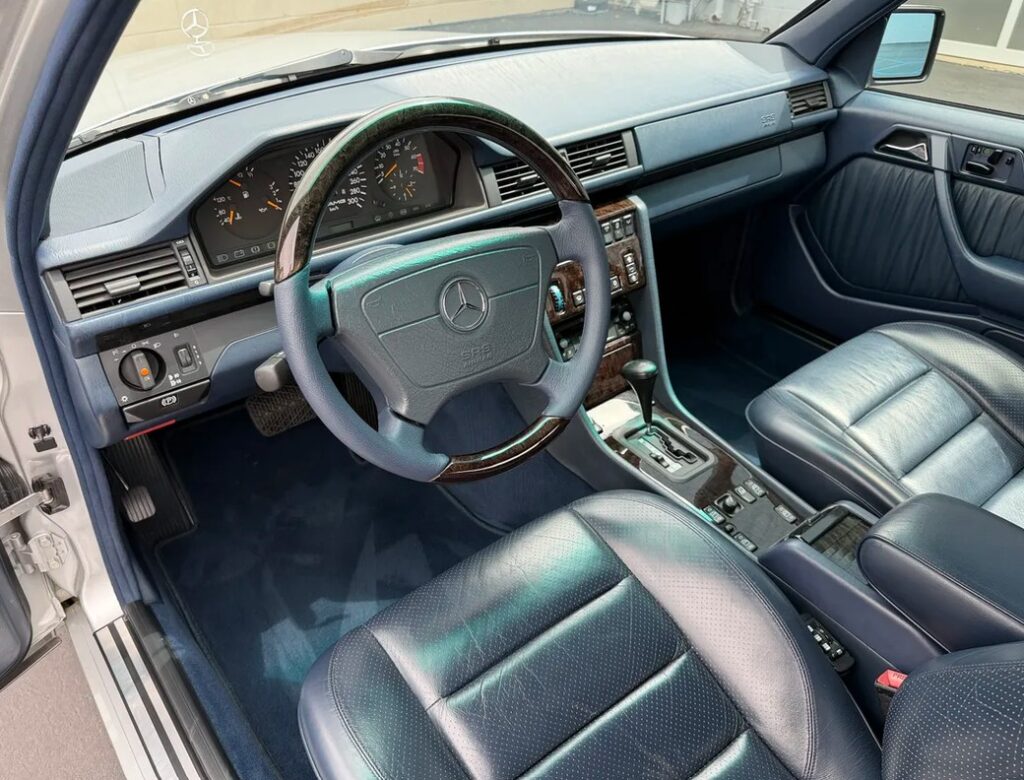
So put plainly, the Q-ship concept is to disguise power in an apparently-innocuous outer packaging.  Like in this case:

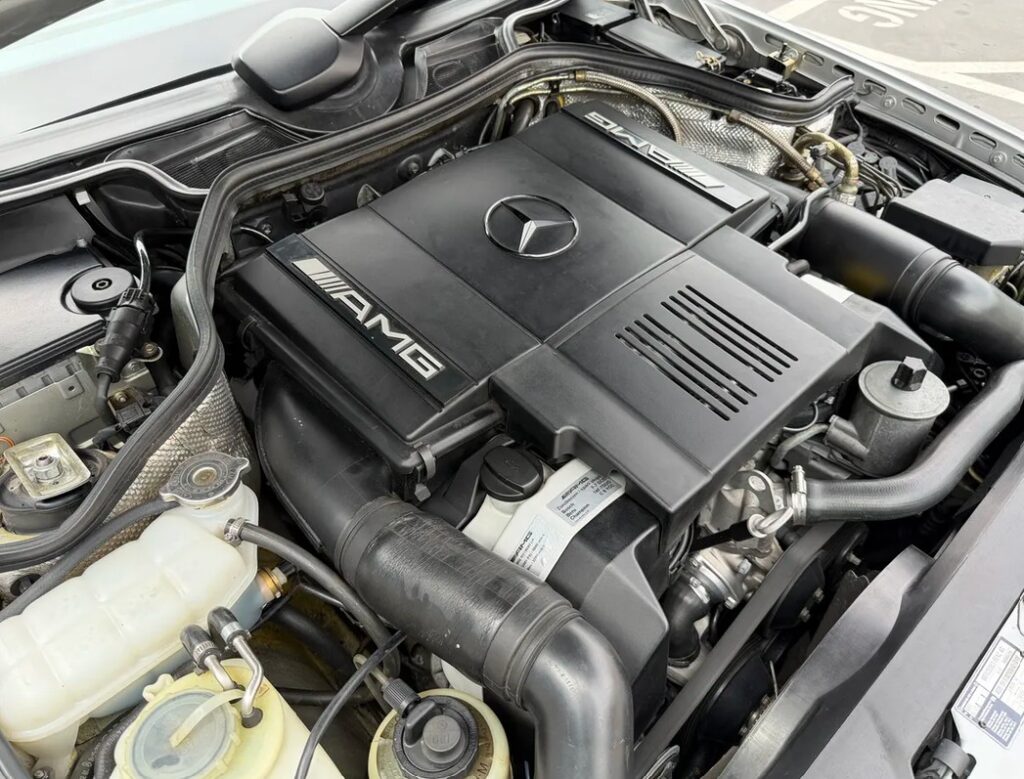
Now that’s a 1993 Mercedes E-class car, done in Standard Boring Mercedes Trim & Shape.  So why would this one, in particular, be on sale for just under $240,000?

Because it’s no ordinary Merc E-class;  it’s an E500, which has under its hood a growling monster 6.0-liter AMG V8, putting out 369hp.  (I know, that’s small potatoes compared to today’s behemoth engines, but back in the 90s it rivaled Ferraris.)

As I recall, Mercedes only ever made a couple hundred or so of these beasts, so the scarcity no doubt contributes to the price.

I once knew a guy who loved cars that looked unassuming, but were hidden dragons, simply because they didn’t attract the attention of Los Federales  in the same way that his rosso Ferrari Testarossa did.

I have to say that if I were in the market for a powerful car and had a spare quarter-million to drop on it, I’d want it to look just a leetle more impressive than something that looks like a banker would drive.  This Maserati MC20 comes to mind… and they cost a lot less than the E500.


I guess I could have just called it a “wolf in sheep’s clothing” and saved myself the tiresome mansplain at the beginning, but that only occurred to me after I’d written the thing.

Besides, I think “Q-ship” fits this E500 better than “wolf”, anyway.

Quote Of The Day

From Carl Hartley (of the Tom Hartley supercar dealership):

“The McLaren F1 tries to kill you.  It treats you like you shagged its wife and beat its kids.”

Actually, it’s being a little cheeky:  trying to kill you while it first plundered your bank balance to the tune of millions of dollars..

And he loves driving the thing.  Go figure.

Chewsday Challenge

I’ll let Reader GT3Ted set the scene for this challenge:

Hypothetically speaking, if someone were to wake up tomorrow having somehow won the current Powerball or Mega Millions jackpot, there would suddenly be a very interesting problem to solve.
After taxes, there might still be something in the neighborhood of half a billion dollars sitting around, and leaving that much cash idle seems almost irresponsible. Naturally, the search would begin for additional places to park the money.
    • You already bought a 10,000 acre cattle ranch in Montana
    • 25 sections of Corn and Wheat land in Kansas and Nebraska
    • A Smaller 9,000 sq ft place in Telluride (Aspen is sooo last Year) 
But you are still missing a good car collection.
Not to worry,   Next month is Monterey Car week and Sotheby’s is selling some of the World’s best Car Collections  (including multiple Pebble Beach Best of Show Winners).

The challenge:  pick any three cars out of the offerings.  You can give as reasons any criteria you wish (longtime dream, a gift for a very good buddy / your heir, investment, whatever).

For the terminally picky and querulous, remember that your bank account can easily handle both the cost of purchase plus any maintenance charges — it’s a rounding error, in both cases — so go ahead and indulge yourself.  Still on that topic: assume that you’re already bought yourself your dream SUV / pickup / Toyota for an everyday driver;  these three would be pure indulgence.

That said (and Ted will agree with me here), the reason that I picked three cars and not one is that any any given time, at least one and quite possibly two of the cars will be in the shop for repairs, so three is a prudent number.

My three choices are below the fold, listed in no particular order because I drool over all of them equally:

Read more

Quote Of The Day

From Carl Hartley of Tom Hartley:

“Buying a Bugatti Veyron… you’re buying a cancer patient.”

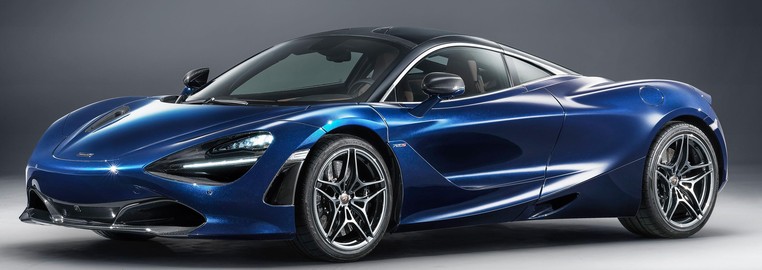
He had something similar to say about the McLaren 720:

“You don’t drive it.  As long as it sits in your garage, nothing’s going to break.  But the minute you drive it outside, the clock starts ticking.”

I used to think the same way about 1960s-70s Alfa Romeos.  The difference is that at that time, no Alfa ever cost well over a million bucks.