Yeah, Nazzo Fast, Guido

Stephen Green takes a long-overdue look at the inevitability of electric cars and such, and comes up with this priceless observation:

We need to talk about the word “inevitability” because when it comes to electric vehicles, I do not think it means what supporters think it means.

And then the killer:

Inevitability, you see, is when government spends money we don’t have and passes laws that won’t work to bribe or force people into buying cars they don’t want.

Like Karl Marx’s sense of inevitability — the inevitable fall of capitalism and the inevitable advent of its replacement — such things which go against human nature always need assistance from the firm foot of government to be applied with a heavy hand.

If the above is slightly incomprehensible to you, you need to read Stephen’s whole piece.

Current Wallpaper

It’s another of the Lingmoor Fell series, and I find it extremely restful — on those rare occasions when all the laptop’s windows are closed and I can actually see it.  One day I’m going to go there…

Right-click to embiggen etc.

Outright Theft

Here’s a little snippet that caught my eye briefly, then buzzed around in my subconscious until it turned into a raging tornado.

Inheritance tax receipts increased to £5.2billion in the eight months from April to November, data from HM Revenue & Customs reveals.

This marks a £400million increase from the same period a year ago, and continues the upward trend over the last decade.

Last month, the Chancellor shied away from slashing inheritance tax in the Autumn Statement, as it emerged the levy is on track to raise nearly £10billion a year by the end of the decade.

The body text concerns me hardly at all because it’s Britishland, and for centuries their governments have always stolen from the country’s wealthier citizens.

It was really just the first two words which snagged me like an errant fish hook.

Here’s how it’s defined by our own beloved IRS:

The Estate Tax is a tax on your right to transfer property at your death. It consists of an accounting of everything you own or have certain interests in at the date of death. The fair market value of these items is used, not necessarily what you paid for them or what their values were when you acquired them.

There are a whole bunch more words which on the surface are supposed to clarify the matter, but which in true IRS form serve only to create more questions, to be clarified by tax accountants and lawyers, and which can be re-interpreted (in the State’s interests, natch) by IRS agents in any way they choose.

Yeah, you have a right to transfer property — your own private property, how nice that they call it a “right” — but that right can be taxed (is it then still a right?) because reasons.

Basically, the State is saying that your private property isn’t really yours, it belongs to the State and therefore they are entitled to a piece of it.

Yeah, I know, it really only applies to “the rich” and we little peasants shouldn’t worry our silly little heads about it.  (The ceiling for application of the death tax is currently set at an estate value greater than $13.6 million.)

Even among people not affected by the estate tax, it is one of the most hated taxes in the nation.  Worse still, it used to cost the State more in the collection thereof than the income it generated — in fact, it only recently “broke even”, and now the revenue : cost relationship stands at something like 1.24 ($1.24 dollars is collected for every dollar it costs to collect it).

If ever there’s a piece of governmental thievery which needs to be taken outside and shot in the back of the neck, this one is it.  (Don’t even ask me about the politicians who support it and the government agents who collect it, because my response would put me on the Naughty List.)


Yes I know, there is a difference between “inheritance” taxes and “estate” taxes.  Regardless of how the godless IRS defines it or how/when it gets collected, however, the principle is the same for both.


Irony Defined

Here’s an unfortunate train of events.  When examining Chris Rea’s Driving Home For Christmas song, scientists at the University of Sheffield in the UK found the following (links included):

Well, yes.  That “carbon footprint reduction” thing is doubleplus virtuous, of course.

However, as with all ivory-tower cogitations, Real Life™ has an unfortunate knack for making such conclusions look ridiculous:

Needless to say, the Eco-Loons don’t care, because not being able to visit your family at all on Christmas means that your carbon footprint would be lower still.

Which is why scientists should stick to things like discovering a better adhesive that sticks wood to metal, or improving the taste of Slim Jims (to give but two examples), instead of trying to add to the Smug Index of Virtuousness.

Just a thought.

Then again, we have another solution for this bunch of wokey watermelons, to make their carbon footprint go away completely:

…but no doubt someone is going to have a problem with this.

Weird But Wonderful

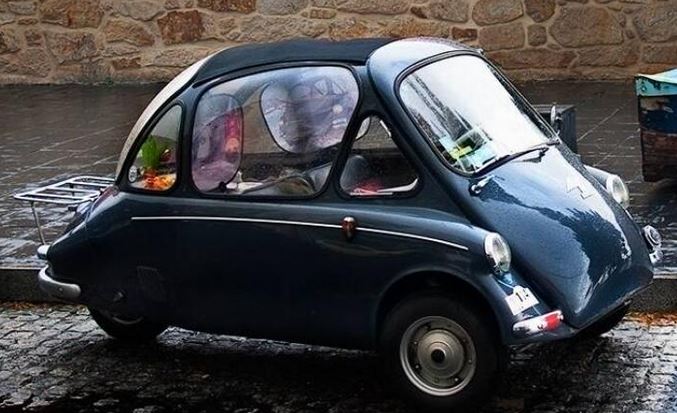
A Reader (lost yer email, sorry) sent me this little look at The Most Odd-Looking Vintage Muscle Cars Ever Made.  I have several problems with said list, mostly because more than a few of the cars cannot be termed “muscle” cars by any stretch of the imagination, e.g. the Heinkel Kabine of the late 1940s:


…which featured a 174cc engine which generated 9hp.  That’s “muscular” only if you’re a Gen Z snowflake or an eco-moron.

Of course, there are a few strange ones on the list, but I have to say that more than a few did catch my eye, and I would have no problem owning / driving one of them, even today.  Here they are:

BMW Z1 (early 1990s)
Sorry, but that’s just lovely.  The retractable doors (!!!) make it strange, but I’d still take one in a heartbeat.

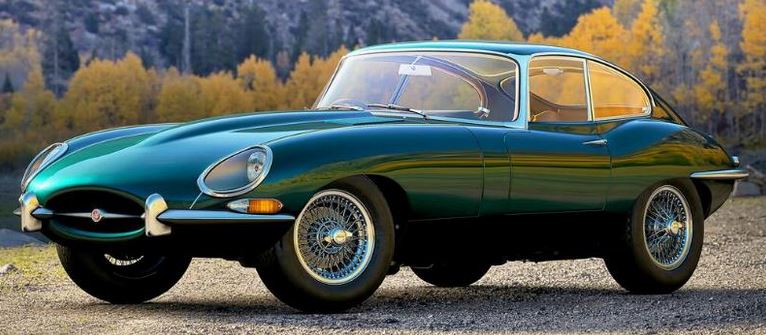
E-type Jaguar (1960s)

That’s not “odd”, you morons, it’s a classic.  Even back then, it wasn’t odd, just beautiful (pace Enzo Ferrari, who knew a thing or two about the topic).

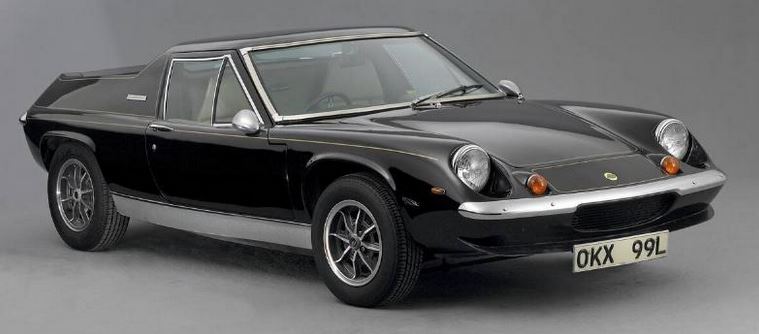
Lotus Europa (1970s)

Yeah, it looks a little strange, but it handled better than any road car of the time.  You could take corners at speeds that would have killed you in any other car.

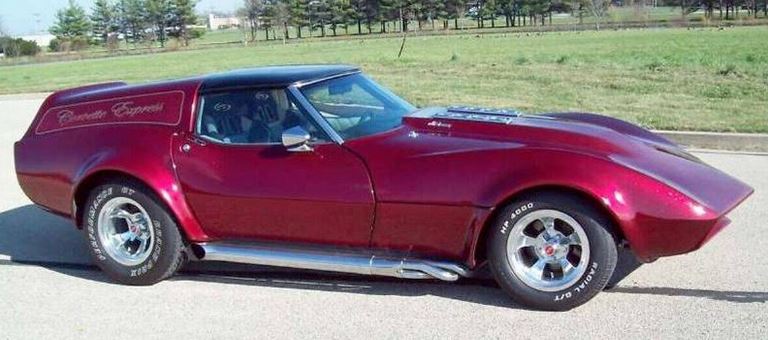
Corvette station wagon (1970s) 

Yeah, I’d have one of these.  It looks a little like the Europa, but it solves the perennial problem of “How do I fit both my girlfriend and my rifle/shotgun cases into a sports car?”

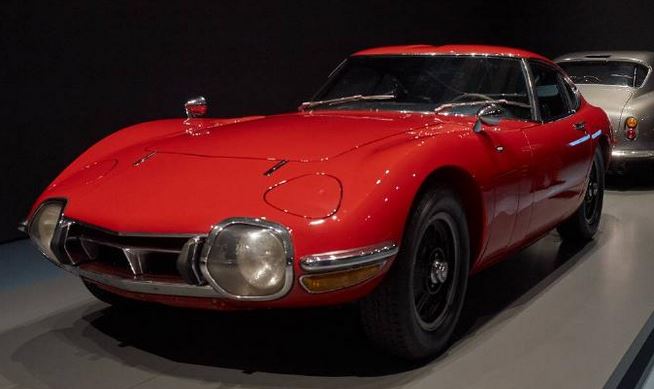
Toyota 2000 GT (1970)

Sorry, but 150hp in a car that weighed almost nothing, handled like a dream and should never have ceased production?  That’s not weird;  the decision to stop making it was weird.  Like the E-type, it was a classic.

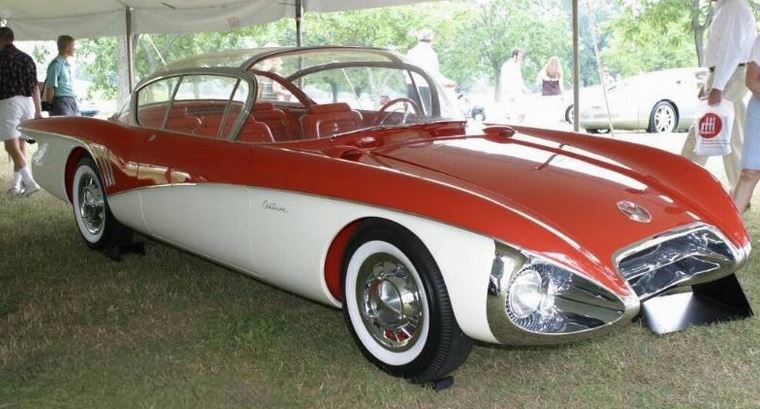
The one that really caught my eye, however, was this one:

Buick Centurion (late 1950s)

I think it’s glorious, not weird — and I’d take one in a heartbeat.

Feel free to peruse the others, and make your own choices in Comments if you want.


There’s also a list that contains some weird motorcycles, but to me they all look the same (like people in various non-European racial groups), so I couldn’t pass judgment.