Asking For It

The inhabitants of various European tourist “hot spots” have recently been rebelling against the incursion of said tourists who, they claim, are making their home towns unaffordable and unbearable.  (I talked about it here, some time ago.)

Well, it seems as though they’re getting what they asked for:

Bookings in some of Mallorca’s most popular summer holiday resorts have slumped by as much as 20 per cent, say hoteliers on the Balearic Island, suggesting holidaymakers are voting with their feet following anti-tourism marches.
The hoteliers association that represents the resorts of Alcudia and Can Picafort say their key markets have slowed in recent months.
The news comes following major anti-tourism protests across mainland Spain and its islands this year – with another huge protest march in the pipeline for Mallorca’s capital next weekend.
Last week, thousands of defiant anti-tourism protesters vowed to bring the streets of Palma to a standstill on June 15th, with representatives of around 60 groups saying they’re planning to march.

Well, let’s hope all the “death to touristas” thing doesn’t kill the destinations altogether.  I suspect the locals would not care for that either.

Then there’s this take:

Pablo Riera-Marsa, president of the hotelier’s Association, said: ‘We are seeing how the German market, traditionally our Number 1 market, is the one that has slowed down the most.’
However, the Majorca Daily Bulletin reports that the group is optimistic that late bookings would still see figures rise, saying tourists were edging their bets on bargain last-gasp deals.  
He explained: ‘We are detecting that this season, last-minute bookings are once again becoming more popular, with tourists waiting for special offers and promotions before making their purchase decisions.’ 

Hate to say it, Pablo me old mate, but the kind of tourists who jump at the bargains are more likely to be the kind of tourists you don’t want.

Proper Fake

Last week I slammed the idiots who are seduced by marketing into paying exorbitant sums of money for ordinary products like vodka (Grey Goose) and guns (Heckler Und Koch).

Then yesterday I bitched about modern cars and their electronic gizmos that cost too much (in every sense of the word) and which at some point are going to be taken away from you;  and added that I’d really prefer to drive an older car without all that nonsense.

I thought that it might be kinda fun to combine those two concepts into a single buying experience.  Here’s how I figured it out.

First, we have a car company whose products command premium prices (i.e. you pay through the nose) for their old cars, but whose cars of that era were frankly just not very good, performance-wise.

Step forward the 1950s-era Porsche 356, and here’s a good example thereof:
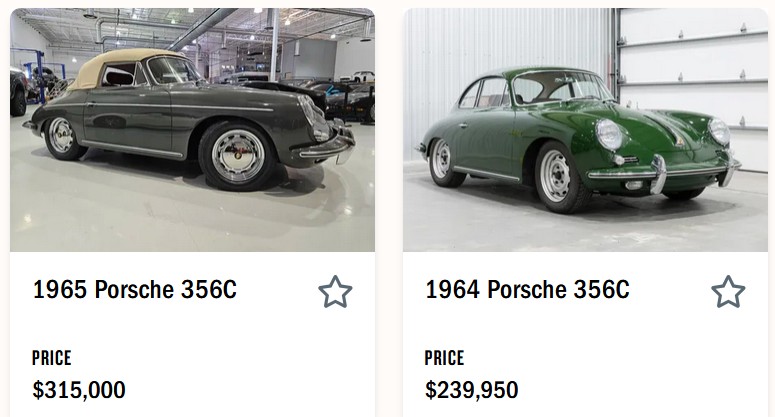
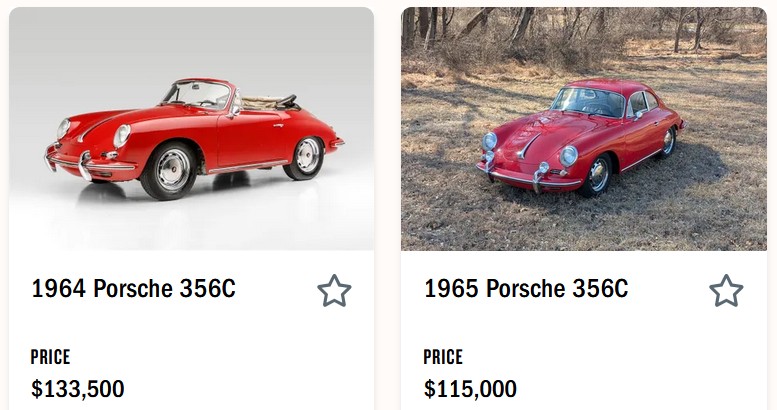
Now let’s be honest, here.  The old 356 may have been very reliable (compared to its competitors) for that time, but if you’ve ever driven an original, you would have been horribly disappointed (as I most certainly was).  The engine is seriously underpowered, it doesn’t handle or brake that well on those skinny tires and drum brakes, although it does give tremendous driving fun because you always feel connected to the road.  But it’s the engine sound which really disappoints.  It sounds pretty much like a VW Beetle engine of the same vintage:  a kind of whiny clatter.  My take:  the original 356 isn’t worth as much as they’re being charged for.  Frankly, the premium prices are a function of restoration “to original” state.  Once you get past the Concours Set, the prices become more “reasonable” because restorers install modern switchgear, better wiring materials and nicer exhaust systems, for instance:
My thing about the 356 is that I just like its looks.  It’s quirky, a little ugly (“a lot ugly” — New Wife) but above all it has character.  Nothing else is quite like it.

But if you strip away all the Porsche stuff and just go with what it looks like, you get one of these:
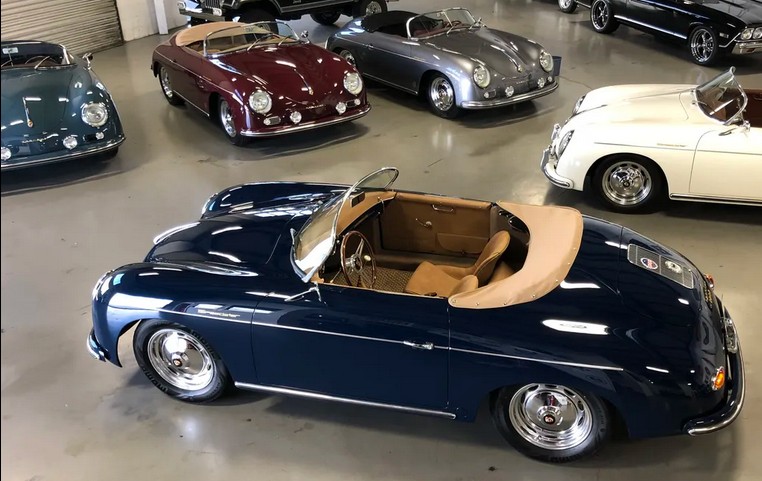
Looks like a 356 museum, dunnit?  But all those 356s are replicas (gasp!):  fiberglass bodies attached to a shortened ’71 VW Beetle chassis, powered by a 2.3-liter VW engine, which pushes out 125 hp (compared to the original 356’s 90-odd hp).  Plenty power for that little body, and they come with a proper exhaust system which makes them sound more modern Porsche than old Beetle.  Modern tires, too.

Price?  Between $60,000 and $72,000.

Still too much?  I don’t think so, because this isn’t one of those DIY garage fiberglass kit cars.  If you order one from this particular manufacturer, you could wait up to two years for your order to get fulfilled.  Me, I’d just get one of the existing stock ones, as in the pic.

But hey, not everyone likes the 356.  However, everybody loves the Ferrari 250 Spyder, right?
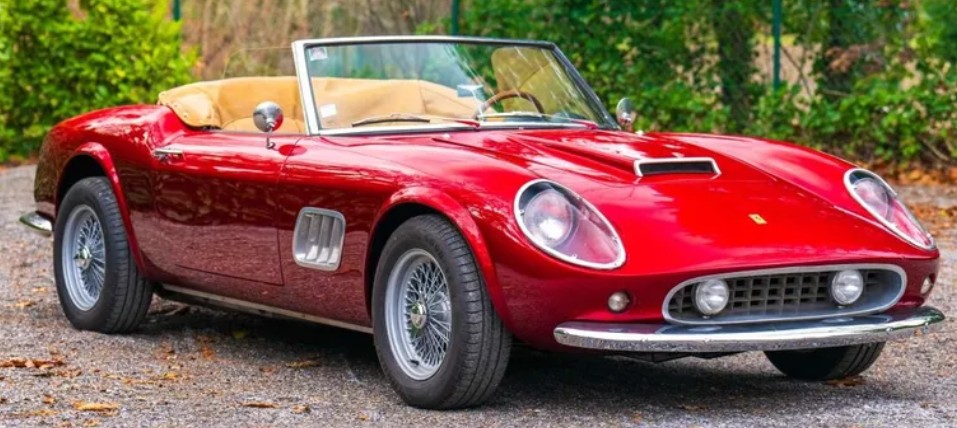
Whoa.

Trouble is that these puppies sell for well over a million — or more — and now you’re in a lot more silliness than a $30 bottle of vodka.

Except that the model above sells for $105,000.  How so?  Well, it’s not a “pure Ferrari”.  Like the Vintage Motors replica of the Porsche 356 above, this is a fiberglass bodied Ferrari lookalike with a… 6.9-liter Ford V8 under the hood.  (Take that, Ferrari!)

Okay:  is this going to handle anything like a Ferrari (any Ferrari)?  Most definitely not.  Does it matter?  No.

Because you’re not going to track this car (unless you’re an idiot), you’re going to drive around in a little beauty, at 10% of the cost of the original, with an AC Cobra-like thunder coming out of the exhaust.

It’s all very well being a badge “purist”.  The problem is that the owners of the badges have made their products so expensive that the cars are all being bought by essentially the same 100 people, leaving the rest of us plebs out of the picture.

The thing is that to those 100 guys, the “proper” badges are either purchased for bragging rights (i.e. dick comps) or as investments, no different from a condo in Monaco or a 25-carat diamond (don’t get me started on De Beers or we’ll be here all day).

Just in passing, I wonder how many miles Bill Gates has put on his Porsche 959?  (And if that story doesn’t make you grit your teeth in frustrated fury — for so many reasons — we can’t be friends.)

But there are guys who love the cars not for their “collector value” or any of that bollocks, but for their exquisite beauty and perhaps to a lesser degree, for their performance.  Guys like me.

And I have to tell you that if I won the lottery and some guy had put together a proper fiberglass Dino 246 shell on, say, a Porsche Boxster-type frame and engine…
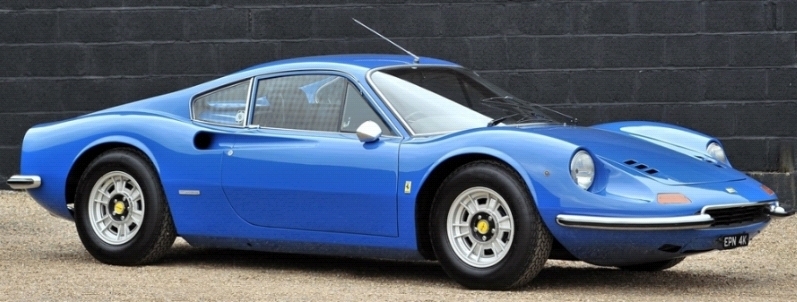

…hold me back.

So I guess my question for y’all would be:  what quality (but inexpensive) replica would float your boat if you saw one?

No Joy In Mudville

I’ve always loved guns.  Some of my best childhood memories are of taking the Diana .177 pellet rifle out to the backyard, setting up a host of tin cans, and blasting away at them until I ran out of pellets.  At a rough guess, I was shooting about 500 pellets per week.

It was my first gun, and shooting it gave me a wonderful solitary activity that was only rivaled by my love of reading.

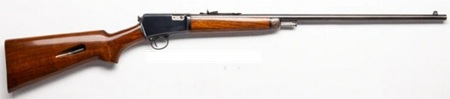
Later, when I was about 14, I graduated to shooting my dad’s Winchester 63 .22:

Compared to .177 pellets, .22 ammo was really spendy for a boy’s allowance (even back then), so I probably only shot off a hundred-odd rounds a week.  I did that for the next five or so years, until I bought my first centerfire rifle.

Here, my memory fails me;  it was either an Oviedo Mauser in 7x57mm, or else an Israeli Mauser (the K98k, rechambered to 7.62x51mm/.308 Win in the late 1950s).

Whatever, I had both, and used them in my first forays into hunting, which only really began in my mid-twenties — although I would shoot off a few boxes for practice each month (rifle ammo was really expensive in Seffrica, even though by then I was earning a salary).

Then I moved to the U.S., and after I could buy them legally, my love of guns and shooting went stratospheric, and my gun ownership ditto.

Of course, occasional periods of poverty followed, meaning that during those times I was forced to sell a few, and at one time almost all.  And that hurt, it really did;  but I consoled myself with the thought that when my finances recovered, I could always buy replacements… which I did.

Then quite recently, my desire to own guns kinda tailed off.  Most probably, this came from getting to age 70 and the concomitant realization that whereas in the past my appetite for shooting was boundless, now it was more circumspect.  Was I ever going to go hunting again?  (no, probably not.)  Was I going to take up clay shooting?  (also, probably not.)  I’d long since quit any kind of competitive shooting as my eyesight started its decline, and even the occasional trip to Boomershoot suddenly became less appealing — maybe because of the distance involved, but that had never stopped me before.

So as you all know, when my financial circumstances recently demanded some remedial action, I started selling off my guns to anyone who was interested, keeping pretty much only the ones I could foresee myself using at least quite often (.22 rifles and handguns, etc.) or ones that I might need in certain “social” occasions, if you get my drift.

I at least contented myself with weekly range visits because their senior citizen discount made it affordable, but even those have tailed off, for no real reason.  I don’t know why that is;  I still love my guns — the few I’ve kept, anyway — but the urge to shoot them, other than for practice, has more or less disappeared.

And I’m certainly never going to restock the larder, so to speak.  Those days are definitely gone.

I’ve had many invitations to go shooting with various friends and Readers, and when I’ve taken them up, I’ve enjoyed the range time, but enjoyed still more the after-shoot coffees and so on:  the socializing part of the event more so than the shooting, which is a complete inversion of my enjoyment in times gone by.

So something that has been a huge part of my life has gone, maybe forever, and I mourn its passing dreadfully.

Maybe it will come back — I hope it does — but until then, I’m left with this hollow feeling at the disappearance of something that has been part of my entire life.

So now, if you’ll excuse me, I’m off to read a book.