Quote Of The Day

From Angelo Codevilla:

Let there be no doubt: the ruling class’s focus on Donald Trump has been incidental.  America’s potentates do not fear one pudgy orange-haired septuagenarian.  They fear the millions of Americans whom they loathe, who voted for Trump, who gave his party control of House and Senate, and who will surely vote for folks these potentates really should fear.

Which is all the more reason for millions (upon millions) of Americans to vote for Trump in November, and for people who support his agenda.

Do not refuse to read Codevilla’s article because it’s “too long”.  It isn’t, because his exposition can’t be fitted onto a bumper sticker, and the stakes are too important.


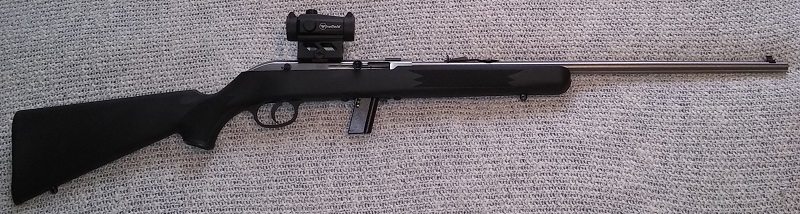
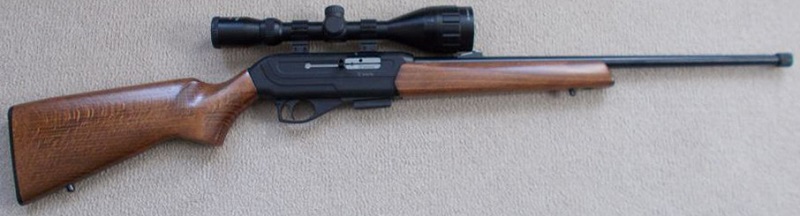
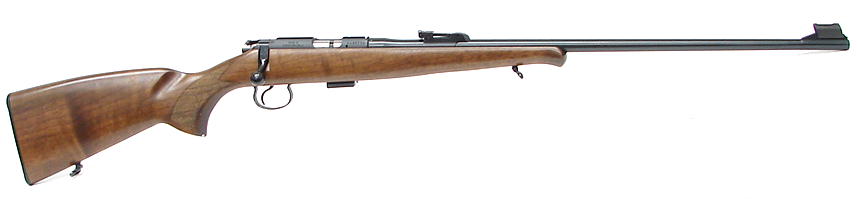
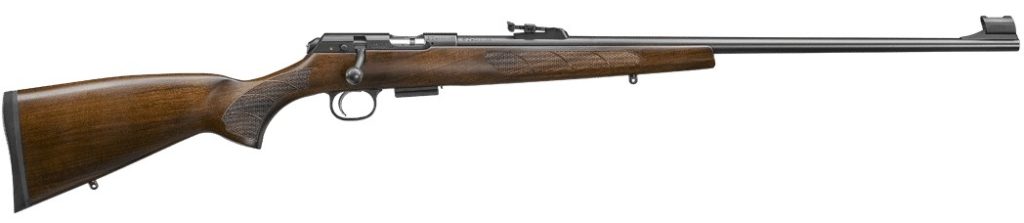
The “Guy With One Gun” Myth

In this piece, the old saw gets recycled:

As the old saying goes, you should beware the man with only one gun because he knows how to use it.

He explains:

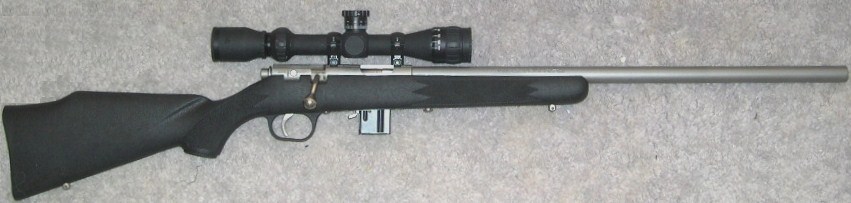
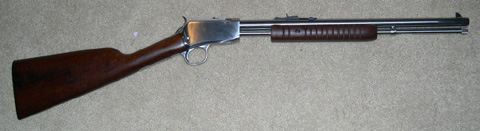
A person who shoots hundreds or thousands of rounds through a particular rifle and spends countless hours carrying that same rifle afield becomes intimately familiar with it. That sort of familiarity quite often means that the rifle almost becomes an extension of the hunter, which usually translates into good results afield.

Frankly, I think that’s bollocks.  While it’s possible that the above may be true, the reality is that a “one gun” guy probably doesn’t practice all that often with it, often relying on ingrained habits to shoot the thing, and if he does practice at all, it’s a few rounds popped off a day or two before the hunting season opens.  I knew a guy in Pennsylvania who boasted to me that he could make a box of .30-30 last for three years.

This is not a committed shooter.  I know that among my Readers, almost all of y’all (except the Brits) own a lot more than a single rifle, shoot a lot of them all year round, and are constantly tinkering with loads, bullet weights and powders — or if not reloaders (like me), at least different brands of ammo — and even scopes, always trying to wring the best possible performance out of their guns.  These are committed shooters, and likely to be far better shots than the guy with one gun.

The only time I’d agree with the old saying is in the area of self-defense pistols, where complete familiarity with your weapon is an absolute necessity.  (If I were restricted to only one centerfire pistol, I’d be fine with my 1911, but I still wouldn’t be happy about it.)

As for the article’s premise  (“If you could take only one rifle out into the field, which one would it be?” ), well, it all depends on the “field”, doesn’t it?  Hunting bighorns in the northern Rockies is different from whitetails in Pennsylvania and Cape buffalo in Africa.

The problem with a “general purpose” rifle — e.g. Jeff Cooper’s Scout Rifle concept — is that it may do a lot of things reasonably well, but not much very well.  It’s a concept that all my Longtime Readers encounter in the hypothetical situation of Crossing America which has been a feature of my writing many times over the years.  (By the way, I re-read the post linked here, and I wouldn’t change anything.)

And while I picked my beloved 1896 Swedish Mauser for that specific occasion, and I know it about as well as any gun I’ve ever owned, I would still not be satisfied with it, and only it, in Ye Olde Gunne Sayfe.

Monday Funnies

It’s Monday, and if you feel swamped already, you’re not alone.

So let’s rise above the tide, buoyed by a little laughter.

…but just try to follow their instructions, and you’re the bad guy.

And I think we can all empathize with this kid:

Our official entry for the “WTF?” category:

And it’s that time of year again:

(The “customer”  is a fucking moron.  Thirty-seven years ago, that coupon probably represented a 50% discount on the price of a bottle of Crisco oil.  Today?  Maybe 10%, if that.)

And here are a few single moms, to help us get through the week:

Now quit loafing around the kitchen, and get to work.

Weekend Listening

If I were to list my favorite musicians of all time, Alan Parsons would rank in the top five, not as much for his musical playing — piano/keyboards, guitar and flute — as for his understanding of modern musical forms, and their composition, arrangement and production.  He was, and is, the complete package.

As a producer, he probably ranks only a little behind the legendary George Martin (unsurprisingly, as he learned his trade at EMI’s Abbey Road studios);  but for all Martin’s genius behind the desk, he was of the previous generation, while Parsons belonged to the next.  (It’s difficult to imagine George Martin creating Pink Floyd’s milestone Dark Side Of The Moon  album, for instance, which was Parsons’s breakthrough into the top ranks of record producers. )

And it says much about Parsons that when asked to produce Floyd’s followup Wish You Were Here, he turned them down in order to create his own works, with co-producer/-composer Eric Woolfson, which could truthfully be described as modern classical music through the medium of “concept” albums.

Which brings us to our weekend listening project:  the Alan Parsons Project.

I discovered the Project back in the 1970s through Lead Guitarist Kevin, who had turned me on to many other artists I would otherwise have missed (Kate Bush, Hudson Ford, Christopher Cross and Earl Klugh, to name but some).  Given the stature of Parsons in the music business, it’s unsurprising that was able to surround himself with a wonderful array of talented musicians.

What I’m going to do is list my favorite Alan Parsons Project albums in chronological order — and for those who’ve never heard his music before, I’ll link to a single song, just as a taste for each work should you not have enough time to tackle the entire album.

Tales Of Mystery And Imagination — sets Edgar Allen Poe’s dark, broody prose to dark, broody music.  My favorite is Doctor Tarr and Professor Fether  (because we used to play it) but Cask Of Amontillado  is an absolute gem.

I, Robot — dystopian future (this time, based on Asimov’s writings), full of gloom and anxiety, set in songs of catchy brilliance.  Try Wouldn’t Want To Be Like You.

Pyramid — hey, it was the Seventies, and people bought into that “pyramid-power” jive.  The album, however, is outstanding, with Shadow of a Lonely Man  (John Miles on vocals!) being my favorite.

Eve — all about broads.  The standout is the bitter I’d Rather Be A Man.  So would I.

Eye In The Sky — the surveillance state (produced, it should be remembered, in the early 1980s).  The first two tracks should suffice.  From this point on, by the way, the Project albums became markedly more commercial-sounding.

Turn Of A Friendly Card — cynical look at gambling, in all its forms.  Time  could easily have been a Pink Floyd song.

Ammonia Avenue — probably the most commercial of the Project’s albums.  Prime Time  (the first song on the album link)was the big hit, although the turgid ballad Since The Last Goodbye  became a chick favorite.

I must confess to losing interest in the rest of the albums, because the commercial sound sounded like they’d all been produced by ugh  David Foster and not Alan Parsons.  Nevertheless, here they are:

Vulture Culture Sooner Or Later is indicative of the direction the Project was moving…

Stereotomy — not as commercial as the others, featuring longer, more complex songs instead of pop ditties.  This one is worth listening to in its entirety.

Gaudi — last of the Project’s “canonical” output.

Enjoy.

Quote Of The Day

From Taki’s Magazine:

If there are two categories in which black people outperform nearly everyone else on the planet, those would be sporting events and crime.

Our modern era is no different from other ones, despite our pretensions at civilization.  You can get pilloried, accused and even arrested just for speaking the truth.

Galileo would understand exactly what I’m saying.

Divided By A Common Language

That’s because the average town in Britishland has clearly-defined boundaries, where Town Planning forbids any kind of development outside those limits.

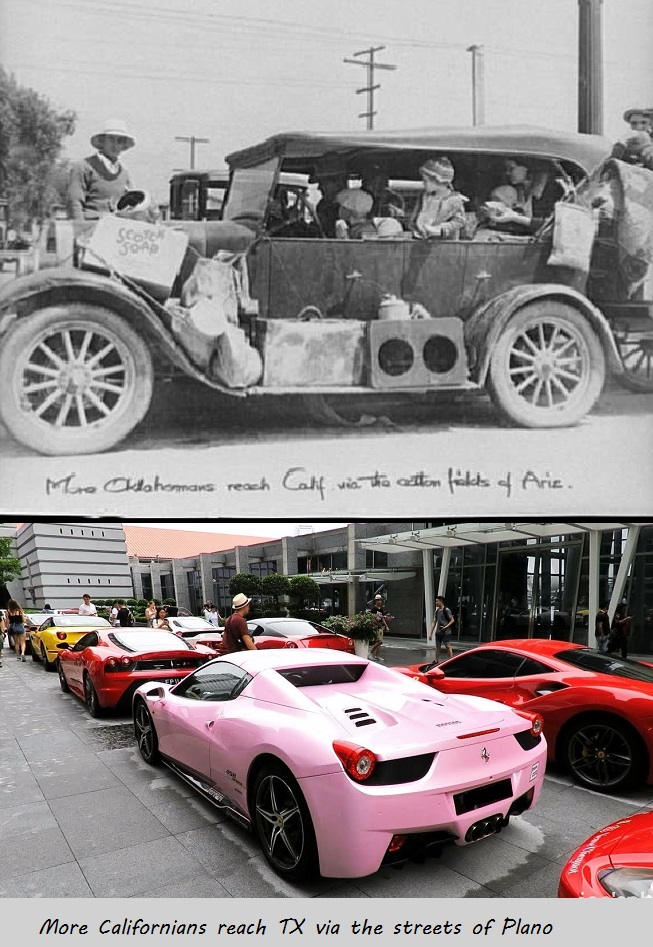
Here in the Land Of Da Free, our towns sprawl all over the fucking place, and (e.g. in Plano) you can drive around all day, not see a business of any kind, and still technically be “in town”.

The Germans, of course, have it down pat.  If you take the Ausfahrt  off the Autobahn  to, say, Stuttgart, you just follow the signs which say Zentrum  and you’ll end up in the main business center of town.

Which, by the way, the Brits with their love of inscrutable acronyms refer to as the “CBD” (central business district), only they don’t always use street signs to direct you there.  You get downtown by guesswork and luck.  Don’t ever stop and ask for directions, because the local yokels think it’s great fun to send you into a series of one-way streets and cul-de-sacs  (which is what signs do say, and not “dead ends”) until you wish Hitler had got the job done and flattened the place, back during the Slight Disturbances Of The Early Forties.

Not that I’m bitter about it, or anything.  When you finally get there, it’s all worth it.

…right up until you try to find parking.