Holes In The Ground

Last October, The Englishman and Mr. Free Market had planned a joint visit to the U.S., but only Mr. Free Market made it over The Pond. The Englishman’s excuse for not making it was that he was going to be looking in a hole in the ground. (Mr. FM’s acid comment: “Nothing wrong with looking at holes in the ground, as long as there are dead Socialists at the bottom.”)

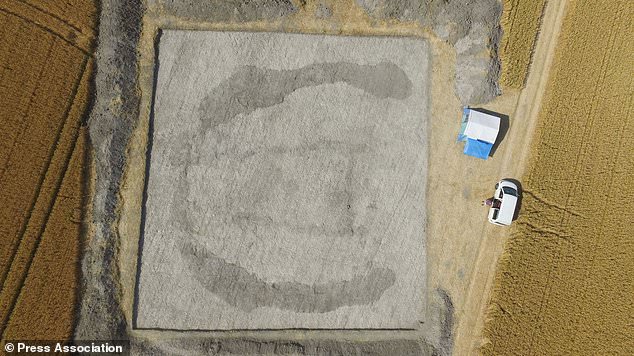
Well, this is the hole that The Englishman was talking about:
…and he took me there earlier today, after a liquid lunch [he added unnecessarily]. Here are my pics, taken at ground level:
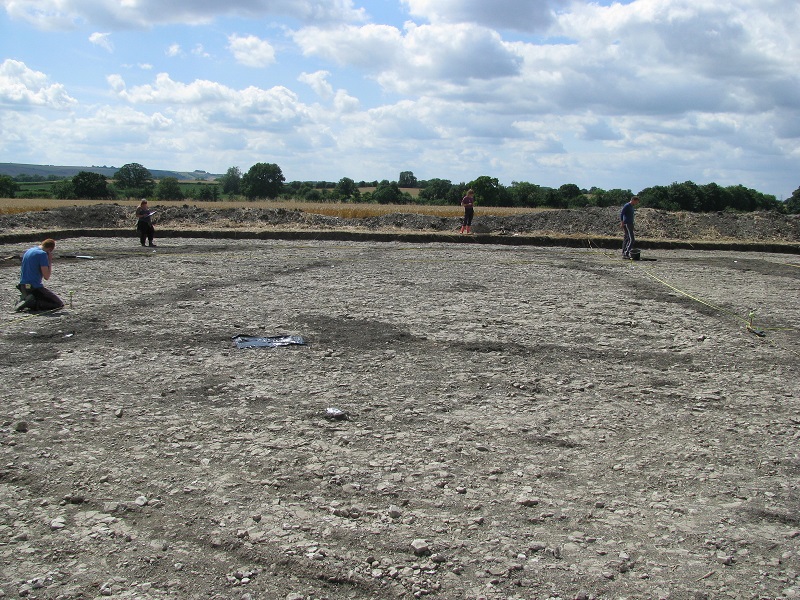
The trapezoidal outline is the “inner wall” that was probably the outer wall of the barrow — basically, a wooden structure covered with earth and turf, wherein, the newspaper article runs, the dead were buried.

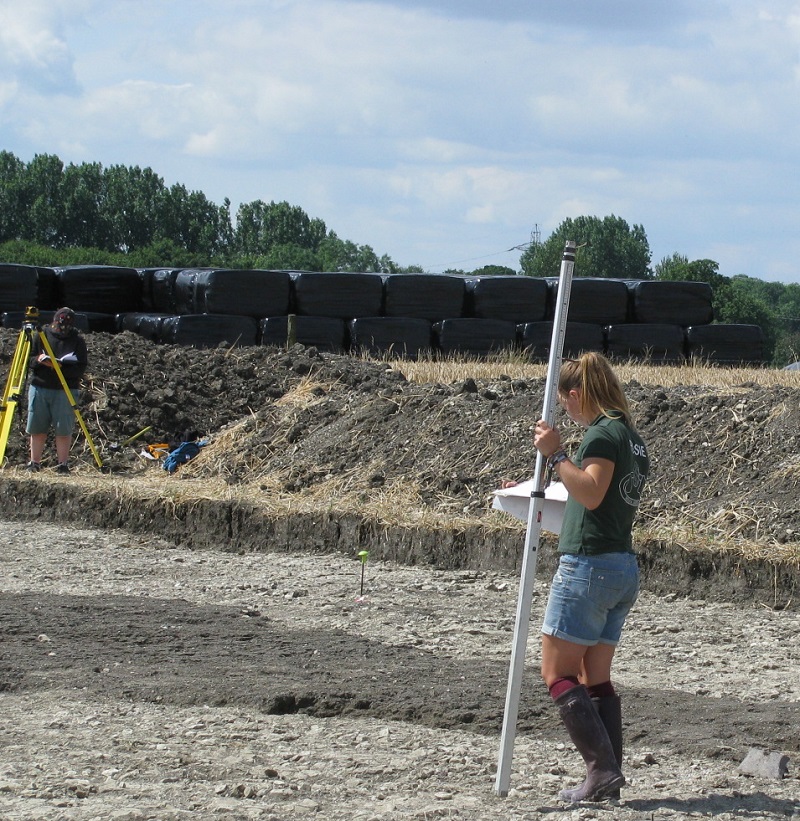
Here are a couple pics of some of the people excavating the site:
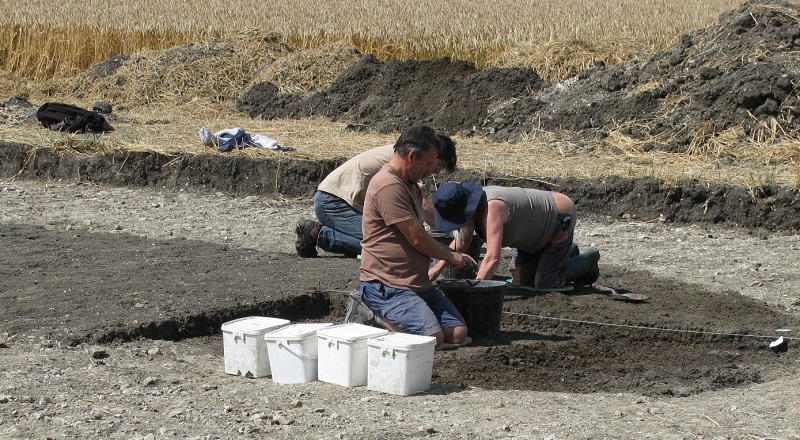
Actually, as The Englishman pointed out to me, the “burial ground” thing could be a load of nonsense, for the simple reason that as of today, no human remains have yet been found. The structure could equally have been a communal living area or shelter — but as the digging progresses, there may well be prehistoric bodies discovered further down.

It makes sense that it’s a burial site, by the way; in Neolithic times, dwellings were generally placed closer to rivers or lakes, and this barrow is at least a quarter-mile up from the nearest stream. Also, the dirt mound which surrounded the barrow had the trench on the inside, and not the outside (which would have made it a defensive fortification around the barrow).

I have to say that generally speaking, this kind of stuff holds absolutely no interest for me whatsoever. I like history (i.e. written accounts of events and people) and not prehistory (which has no such accounts). The problem is that I love listening to experts talk about their area of expertise — it can be a glassblower, a gunmaker, a liquor distiller or someone who’s spent forty years studying Shakespeare’s sonnets — and along with The Englishman, who is very knowledgeable about all this prehistory stuff, I also met Jim Leary and Amanda Clarke (see the article) who are heading up both this dig and a nearby one (which we visited too). It’s impossible not to be excited when people like these talk about finds they’ve made which could completely change our understanding of this hitherto-unknown time.

Of course, all this was made still more enthralling for me when we passed this building on the way home — a Saxon church built around the time of Alfred The Great:
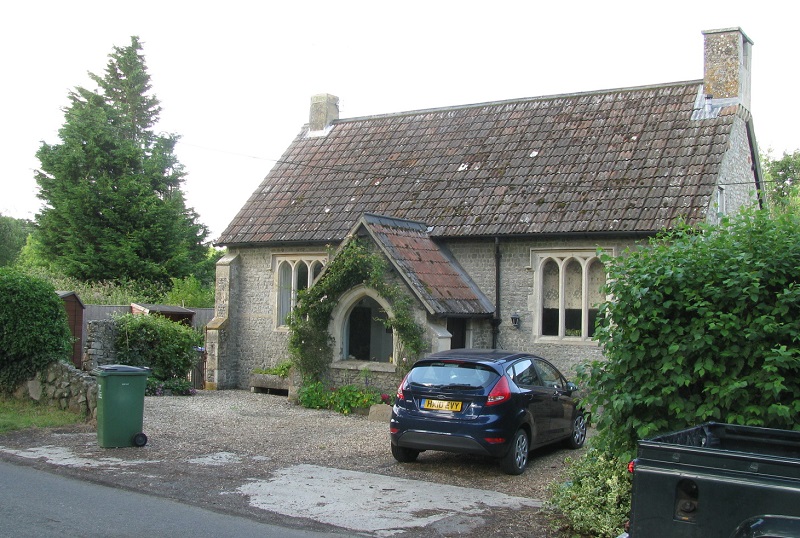
It’s long since been converted into a house, and I just hope that the owners appreciate its heritage.

And on the right is The Englishman’s Land Rover Defender (full pic below):

Of course, we’re not allowed to own such exquisite vehicles because of OSHA (no “side-protection”, or some such nanny-state bollocks), but don’t get me started on that tangent.

As with so many days I’ve spent here, it was perfect — and I’m going to do it again, somewhere else.

Oh, and of course, I’ve been remiss in not showing the place from which we started off the day’s activities, The King’s Arms in the village of All Cannings:
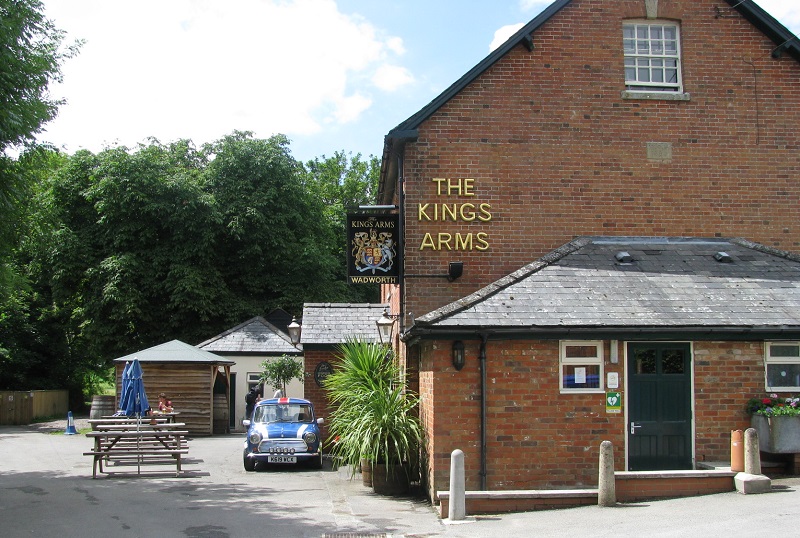
This is an historic site for me, because it’s where I was first introduced to Wadworth’s 6X Ale.
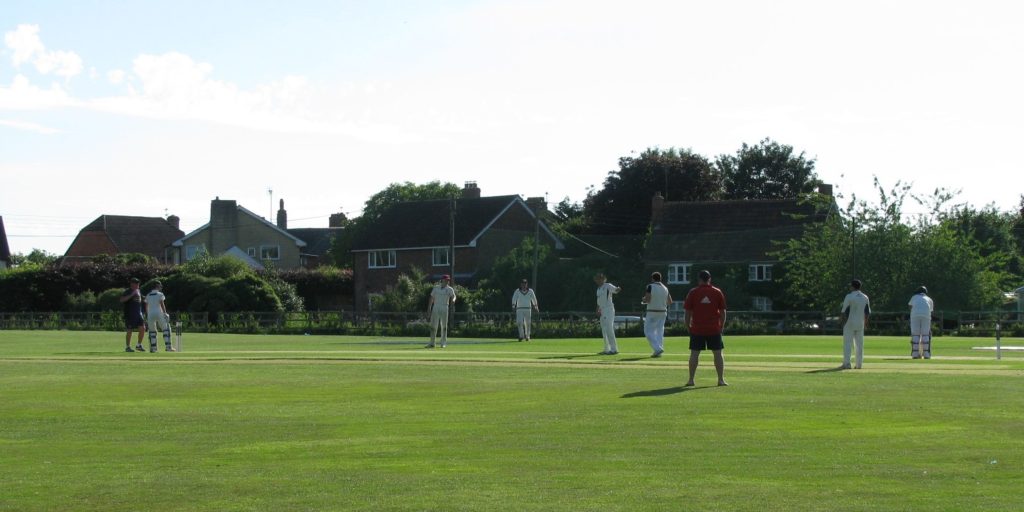
Again With That Cricket Thing

So yesterday afternoon I went once more to watch Mr. FM’s Son&Heir play for the local village cricket team, which, as before, was played in an atmosphere of utter class, fine play and good sportsmanship. The weather this time was far better, though:

…and after Our Lads thrashed the visitors (aided by a splendid knock of 50 not out from FM Son&Heir), we retired to the local pub, with the usual fare:

…and unfortunately, the usual consequences. (I’d write more about the day, but I have hobgoblins playing rugby in my head.)

Tomorrow (weather permitting), I’ll be at Lord’s to watch England take on South Africa in the First Test, to take that particular item off my Bucket List. Report to follow.

No Frigging Rules, Except For

As much as I love my job Over Here, reporting from behind enemy lines, there are certain things which drive me nuts. Chief among them is pronunciation, because while there are some rules, there are almost as many exceptions. Should any of my Loyal Readers find themselves in Britishland, here are a few tips which may prevent you from sounding like a mawkish ‘Murkin. Most are place names.

The town of Cirencester is pronounced “Siren-sister”, but the town of Bicester is not Bye-sister, but “Bister”, like mister. Similarly, Worcester is pronounced “Wusster” (like wussy), which makes the almost unpronounceable Worcestershire (the county) quite simple: “Wusster-shirr” (and not Wor-sester-shyre, as most Americans mispronounce it).

Now pay careful attention. A “shire” (pronounced “shyre”) is a name for county*, but when it comes at the end of a word, e.g. Lincolnshire, it’s pronounced “Linconn-shirr”. The shire is named after the county seat, e.g. the aforementioned Worcester (“Wusster”) becomes Worcestershire (“Wuss-ter-shirr”) and Leicester (“Less-ter”) becomes Leicestershire (“Less-ter-shirr”). Unless it’s the town of Chester, where the county is named Cheshire (“Chesh-shirr”) and not Chester-shirr. Also Lancaster becomes Lancashire (“Lanca-shirr”), not Lancaster-shirr, and Wilton begat Wiltshire (“Wilt-shirr”). Wilton is not the county seat; Salisbury is. Got all that?

*Actually, “shire” is the term for a noble estate, e.g. the Duke of Bedford’s estate was called Bedfordshire, which later became a county; ditto Buckingham(-shire) and so on, except in southern England, where the Old Saxon term held sway, and the estate of the Earl of Essex became “Essex” and not Essex-shire, which would have been confusing, not to say unpronounceable. Ditto Sussex, Middlesex and Wessex. Also, the “-sexes” were once kingdoms and not estates. And in the northeast of England are places named East Anglia (after the Angles settled there) and Northumbria (ditto), which isn’t a county but an area (once a kingdom), now encompassing as it does Yorkshire and the Scottish county Lothian — which I’m not going to explain further because I’m starting to bore myself.

And all rules of pronunciation go out the window when it comes to Northumbrian accents like Geordie (in Newcastle-On-Tyne) anyway, because the Geordies are incomprehensible even to the Scots, which just goes to show you.

Now here’s where it gets really confusing.

Villages used to be called “hamlets” (still are, in some places), so a village might be called Chesham (pronounced “Chezz’m” and not Chesh-ham), unless it’s the town of Horsham, which is pronounced “Whore-sh’m” (not whore-sham). In fact, Chesham might be an anomaly, because most villages where the name ends with an “s” create an “sh” dipthong — e.g. the lady in Great Expectations who’s called, Miss “Haver-sham” and not Havers-ham. Also, the “-sham” is pronounced “-sh’m” (or “-shim”), but let me not confuse you here.

The letter “l” inside a word is almost always silent. Palm and calm are pronounced “pahm,” and “cahm”, so the village of Calne is pronounced “Cahn” and not Cal-nee or Cal-nuh — similarly, the village of Rowde is pronounced “Rowd” (like crowd) and not RoadieRowdee or Rowd-uh.

Oh, and to end this thing: people are often confused by Welsh place names such as:

Llanfairpwllgwyngyllgogerychwyrndrobwll-llantysiliogogogoch

…but you needn’t worry. It’s just that the Welsh, like the Germans, run several words (and even phrases) together into a single word. The name of the above town, which is on the Isle of Anglesey, simply means “St. Mary’s Church in the hollow of the white hazel near a rapid whirlpool and the Church of St Tysilio of the red cave”. It used to be called by a much shorter name, Llanfair Pwllgwyngyll (“The Mary church by the pool near the white hazels”), but that wasn’t confusing enough to the English and Scots, and the Welsh do love to take the mickey, so in 1850 the town was given its full name.

The rest of Britain got their revenge with the invention of computers, where the (English) programmers were not going to create a 50-character field just to accommodate the Welsh, so the place is now known as “Llanfair” (or “Llanfair PG”, to differentiate it from all the other places called “Llanfair” in Wales).


Not Bisley

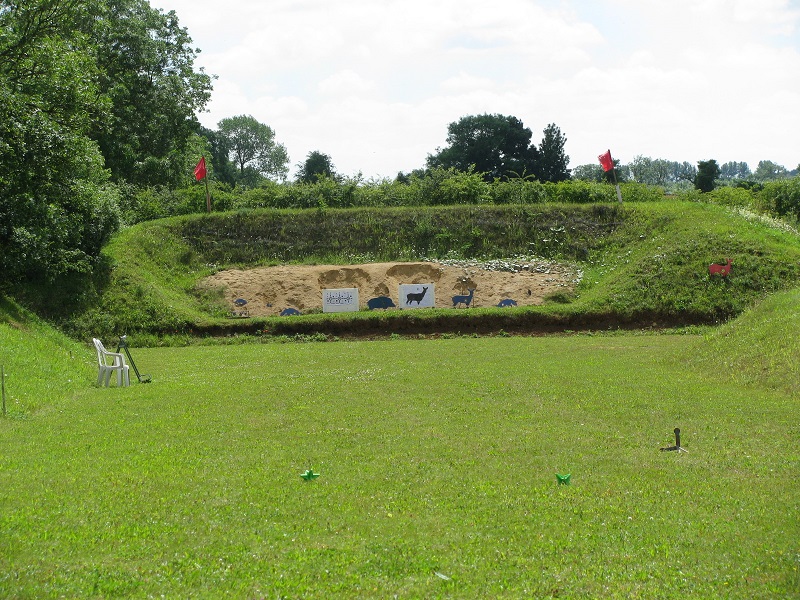
Apparently, Royal Bisley is mostly populated by People Who Treat Shooting Seriously — i.e., not my kind of people at all, because I prefer having fun at the shooting range. So instead, Mr. FM booked us time at a private range, where we could do just that. Here’s a view downrange at 100 meters (ugh, metric is everywhere Over Here).

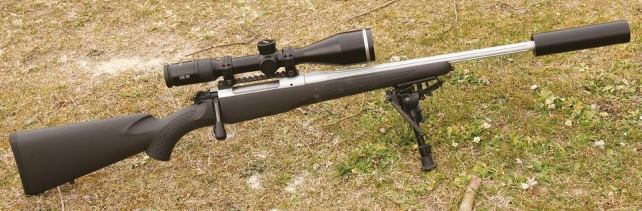
…and I played with several rifles: the aforementioned Blaser 93 in 6.5x55mm Swede, Combat Controller’s Browning .300 WinMag (which has completely recovered from its earlier Scottish mishap, and is capable of shooting minute-of-angle — MOA — at 100 meters, just not by me — I could only manage 2″ groups because eyes), and finally, a Mauser M12 “Impact” in .308 Win.

As Longtime Readers know, I have either a soft spot or a hard-on for Mauser rifles, depending on whether I’m talking about them or I’ve just shot one. Good grief. Thus equipped, I can honestly say that the M12 is in the top three rifles I have ever fired — and let me tell you, that encompasses an awful lot of rifles. With this rifle, minute-of-angle wasn’t just easy, it was a breeze. If you look in the center of the pic above and see the boar-shaped steel target, and squint to see the 4″ heart/lung target area “flipper” plate, I was hitting that flipper dead center with every single shot.

Let me go further: if I was told I could only ever own one medium rifle, you’d have to talk me out of choosing the M12. (I’d get the “regular” model with wood stock, of course, because Kim; but I think you catch my drift.)


And by the way: if anyone knows a way we can get Our Rulers in D.C. to pass the Hearing Protection Act (which will finally take moderators off the NFA list), feel free to apply that particular cattle prod to their backsides.


Saturday Morning

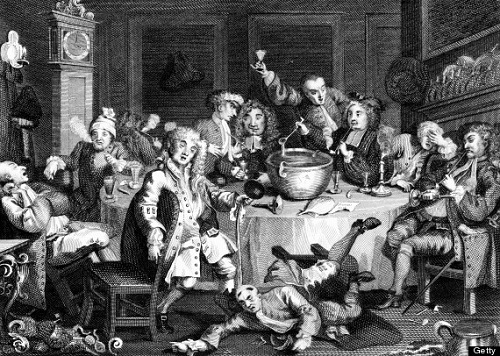
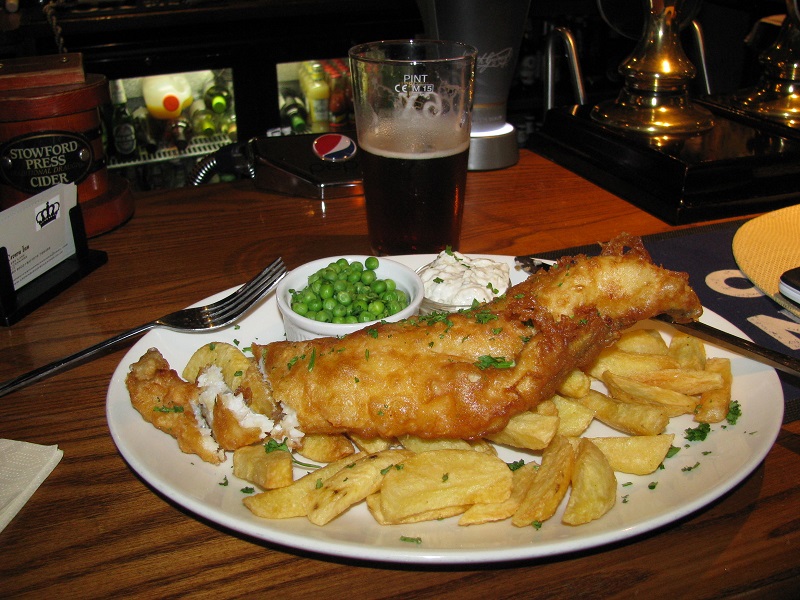
So Mr. Free Market, The Englishman, Longtime Reader John M. and I went down to the local pub last night for a quiet pint. Here’s an approximate rendering:

Right: time for coffee and a Full English, then off to the range. A full report on both last night’s festivities and the range visit will follow.

It’s a tough life Over Here, but someone has to do it.

Downsides

Now I don’t want you folks to think that staying at Free Market Towers is all Wadworth 6X, Full English Breakfasts and flogging of servants. Oh no. There are several downsides to all of this which burden the soul of your Humble Narrator. Here’s one.

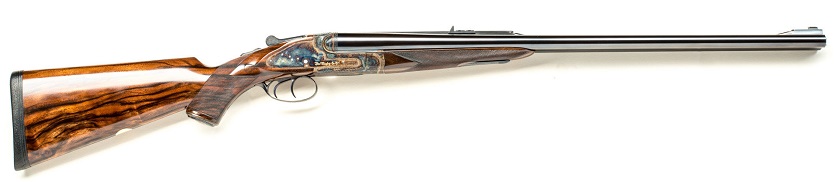
Lying carelessly scattered upon a coffee table is the John Rigby gun catalogue, which features many a fine piece of weaponry. Now Rigby & Co. are not known for shoddy workmanship and never have been, and their prices reflect this. Here’s one such product that made my trigger-finger itch, and a low moan escaped my mouth. It’s the Rigby Rising Bite Double Rifle, chambered in the famous .416 Rigby caliber, and the Nitro Express (magnum) .450/400, .470, .500, .577, and .600:

…and here’s a close-up of the breech:

That was the cause of the itch.

Now here’s the cause of the moan: the reason there’s the word “Bite” in the description is because of what the purchase thereof will do to your wallet. You see, this gorgeous piece will set you back around $110,000.

Worse yet, there’s a three-year waiting list.

And next to the Rigby catalogue is the one from James Purdey & Sons, which I have not yet had the strength to open.

I don’t know if I can endure such hardship.