A Tale Of “Sixties”

Fiend Reader JC_In_PA sends me this article, which compares two old rimfire warhorses (the Marlin Model 60 and the Ruger 10/22) and then invites me to wade into the argument — which he correctly compares to the various X vs. Y arguments in the gun world (.45 ACP vs. 9mm, etc.).

And I respectfully decline the invitation.

You see, I’ve owned both at various times in my life, fired at least a jillion rounds through each — more than a few times at the same range session together — and for the life of me I can’t / won’t declare a favorite.

I love the heavier barrel of the Mod 60 — I shoot it more accurately than I do the 10/22 — and likewise prefer the reloading ease of the 10/22’s magazine over the Marlin’s tube.

At the moment, I don’t have a 10/22 — if anybody has a spare one that isn’t worn out, I’ll take it under advisement — but I’m not under any pressure to get one because I do have a Mod 60 standing in Ye Olde Gunne Sayfe #2 (alongside its bolt-action brother, the scoped Mod 880 SQ).

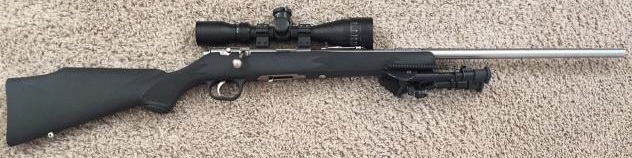
With these two Marlin brothers, therefore, I can indulge my plinking needs, whether in volume at tin cans (60) or when the occasion calls for single-hole accuracy at varmints or swinging plates (880).  I am blissfully happy with either activity.  While both rifles “prefer” CCI Min-Mag ammo, the Mod 60 will shoot just about anything, whereas the 880’s pinhole accuracy tends to drift towards more of a quarter-sized hole.

So yeah, I could do with some kind of 10/22 (because reasons) — such as this one:
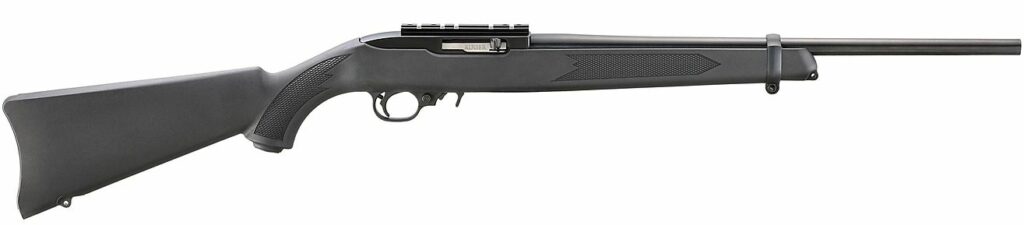
…because with my crappy old-fart-eyesight, I need a scope to see the stupid target and one is somewhat limited in scope choice with the Mod 60 because of the scope mount shortcomings;  but I can’t honestly say that the lack thereof is burning a hole in my psyche, either.

What I really want is a Ruger 10/22M (.22 Win Mag) in its “International” full-stock variation:
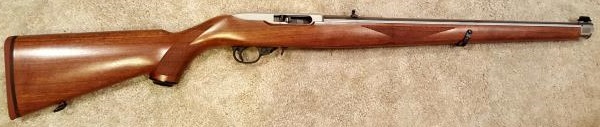

…but they make hen’s teeth look like a household commodity, and when one does become available, it’s generally at a price which makes my nuts ache and causes my trigger finger to go numb.

Anyway… I seem to have wandered off the reservation here, but there ya go.

Marlin Model 60 or Ruger 10/22?  Take yer pick;  either is a good choice.

By the way:  everyone does own a .22 rifle, right?  Because if not:

It’s un-American.

(Furrin Readers — including those in New Jersey — get a pass on this one, because as we all know, semi-auto .22 rifles are the cause of a million human deaths every second — I read it on Teh Intarwebz, so it must be true  — and that’s why they’re banned in your benighted countries.)

Oh, and the title of this post?

The Marlin was released in 1960, while the Ruger 10/22 was released in 1964, making last year its sixtieth anniversary.

Reaching Out In Silence

My old pal, the late Airboss once said (pace  the old AT&T ad) that everyone should own at least one rifle that can “reach out and touch” someone.

Here’s my candidate, which has the added benefit of almost utter silence with the proper add-on, the CVA Scout, chambered in the .300 Blackout:

Yes, it’s a single-shot rifle (but that means it’s both quiet and cheap — nothing wrong with that little scenario).  Also, I would venture to suggest that if you do your part, a quick reload should be entirely unnecessary.

In fact, it’s difficult to imagine a better gun for pig-hunting, where the sound of the shot from a regular rifle makes the other pigs scatter like flies.  With silence comes an excellent chance for a further pop, or three…

I also like that the Scout can also come with a short barrel (ribbed  threaded for your pleasure).

I have also said in the past that hunting with a single-shot rifle is not o be sneered at, because nothing concentrates the mind better than knowing that one shot is all you’ll get.  And I’m all over that one, with my own peerless Browning High Wall:

…but I must say that the CVA does make the old trigger-finger itch a little, because of its utter stripped-down utility and scope-ready rail (which the Browning does not have).

Worth some consideration, yes?

An Old Favorite

What with one thing and another, I haven’t been keeping up with the adventures of Othias and Mae’s C&Rsenal, so when I stumbled on this one talking about an old friend, I opened the video toot sweet, and you should too.

Let it be known — as I’ve said several times before — that I have always loved the Commie SKS, and Othias is definitely on my side on this one.

I know, I know:  the thing has been (unfairly) overshadowed by its successor, the AK-47.

And yes, the SKS holds only 10 rounds in its semi-concealed mag compared to 20-30 in the AK’s banana-like appendage.  Don’t care.  Also, the AK can be modified as above (albeit with some difficulty), while the SKS cannot (not even ULTiMAK makes the proper rail mounts).  Don’t care about that either.

The fact is that the SKS is actually a better design, and is way more comfortable to shoot than the AK.  I have owned both, fired literally thousands of rounds through each, and on this I will accept no argument.

Of course, I don’t own either of them ever since that tragic accident on the Brazos River all those years ago;  but lemme tell you, watching Mae and Othias shoot and fondle the SKS respectively made me itch in all the wrong places.

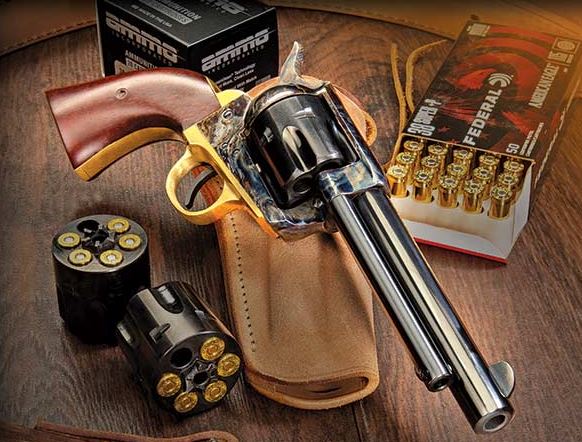
Gratuitous Gun Pic: Pietta King Trio

Loyal Reader Mike S. (thankee) sends me this lovely pic of a gun (or a pic of a lovely gun, whatever):

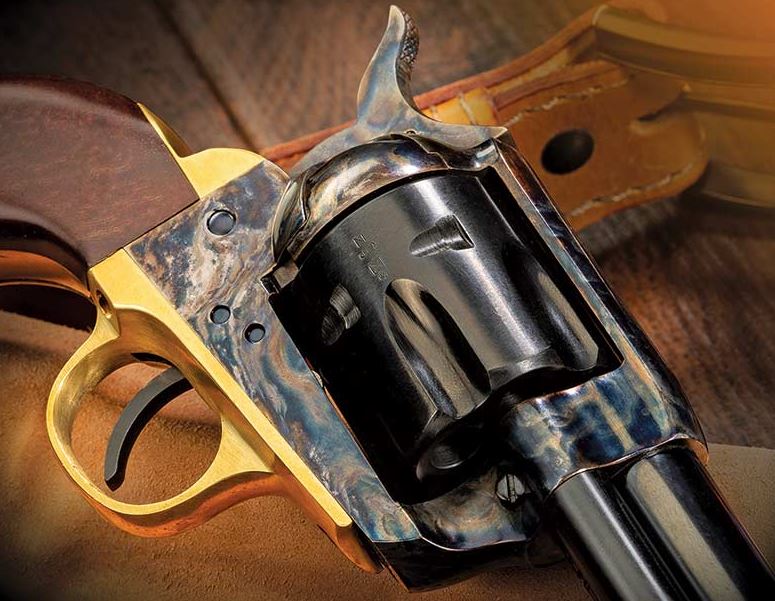
Note the extra cylinders.  These will be explained later.  But first, a close-up:

I don’t care who you are, that’s a purty lil’ thang right there, yessirree.

“But Kim… what’s it chambered in?”

According to the article Reader Mike so thoughtfully provided:

A close copy clone of a Colt Single Action Army (SAA), the King Trio comes with three cylinders, making it capable of shooting four different cartridges, earning King status on versatility for six-shooters.

And the boolets?

First up is the .38 Super. The .38 Super came out in the late 1920s and is a favorite cartridge for Mexicans. Being illegal to own firearms capable of shooting cartridges of war like 9mm and .45 ACP, the .38 Super is a popular choice by having the power to take care of business in the famous 1911 platform.  Having a cylinder for .38 Super adds to the versatility of the King Trio revolver while upping the cool factor by 10!

Next is the .357 Magnum/.38 Special cylinder. Who doesn’t love the power of the .357 Magnum? Capable of taking deer-sized game, as well as being a proven one-shot man stopper, the .357 may be our most balanced and practical cartridge for everyday chores.

That .38 Special can be fired in the same cylinder, making it doubly good!  Usually abundant and cheaper than most ammunition, the mild loads are great for practice, small game and teaching youth how to shoot without all the nasty muzzle-blast the .357 Magnum is known for.

Lastly, we have the 9mm. For plain plinking fun and varmints, the 9mm is hard to beat.

As any fule kno, I’m not a huge fan of the last-mentioned.  But the ammo is cheaper than almost anything except .22 LR, and I bet it’s great fun to shoot those teeny lil’ Europellets out of a honking big revolver like the Trio.

Can you say “Governor’s BBQ Gun”, children?

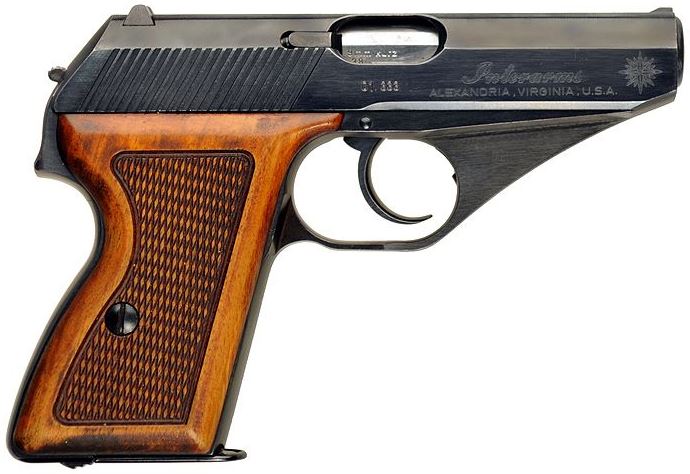
Gratuitous Gun Pic: Mauser HSc (.32 ACP/7.65mm Browning)

The HSc was Mauser’s answer to Walther’s PP model in the same chambering, and it’s a pretty little thing, made very much in the Art Deco style of the time:

Like many of the .32 ACP guns, I’ve actually owned one of these, and while it’s a joy to shoot — far nicer than the PP, by the way, which can cut your hand up — it’s not really a “pocket” pistol like its many competitors, in that it’s surprisingly heavy despite its diminutive size.  (Carried in a pants pocket, it’ll make your trousers sag alarmingly — ask me how I know this — which is not true of the others.)

I’ve spoken before of my fondness for the .32 ACP cartridge, and it should be known that I’ve owned a large number of guns thus chambered, and fired almost all of them.

I once owned a Mauser HSc, and I very much regret selling it (but not the Walther), because it was a peach to shoot:  accurate, smooth and in my hands, absolutely reliable without a single stoppage (despite that semi-rimmed design, which can cause feeding problems, I never experienced any with the HSc).  Other people think so too, as whenever one appears at Collectors Firearms, for example, it seldom lasts long before being gobbled up.

The biggest problem with owning the HSc (like many of its cousins) is that the magazines are made of unobtanium, and if you can find one, it’s going to put a big hole in your wallet.  Upon reflection, however, I don’t happen to think that it’s a problem because a .32 ACP pistol isn’t going to be your primary carry piece anyway.

But every time you take it to the range, you’ll remember why you enjoy shooting it so much.  And that is not something you can say about many guns.

Amen To That

SOTI, Chris Cypert talks approvingly about revolvers as self-defense weapons:

I set out to learn all I could about revolvers, their strengths and weaknesses, and how to use them effectively for self-defense. Did I learn that revolvers are obsolete relics of the previous century? That’s what I expected, but instead I learned that revolvers are still more than sufficient for self-defense and can even be the optimal tool in certain contexts. Let’s examine the strengths of revolvers for armed citizens and self-defense.

And then he goes on to list all of them.

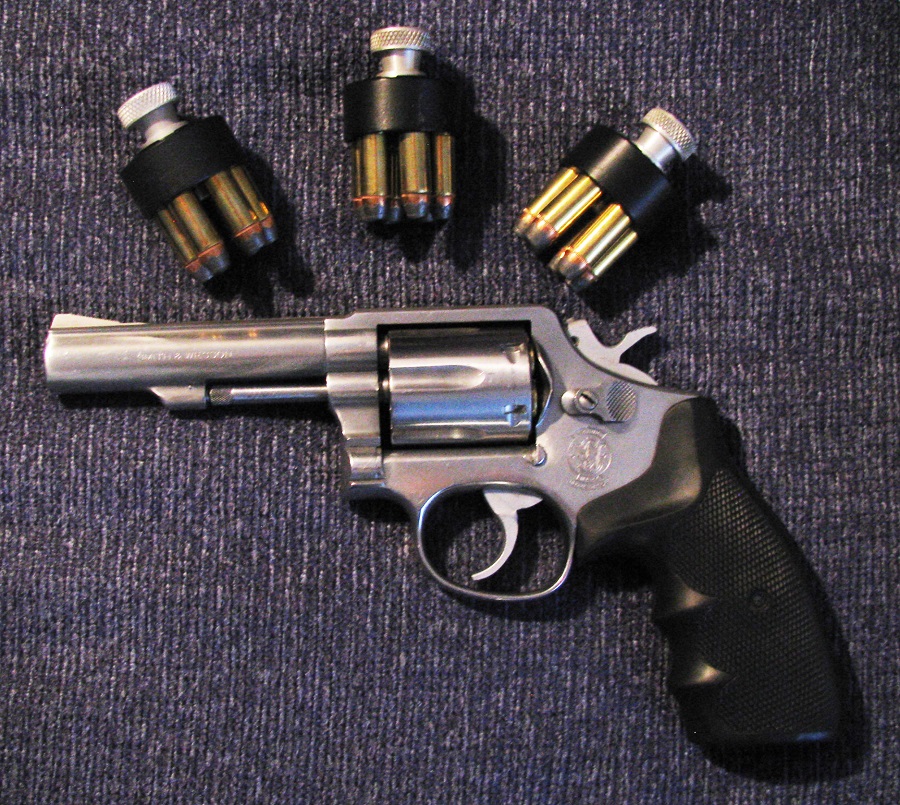
As most Readers know, I keep a S&W Mod 65 next to the bed — my “bedside” gun — because in any kind of bad situation, a revolver is like a fork:  you pick it up, and it works.

No scrabbling for a safety, no racking of a slide, none of that.  You get it in your hand and pull the trigger… bang!  and it’s all over.  (Okay, bang! bang! bang!  etc. as the need arises.)

It’s that instinctive action that makes me do the above.  Gawd knows that I have practiced for countless hours with my 1911, and its operation is by now about as automatic and instinctive as I could possibly get it.  And it’s the reason I keep it under the revolver… as a backup, because I do believe that by the time I’ve emptied the Model 65’s cylinder, I’ll be awake enough to grab and operate my 1911 (which is always kept cocked and locked anyway), should I need more than six shots.

This is my way, and if yours is different, that’s fine — whatever works for you, works for you.

But just as Cypert learned about the excellence of the revolver as a self-defense piece, maybe my argument will help you, and perhaps at a time of the direst emergency.

Think about it.