From Reader Adam H. comes this request:
“Some time ago you put up some pics of the fantastic Wiesmann Roadster. Do you have any more?”
From my private collection:

Yer welcome.

From Reader Adam H. comes this request:
“Some time ago you put up some pics of the fantastic Wiesmann Roadster. Do you have any more?”
From my private collection:
Yer welcome.
Back in Ye Olde Days in the Racist Republic, the top tax rate was 48%, and with a National Sales Tax of 14% (on everything including food), you didn’t get much of your paycheck left for any of the pleasures and indulgences of life.
So what employers did was offer most employees a company car — which wasn’t taxed — as part of their total compensation along with a “fleet” credit card to cover all fuel and maintenance costs, and let me tell you, it was brilliant. (Do the math for yourselves, adding up the car payment, insurance, running costs and depreciation, and see what you end up with. The number will stagger you.)
Now not everyone qualified for such largess, of course, but if your job involved activities like calling on clients, fetching office supplies each month or visiting field offices, you qualified. Senior management, of course, also got cars because of the “prestige” of their jobs (even though they were the ones who could well afford not to have one, the bastards, but that’s corporate inequity for you).
Anyway, the company was usually very strict about who drove the cars — you couldn’t let your wife drive it to get groceries, for example — because in most cases the insurance only covered the actual employee. So if the car was involved in a wreck and you weren’t the driver, say hello to massive damages and (probably) termination.
As for the cars themselves, the model you got was very dependent on your place in the hierarchy of the company, and most companies simply gave you the car that your predecessor had driven, or if it was too old (usually around 2 years or 50,000 miles or so), you could get a new one from an approved list.
Well, my company car was once in the shop for some rather major repairs that would take at least a week to be done, and so I approached my boss and asked what the company was going to do about it. He called up the company accountant, and was told that one of the other guys at my level in the company would be away on leave for a couple of weeks, so I should just get the keys from him and use his car in his absence.
I must confess to feeling somewhat apprehensive about this, because said vacationer was a slob of the first order — his office looked like he hosted daily food fights and small animal sacrifices — so I got his keys and walked down to the underground parking garage, prepared to run screaming.
However, to my amazement, not only was Fred’s Saab clean, but it was spotless, looking brand new. (I should have known; included in approved “maintenance” was a six-monthly full detailing of the interior, and he must have just done it the day before he left.)
But that wasn’t all. Among the VW Golfs, Passats and Mitsubishis in that group of approved cars, he’d somehow managed to wangle himself one of these:
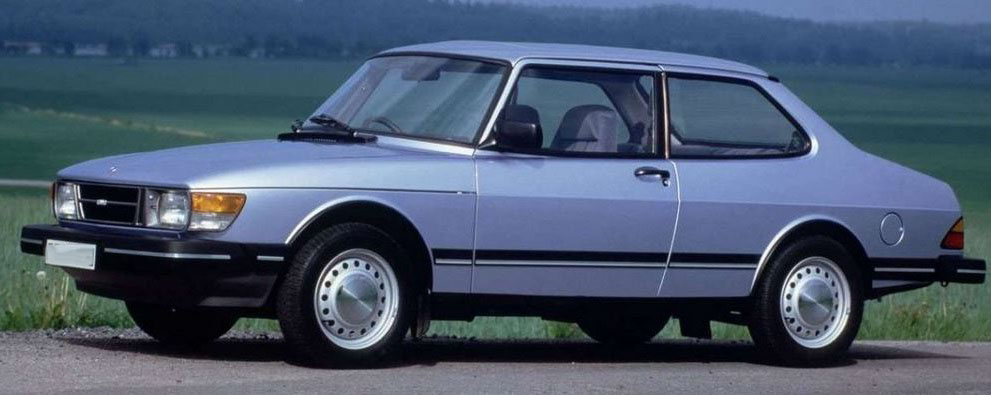
Yup; it was a Saab 900 Turbo, the one that came out with a “remodel” in 1984.
Bloody hell, the thing was a rocket (and especially so when compared to my staid Opel Kadett a.k.a. Chev Cavalier stationwagon, with its anemic 1500cc un-turbo’d engine).
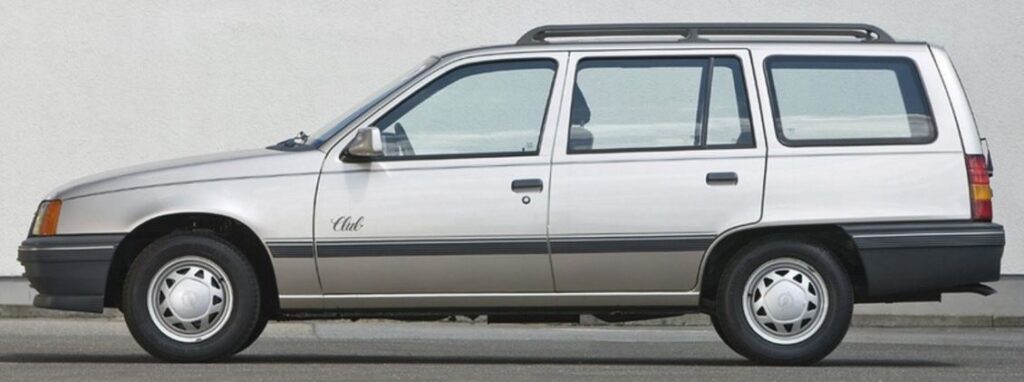
The Saab was also a sharp-looking silver (as in the pic), whereas my Opel was… bamboo-yellow. (Hey, it was the only one available at the time and remember, it was FREE.)
Anyway, I drove that Saab for nearly two weeks, and boy did I love it. What amazed me was its roadholding, which was better than any car I had driven before, and only bettered by my next company car (promotion!), a BMW 325i.
I don’t know how well the 900 Turbo fared in the U.S., sales-wise, but I’m told that it didn’t do well. A pity: it should have blown all American cars of similar type off the roads. The only problem, as I see it, was that we Murkins loves us our big-ass engines, and even with a turbo, the Saab’s little 2-liter fourbanger probably did not have the allure of the typical mega-liter V8s from Chrysler, Chevy or Ford.
Me, with my fondness for small, peppy engines? I loved that Saab with a passion, and only getting the promotion to Beemer-level prevented me from nagging the boss for one.
I have since learned that while the Saab wasn’t that popular in the U.S. market as a whole, its actual user base was almost fanatical in their devotion to it.
Can’t say I blame ’em; for two weeks I was one of them. Hell, I’d take a new one now, if I could.
So what car did Ian Fleming’s James Bond really drive?
Forget that Aston Martin / Lotus / BMW nonsense; Bond was a Bentley man.
And when you have an actual car designer who was a devoted Bond fan in his youth… well, you get this wonderful creature, handbuilt and derived from another Bentley model altogether.

Never mind that Ian Fleming’s description of said Bentley never existed; Our Hero Car Designer (Tony Hunter) just went ahead and designed and built his Bentley pretty much from the writer’s description — and the result is a one-of-a-kind, snorting, roaring beauty.
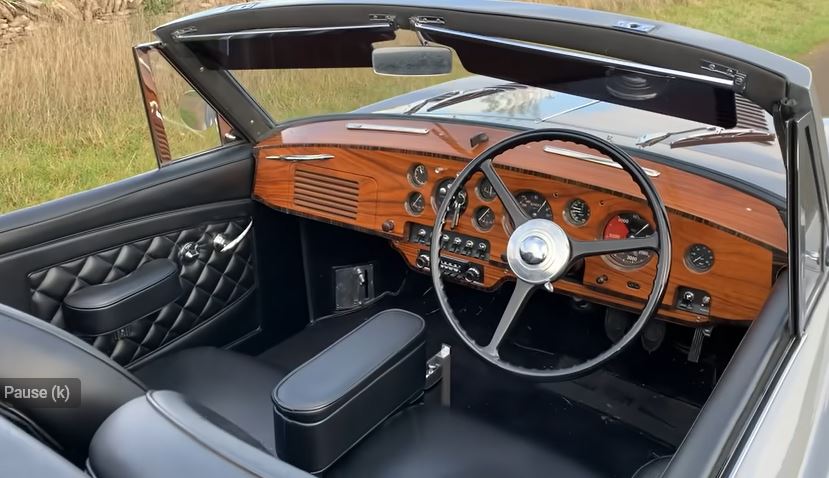
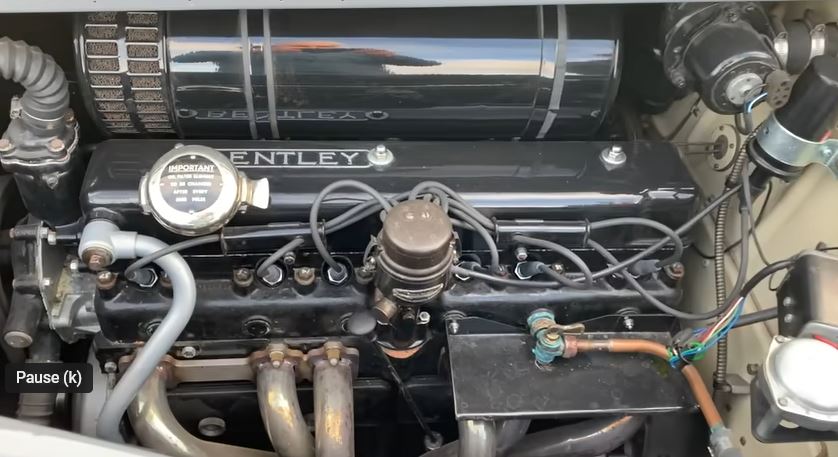
Old W.O. would have approved, mightily.
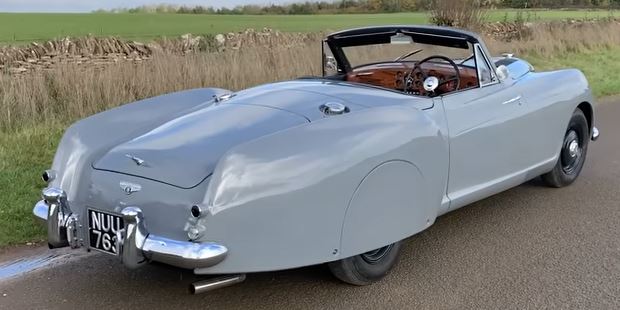
So would (the real) James Bond.
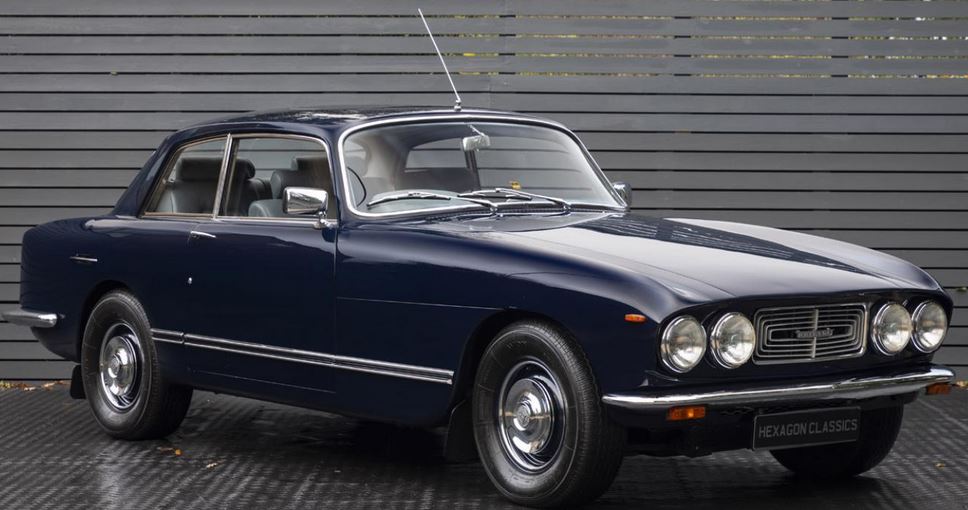
Please watch just the first 8 minutes or so of this video, and then tell me why I shouldn’t lust after an Arnholt-Bristol:



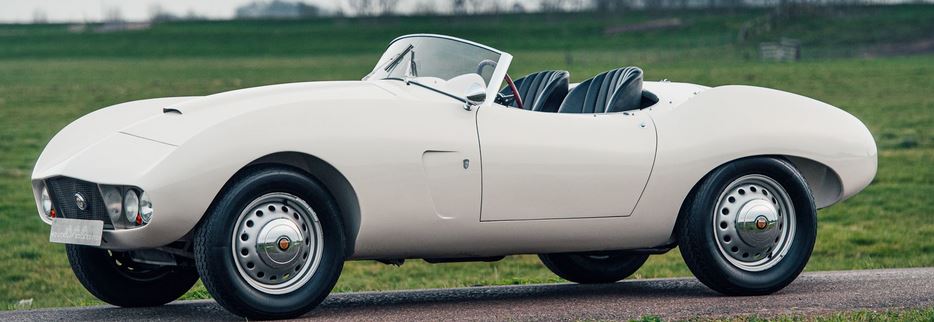
Good grief, they’re beautiful. And spendy. Typically, they run for well over a quarter-million dollars, when you can find one.
Quality + scarcity + performance… you get the picture.
And speaking of the above features, the other two cars featured later in the video aren’t bad, either.
Yeah, don’t fuck mess with Texas:
Texas has sued insurance provider Allstate, alleging that the firm and its data broker subsidiary used data from apps like GasBuddy, Routely, and Life360 to quietly track drivers and adjust or cancel their policies.
Allstate and Arity, a “mobility data and analytics” firm founded by Allstate in 2016, collected “trillions of miles worth of location data” from more than 45 million people, then used that data to adjust rates, according to Texas’ lawsuit. This violates Texas’ Data Privacy and Security Act, which requires “clear notice and informed consent” on how collected data can be used. A statement from Texas Attorney General Ken Paxton said the suit is the first-ever state action targeting comprehensive data privacy violations.
How so?
According to Texas’ complaint (PDF), the data collected included “a phone’s geolocation data, accelerometer data, magnetometer data, and gyroscopic data, which monitors details such as the phone’s altitude, longitude, latitude, bearing, GPS time, speed, and accuracy.”
With that data—plus, in some cases, data from connected vehicles—Allstate could see when, how far, and for how long someone was driving, along with “hard braking events” and “whether a consumer picked up or opened their phone while traveling at certain speeds.”
Texas’ lawsuit claims that Arity incentivized—through “generous bonus incentives”—apps like GasBuddy, a gas price-tracking app, and Life360, which is intended to keep tabs on family members’ location, to “increas[e] the size of their dataset.” Under their agreements with app makers, Arity had “varying levels of control over the privacy disclosures and consent language” shown to app users, according to the complaint.
And now for the doublespeak:
“Arity helps consumers get the most accurate auto insurance price after they consent in a simple and transparent way that fully complies with all laws and regulations.”
But they’re not the only villains in this piece:
The suit also cites Allstate as gathering direct car use data from Toyota, Lexus, Mazda, Chrysler, Dodge, Fiat, Jeep, Maserati, and Ram vehicles.
And if these assholes shared data with Allstate, you can bet your house that they did so with other insurance companies too.
If you’re not into letting corporations do this to you:

…you may want to avoid any dealings at all with these bastards. It’s not like Stellantis (Chrysler, Dodge, Fiat, Jeep, Maserati) are reporting a boom in sales, after all.
When the Texans win their suit, at it should, I would argue against fines because those bastards will just pass the cost into their customers and claim a tax deduction at worst.
What I would do as TxAG is get a list of all Texans with Allstate policies, and demand that Allstate provide free insurance to them for a period of time commensurate with the start date of Arity’s snoopery.
I know, that would just cause Allstate to cease operations in Texas. That’s fine, too — take away access to the second-largest pool of drivers in the U.S.

Iain Tyrell talks about his favorite cars. Unsurprisingly, cars that inspired him as a young man get on his list:
1. Lamborghini Miura
2. Ferrari Daytona
3. Fiat Dino Spider
4. Rolls Royce Camargue
5. W.O. Bentley 4.5-liter Supercharged “Blower”
6. 1983 Toyota Supra 2.8i
7. Chevy Corvette C3
8. 1914 Rolls Royce 40/50 Silver Ghost
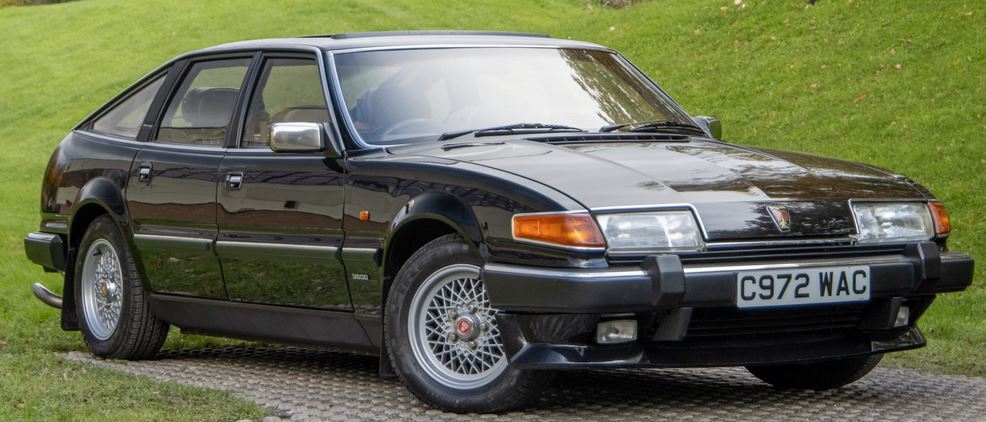
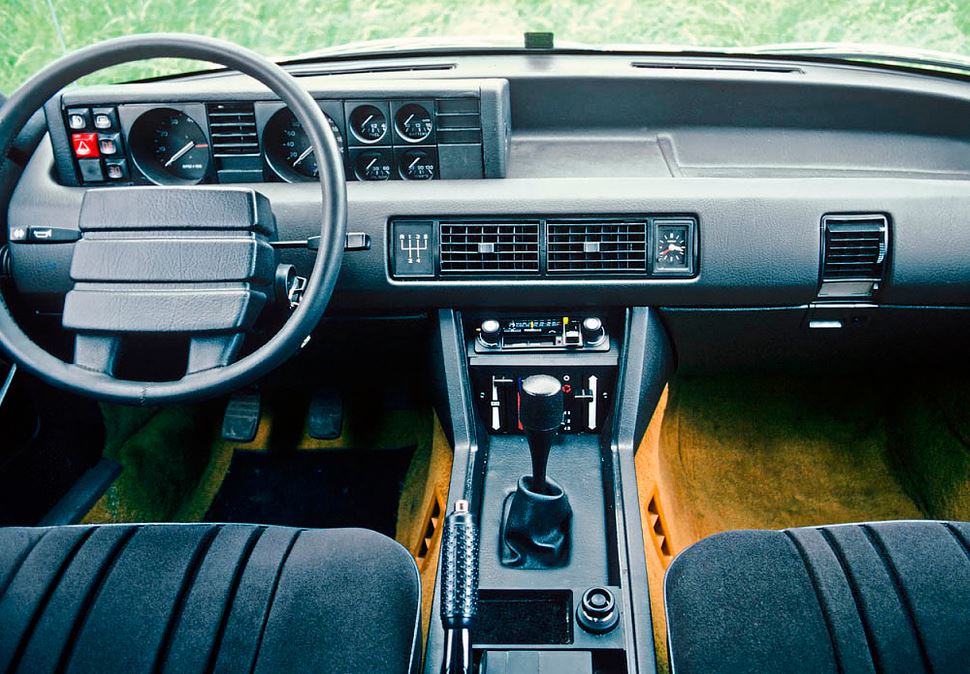
9. Rover SD1
10. Jaguar XJC 5.3C
11. Lamborghini Espada
12. Fiat 130 Coupé,
13. Mercedes-Benz 300 SEL 6.3
14. Mercedes-Benz 450SEL 6.9
15. 1965 BMC Mini Cooper S Mark 1
16. 1912 Stutz Bearcat 6.4-liter
17. Bristol 411/412
18-20. 1963 Citroen DS/CS/SM 2.5-liter
Even if you disagree with his choices — and there are some surprises — you can’t really take issue with his rationale for their inclusion.
I have to say that if some of the older ones were remade today, using better build quality, steel and electrics — hello Bristol 411 and Rover SD1, for instance — I’d grab one in a heartbeat.