I have been a fan of Formula One racing since my early teens, which makes me older than just about everyone involved in running F1 today.
Just recently, I had a problem with my AppleTV account and couldn’t change the payment method — no need for details, but it’s a fucking nightmare and would be easier if I just created a new account. Why am I subscribing to AppleTV, you ask? Well, late last year F1 told me that their own website (F1.com) would no longer be streaming races because they’d sold the broadcast rights to AppleTV. Fair enough: it’s their absolute right to do so, and the AppleTV sub was actually cheaper than the F1 sub; so that, coupled with my desire to watch the Slow Horses TV series (read the books, loved them), I made the change even though once I’d watched all the episodes, I found that AppleTV doesn’t have much worth watching anyway. But there was always the F1 racing, which (did I already mention? I’ve loved since my early teens) so what the hell.
Of course, the modern F1 is no longer the F1 I used to love. Gone were the earsplitting roar and howls of V6- and V12 car engines, and in their place came hybrid engines, using pathetic little 1500cc turbo motors with laptop batteries to “boost” performance because Green Is Mighty and Internal Combustion Engines Are Evil, or some such nonsense.
Then this season saw new rules (a.k.a. the “formula” in the product description), which made the cars even MOAR BATTERY, except of course that batteries when used to propel cars at 300mph run out of spark within yards not miles, so we were greeted with the spectacle of the world’s finest drivers and the world’s most accomplished engineers becoming software managers. Put in plain terms, cars would overtake other cars, and then immediately lose their position because their batteries were drained whilst their competitors had recharged theirs so could take back the position: repeat ad nauseam. Not only was the spectacle unsatisfying, it became outright dangerous, as was seen in the last race where a driver with a full battery was about to move to overtake, but the car in front suddenly lost 25mph because his battery had just gone flat. At a closing speed of 275mph, no human reactions are quick enough to address that impending crash — but amazingly, young Ollie Bearman’s were almost that quick and he pulled off the track to avoid a massive collision. Unfortunately, his car’s battery was still in flat-out mode, and Bearman hit the barrier head-on with a force of 50 Gs. How he survived is a miracle; how his electric motor didn’t catch fire and turn him extra-crispy is a credit to the engineers who built the car. Nor did his car crumple like a newspaper and turn his skeleton into soup.
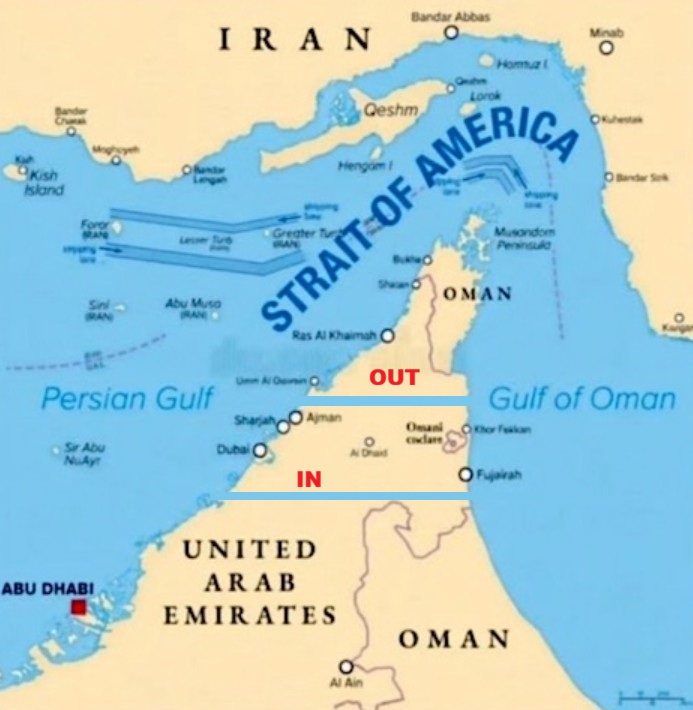
Of course, the F1 organization recognized all this for the disaster it is, and have hurriedly put through a massive rules change. They were fortunate in that next two Grand Prix races in Saudi Arabian peninsula had been canceled because Trump’s merry war on Iran had resulted in the latter sending missiles raining on the Gulf states — and nobody wanted to see battery-powered race cars having to take action to avoid incoming SCUDs, let alone their competitors’ cars, and F1 audiences in the stands deciding that watching electric go-karts play swapalongs would not be sufficient spectacle to keep them from being turned into hamburger by the aforementioned missiles. So F1 caught a break, and having three weeks before the next race (Miami GP), changed a whole bunch of rules, making the thing even more complex than before. (Please watch this video — it’s less than ten minutes long — to see the absolute clusterfuck that F1 racing has become.)
Why am I telling you all this? Because after sixty-odd years of F1 fandom, I’ve decided that enough is enough. I’m not interested in watching what F1 has become, I don’t like what F1’s owners, the foul Liberty Media, have created — four races in the Saudi Peninsula? WTF? — and even worse, losing various countries’ Grand Prix races because European organizers can’t match those of the oil-rich Arabs. I mean, the entire Grand Prix concept began in France, and there’s no room on the calendar for a French GP? WTFF?
So I’m walking away. I would say that I’ll content myself by watching the “highlights” videos on EeewChoob, but honestly, I don’t think there will be any highlights worth watching, anymore.
Here’s a thought: throw away the stupid hybrid engines and go back to racing with real engines, the aforementioned V6 and V8 monsters, let the drivers race these cars to the utmost limit of mechanical and human performance, and make F1 watchable again. Like it was in, say, 1975. (And yes I know, the cars were deathtraps. I’m not suggesting throwing out the entire car, just the stupid engines.)
I know, I know: “You can’t stop progress, Kim; you can’t go back to the old ways.”
And don’t suggest I try to follow other motor racing types, either. Once you’ve watched Formula 1, all other car types resemble tortoises and hippos racing. Even Le Mans, which I watch every year, all 24 hours at a time if there’s no highlights video, doesn’t begin to compare.
I think I’ll start watching horse racing instead. That is, until Liberty Media buys them out, makes the owners strap rockets to their horses’ asses “to improve the spectacle”, and gets fifty racing tracks built in Saudi Arabia to host the new F1 Horse Racing Circuit, doing away with Belmont, Saratoga, Aintree and Epson in the process.
And speaking of horses’ asses: so long, F1/Liberty Media — and AppleTV. Neither of you is worth the trouble of supporting anymore.