Opening The Bottleneck

Here’s my idea for ending the “Hormuz Bottleneck”:

As it stands:

Kim’s Two-Canal Solution:


…construction thereof to be funded by a simple per-barrel fee assessed against all those nations who currently get their oil from the Persian Gulf (i.e. not the United States).

Unwelcome Newcomers

At first, I didn’t think too much about this development:

America’s largest gunmaker, Sturm Ruger & Co., accused the parent company of Italian arms firm Beretta of trying to stealthily seize control of the Connecticut-based business through “self-serving demands” such as cut-price stock buys and veto-like board power.

The Todd W. Seyfert-led giant hit back on Monday at the historic firm’s proxy fight, which was first reported by The Post on Feb. 25, that branded the move as a thinly-veiled threat to launch “a war” and complete a full takeover.

Ruger claimed Beretta quietly built a large stake, refused to halt purchases during negotiations and sought perks that could break US antitrust laws that prevent companies from unfairly dominating markets.

“At that meeting, Beretta’s chair indicated a long-term plan to combine Ruger with Beretta but made no formal proposal,” Ruger said in a statement issued via a spokesperson.

“Beretta’s chair also indicated that he had no interest in the status quo and that he would find a way to increase his position if Ruger remained resistant,” the company added.

Looks like the usual corporate dogfight, dunnit?

Then I looked at some of the small print:

Beretta announced plans two weeks ago to nominate four new members to sit on Ruger’s nine-member board after the publication of The Post’s exclusive story.

The names are William Franklin Detwiler of Fernbrook Capital, Mark DeYoung, the ex-Vista Outdoor CEO, Frederick Disanto of Ancora Holdings and Michael Christodolou of Inwood Capital.

Oh, how nice.

And what do capital funds typically do?  Under the guise of “giving more value to shareholders”, these fucking vultures systematically strip and sell assets from companies they come to control.  And having four out of nine directors means they can pretty much do whatever they want — unless of course, the other five directors can hold the line and kick back against them, with shareholder support.

Sounds good, but that’s not the way to bet.

So what can we do, as ordinary folks?  Not a whole bunch, except make Ruger a priority or a first choice on our next gun purchase.  I wish there was more we could do, but there it is.

I have a bad taste in my mouth and a bad feeling in my gut…

Consolidation

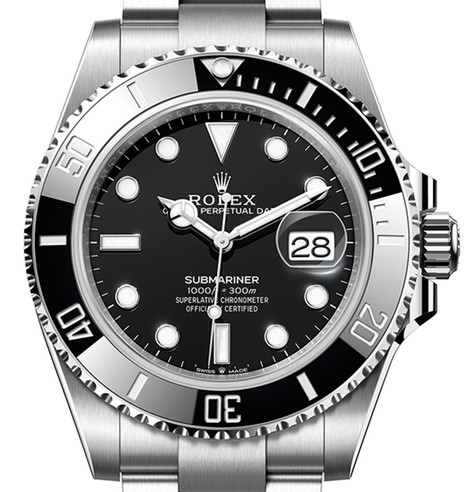
According to this rather lengthy video, Rolex is dropping hundreds of smaller Rolex “dealer” outlets and instead creating Rolex megastores in “prime” locations such as London (!!!) and Manhattan (!!!).

It would appear that the main reason behind this is that Rolex wants to protect their brand by limiting the number of outlets, dropping smaller stores (regardless of relationship longevity) so that they can control the whole “Rolex buying experience” and provide their customers with the proper treatment with fine ambience, better-trained staff and so on.  Also, these larger stores can carry the extensive Rolex range that a smaller store couldn’t.

It all sounds well and good, except that the actual reason, it seems to me, is that during the sales spike caused largely by the Great Covid Panic of 2020, the people who really made money weren’t Rolex themselves but the profiteers who bought their watches and resold them on the “grey” market — and Rolex, like Ferrari, wants to keep as much of the market to themselves.  (Same tactics, different product.)

Of course, there’s nothing wrong with what they’re doing. As long as there are people willing to pay the inflated prices of their products, then good luck to them.

My own personal take on the thing is that I’m indifferent because (regardless of any lottery winning) I would never be a Rolex  sucker  buyer in the same way as Ferrari would forever be outside my list of automotive choices (except maybe a Dino, although given the current price list of same… nah, never mind).  Sorry, I’m no longer impressed by brand names, especially when the brand’s “value” is artificially pumped up by fools and suckers with more money than sense.  And even more so when the brand operates in a commodity category like watches.

And finally, I happen to think that those big, blocky things like the Submariner are just… ugly.  I’m not a scuba diver so I’ll never need one, and anyway, there are other watches just as good for half the price and a tenth of the Rolex attitude (once again, see:  Ferrari dealers).

A pox on all their houses.

Changing Cards

Last Monday morning I went out to run some errands — nothing fancy, just dropping off a document at the tax guy, paying for the sooper-seekrit mailbox, and a quick trip to Kroger for some top-up items.  Basically my spend was less than a hundred dollars, but I knew I had way more than that in the bank account, so no big deal, right?

Wrong.  I got home, check the email and there was a warning message from the bank saying I had less than $100 in my account (I am so glad I have this feature).  When I looked at the account, there was an ATM charge from some company for $336 dollars — a company I’d never heard of nor visited, and when I looked at the details, it noted that the transaction method was a “tap”.

Didn’t happen.

I then called the bank and told them about the fraudulent claim, which got the wheels turning.  Net result:  they changed the transaction to “pending”, but then the crap began:  policy is to issue a new card number/card, which takes ta-da!  up to five business days to process and deliver.  So basically, I end up without an ATM card for that period, plus I have to contact all the autopay vendors and give them the new card number so that my life can continue uninterrupted, without such things as wifi being disconnected and so on — you know the deal.

What disturbs me about all this is that apparently there’s no guarantee that a fraudulent transaction can be “clawed back” if it’s been made against a checking account — it’s considered your problem — but with a credit card, however, it’s the bank’s problem and they have all sorts of ways to get the money back.  Seems weird, but that’s banks for you.

I remember seeing one of those EeewwwChoob videos a while ago wherein some smart money guy said that he refused to use an ATM card, ever, and only used a credit card because of just such a situation.

Here’s my take:  I don’t owe a lot of money on my credit card, and thanks to an upcoming tax refund I could pay it all off without any problem.  (I normally pay 6x the “minimum” each month, so I don’t get stung too badly by their loanshark interest rates.)

I am thinking, now, that maybe I should do what the Smart Money Guy said, do away with the ATM card and treat the paid-off credit card like it’s an ATM card, and just pay the balance in full each month.  (I don’t spend a lot of money on the Visa card so this shouldn’t be a problem, and our income — from New Wife’s job and my SocSec gets automatically transferred out of our current accounts into an interest-bearing account anyway, so we never have that much cash in the current accounts.)  I have full faith in my and New Wife’s self-discipline to do this, by the way, so on that score there should be no problem.

My question for y’all:  if I do the above and pay off the credit card balance in full each month, is there a risk that Global MegaBank Inc. will realize that they’re making no money off their loansharking, only from their transaction fees, and cancel my credit card?

All input is welcome.

Bring Back The Killing

This kind of crap really throws sand in my gears:

The US Army’s declining warfighting lethality is not a mystery—it’s a direct consequence of a feudal promotion system that rewards bureaucratic survival over bold leadership, misaligning senior-level priorities with the core mission of closing with and destroying the enemy. This patronage-based structure, decoupled from lethality metrics, incentivizes risk aversion and ethical compromises, eroding the force’s combat edge even as technology advances. We’ve invested billions in cutting-edge gear—Next-Gen Squad Weapons, advanced optics, and precision munitions—yet lethality is tanking. Fewer hits at Combat Training Centers (CTCs), slower quals, and dismal first-run crew scores tell the story. The root? Not tech.

Organizations host two groups—mission-dedicated (Type 1: warfighters) and bureaucracy-dedicated (Type 2: careerists). “The second group will gain and keep control,” Jerry Pournelle asserts, crafting rules that prioritize self-preservation over goals. In the Army, Type 2s dominate, sidelining Type 1s who champion core principles like honest readiness. They lose their “seat at the cool kids’ table,” as the system favors patrons over performance.

And:

Promotions rely on feudal patronage—loyalty to superiors, not lethality. As one analysis puts it, it’s a “bargain and sale” dynamic, decoupled from warfighting. Resources improve, but lethality drops because rewards measure compliance, not kills. We’ve optimized for career survival, not victory.

Read the whole thing if you need to have your good mood spoiled.

SecWar Pete Hegseth needs to get on top of this bullshit, and quickly.