Caveat

Here’s a little nugget from the Trump Tariff Front:

General Motors (GM) announced plans to invest $4 billion in three new U.S. assembly plants, including the production lines for the Chevrolet Blazer and Chevrolet Equinox, which the company currently builds in Mexico.

Yay and all that.  Another reaction:

The United Auto Workers (UAW) praised GM’s decision, calling it a validation of the effectiveness of global auto tariffs.

Yeah, fine, whatever.  Let’s just hope that you union assholes don’t jump on this opportunity to make unreasonable wage demands, which is what drove GM to move the plants to Mexico in the first place.

I’m not at all confident that this won’t happen, but as I am not and never will be a target customer of General Motors*, I personally will not be affected, especially as the newly-replanted assembly plants will be building Chevrolet Equinox, Chevrolet Bolt EV, Chevrolet Blazer, Cadillac Lyriq and Vistiq EVs and the Cadillac XT5.  (Lyriq? Vistiq?  WTF kind of names are those?)

I see that GM, with its customary foresight, has slated its EV models for some of the new plants, despite customer demand for said excrescences falling through the floor.

Pathetic.


The only GM car I’d ever consider buying is the Caddy CT4 Blackwing, except that while its engine is admittedly excellent, the CT4 looks like a primitive 1978-era CAD drawing:

In earlier times, we would have described that thing as “uglier than a bucketful of burst assholes”.

As for all GM’s other models:  pass, with extreme prejudice.

Private & Personal

I’ve never been that interested in my origins to have done the 23andMe thing, so I’m personally not affected by this activity.  Nevertheless:

Twenty-seven states and the District of Columbia have sued the genetic-testing company 23andMe to oppose the sale of DNA data from its customers without their direct consent.

The suit, filed on Monday in U.S. Bankruptcy Court in the Eastern District of Missouri, argues that 23andMe needs to have permission from each and every customer before their data is potentially sold. The company had entered an agreement to sell itself and its assets in bankruptcy court.

The information for sale “comprises an unprecedented compilation of highly sensitive and immutable personal data of consumers,” according to the lawsuit.

The genetic data at stake is especially sensitive and should be protected, because if it is stolen or compromised, it cannot be replaced. The data can be used to track not only the individuals who sent the kits, but also people related to customers, including yet unborn generations.

Why, and who is the prospective purchaser of all this “highly sensitive and immutable personal data”, you ask?

[23andMe] is poised to be acquired by Regeneron Pharmaceuticals for $256 million, according to the lawsuit.  Regeneron is a biotechnology company that uses genetic data to develop new drugs.

So there’s no chance that the data will be abused in any way, then. [eyecross]

I think that my position on this kind of thing should be fairly obvious by now.

Your personal data — all of it — belongs to you, and to nobody else.  Only you can authorize its use or dissemination, for whatever reason.

So if some asshole organization — let’s just call them Regeneron, for brevity’s sake — wants to use personal (i.e. unaggregated) data, they should have to ask you personally for your permission, each and every time.  (Once data is aggregated, of course, your anonymity is no longer an issue.)


By the way, the same should apply to US Census data, but that particular bullet has gone through the church countless times already, and it’s a terrible precedent.  (Which is why I always urge people not to fill out the “long form” census questionnaire every time this bit of government snoopery comes around.)

Proper Fake

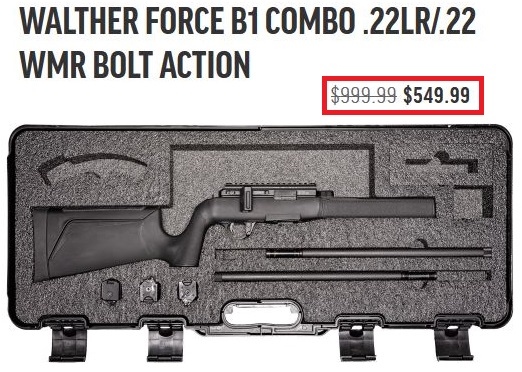
Last week I slammed the idiots who are seduced by marketing into paying exorbitant sums of money for ordinary products like vodka (Grey Goose) and guns (Heckler Und Koch).

Then yesterday I bitched about modern cars and their electronic gizmos that cost too much (in every sense of the word) and which at some point are going to be taken away from you;  and added that I’d really prefer to drive an older car without all that nonsense.

I thought that it might be kinda fun to combine those two concepts into a single buying experience.  Here’s how I figured it out.

First, we have a car company whose products command premium prices (i.e. you pay through the nose) for their old cars, but whose cars of that era were frankly just not very good, performance-wise.

Step forward the 1950s-era Porsche 356, and here’s a good example thereof:

Now let’s be honest, here.  The old 356 may have been very reliable (compared to its competitors) for that time, but if you’ve ever driven an original, you would have been horribly disappointed (as I most certainly was).  The engine is seriously underpowered, it doesn’t handle or brake that well on those skinny tires and drum brakes, although it does give tremendous driving fun because you always feel connected to the road.  But it’s the engine sound which really disappoints.  It sounds pretty much like a VW Beetle engine of the same vintage:  a kind of whiny clatter.  My take:  the original 356 isn’t worth as much as they’re being charged for.  Frankly, the premium prices are a function of restoration “to original” state.  Once you get past the Concours Set, the prices become more “reasonable” because restorers install modern switchgear, better wiring materials and nicer exhaust systems, for instance:

My thing about the 356 is that I just like its looks.  It’s quirky, a little ugly (“a lot ugly” — New Wife) but above all it has character.  Nothing else is quite like it.

But if you strip away all the Porsche stuff and just go with what it looks like, you get one of these:

Looks like a 356 museum, dunnit?  But all those 356s are replicas (gasp!):  fiberglass bodies attached to a shortened ’71 VW Beetle chassis, powered by a 2.3-liter VW engine, which pushes out 125 hp (compared to the original 356’s 90-odd hp).  Plenty power for that little body, and they come with a proper exhaust system which makes them sound more modern Porsche than old Beetle.  Modern tires, too.

Price?  Between $60,000 and $72,000.

Still too much?  I don’t think so, because this isn’t one of those DIY garage fiberglass kit cars.  If you order one from this particular manufacturer, you could wait up to two years for your order to get fulfilled.  Me, I’d just get one of the existing stock ones, as in the pic.

But hey, not everyone likes the 356.  However, everybody loves the Ferrari 250 Spyder, right?

Whoa.

Trouble is that these puppies sell for well over a million — or more — and now you’re in a lot more silliness than a $30 bottle of vodka.

Except that the model above sells for $105,000.  How so?  Well, it’s not a “pure Ferrari”.  Like the Vintage Motors replica of the Porsche 356 above, this is a fiberglass bodied Ferrari lookalike with a… 6.9-liter Ford V8 under the hood.  (Take that, Ferrari!)

Okay:  is this going to handle anything like a Ferrari (any Ferrari)?  Most definitely not.  Does it matter?  No.

Because you’re not going to track this car (unless you’re an idiot), you’re going to drive around in a little beauty, at 10% of the cost of the original, with an AC Cobra-like thunder coming out of the exhaust.

It’s all very well being a badge “purist”.  The problem is that the owners of the badges have made their products so expensive that the cars are all being bought by essentially the same 100 people, leaving the rest of us plebs out of the picture.

The thing is that to those 100 guys, the “proper” badges are either purchased for bragging rights (i.e. dick comps) or as investments, no different from a condo in Monaco or a 25-carat diamond (don’t get me started on De Beers or we’ll be here all day).

Just in passing, I wonder how many miles Bill Gates has put on his Porsche 959?  (And if that story doesn’t make you grit your teeth in frustrated fury — for so many reasons — we can’t be friends.)

But there are guys who love the cars not for their “collector value” or any of that bollocks, but for their exquisite beauty and perhaps to a lesser degree, for their performance.  Guys like me.

And I have to tell you that if I won the lottery and some guy had put together a proper fiberglass Dino 246 shell on, say, a Porsche Boxster-type frame and engine…


…hold me back.

So I guess my question for y’all would be:  what quality (but inexpensive) replica would float your boat if you saw one?

About Damn Time

I see that CitiBank may have seen the light:

We will update our employee Code of Conduct and our customer-facing Global Financial Access Policy to clearly state that we do not discriminate on the basis of political affiliation in the same way we are clear that we do not discriminate on the basis of other traits such as race and religion. This will codify what we’ve long practiced, and we will continue to conduct trainings to ensure compliance.

We also will no longer have a specific policy as it relates to firearms. Our U.S. Commercial Firearms Policy was implemented in 2018 and pertained to sale of firearms by our retail clients and partners. The policy was intended to promote the adoption of best sales practices as prudent risk management and didn’t address the manufacturing of firearms. Many retailers have been following these best practices, and we hope communities and lawmakers will continue to seek out ways to prevent the tragic consequences of gun violence.

Yeah, whatever.  Just to make myself clear:

I have absolutely no problem with “gun violence”, provided it’s of the kind where potential victims ventilate the goblins who are trying to harm them and/or take away their possessions violently and unlawfully.

And it was people like me who by extension would have run afoul of Citi’s so-called “Commercial Firearms Policy”.

So I’m glad they’ve had a change of heart — no doubt brought on by the Trump Administration’s overt hostility towards corporate fuckery of this nature — but even so, fuck ’em, the chiseling Shylocks.

I finally managed to pay off my credit card balance from Bank of America — the first and most public of the anti-gun banks — and closed the account.  My CitiAA card is next on the chopping list. It may take some time because the balance is still quite high — air tickets for New Wife’s various family visits to Australia and Seffrica, hello — but pay it down I will, make no mistake.  and then it’s bye bye, too.

Boondoggle Over

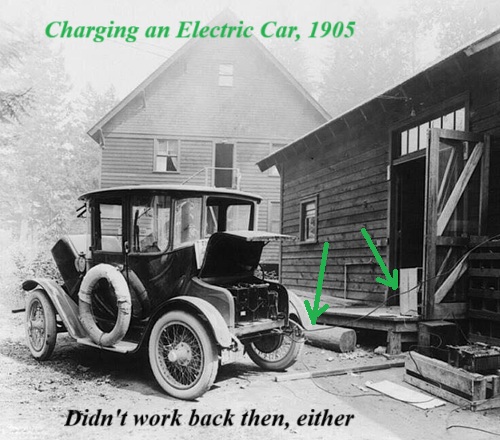
I see it suggested that Elon Musk’s apparent disapproval of Trump’s budget (the Big Beautiful Bill — ugh, FFS) may stem from the fact that included in the suggested budget cuts are federal subsidies for EV purchases.

If this is the case, then Musk’s ire may be understandable… but not excusable.

Sorry, dude:  the whole climate-change-is-gonna-kill-us-therefore-we-must-all-buy-EVs bullshit is one of the more egregious examples of governmental waste and budgetary irresponsibility.  You’ve ridden the gravy train because if Gummint is going to throw money your way then why not take it — say your shareholders — but that time is over, so suck it up and spend more time on other pursuits, those which don’t rely on government subsidies to survive or turn a profit.

Like I said, I don’t know if this is the reason for Elon’s peevishness, but if it is, then it’s just silly.  The gravy train was bound to end sooner or later, and from a taxpayer’s perspective, sooner is better, although said taxpayers who were going to buy a Tesla may not see it the same way, of course.

Too bad.

Connectivity Assholes

Normally I reserve the above epithet for people who have their phones surgically attached to their hands, or bosses who insist that employees Stay.In.Touch.At.All.Times., yeah even unto night time, weekends, and vacations.  (Just because you’re attending your sister’s wedding or mother’s funeral — requiring use of paid time off [PTO] instead of compassionate leave, FFS — doesn’t mean that your boss shouldn’t be able to demand your time to attend to That Pressing Corporate Need.)

No, the connectivity assholes I refer to here are “services” like GM’s OnStar, Hyundai’s Blue Link, NissanConnect, AcuraLink and Toyota Connect.  Via Insty, I see the following is happening (from the annals of Corporate Automotive Bastardy):

Connected services is a catch-all term for everything your car can send and receive over the internet. It includes features such as automatic 911 call-outs after an accident, roadside assistance after a breakdown, over-the-air (OTA) software updates, vehicle health reports which can be sent to your dealer, wi-fi hot spots in the vehicle, and phone apps that allow you to connect to and even control some of your car’s functions.

They’re also big business. Most connected services require a paid subscription once the free trail (usually three months to a year) runs out. As more and more of them are added to your dashboard, automakers hope to make billions of dollars annually just on subscriptions. That doesn’t mean older vehicles will be supported forever, though.

Anyone who’s ever touched a device with a computer chip in it knows that device will eventually be obsolete. Cellphones, even if they still work fine, will eventually stop receiving software updates. Right or wrong, this is the way of the world. The average American, though, keeps their car for much longer than they keep their phone, and the average age of a vehicle in America is nearly 13 years old. Meaning, a lot of people could potentially be affected if other automakers follow Acura’s lead in cutting off cars newer than the average. And that’s not to mention those who own used examples of older models.

While it’s arguably bad customer service, there’s no law or contractual obligation requiring automakers like Acura to continue supporting older models with outdated hardware and software. In fact, it’s quite the opposite.

Yeah, click HERE to accept the (300 pages of) Terms & Conditions Of Service.  (Wait;  you all do read those before clicking, right?)

Somebody tell me how many times I’ve ranted on these pages about people handing over their privacy and freedom of action in the name of “conveeeeenience”, because I can’t be bothered to look it up.

This is why, in all my lottery dreams, I am convinced that I would never buy a modern car, but would pay a premium (in service / maintenance costs etc.) just to own a car that is completely and utterly under my personal control.  I have actually come to the point where I would buy any car — in reasonable working condition — that has an ordinary key to start it, whose operating system contains not a single chip and does not send my usage data to just anyone who wants to see it, for whatever reason — which includes insurance companies, the police, the State, the advertising industry and all the other forms of bureaucratic bastardy that have infested our personal lives like some creeping fucking cancer.

A pox on all of them.