Last Saturday I posted a link to a discussion on classic car prices and the market thereof, and threatened promised a followup post. Here it is.
Right off, I’m going to suggest that anyone who’s happy with their 1979 Ford Bronco truck and can’t see the need for even having a discussion which features luxury classic car collecting may feel free not to comment. This post is not for you.
Let me start this off by looking at an anomaly: the BMW 507 from the late 1950s.
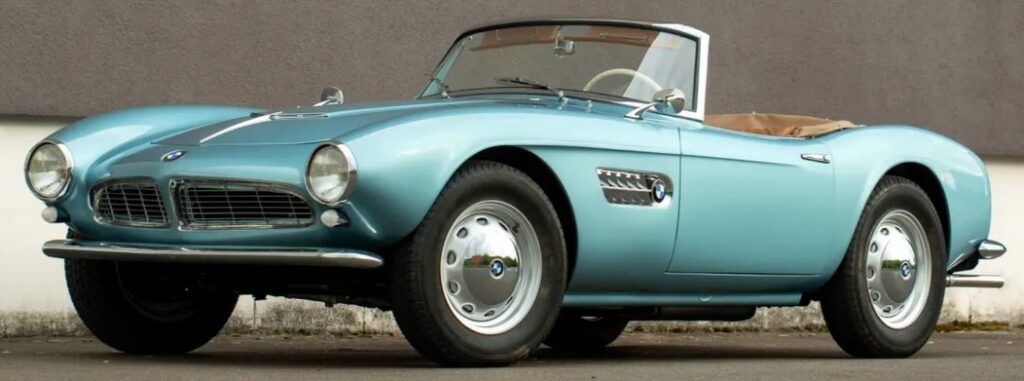
As anyone should know, this was BMW’s competitor to the Mercedes 300 Gullwing, in that it had a 3.2-liter V8 inside a lightweight chassis. It nearly bankrupted BMW back then because the market wasn’t willing to spend what amounted to a king’s ransom back then on a car that wasn’t a Gullwing, or (in the U.S.) a similarly-powered Corvette that cost a lot less.
It’s a great pity, because while BMW has pretty much always produced “handsome” cars (as opposed to drop-dead gorgeous ones), many people thought this was a beauty. Not enough people thought that, of course, which is why hardly any 507s were ever produced, and were bought by only the very wealthy (like Elvis Presley).
Nowadays, of course, it’s a whole ‘nother story, which is why the little thing pictured above sold earlier this year for just over $2 million.
Let me change course for a moment, while I talk about the Porsche 356.

Unlike the 507, Porsche made a zillion of the various sporty 356 models, because they were relatively inexpensive and for the time quite reliable, albeit underpowered. Because they were inexpensive, not much care was devoted to their upkeep, so they became somewhat scarce through pure attrition. Then in the mid-2010s people started to remember the 356 with great fondness, and a renewed interest followed, which is why the above-pictured 1958 356 (only two owners, 84,000 original miles, restored but not modified) is currently for sale for around $400k.
Well, that’s just silly, say a couple of people, which is why you can nowadays get a replica of the 356 — looking exactly like the original, down to the badges — with a fiberglass body and a better-than-the-original VW or Subaru engine with better efficiency, reliability and performance.
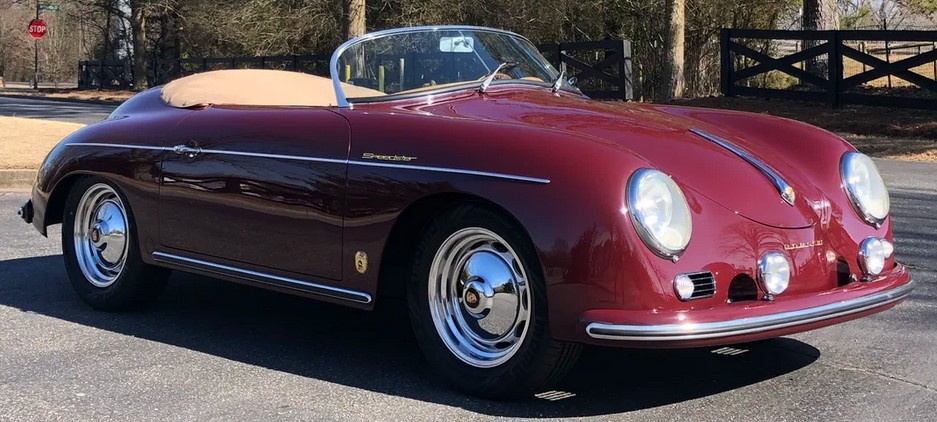
Cost: just over $70k.
Now to the puristi, of course, this is an anathema: it’s not a “real” Porsche, etc. etc. and I can see their point.
But what if you just want to drive a classic, beautiful car that is in good running order, will not cost you an arm and a leg to maintain and looks brand-new?
In other words, you want to drive the shape of the thing, and all the other stuff is irrelevant because of the steep cost of parts, service and so on.
It’s not too dissimilar with fine art, for example, where a decent print of a Monet — in acrylic rather than oil — can cost you mere hundreds, as opposed to the millions demanded for an original Claude. And honestly, to the non-art history major, it’s just as pretty hanging on your wall.
Still another example is that of the Land Rover Defender. The old joke about them is that if you want to go into the bush, you take a Land Rover; but if you want to come back out of the bush, you take a Toyota Land Cruiser.
The chronic unreliability of the Defender is so legendary that it’s a joke in and of itself. (In the UK, Land Rover drivers acknowledge the oncoming Land Rover drivers by flicking their headlights: a rueful admission, as the story goes, that yeah, I’m also an idiot.)
Nevertheless, many, many people love the Land Rover (I’m one of them), but are frightened off from buying one because they want to own a truck which doesn’t break down every hundred miles, has headlights and windshield wipers that only occasionally work, isn’t plagued by the usual  , and won’t fall apart with rust.
So why not get a truck that looks like a Land Rover Defender, but has a galvanized steel chassis, reliable electricals, and is powered not by the cranky and underpowered original Rover engine but by a nice modern Cadillac 5.3-liter V8?

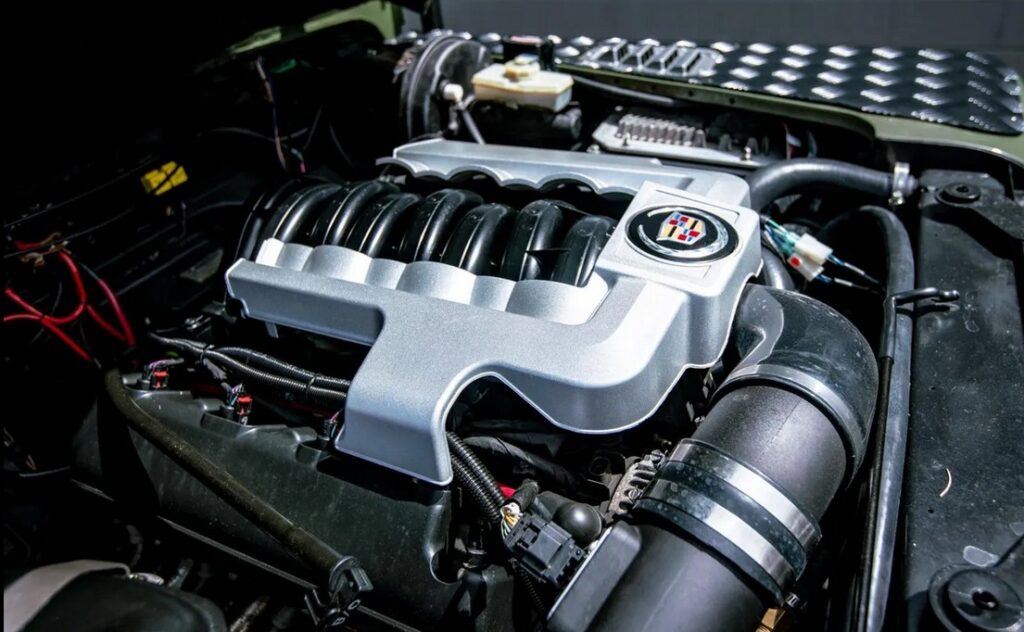
Cost of the above monster: just over $100k — pretty much in line with modern-day Defenders — and the mileage on the engine is in the hundreds, not thousands. (Excuse me for a moment while I wipe off the drool.)
In other words, “driving the shape” shouldn’t cost you an arm and a leg, because you’re not driving the all-original heritage, just its appearance.
Which brings me back to the BMW 507.
There’s no industry around to make replicas of the 507, but some guys did make one — and a purdy lil’ thang it is too — with a handmade aluminum body, dropped onto an original BMW 502 chassis and powered by an original 5.2-liter V8, putting out about 150hp.
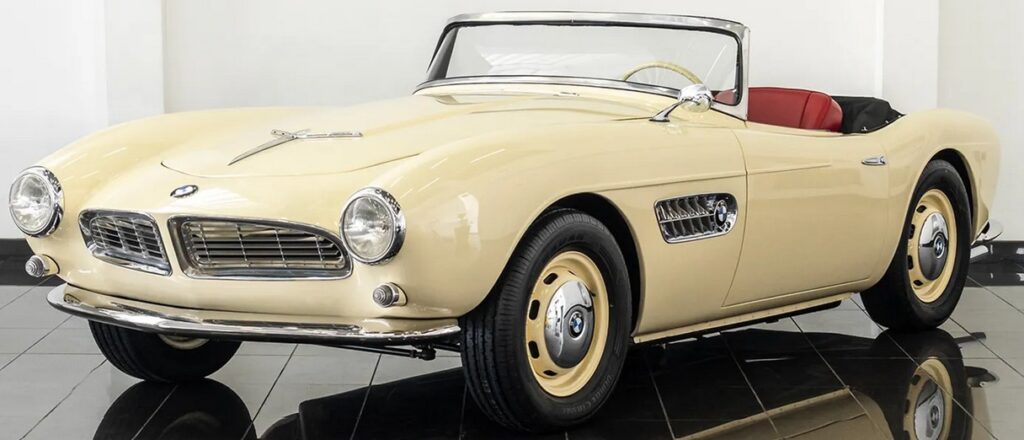
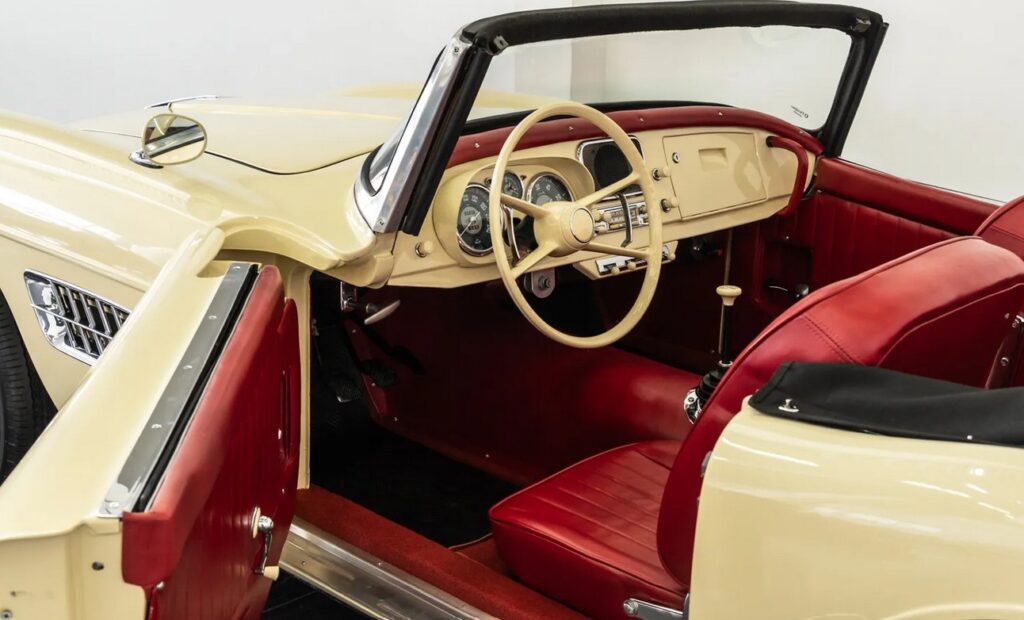
The thing is, though, that it’s not a replica, but an attempt to re-create the original. Hence its price: $540k.
The dealership selling this idiocy is in Dubai, which figures. Maybe some Arab oil sheikh will be tempted into splashing the cash for it.
Me, even if I won a mega-lottery? Never in a million years. I love the 507’s shape, but that’s all I’m interested in driving. This little luxury plaything? Nope, no matter how beautiful.
Oh, and in terms of the market: people who would be enamored of the BMW 507 are in my age bracket — i.e. not much longer for the world, so what you’re left with are people who look on luxury cars purely as an investment. And I suspect that the market for that era of luxury cars is going to disappear, just as the market for pre-WWII cars has also dipped precipitously as their nostalgia effect dies with the owners thereof. Even the stratospheric prices for Mercedes Gullwings is softening, or else it’s taking a lot longer to sell them.
I myself would be perfectly happy to own that 356 replica and the Defender restomod. I’m only interested in shapes; the rest is irrelevant.