How Steep The Slope?

I think it was Adam Smith who said:  “There is much ruin in a nation.”  What he meant was that a nation’s downward decline from prosperity to ruin can take some considerable time — nearly five hundred years, in the case of ancient Rome — because all the foundations of that prosperity and the institutions which maintained it may have inherent strength;  and decay, while apparently certain, can still be resisted or even held back and improved by the efforts of the nation’s people.

None of which applies, of course, when the nation’s institutions are actively destroyed or its policies undermine its very foundations.

Which leads me to Germany, which is doing both by not taking the Greens out and standing them in front of the machine-gun pits.  (Okay, maybe that metaphor could be interpreted as a little too strong, given Germany’s not-so-distant use of said pits, but you know what I mean.)

I suspect that you’ll change your opinion on that metaphor when you read this article:

In response to the intensifying European energy crisis, the green lobby in Brussels and Berlin is accelerating the pace of transformation. Politics lacks the imagination for a real energy crisis scenario. Civil society submits, nearly paralyzed, to its fate.

Anyone who expected that empty gas storage in Germany and the escalating energy crisis in Iran would silence the green lobby in the country must think again. The political representation and its media apparatus — the extended arm of the green crony system — fight with all means to preserve the green transformation complex, regardless of the force with which the waves of reality now crash against the thin green dam.

While economists and business associations worldwide foresee a new energy price shock — with the potential to derail the global economy — solutions to the mercantile bottleneck at Hormuz barely emerge from Berlin’s intellectual narrowness.

On the contrary: On this side of ideologically dismantled infantilism, political elites focus primarily on the survival of their power construct — the Green Deal.

As the saying goes: even civilized societies are always only two missed meals away from chaos. And energy — a steady, secure, and affordable stream of this life force — is the very foundation of what we call civilization.

Stepping back to illustrate the societal phenomenon: under the Green Deal, a highly complex web of politically proliferating environmentalism has emerged — a highly opaque yet extremely effective redistribution machine. Supported by decades of cultivated green moralism, widely accepted in the population — or at least hardly questioned until now.

In this way, an extraction mechanism has emerged that systematically siphons wealth from the productive machinery of society. This wealth is channeled precisely into the green parasitic system, which can proliferate in the shadow of political programs and moral justification without facing significant resistance.

Over time, a state within the state has emerged, its structures deeply grown into economic and institutional fabrics. This entity now seems to be entering a new phase — one of exponential weakening of its host body. Rising energy prices, which over the long term translate into higher inflation rates, are a symptom of the host’s weakening.

I apologize for the lengthy excerpts, but as I read the article, I couldn’t help thinking, “There but for the grace of Donald Trump goes America.”

But more to the point:  if we fail to see that the Green Catastrophe will, if we allow it to, become as much a part of our polity as it is in Europe.  Hell, thanks to the Obama Dozen Years it nearly did, and it’s taking a Herculean effort by the Trump Administration to undo and untangle us from that strangling creeper.

Suicide may be woven into the Western European polity;  but I’m sure as hell hoping that it’s not in ours.

Un-Constitutional, Illegal And Nonsensical

…and yet the National Firearms Act (NFA) is still with us, becoming evermore ridiculous, evermore illogical, and always (still) un-Constitutional.

Here’s the best history of the disgusting thing I’ve ever seen which — as with so many of the bullshit laws and bureaucracies that still bedevil us to this very day — stemmed from the diseased liberal New York mind of the sainted Franklin Delano Roosevelt.

And the Act’s very vagueness of terminology makes it almost unique among our forest of laws in its ability to turn any gun owner into an instant felon without him knowing about it until the AT-fucking-F agency thugs drag him away in chains.  And said feature alone should make it legal poison, except that the Department of (alleged) Justice is too busy fucking around with irrelevancies like the Epstein files.

Kill the NFA.  Kill it stone dead, and then abolish the ATF in toto, because the government has no business in the alcohol, tobacco and (especially) the firearms business.  I might make a teeny exception for the oft-elided “E” — explosives — part of the agency’s nomenclature, but those first three initials?  X marks the spot in the back of the neck, for each of them.

Otherwise?  Line ’em up.

Change Agent

…or, “Why are we continuing to act like the Cold War is still a thing?”

Four score years ago, the United States brought forth a new economic system, dedicated to the proposition that we would rebuild the world from the wreckage of the Second World War and stand athwart communism. For 40 years, that system worked. Germany and Japan, economically devastated, got rebuilt. In return, the United States accepted persistent trade deficits and the gradual hollowing out of our manufacturing base. The logic was coherent: we needed these allies secure and prosperous.

Then the logic expired in 1989, but we never stopped. For the past 30 years, we’ve been running the same policy for no reason at all. That’s the mistake.

See how Trump is undoing the years of economic mismanagement by the U.S. government.

If he (and his successors) can pull this off, it will be one of the most consequential (and beneficial) acts ever to grace this nation.

More Knife Stories

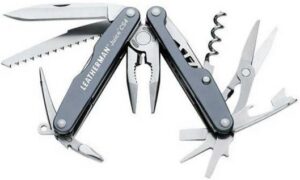
Reader Blackwing1 had some good things to say about his Leatherman CS4 Juice:

…and I must say it looks good for an everyday carry (EDC) function;  but it does lack a whole bunch of SHTF gear, which was the premise of the original post.

Unfortunately, I just can’t get past the fact that Tim Leatherman voted for Fuckface Kerry, back in the day.  So I’m reluctant to buy any LM products — and yes I know, it’s ancient news, but there it is.  (According to him, he’s not anti-gun — “I own a rifle and a shotgun” — but the fact that he was prepared to vote for Anti-Gun Fuckface really sticks in my craw.)

I was once given a Leatherman tool as a Christmas present, and I passed it on to someone else as soon as the occasion arose.

Feel free to take issue with me.

Swarming

Many years ago, back when we were still in the “win wars with boots on the ground” mindset, and when we were battling a weak or non-state enemy (e.g. Afghanistan), I suggested that ground support for the troops could be fairly cheaply (and adequately) be fulfilled by using in-theater two hundred WWII-era P-51 Mustang fighters armed with small smart bombs.  The idea of course was that such a high number could swarm the battlefield or area of interest to overcome any poorly-armed resistance.

Of course, this was before remote-controlled drones came on the scene to the extent they have, and Doug Ross gives an excellent overview of how this has changed modern warfare.

Military drones aren’t just one thing — they come in a huge range of sizes, costs, and purposes. On the low end, you’ve got $500 disposable quadcopters that soldiers fly into enemy positions. On the high end, there are $100 million surveillance drones that fly at 60,000 feet and can stay in the air for days. The key pattern is simple: the cheaper the drone, the more of them get used. The most expensive drones exist in small numbers, while the cheapest ones are built and destroyed by the hundreds of thousands. By 2026, militaries around the world have organized their drone forces into what’s called a “drone stack” — a system where different types of unmanned aircraft are layered by altitude, flight time, cost, and mission, covering everything from a single squad’s needs to an entire war zone.

Here’s an idea of the scale:

By 2025, Ukraine was building over 200,000 small attack drones per month.

So I had the right idea, but I just wasn’t thinking small enough.  Mea culpa.

Shooting Them Down

Interesting stuff, this (via Insty):

I Have Seen the Future of Anti-Drone Warfare, and It’s Dirt-Cheap

I vaguely remembered reading something about the Sting a year or more ago, but I just learned today that they’re both dirt-cheap and extremely effective — mostly at shooting down Russia’s Geran-2 one-way attack drones, which are licensed copies of Iran’s Shahed that have caused us considerable trouble in Operation Epic Fury.

Ukraine needs tons of these things, because Geran is essentially a terror weapon aimed in large numbers — currently 100 to 200 per attack — at Ukraine’s cities and infrastructure. Larger attack waves include anything from 300 up to just over 800 Geran-2s in one night.

So the concept behind Sting is simply enough: Make something cheap and fast to build, easy to use, yet still capable of knocking a Geran-2 out of the sky far enough out from its target for some degree of safety.

And the Ukrainians did just that.

Of course, that’s all well and good in a military context, and our own .dotmil needs to hop onto this with all due dispatch, if they haven’t done so already.  (I assume they have, but whatever.)

What interests me as a civilian, however, is a solution closer to home [sic], in that these little airborne nuisances can also be used by anti-social elements to both spy on people and, in the worst case, to kamikaze themselves into a target — such as, for instance, your home or similar.  Why go to all the trouble of kitting yourself up with a suicide explosive vest or a rifle in order to inflict death and damage on (say) a church or synagogue, when you can essentially outsource the suicide bit to something you hand-built in your garage?

And in the above scenario, how would ordinary people — say, adherents of the Second Amendment — defend themselves or their communities against such nefarious electro-mechanical mosquitoes?

I’m thinking of something like this, of course:

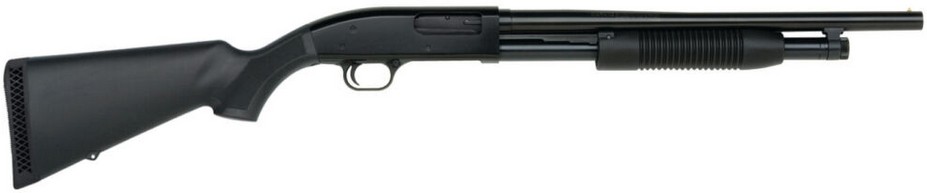
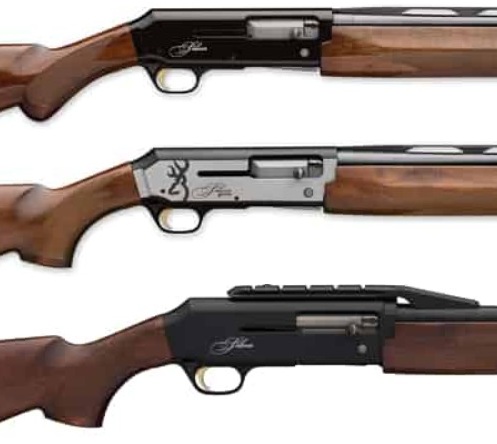
That’s the semi-auto 12ga Browning Silver Hunter (and of course there are less-expensive options because America).  This differs from your standard home defense shotgun, say a 12ga Mossberg Maverick 88:

…in that the Hunter is not a pump action device but semi-auto (ergo  a higher rate of fire) and it has a much longer barrel (ergo  much greater accuracy at distance, ask any bird shooter).

I’m interested in this concept because it raises a couple of practical issues such as the type of ammo that would work best to bring down a drone (00 buck, or perhaps something lighter?).  Obviously, a 12ga slug would end the flight path of a drone with spectacular effect, but it has to be accurate:  far easier to spread the terminal effect with shot… but which shot?  00 buckshot is excellent, but it also kicks like hell — and getting followup blasts off quickly with said semi-auto action means a quicker target re-acquisition time is necessary.  Would 7/8 birdshot do the trick as well?  For that matter, would a 20ga shotgun be as effective as a 12ga under such circumstances?  (Almost all semi-auto shotguns are offered in both chamberings.)

I’ve owned a 20ga semi-auto shotgun in the past, and I have to say that the effect downrange is almost as effective as a 12ga (if those watermelons and milk jugs are at all indicative), but the recoil was far less problematic.

Of course I think that the Silver Hunter is just dreamy, in so many ways:

…and yes, the addition of a red-dot sighting device may certainly be of assistance (even though I think it spoils the look of the gun).

Feel free to discuss this topic in Comments, of course.