Fuck You, Regs

Longtime Readers will be familiar ad nauseam with my constant bitching against modern automotive design and how homogeneous the cars of today appear.  While a lot of it is driven by things like “wind-tunnel” performance, I’ve never bothered to talk about exactly why  car makers are so obsessed with streamlining and what have you, because I’d always thought people knew why they’re thus obsessed.

Allow me then, to address this shortcoming by pointing you to this excellent article, a snippet of which reads as follows:

It hasn’t happened all at once. It’s been a bit at a time, taking place over four decades in the name of safety and the environment. The whole thing began in 1966 with creation of the National Highway Traffic Safety Administration, followed by the Environmental Protection Agency and dozens of others. Every regulator wanted a piece of the car.
Each new regulation seems like it makes sense in some way. Who doesn’t want to be safer and who doesn’t want to save gas?
But these mandates are imposed without any real sense of the cost and benefits, and they come about without a thought as to what they do to the design of a car. And once the regs appear on the books, they never go away.

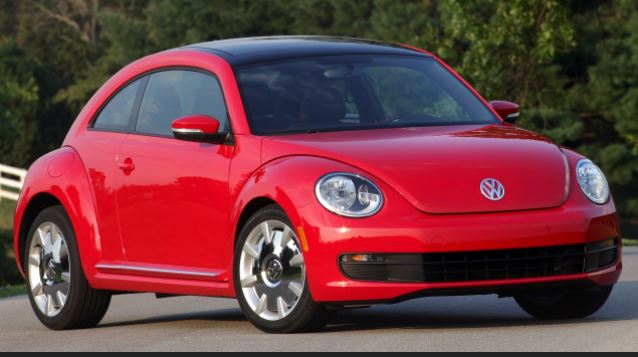
Truly, this cries out for explanation. So I was happy to see a video made by CNET that gives five reasons: mandates for big fronts to protect pedestrians, mandates that require low tops for fuel economy, a big rear to balance out the big fronts, tiny windows resulting from safety regulations that end up actually making the car less safe, and high belt lines due to the other regs. In other words, single-minded concern for testable “safety” and the environment has wrecked the entire car aesthetic.
And that’s only the beginning. Car and Driver puts this as plainly as can be: “In our hyper-regulated modern world, the government dictates nearly every aspect of car design, from the size and color of the exterior lighting elements to how sharp the creases stamped into sheetmetal can be.”
You are welcome to read an engineer’s account of what it is like to design an American car. Nothing you think, much less dream, really matters. The regulations drive the whole process. He explains that the Federal Motor Vehicle Safety Standards with hundreds of regulations — really a massive central plan — dictate every detail and have utterly ruined the look and feel of American cars.

Here’s my suggestion to the Trump administration:  wherever the so-called “Federal Motor Vehicle Safety Standards” reside, go in there and take out 75% of them – I don’t care which ones, but I bet a random sample of my Petrolhead Readers would take care of the problem.

Here’s the money shot quote from the article:

No one set out to wreck the diversity and beauty of our cars. But that is precisely what has happened, as the political and bureaucratic elites have asserted their own value systems over the values of both producers and consumers. They are the masters and we are the slaves, and we are to accept our lot in life.

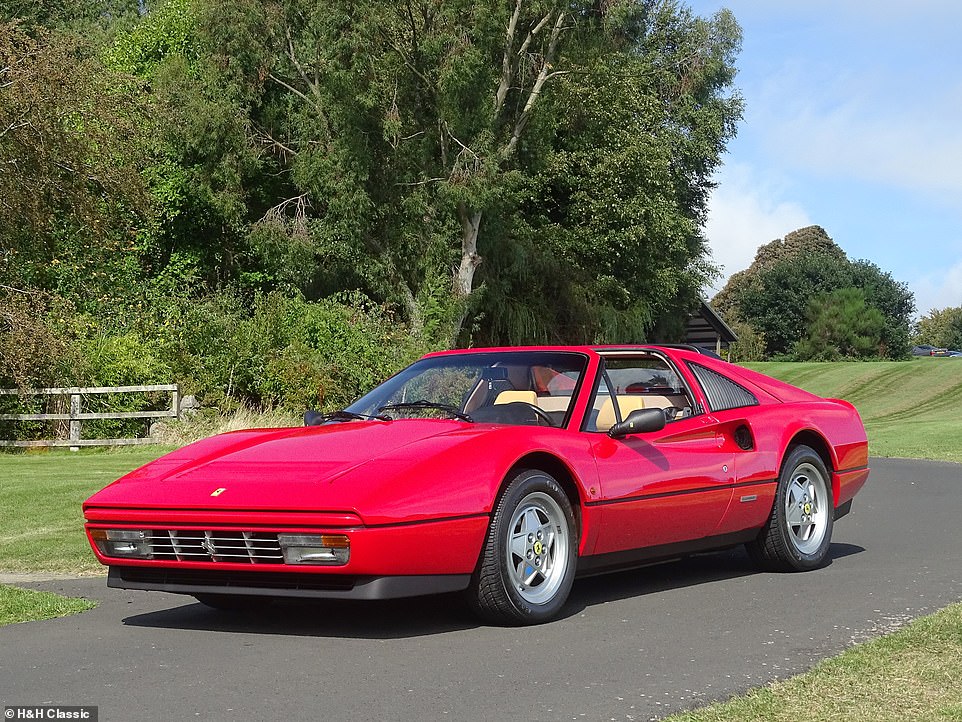
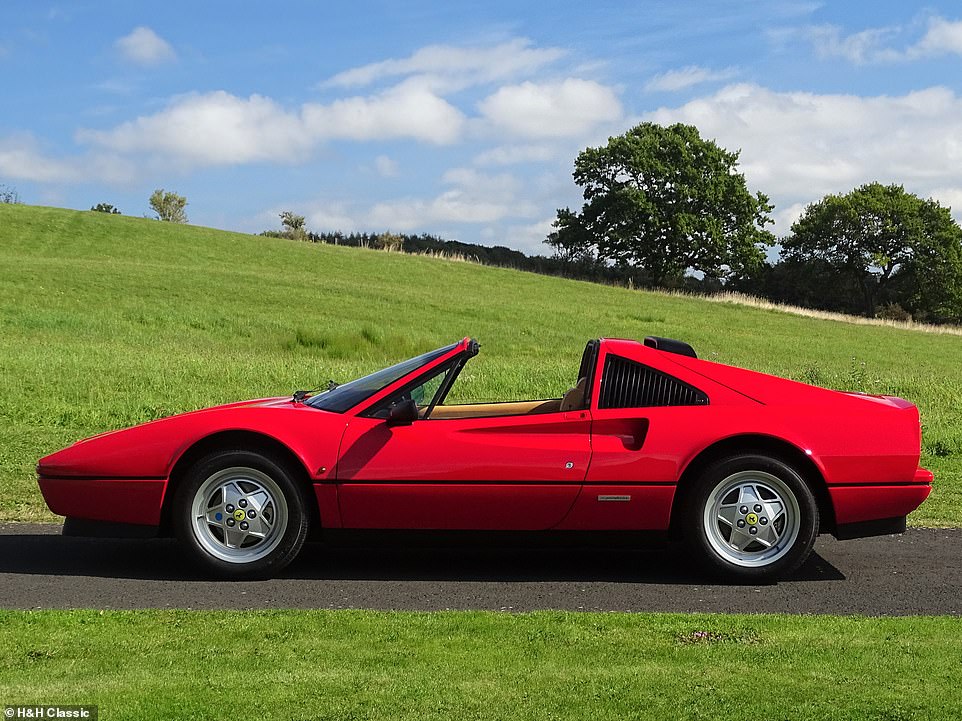
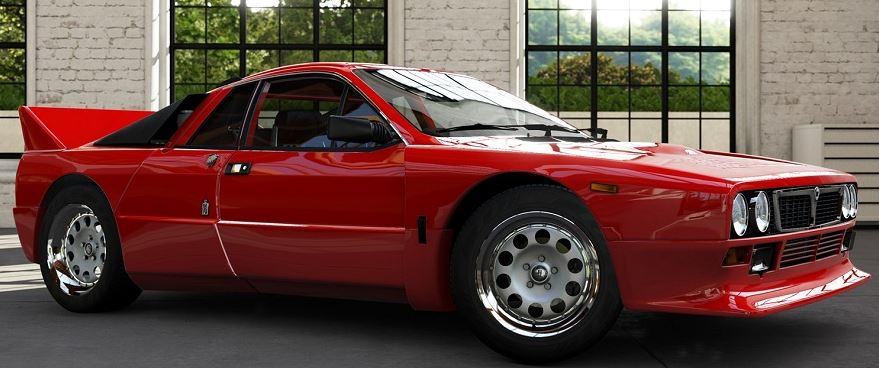
Maybe not.  This is a hill I’d be glad to die on — just for the sake of automotive beauty.  Here’s one example of a car that couldn’t be made in the U.S. today because regs, and we are the poorer for it:

More about Bizzarrini.


The title, by the way, is a play on a line of dialogue from Cheech and Chong’s Big Bambu  album.

Birth Year II — The British Saloons

Last week we looked at the sports cars that were buzzing around the city streets and country roads during 1954.  Now we’ll be featuring the saloon cars of that era. First, let’s look at some British cars that take my fancy for various reasons (it’s not  a comprehensive list):

Bentley Continental R Fastback

Rolls Royce Silver Dawn

Alvis TC 21/100

Daimler Conquest Series II

Sunbeam Talbot 90

Jensen 541S

But those are luxury  cars.  The commoners (hoi polloi) drove cars that were far more modest and prosaic:

Rover P4-110

Wolseley 4/44

Austin A40 Cambridge

Hillman Minx Mk VII

And if you were the lowest of the polloi, you drove things like this:

Morris Minor Series II (my Mum had one)

Austin A30

Other than the Bentley or the Jensen, I wouldn’t be caught dead in any of them.  That said, my grandfather drove an Austin A40 (in the early 1960s), my Mum drove a Morris Minor, and my buddy’s mother used to drive us to primary school in an Austin A30…

One of the downsides of being a British colony in the 1950s.

Next week, the Europeans.

Birth Year

I was born in 1954, a rather unremarkable year wherein not much momentous happened other than the aforementioned (yeah, I know, “Enough of the damn solipsism, Kim” ).

I wish I could say that some great cars were also  born in 1954, but it seems like all the cool ones came either before (Mercedes Gullwing, 1952) or afterwards (Ferrari 250). So I can’t even say that.  Nevertheless, let’s take a stroll down Memory Lane and look at some spectacular sports cars which were around during that year.  In no specific order:

Aston Martin DB2-4 Spider (Bertone)

Bristol Model 403

…and its “near-twin”, the BMW 502 convertible

Daimler Conquest Drophead

Alfa Romeo 1900 Sport Spider

Fiat 8V Vignale

Ferrari 375 Mille Miglia

Jaguar XK120 Roadster

Austin Healey 100-4

Then there was the Mercedes 300SL Gullwing

But my favorite of all of them?

Lancia B24 Aurelia Spider (which, by the way, had the first-ever production V6 engine) and which was  introduced in 1954.  Here’s Jay Leno’s take on the later 1958 model.

Maybe I’m just prejudiced… but are these sports cars not stunningly beautiful?  Next week we’ll look at some passenger cars of the era — which were definitely not  the equal of the sports cars.


Update:  My  eyes aren’t what they used to be, either:  here’s the Morgan +4:

25 Best Bargains

Via Insty, I stumbled across this list:

If you can afford the running costs or get a great warranty, these cars will be nicer than anything new at the same price. Here are some great used luxury cars to buy.

Go ahead and look at what’s on offer.  Then come back for the challenge, which is:

Pick your top 3 (assuming that all the cars are well-maintained inside, and that they’ll run for at least 40,000 miles before something breaks).

Unlike my normal practice, I’m going to pick my own top 3 up front.

#1:  Aston Martin DB7 Vantage

…because Aston Martin, and that exquisite V12, better than anything outside a Ferrari or Bentley.

#2:  Jaguar XK

…and NOT the XKR, which is horribly vulgar.  Honestly, the “ordinary” supercharged 4.2-liter V8 should be enough for anyone.

#3:  Jeep Grand Wagoneer

Of all the twenty-five cars on the list, it’s the one that gets a visceral reaction from me.  I want to drive it on a crappy dirt road in Colorado, guns in the back and elk/bear hunting on the brain…

Your top 3 in Comments.

Yet Another Difficult Choice

One of my favorite games is one I’ve played before on this blog:  someone offers you a choice between three cars (in mint-original, fully-restored and/or modernized condition, whichever you prefer), which one would you pick?  The rules are:  you can’t ever sell it, so the car’s current market value is irrelevant; and it’s a driver.

For today’s fun, we’re going to feature three ragtop beauties from the mid-1960s (and I’ve tried to match the color so that it doesn’t affect your decision):

1967 Ferrari 275 GT Spider (3.3-liter V-12, 300 hp)

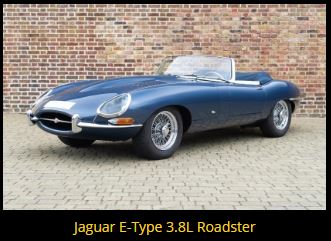
1965 Jaguar E-type Roadster (4.2-liter straight 6*, 265 hp)

1967 Maserati Ghibli Spider (4.7-liter V8, 306 hp)

Go ahead, make your pick in Comments — but show your work.


*Duly corrected, sorry.

/1984

Improving The Past

I talked about the David Lee resto-mod of the 246 Dino a little while ago, and either I’ve been asleep or there’s a growing movement afoot to taking old, gorgeous cars of dubious reliability and either restoring them with modernizations (David Lee) or building new models from scratch (usually at ruinous cost) from companies like Eagle GB (with their E-Types), and now, Frontline Developments with the venerable and exquisite MGB (compared to the original here).

And just like the gorgeous Eagle E-Type, the FD-built MGB is a sight for sore eyes:

…and yeah, the LE50 looks exactly like the old MGB GT — but whereas the old MGB used a 1800cc engine which produced 96hp and had a top speed of 95mph (downhill with a tailwind, half of that uphill), the LE50 has a tweaked Mazda 2-liter engine which kicks out 138hp and propels the lightweight LE50 up to 160mph(!!!!).  Oh, and the LE50 has banished Lucas / Smith Electrical to the fires of automotive hell, which means it will start every time, and that using either headlights or windshield wipers (but not both) is no longer a feature.  (Here’s the AutoMag review.)

Kim wants.  So too does New Wife — because she used to own one of the old MGBs back in the mid-1970s, when she was still a glamorous young socialite.

And at about $85,000, the LE50’s purchase will need considerable assistance from my retirement plan a winning lottery ticket… [sigh]

Oh, and one last thing:  on some forum or other, a twerp questioned whether anyone would pick the new MGB over a Porsche Cayman (at about the  same price, but with vastly better performance).  I can think of at least two  people who would, and they live at the same address.  In this house (and, come to think of it, at this blog too), class will always trump flash.