
This one had me howling, in Comments:
Category: Deep Thoughts
Keeping It Anonymous
POTUS-wannabe Nikki Haley and some others have come right out and said that Internet anonymity should be banned.
I think that’s bullshit, despite the fact that I myself have eschewed Internet anonymity (for the most personal of reasons). I think that while anonymity can breed mischief, it can also protect someone from retaliation when, for example, shining light on the inner workings of an institution.
Whistle-blowers in large institutions (especially government and large corporations) would almost certainly be silenced because of (justified) fears that they’d lose their job by so doing — even if they were exposing extreme malfeasance or negligence. That cannot be a good thing.
Of course, anonymity affords trolls and other such excrescences the ability to say awful things — such as defamation or character assassination — not to mention unacceptable utterances such as… racism?
Oh yeah, and that’s the problem. Because the minute you say “You can say this and not that”, there’s a little question of who decides the parameters of accepted speech.
We have a First Amendment that addresses that issue, I believe, and it was thoroughly covered in the Anti-Federalist by — ho! — the anonymous “Brutus”.
There is a vulnerability in that freedom, of course, just as there’s vulnerability in all our social and political freedoms. But confining ourselves to speech for a moment, we know the old adage that a lie travels round the world before the truth can get out of bed, and anonymity is the prime facilitator thereof.
Online commenter “Fred_The_Wise” can post on Xwitter that he has proof that Bill Clinton is a serial molester of underage girls, and even Clinton’s feral lawyers would have a problem stopping that “untruth” from spreading and “contaminating” Clinton’s good name. “Kim du Toit” can do no such thing, of course, unless he has the actual proof that Bill Clinton is such a pervert.
The problem, as we all know, is that “Fred_The_Wise”, even if he has actual proof of said molestation, is not going to be the next “suicide” at the hands of the Clinton “Hit Squad” because nobody knows who he is; whereas “Kim du Toit” would have to be extremely careful of slippery soap in the shower and random nooses hanging from trees, if you get my drift.
That “Fred_The_Wise” might just be indulging in a little gratuitous character assassination is just a malevolent by-product of the freedom of speech.
Which is terrible, but unfortunately for goons like Nikki Haley, they’re just going to have to live with it, as we all have to do.
Call To Arms
At the Federalist Society, a speech from Bari Weiss which outlines the issue facing us at this time, and reminds us of our collective duty to save civilization. As she rightly says:
When antisemitism moves from the shameful fringe into the public square, it is not about Jews. It is never about Jews. It is about everyone else. It is about the surrounding society or the culture or the country. It is an early warning system—a sign that the society itself is breaking down. That it is dying.
It is a symptom of a much deeper crisis—one that explains how, in the span of a little over 20 years since Sept 11, educated people now respond to an act of savagery not with a defense of civilization, but with a defense of barbarism.
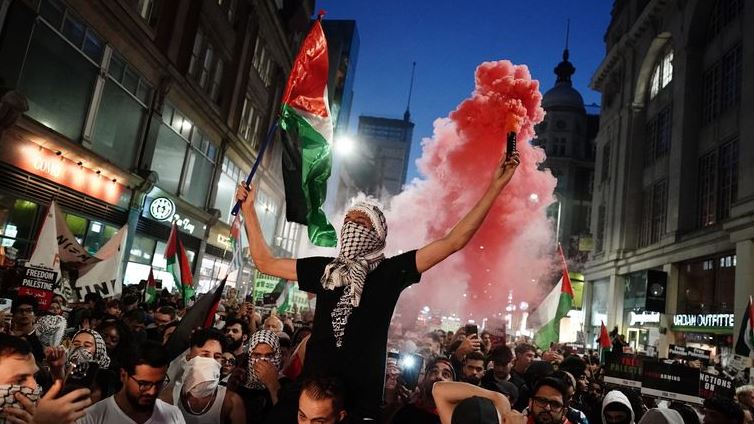
Read the whole damn thing, because you must.
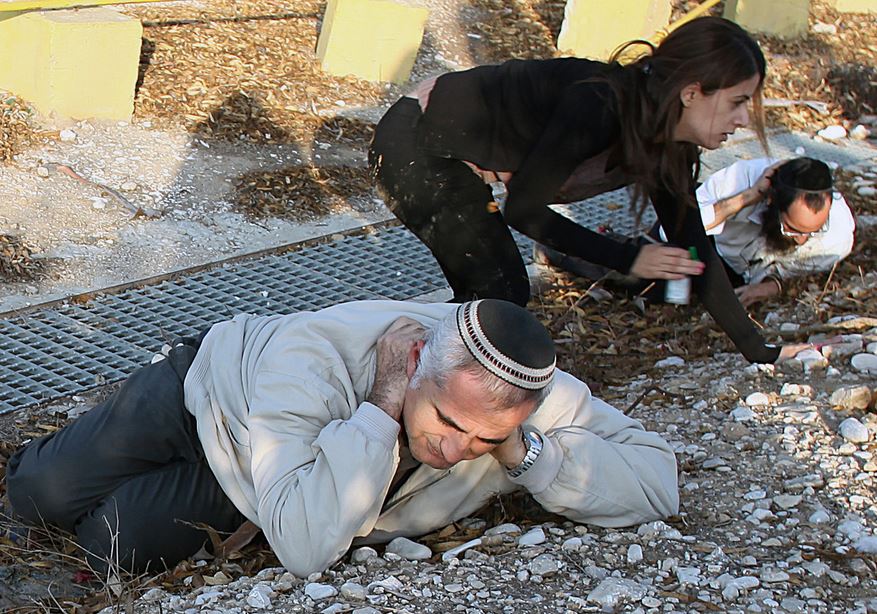
It’s not just Jews who are at risk. We are all at risk, every one of us who claims to be civilized.
Required Viewing
Almost every speech or article by Victor Davis Hanson is worth one’s attention, but his speech on George S. Patton is absolutely filled with all sorts of relevance in today’s society.
Specifically, VDH comments on the unease with which civilized societies view (and treat) their warriors — and he’s absolutely correct. (By the way, the sainted Omar Bradley doesn’t come out very well, which alone makes it worth watching.)
(You only have to watch the first 40 minutes or so to get the full flavor.)
Warning
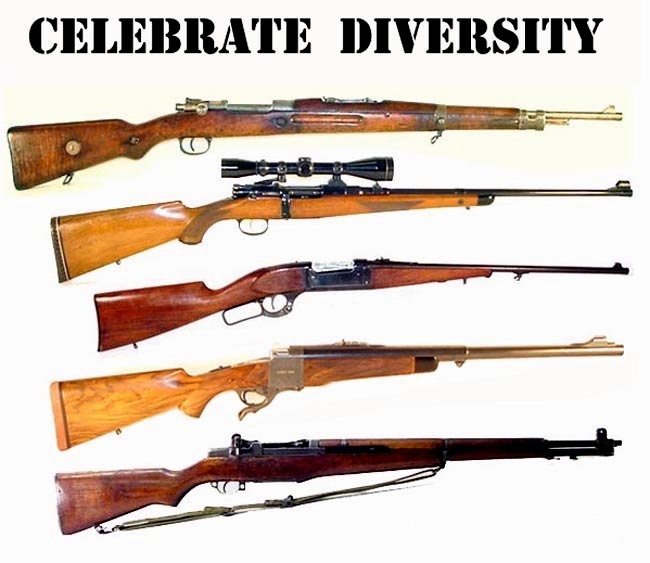
Every single one of today’s posts is about guns. Including the Funnies.
Try to control your shock and surprise.
Actual Meanings
I have to admit that I’ve missed Jeff Goldstein’s Protein Wisdom these past few years — Jeff was one of the First Wave of bloggers, and his writings were always interesting, not to say educational.
As is his latest post. Witness:
At its essence, stakeholder capitalism is Marxian capitalism run through a lens of business ethics. It is the attempt to maintain authoritarian control over capitalism by forcing upon the Invisible Hand a Velvet Glove, then using that glove, which hides an iron fist, to pound the world into adopting values that both assert and maintain its worldview. It is Theory applied to markets, marketing, wealth creation and management, and an overall globalized ethos of required and policed “virtue,” with the end goal being — as it always is under the discourses of cultural Marxist thought — power: who has it, who controls it, and who uses it for their own ends most effectively and ruthlessly.
Seldom have I seen varied metaphors blended so seamlessly into a single argument.
And the well-stated zinger:
In the stakeholder capitalist system, investors aren’t — or at least, they shouldn’t be — solely interested in profits driven by production and consumption. And this is because to the stakeholder capitalist, itself a euphemism for collectivist corporatist, “it is well proven that our current form of Capitalism is inherently unsustainable because it requires endless growth on a planet with finite resources.”
Of course, none of this is “well proven” — the history of shareholder capitalism suggests the opposite, in fact, as innovation has led to the production of more and more out of less and less — but whether this is or isn’t the material case is incidental to those who are working on this inorganic worldwide paradigm shift commonly known as The Great Reset.
Read the whole thing, because it’s protean.
I’m grateful for this opportunity to voice a question which has nagged me for many years: is Kim Du Toit really an American?
Look, I know you faced the choice: legally immigrate to America or be beaten to death in a cargo container. Anyone who has not faced that situation has no standing to say which is the moral choice. Nevertheless, your choice is questionable.
No reasonable person can doubt your commitment to constitutional, republican governance; to the public order so essential to the thriving of civilization; to entrepreneurship and the creative power of capital; to national defense; and ultimately to the rights and prerogatives of the individual.
However, you have certain… cosmopolitan tendencies, which cast doubt on your true allegiance. You have traveled to England and maybe even to Stockholm; places where child molesters are tolerated. We patriotic, heartland Americans might overlook such peccadilloes… except for one thing.
We can’t pronounce your name. Americans have made no secret of this: we cannot hear or pronounce French vowels or terminal consonants, and we understandably become violent when anybody points this out.
Previous generations of immigrants had the good sense to Americanize their names, is all I’m saying.
All good stuff, and it gave me much amusement. Let me take them in reverse order. Firstly, here’s the story of the name.
When I became a U.S. citizen — I mean, on the very day I was sworn in — I was asked if I wanted to change my name.
It was the first I’d heard of this option; nobody had ever told me I could do it when I became a citizen. All I had to do was give a new name right there, and that would be the one on my passport and naturalization certificate (and SocSec database, automatically).
Had I changed it — one option was “Dalton” because it sorta sounds like “Doo-twah” and had two syllables, but I needed to think about it — it’s a big deal, changing one’s name — and I had to make a decision right there and then.
So I didn’t.
And lo and behold, I found over time that people liked it — they said it sounded really cool and exotic — and it was quite a hit with the ladies, along with this kinda-fake Brit accent that I picked up at school.
Interestingly enough, when I asked both my American wives (Son&Heir’s mom, and Connie) if they wanted to keep their respective surnames instead of being saddled with this strange French thing, they not only refused, but refused loudly and emphatically. (New Wife, when I asked her the same question, just gave me That Look so I changed the subject hastily.)
As to the other charges:
However, you have certain…cosmopolitan tendencies, which cast doubt on your true allegiance. You have traveled to England and maybe even to Stockholm; places where child molesters are tolerated. We patriotic, heartland Americans might overlook such peccadilloes…
(I chuckle helplessly again, even as I type this.)
I realize that the charge of “cosmopolitanism” is a serious one, especially to Middle America (the class to which I aspire, and the one with which I identify the most strongly).
But FFS, just because I speak several other languages that most Murkins can’t, and I like visiting foreign lands, and can tell the difference between Baroque- and Norman architecture, and likewise between Academy- and Romantic art, and Chopin and Schubert’s music, does this make me less American?
I even admit to preferring croissants over Wonder Bread, sausage rolls over hot dogs, and Victoria sponge cake instead of apple pie. (I draw the line at BBQ, however: no other food can compare.)
And I’m really sorry, but Wadworth 6X is just a better goddamn beer than fucking Budweiser or Coors.
Frankly, I think that Americans could do with a little more cosmopolitanism, if for no other reason than to break the bonds of bullshit American marketing of mediocre/awful products like the above (and let’s not forget “American” cheese, which is truly fucking horrible and no man should).
And I’m happy to do my bit to advance that cause, on these here pages and on this back porch of mine.
By the way: I’ve never been to Stockholm, and I think child molesters should be burned at the stake, after extensive torture.