Quote Of The Day

“It’s like asking Iron Maiden to play jazz.” — Chef for Prince William’s eco awards, in refusing to prepare a vegan menu.

Now let’s do away with crap like “eco awards” and we can all be happy.

Validation

Many years ago I made the decision to travel only during off-peak season times — usually during fall and winter — so as to avoid this kind of thing:

Apart from the claustrophobia of crowds such as the above, I decided that there was nothing — no tourist attraction, no museums, no vista — that was worth that kind of hassle.

And I’m not even considering the fact that among those crowds in the pictures are undoubtedly scum like pickpockets and other such wealth redistributionists.

It has bitten me on a couple of occasions, of course, most notably in winter when establishments such as restaurants and hotels will “close for the season” (New England and the French Riviera being the most notable).  So be it.  I make a note, and move on.

I also make an exception for things like Christmas markets — especially in southern Germany and Austria — mostly because I enjoy them more than I hate the crowds that throng them.  Here are Heidelberg, Salzburg and Vienna (in order):

Note that the freezing temperatures didn’t seem to put off too many people — mostly, I suspect, because they’re locals (ergo accustomed to the weather).  Certainly, from memory, German was the most common language I heard in all three places;  Japanese, Chinese and other such diversity:  not so much.

Then of course there are crowds that would be welcomed, such as at the Goodwood Revival*:

…and if you’re not willing to put up with crowds for the last of these pics, I don’t want to talk to you.

Then there’s the Chelsea Flower Show for New Wife (a very keen gardener), which is taking place as I write this:

But being in a summer crowd of thousands at the Spanish Steps in Rome, or waiting to get into the Louvre in Paris?

Pass, with prejudice.


*note that I said “would”, because I have yet to go to the Revival.  One of these days, Rodders…

More “Legal” Bullshit

Here’s an interesting take:

A University of Miami law professor recently offered reasons why that the public should consider extending copyright law to include “collectively held cultural identities.”

In an excerpt of her paper “Protecting Cultural Personality” in Race, Racism and the Law, J. Janewa Osei-Tutu notes companies such as Timbuk and Louis Vuitton “have designed and marketed clothing based on traditional ethnic clothing styles or symbols” … but without the “knowledge, consent, or involvement of the cultural group” in question.

Osei-Tutu argues intellectual property laws are “underinclusive — at least in relation to valuable intangible cultural heritage from indigenous communities and local communities from the global south [which] allows corporations and those outside the community to capture and monetize this unprotected resource, which means that it is exposed and subject to misappropriation.”

Sounds like bullshit, dunnit?  Gets deeper, though:

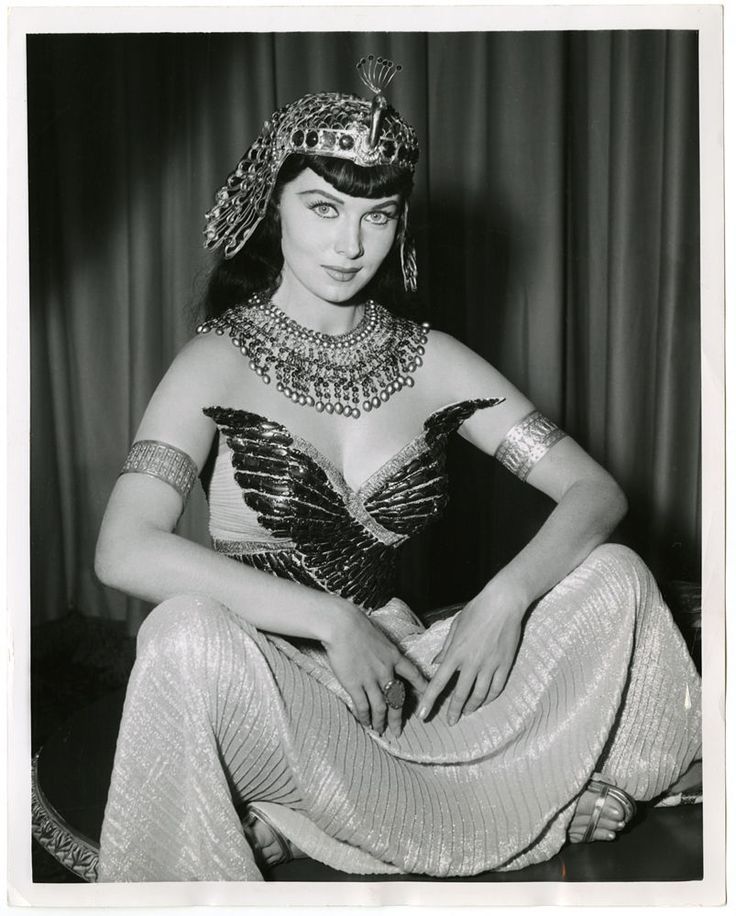
In order to protect “cultural personality rights,” Osei-Tutu (pictured) says cultural groups should have “sufficient boundaries and markers, or indicia” by which to identify them.

Groups can be “self-defining,” and it’s “not necessary for the public to have significant knowledge of the group.”

Sure, just make it up as you go along.  Okay, I’ll play.

Supposing I composed and released a blues song in the style of, oh, B.B. King.  (Note:  “in the style of”, not a copy of.)  Am I making an appropriation of the blues culture — defined on the fly as something that is inherently of Southern Black origin?  According to this college harpy professor, probably so.

Fine.  But let’s just examine that “blues culture” thing for a moment.  It was indisputably a lament, born of a race’s suffering, and played on either piano or else guitar by Black musical luminaries such as Otis Spann and Muddy Waters, respectively.

On the piano?  You mean, that keyboard instrument invented and devised in 1700 by Italian Bartolomeo Cristofiori, a White man?  And about the guitar:  the “classical” acoustic version was invented by inter alia  Spaniard Antonio de Torres Jurado, and its electrical counterpart by inter alia  Adolph Rickenbacker and Leo Fender (to name but two).  Regardless, both instruments were invented by White men of European heritage.

If Spann and Waters had had to operate under those pesky “cultural appropriation” restrictions, it’s safe to say that the blues would still be being sung in Black Christian churches and not in concerts all over the world.

Wait:  did I say “churches”?

Doesn’t look too much like something African (or African-American), does it?

Of course, I’m just screwing around here.  But at the heart of this little piece of satire is a very serious message to the racist hustlers like this Osei-Tutu creature:

Stop fucking around and claiming that “cultural appropriation” is somehow an evil thing.  That, or don’t wear jeans (invented by White Jewish guy Levi Strauss) ever again.

And steer clear of fried chicken, while you’re about it, or else the Romans are going to declare a classical fatwa on your ass.

I could go on all day, but I think you get my point.

Range Report: Walther-Hammerli B1 (Part 2)

Last week’s test of the above rifle made me want to test how the thing shoots with serious glass (instead of the “meh, that’s close enough”  accuracy of the red-dot genre).

So suiting the action to the word, I mounted a Burris Fullfield 2.5-10x42m that just happened to be lying around in Ye Olde Odds & Sods box:

Looks better, dunnit?  Also, this time I’d brought a sandbag along, instead of having to rely on my shaky old grip off the bench.  Ammo used was CCI Mini-Mag 40gr solids, and CCI Maxi-Mag 40gr solids.

Anyway, for the life of me I could not remember when last the scope had been mounted, or even what gun it had been mounted on, so I started off slowly, at 30 feet with the .22 LR:

Okay, good enough for jazz / government work.  When I moved the target out to 60 feet and then 75 feet, the shots went quite high, as to be expected.  So I moved the target back to 60 feet, dialed the scope down, and fired off the unlabeled string in the orange target on the left.  (Yeah, I forgot to label it, sue me.)

So much for the .22 LR;  now came time for the barrel swap and the .22 WMR.

The top string, at 75 feet, was fired with the scope untouched from the .22 LR sighting-in.  High (expected) and much to the left (unexpected).  The next string, at 60 feet:  still high (okay) but a lot less to the left (not okay).  When I brought the target back to 30 feet, the group was a little high (to be expected, with the mag load) and still to the left.

So I said a few Bad Words, and decided to zero the scope for 60 feet as the default (which is the very bottom grouping).  Very much good enough for jazz / government work.

But when I left the scope untouched and changed the barrel back to .22 LR, at the same distance (60 feet) I got the un-labeled grouping on the left (with a called flyer because the guy in the bay next to mine chose that precise second to touch off a .44 Mag revolver, and I caught a fright).

Still, there seems to be way too much left/right variance between the two calibers — which means that I can’t swap barrels in the same session without messing with the scope each time.  And that’s somewhat annoying.

So here’s what I’ve decided to do.  If I’m going to be shooting .22 LR, I’ll use this setup:

…and if I’m going to be shooting the .22 Mag, then the scope:

Swapping the scopes — they both have quick-detach (QD) mounts — actually takes less time than changing the barrels.

So I’ll be using the red-dot for plinking .22 LR fun, and the scope for any serious .22 Mag shooting I may want to do.

Final thoughts:  while shooting the .22 Mag ammo, I had several ejection failures (FTE) and a couple of feeding failures (FTF).  As I was too busy doing the sighting-in thing, I didn’t pay much attention to it until afterwards.  Here’s what I learned:  even though the straight-pull bolt looks quite flimsy (plastic, what can I say?), it really isn’t, and the thing needs to be pulled back and slammed home with as much force as a turnbolt action.  I was actually being quite gentle with the loading process, and I shouldn’t be.  That will be addressed in future range sessions.

Next step:  acquire a suppressor.  More on that, later.