
Several Readers (thankee) have pointed me to this article at American Thinker:
There was a time — not very long ago — when the automobile represented one of the clearest expressions of individual choice in a free society. Limited only by fuel, roads, and imagination, a person could choose where to go, when to go, and how to get there. The car was not merely a machine. It was mobility made personal — an extension of autonomy and freedom.
Sadly, that is no longer the case. Increasingly, this same instrument, once a tool to facilitate individual independence, has been repurposed into a system of monitoring and control. Though advertised as safety measures for the consumer, these measures were clearly designed to empower the state.
Modern vehicles are no longer just mechanical devices; they are computers on wheels. Embedded sensors track speed, braking patterns, seatbelt usage, location, and even driver attention. Event Data Recorders — commonly referred to as “black boxes” — have been standard in most new vehicles for years. Originally justified as instruments to reconstruct accidents, these devices record data in the moments before a crash. Few object to understanding the causes of collisions. But it is worth noting that once data exists, its use rarely remains confined to its original purpose.
Insurance companies now seek access to driving data to adjust premiums. Law enforcement agencies have used vehicle data in criminal investigations. Courts have admitted such data as evidence. Each of these developments can be justified in isolation. Together, they represent a quiet but unmistakable shift: the automobile is no longer simply your property — it is a source of information about you.
More recently, legislative developments have accelerated this trend. The federal infrastructure legislation passed in 2021 includes a mandate for advanced impaired driving prevention technology to be installed in all new vehicles within the coming years. While often described in benign terms — systems that passively detect intoxication or driver impairment — the practical reality is that these systems must continuously monitor driver behavior in order to function. Monitoring creates data. And data, once created, rarely remains unused. It takes on a life of its own.
Proposals and discussions around remote vehicle disablement — popularly referred to as “kill switches” — have raised further concerns. While proponents argue that such features could prevent high-speed chases or stop stolen vehicles, the existence of remote-control capabilities introduces a fundamentally different relationship between the individual and the machine. A car that can be disabled remotely is clearly not under the control of its owner.
I’ve ranted about this little bit of rampant evil on many occasion, and the gist of all my screeds has been all around this concept: giving up control — to anyone, for even the most laudable purposes — will, inevitably, end your freedom.
I’m unlikely ever to buy a new car, and certainly not a “modern” car which would contain all the electronic snoopery and filth as discussed above, and most especially at today’s bloated and excessive prices. But if I were ever to be forced into buying a replacement for the Tiguan or the Fiat, and given that no matter what I buy, it would carry a horrible price tag withal, then why would I just not get a much older car that while expensive, at least allows me the freedom that cars of yore gave me? Something like this one, for instance:
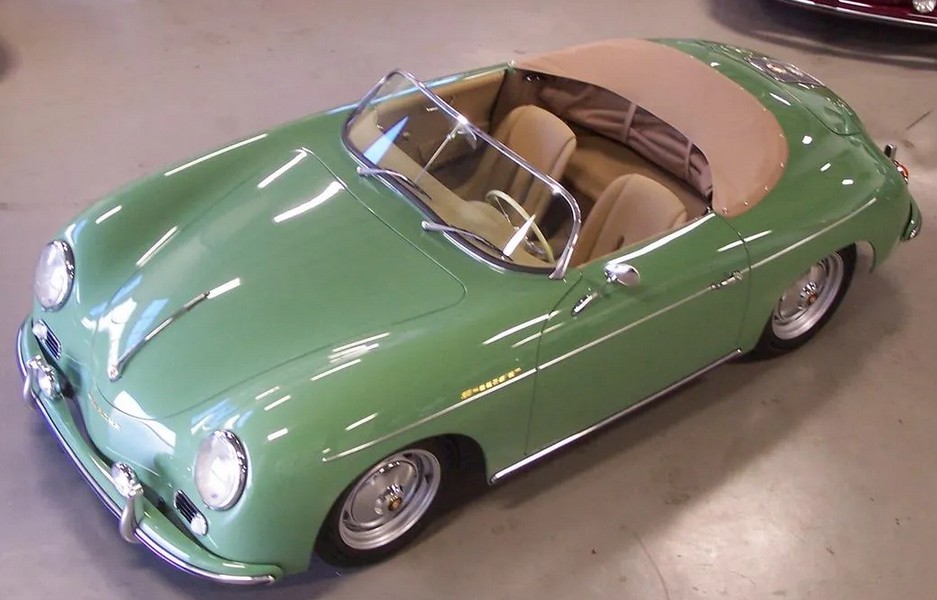
I know, fifty-odd grand for what is in essence a gift-wrapped VW 2300cc engine may seem excessive to some; but I don’t need much more than 145hp (especially on that featherweight chassis), and it least it doesn’t look like every other car on the road (#WindTunnel). But most of all:
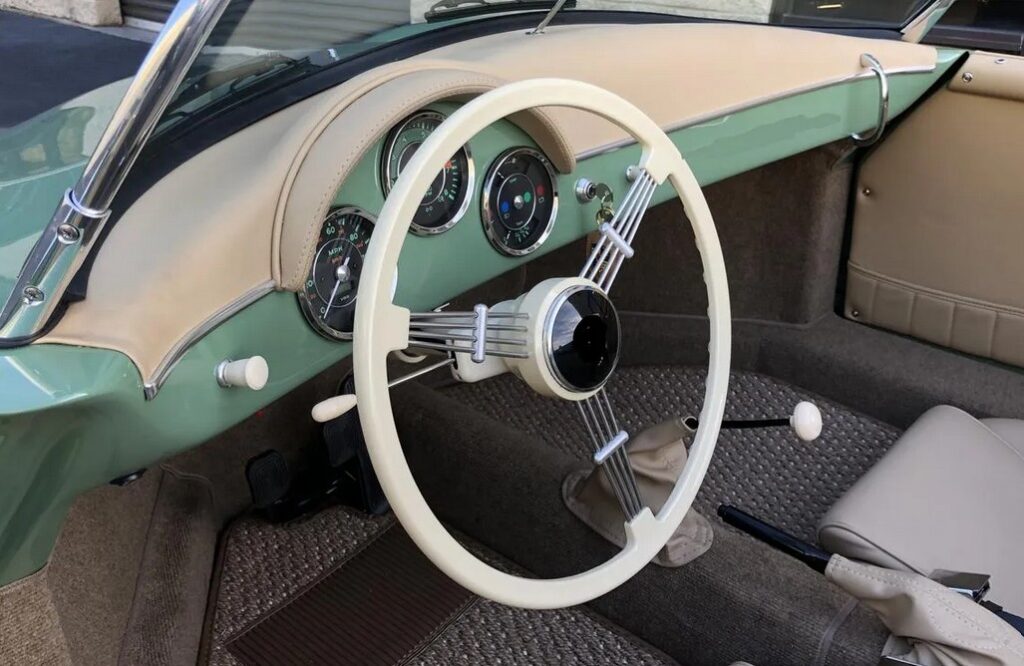
…please note the refreshing absence of all the modern electronic geegaws which bedevil today’s automotive offerings. The only thing missing (which I’d add with alacrity) is air conditioning. (#TexasSummer)
For the faint of heart, let me point out that a new VW Tiguan base model will set you back close to $40,000, and a Jetta (with a stick shift!) only five grand less. And you can bet your ass that both the VWs will come equipped with all the latest in snoop-‘n-control electronics.
Sorry, but no. To hell with all that. I want simple, and I want freedom.