
(Previous: Chapter 1, Chapter 2, Chapter 3, Chapter 4, Chapter 5, Chapter 6, Chapter 7, Chapter 8)
Chapter 9: Club Work
Here’s the thing about Pussyfoot. Yeah, we were a band, and a fairly competent one. Certainly, when the opportunity came, we were often re-booked to play again for the same crowd for the next year (office parties and so on). But our principle opportunities had always been wedding receptions and some school dances, and there’s very little “repeat” business there, of course.
So why did we stay together all that time, while we were struggling to make it work? Most other bands would have called it quits, or broken up to join other bands, as so many did.
But we were more than just a group of musicians. We were friends, and so we did what friends did — we hung out together, all the time. It helped that we shared so many interests and hobbies outside music, of course; Kev, Knob and I all played golf, so Saturdays and Sundays often saw us at Huddle Park, the local municipal course, struggling away at our game. (Knob was the best of us, Kevin the worst, and I was sometimes the best, and sometimes the worst. No wonder I gave up the stupid game later.) Mike was Mr. Hobby Man, only he did it seriously. I had a giant Scalextric slot car racing set which featured a 15-foot straight, powered by two transformers (one per lane), and many was the evening we spent together, racing furiously, teasing each other and trying hard to crash the other guy’s car off the track. Mike, however, although he raced with us, used to race Pix cars, which was almost semi-professional, so fanatical were its players. He also got his private pilot’s license and built an ultralight aircraft — and taught me how to fly it. Knob was (and still is) more into boats, so we’d sometimes join him in that activity at Vaal Dam, the enormous reservoir south of Johannesburg. And those were just some of the shared fun times; we’d go on double- or triple dates together with the Girl Of The Month / Week / Weekend, sometimes with all the band members and a bevy of hapless girlfriends who were pretty much sidelined while we messed around and behaved like stupid boys. We were good friends, close friends.
So when I got back from the horrible Kelly Green gig in Bulawayo, only to find that I’d been replaced, there was no way I was going to let that be permanent. I went up to “visit” the guys at the Boulevard Hotel in Pretoria, to see what was going on and how I could undo it.
The Boulevard Hotel was quite a swanky hotel, and their second-floor restaurant was a nice room. While the first two musical sets were generally quiet affairs, the management were quite happy to let the band cut loose after the dinner hour. It was a fairly popular place, and blessedly free from the low-class scum that were so destructive a feature of Pretoria crowds.
But I wanted to see the new Pussyfoot — or “Atlantic” as they were now called — and most especially keen to see the new members of the band.
The new guitarist, Martin (“Farty Marty”) had been a member of Gate Show Band, one of the most popular club bands in South Africa. The reason he left them was because he’d tired of the professional music life: the constant uprooting and travel, the uncertainty that followed the end of each contract, and most especially, he’d been married (and since divorced) and he didn’t want to spend maybe months away from his baby son. So he’d got a day job, and looked around for another band, a part-time band this time, and he ended up with the guys. (I think he’d actually landed the Boulevard gig, and needed a band to play it with him. It was a fortunate confluence of opportunity, there.)
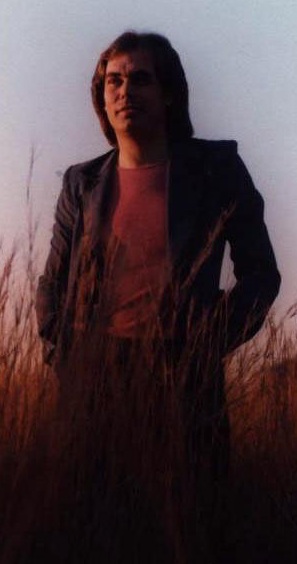
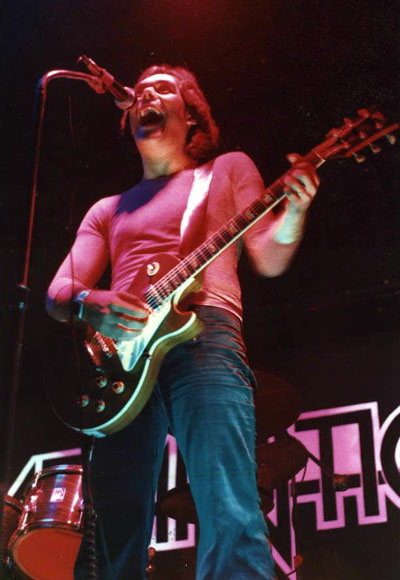
Farty Marty, looking sexy
Marty was an indifferent guitarist — just barely competent — but he made up for it by having a tremendous voice. Truly, it was golden, and he quickly became the principal vocalist in the band — the first among equals, so to speak, because Knob and Kevin had pretty decent voices themselves.
The same was not true of my replacement, Phil. He was an okay bassist, but his voice was terrible — not that this stopped him from singing out-of-tune harmonies, by the way — and he was also one of those dorky musicians with zero stage presence. Amazingly, he had rather a pretty wife (they lived in Pretoria) who used to work the door to collect the cover charges. Well, she worked the door some of the time, anyway.
Side note: We dealt with two managers at the Boulevard, a young blond Brit named Simon Totnes (whom we nicknamed “Simon Toothbrush” because of his spiky hairstyle) who was the assistant general manager, and the restaurant manager, an Irishman named Jerry Joyce (whose nickname was “Jerry Juice” because of his love of Teh Booze). Well, Jerry took a shine to Phil’s wife Celia, and she to him. And with Phil guaranteed to be on stage for forty-five minutes of every hour, that meant that Jerry and Celia could sneak off for a little quiet adultery in an empty hotel room, four times a night — Jerry having arranged for a hotel staff member to take Celia’s place at the door while she was otherwise occupied. Their little fling turned out to be not so quiet in that he confided the affair to Knob (because he didn’t know better), and the next time he came into the restaurant looking all flushed, the band broke into that popular Sutherland Brothers song, Lying In The Arms Of Mary — only the lyrics had changed to “Lying ‘tween the legs of Celia”, with “Mary” changed to “Celia” all the way through the song. Jerry nearly died of embarrassment. But he was saved by the fact that Phil The Retard was completely oblivious of the change to the lyrics, and of the affair… for a while. And just to mess with Jerry, we didn’t always sing the Celia version — only when he was in the room.
Phil’s other problem, although he didn’t know it yet, was that he wasn’t working the lights; in fact, nobody was, and the light “show” consisted of a couple of the lights shining permanently, without any change all the way through the evening.
Anyway, I watched this new Atlantic Show Band, and then at the end of the evening, after Phil and his thoroughly-shagged wife had gone home, I went over to be introduced to Marty, and we all sat around and talked music for an hour or so. When I was asked for my opinion of the band, I said bluntly, “You need a new bassist.” Howls of laughter from Kevin, Knob and Mike, with Knob saying to the others, “I told you he’d say that.” Marty, however, wasn’t clear on the concept, even though they’d told him I was the ex-bassist, and asked me why I’d said that.
“I’m a better bassist than Phil is, and I’m the fucking founding member of this band,” I told him. “And I have a better voice than he does, and can sing better harmonies.”
“You think?” he asked.
“When’s your next rehearsal?”
“Tomorrow afternoon.”
“Call Phil and tell him the practice is canceled,” I said. “If I can’t play every single song on the playlist (and sing better harmonies too) by the end of the practice, you can tell me to fuck off.”
So they did, and I did — discovering along the way that Marty’s and my voice blended wonderfully, to his great joy; and just like that, I was back in the band.
Phil didn’t take his firing well, of course, and took the news of his wife’s bonking the restaurant manager even less well, some weeks later when she blurted it out to him. Needless to say, her job ended because her husband had no sense of humor. So we lost a door collector, but nobody cared.
Of course, I wasn’t just boasting about being able to play the band’s entire playlist: most of the songs were from the old Pussyfoot playlist anyway, and Marty had only had a chance to add maybe half a dozen songs of his own to the list during his brief stay with the band; and I knew all but one anyway. Of course, there were also all “my” old songs (like this one) that the band could now play again, so the playlist was expanded considerably.
So the band was able to carry on seamlessly, the light show reappeared, and even Jerry Juice was impressed by how much the show had improved. (Not bragging; that’s what he told us after my first night back.) We settled into the routine, playing comfortably together again, and the only hassle was that because all the others (apart from me) had day jobs, we had to schlep from Johannesburg to Pretoria — about sixty miles — every weekend, playing Friday and Saturday nights only, and therefore for not much in the way of compensation. (I don’t remember how much we made at the Boulevard, but I think it was a combination of the door and a make-up amount, similar to the arrangement that Knob had negotiated with Vasco’s. It ended up being more than that, but not by much. Once again, though, we accepted it because we didn’t have to pack the gear up every night.) Simon Toothbrush was kind enough to give us each a room for the Friday and Saturday night, and as the restaurant was closed on Sundays (blue laws, in ultra-Christian Pretoria), we could rehearse on Sunday before heading back to Johannesburg (and Marty all the way back to his home in Springs, a little town about sixty miles east of Joburg; but his job included company car, so he didn’t care much about the miles, and he was a traveling salesman for a tire company, so he spent all his time on the road anyway).
The way the club scene worked in South Africa back then was actually pretty good for bands, if you could break into the circuit. House bands signed a three-month contract, and if management (and the crowd) liked the band, the contract might be extended for another three-month stint; and if the band was really popular, it could be extended almost indefinitely. (One of the top club bands was called Ballyhoo, and they were so popular that they seldom played any club for less than a year, and often longer than that. Most bands, however, did the three-month contract and maybe one extension, mostly because they wanted to play somewhere else or management decided it was time for a change. The contracts were therefore quarterly: January through March, April through June, and so on.
Atlantic had been signed for the Boulevard gig in about mid-January 1977, so the contract was due to expire at the end of March. I would have been quite happy to stay there for another stint through June, because:
My National Service in the Army was due to start in July.
But fate had other plans in store for us. Halfway through March, Marty told us that a gig had opened up: a band named Circus (another well-known club band) was breaking up, and so their April-June contract was going begging. The venue: the O.K. Corral outside Pretoria — the place where I’d seen Shalima play all those months earlier.
Holy hell: this was not some sleepy hotel restaurant gig; this was a proper, well-known and respected club, with salaries and accommodation included. (“Okies” was actually connected to a motel poetically called the “Silverton Motel”, thus named because the town was named Silverton.)
Originally, we’d expected to be paid the same as Circus’s contract had stipulated, but management decided that they weren’t going to pay us like Circus because, well, we weren’t Circus. Whereupon we told them that if they were going to pay us less, then we were going to play less — Friday and Saturday nights only, to be precise. To our amazement, instead of telling us to take a hike, they agreed to our terms — largely, I think, because they weren’t going to be able to find another band at such short notice, especially as the booking cycle was now closed. Sure, they might have been able to find another band — just none of the “name” bands because they’d already been booked. So they were stuck with us, and to their great surprise we were pretty damn good: maybe not quite as good as Circus, but not far off either. The proof was in the size of the crowds, which over the weekends were not far below those that Circus had attracted.
There was only one small problem. Our keyboards player Mike told us that he’d suddenly been called up for a fucking Army camp for the months of April through August. So we’d either have to play the gig as a guitar band — not a pleasant prospect because so much of our material now had a keyboard foundation — or else we’d need to find a replacement keyboards player, and right quickly because we’d need to rehearse intensively for him to learn the playlist.
Bloody hell.
For about a week we all wandered around in a daze. I think that had we not become serious professional musicians, we might just have walked away from the thing, contract or not. But we were never going to do that, not only because it would have been unprofessional and a shitty thing to do to the club, we didn’t want to become known as a band who would do such a thing: the pro music world in South Africa was small, all the club owners knew each other, and all the bands knew each other too. Nope: we had no choice.
One day I went off to my old stomping ground, Bothners Music Store, to see if perhaps Eds Boyle knew a keyboards player who could help us out. He didn’t — which was amazing because he knew everybody in the business — so we settled in to chat for a while. I moaned that I was going to go off to the Army, and didn’t fancy the thought of running around parade grounds and going off to fight South Africa’s shitty war against terrorists. Eds looked at me quizzically.
“Why don’t you join the Entertainment Group?”
“The what?”
“The Army has a unit called the Entertainment Group.”
“You mean the Army Band? Eds, I can’t play Army band instruments!”
“No, it’s separate from the Army Band. It’s a bunch of pro musos, some PF [Permanent Force a.k.a. Regular Army in the U.S.] and some national servicemen. You could go there.”
“Eds,” thinking that this was another of his well-known pranks, “I’ve never heard of them.”
“Kims… Trevor Rabin was there just a few years ago.”
“Seriously? Wow… but how do I get in?”
Eds smiled. “Relax, my son. I know the Group’s commanding officer — George Hayden.” (George Hayden was a well-known leader of a big band — I mean, TV appearances, records played on the radio, government functions, the full deal. At the time, he could truthfully have been called the South African equivalent of Artie Shaw or Glenn Miller.)
“George Hayden’s in the Army?”
“Yup. Here: let me write you a letter of introduction, and organize an audition. You’ll walk it, I know you will.”
And there and then, Eds wrote a letter for me, on the company letterhead. (I used to have the original, but it’s been lost in the mists of time so this is the gist of it.)
“Dear George:
This is to introduce you to Kim du Toit, who is a professional bass guitarist and whom I’ve known for years. He is due to be called up in the July draft of this year, and I have no doubt he would be an excellent asset to your Entertainment Group. Please give him an audition. — Eddy Boyle.”
Of course, I had no idea how to go about getting an appointment with someone in the Army; but I decided just to show up and see what happened. So I found out where the unit was stationed (a huge military complex known as Voortrekkerhoogte, don’t bother trying to pronounce it), and one morning I set off to see what the future might bring me.
Major George Hayden was (to say the least) somewhat taken aback at my unannounced appearance at his office door, but he read the letter and said, “Well, you come well recommended. Let’s see if this is all true, and Eddy’s not pulling one of his terrible jokes on me.” (Clearly, he knew Eds very well.)
The Entertainment Group was an interesting place. It consisted of an old farm house, which held the admin offices and Hayden’s own office, as well as a large practice room for the Big Band and some other smaller rooms. Then there was a row of corrugated-iron sheds (like Quonset huts), each of which was the permanent practice room for the four or five full-time PF bands.
Hayden took me to the first practice room, and introduced me to the band leader, Neil Herbert.
Oh, hell. Neil Herbert was a pop musician and recording star: he’d had several Top 20 hits over the years, and was very highly regarded as a musician. So this was the guy I’d have to play with, and his band?
Anyway, I was introduced to him, and after I’d plugged the Rickenbacker (which got some admiring looks from the band) into an amp, he asked me: “What do you want to play?”
I actually didn’t know what to say, so I just blurted out, “Can you play Chuck Berry’s Johnny B. Goode?”
He chuckled, “Of course”, and just like that, the drummer counted us in and off we went.
Now I’d played and sung Johnny B. Goode at least a hundred times before, and when it came time for the vocals to begin, Neil looked at me quizzically (“You going to sing the song?”) and I launched into it.
The nice thing about that Chuck Berry ditty is that it has a wonderful running bass line, and because I knew the song so well I didn’t have to look down at the fretboard at any point. That, plus my vocals, must have made quite an impression because when the song ended, the guys in the band actually applauded me.
“That was fun. Can we do one more?” asked Neil. This time, I had no idea what to suggest, so I asked to see his playlist. And then some damn mischievous imp made me say, “How about this one?”
“Do you know it?”
“I know it, but I’ve never played it before, and I’ve always wanted to. Just tell me what key you play it in.”
So once again, the drummer counted us in, and off we went into ELO’s Living Thing. And yes, I sang it, too, because the bass part isn’t that difficult and I knew the lyrics. When the song finished, Hayden said to me, “You’ve never played that before? Are you serious?”
“Scout’s Honor, Major,” I said, and crossed my heart.
He looked at Neil Herbert, who nodded. “Well, that’s enough. Let’s go back to my office.”
He scribbled a note, and gave it to his clerk to type up on the Unit’s letterhead.
“To the O.C.*, Services School Regiment (my designated unit):
I have provided NSM* Private Kim du Toit (704-164-144-BG) with this letter to give to you. I have auditioned him, and it is quite clear that he is an accomplished professional musician. I have no doubt that he would be an asset to the Entertainment Group, and I therefore request that you transfer him to my unit as soon as you are able. — George Hayden (Maj)
*O.C.: Officer Commanding and NSM: National Serviceman. I’ll explain the “BG” later.
So that looked promising; although this was the South African Army, so there was still a good chance that the transfer letter might result in me ending up as a cook in some foul artillery regiment. (All veterans will understand this circumstance completely.)
But Atlantic still didn’t have a keyboards player, and the gig date was drawing ever nearer. Then suddenly, I had a flash of inspiration:
GIBBY !!!!!
Yes, my old school buddy and Mike’s previous substitute had finished his degree and was now working for a firm of architects in Johannesburg. Could this work? I called him up — or maybe I went to his house, I don’t remember — and put the proposition to him. I was by no means sure that he’d be able or even want to help us out because by now, of course, he was married with a baby son. And the Okies gig was not a case of messing around on stage like we had at Vasco’s either: this was serious shit.
I had no reservations about whether Gibby could manage the gig, of course; some intensive rehearsals and he’d be good to go. But would family life allow him to take on the gig for three whole months, even if only on weekends?
Side note: Gibby had married his high school sweetheart Sue, whom I adored (and still do: they’ve been happily married for over forty-five years as I write this). But she was very definitely the boss when it came to this kind of thing, because… well, the talented and artistic Gibby was and still is extraordinarily prone to making impulsive decisions, so from the beginning he’d designated her as the gatekeeper to all his plans and ideas. So no matter how much he might like the idea of a pro gig, there was no doubt who would have the final say.
Of course, I ended up pitching the whole thing to Sue as well as her husband; and to my indescribable relief she just smiled and said, “That sounds like good time.”
Needless to say, the rest of the band was ecstatic at the news. Now all we had to do was bring Gibby up to speed with the playlist, which had indeed changed considerably since he’d last seen it. But times had changed, and we not only had a playlist, but we’d committed it all to a series of cassette tapes, which we presented to our new keyboards player (and guitarist — Gibby insisted on playing guitar if a song didn’t contain piano, organ or synthesizer). As I knew he would, Gibby learned to play all the songs in just over a week, and we therefore needed only a couple of rehearsals before the opening night.
So here we were: at last, a club band gig as I’d always dreamed.
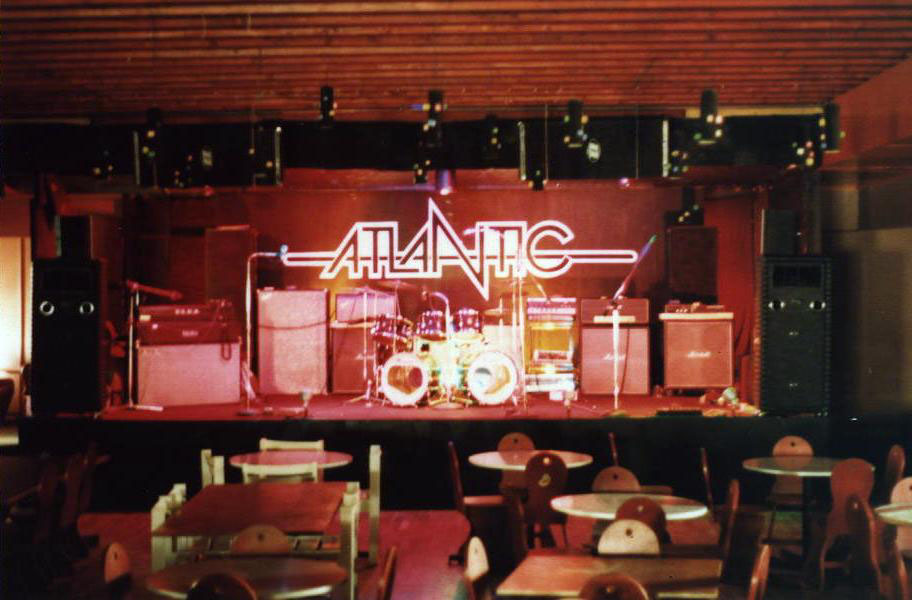
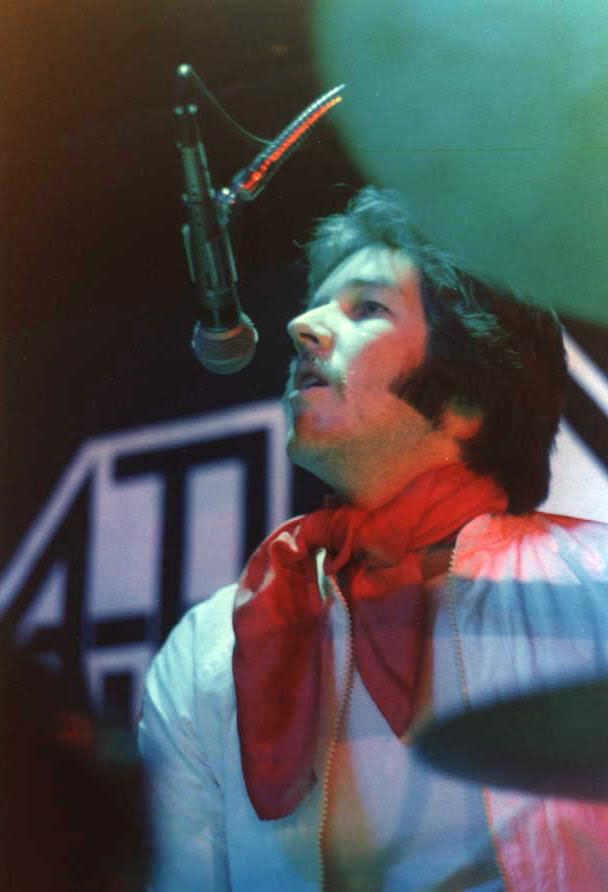
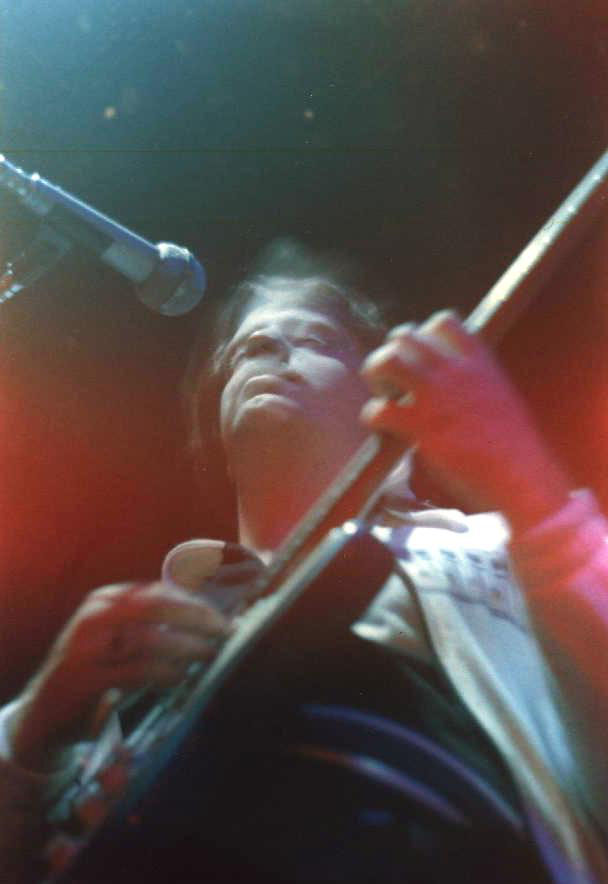
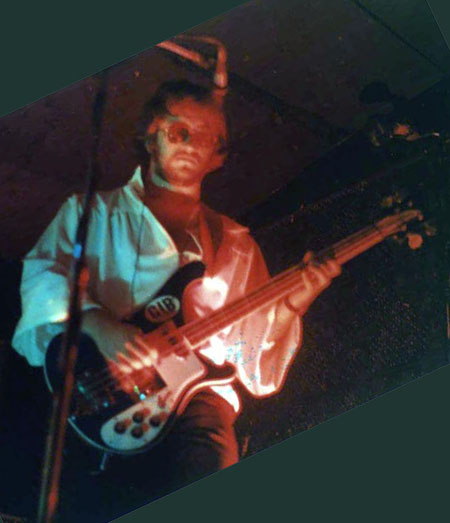
…and the new guy:
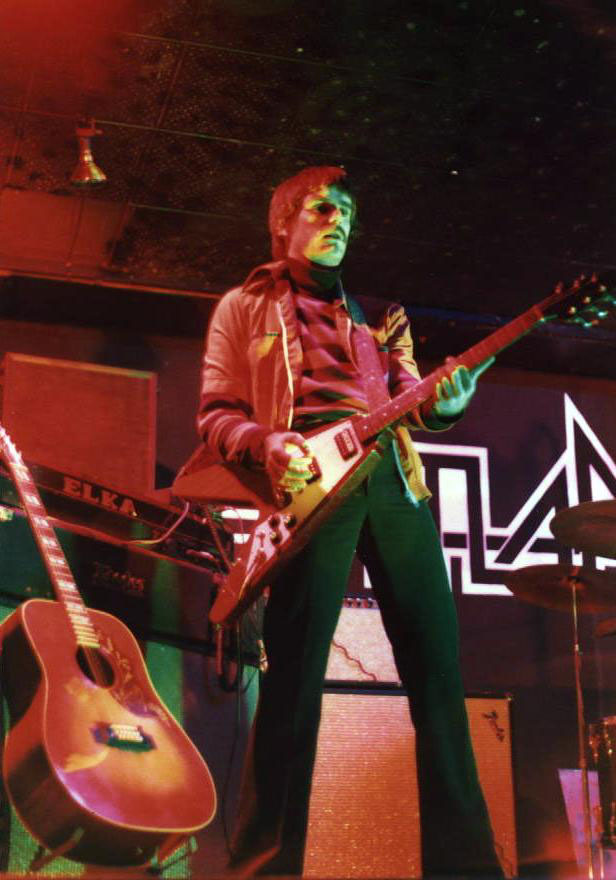
We blew the doors off the place, for three months. Along the way, we tightened not just our sound, but our whole act. When you open up the evening with Billy Cobham’s Stratus and then straight away launch into ELO’s Do Ya?, followed shortly thereafter by Bloomfield-Kooper-Stills’s You Don’t Love Me… and then at some point, I put on a girl’s pale blue nightie (to perform Sticky Love Songs), Knob became Far Ting, our Chinese drummer complete with Fu Manchu mask and three-foot-long drumsticks as we hurtled through a heavy metal version of the venerable Pipeline, and Kevin played not like some humble gig guitarist, but like a Guitar God when we blasted out Jumpin’ Jack Flash — no, not that one, this one — and Black Magic Woman — no, not that one, this one. Then Marty slowed everything down with a slowed-down soul-drenched version of Dave Mason’s Feeling Alright? and then we filled the dance floor with Listen To The Music.)
Yeah, we were definitely not Pussyfoot anymore; we were The Atlantic Show Band.
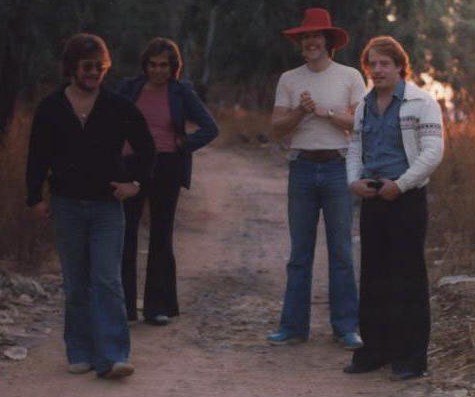
(pic taken by Gibby)
Now all I had to do was deal with the fucking Army, in a few months’ time.