Verification

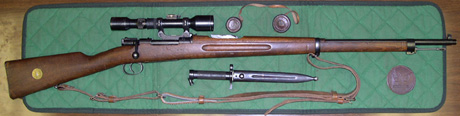
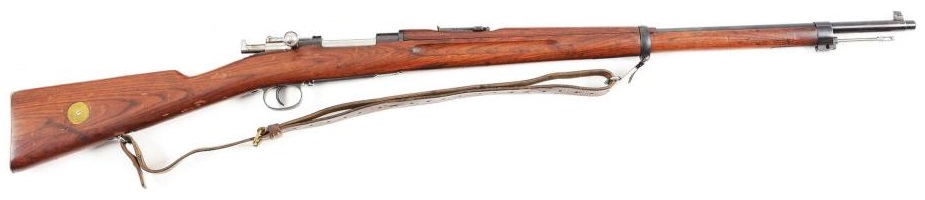
Ask me again why I love the Swedish M96 Mauser in 6.5x55mm… in the hands of Henry Chan.

…or the model (M/41B) actually used in the video:

Of all the rifles I’ve let go in my life, this one ranks near or if not actually at the top.

And Henry’s post-range commentary parallels my own thoughts on the subject, precisely.


Incidentally, viz. his earlier comments on the Lee-Enfield counterpart, Henry shooting the the No.4 MkI (T) can be seen here.

Dept. Of Righteous Shootings

…in which we debate the use of the word “alleged”.

But first, the salient details of the case:

An alleged armed intruder died around 1:45 a.m. Sunday on the back porch of a Pierce County, Washington, home after a homeowner shot him.

KOMO News reported the homeowner called 911 to inform them he had shot an alleged intruder. Pierce County Sheriff’s Deputies arrived on scene to find a 36-year-old suspect “with a single gunshot wound on the back porch.”
[cue applause for excellent shot placement]

Now I understand that everyone has to use the word “alleged” in matters like this, because the “alleged” dead guy had not been proven to be an intruder in a court of law.

In this case, however, the Corpus Delicti isn’t ever going to court, unless they rename cemeteries as such.  And then there’s this:

KING5 quoted Sheriff’s Office PIO officer Carly Cappetto saying, “In the surveillance video, it does show that suspect had a gun in his hand and was actively banging on [the] back door of that homeowner in a fully fenced backyard.”

Seems like pretty conclusive evidence that said “suspect” was indeed intruding — unless Our Hero had given him permission to climb over the backyard fence, which seems unlikely;  and similarly, the soon-to-be-dead asshole was carrying a gun, which in any place not named Boston or London might seem to indicate that he was dangerous, and therefore worthy of shooting — unless he simply wanted Our Hero to help him clean the thing, which also seems unlikely.

I should point out that when I report on Righteous Shootings, I often edit the headlines or text to remove these silly little qualifiers (like “suspected” or “alleged”) because they’re pointless and are there only to appease the Powdered Wig types in the public defenders’ office.

In situations like the above Blessed Event, however, such qualifiers are just unnecessary.

A Weighty Matter

One of the Newtonian principles is that of the mass : velocity equilibrium (if I may call it that).  Simply explained in gun terms, it’s that compromise that one has to make between bullet weight and velocity (and eventually, terminal velocity and impact).

The simplest example is a comparison between a .22 bullet and .45-70 Government:  the first zips along with a muzzle velocity in excess of 3,000 feet per second, while (relatively speaking) the huge .45-70 struggles to leave the barrel altogether.  Yet as fast as the .22 may be, its diminutive 40gr weight arrives without much authority, so to speak, at (say) 100 yards distance, while the .45-70’s 300gr lump of lead will crush everything in its path when it eventually gets there.

Which is all very well and good, because the difference between the two bullets is vast.

But what if there’s little difference in bullet weight between two (or three) bullets, the only difference being the amount of powder driving them?

Here’s a fun video of just such a test, made by shooting the .22 LR, .22 Mag (WMR), and the .17 Hornady Magnum.  (By the way, I love the fact that Our Hero eschews the appallingly-expensive ballistic gelatin, using instead large cubes of pottery clay to make his point.  It’s as valid a medium as any other, I think, when making comparisons of this sort.)  Go ahead and watch the thing (it’s just over 10 minutes long), and then come back here for my thoughts.

Read more

The Old Cartridge Question

Ron Spomer was recently challenged to name his favorite cartridges for specific animals.  The catch?  He was restricted to only those cartridges developed and commercially sold before 1950.

In case you don’t have 20 minutes to watch the video, here’s the executive summary (with my very respectful preferences in parentheses):

Elk:  .300 H&H Magnum (9.3x62mm)
Mule Deer:  .270 Win
Whitetail:  7×57 Mauser
Moose:  .30-06 Springfield (9.3x62mm)
Pronghorn Antelope:  .257 Weatherby Magnum (.25-06 Remington)
Bison:  .375 H&H Magnum
Black Bear:  .35 Whelen (.32 Win Special OR .45-70 Govt, depending on the terrain)
Grizzly Bear:  .375 H&H Magnum
Elephant:  .375 H&H Magnum (.416 Rigby)

And by the way, I have absolutely no argument with any of Ron’s choices.  My “alternatives” are a personal preference, no more.  (I’d hope that he wouldn’t have a problem with any of mine, in return.)


Of course, I have opined on those wonderful cartridges of yore, and for those New Readers or else Elderly Readers Of Fading Memory, here’s a link to that 2003 post.

Almost Perfect

For purposes unknown (LOL), Friend & Reader JC in PA sends me this link about a gun:
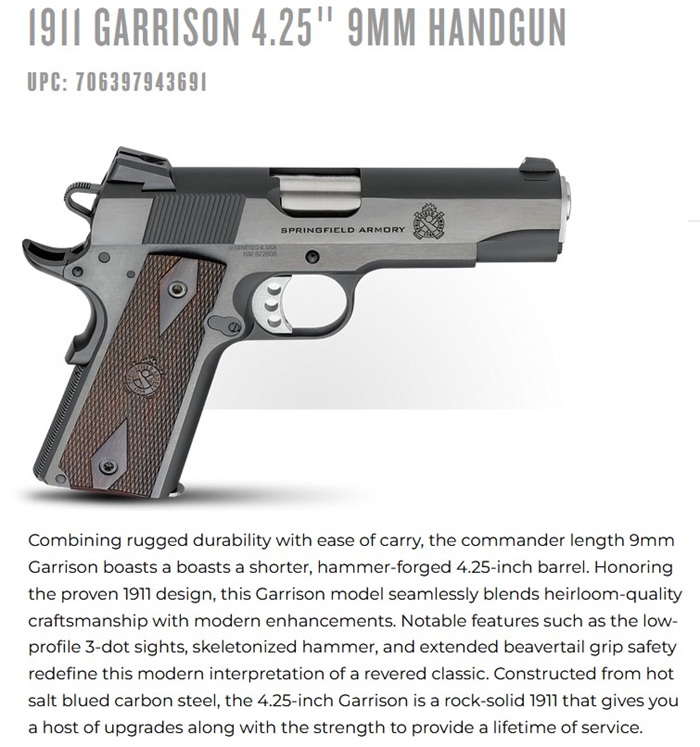
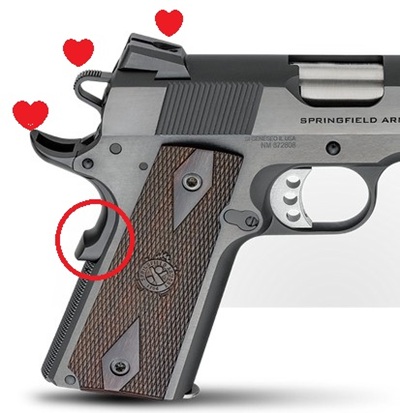
Of course, there’s a lot to like about this gun (it’s a 1911, for starters):  Novak-style sights, lightweight hammer, beavertail grip (hammer bite, for the alleviation of), to mention just some.

For me, the flies in this lovely ointment are the extruded grip safety (unnecessary and a massive irritant in an extended range session) and of course the fact that it’s chambered for the Europellet.
Nevertheless, I think it’s a Good Thing (albeit not for me and in any event, I own a sufficiency of 1911s, and properly chambered withal).

Some might ask:  Why not just use a Browning-type SA-35 (High Power), if one wants to use a John Moses Browning-designed gun? 
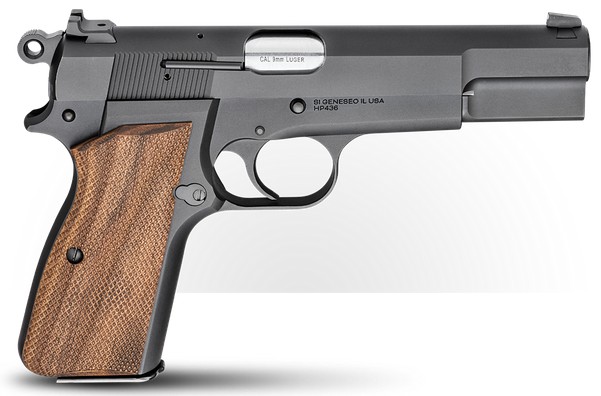
There’s no reason not to, of course;  as any fule kno, I yield to no man in my love of the High Power (despite its Europellet chambering).

If one is going to go the Euro way and use the 9mm Parabellum, then both are sound choices — the 1911’s shorter barrel may even make it more portable than the full-size High Power.

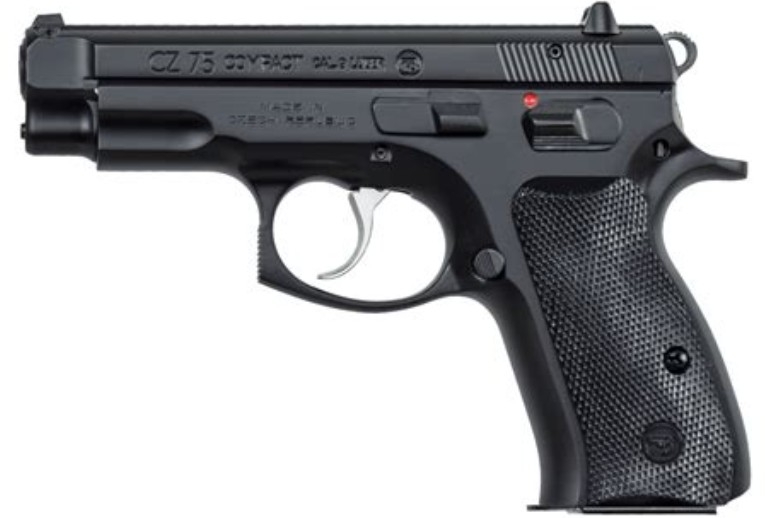
The problem, however, is that deciding on the 9mm does open up the choice of gun, bigly.  Sticking with all-steel construction, there’s the CZ 75 series (e.g. the compact):
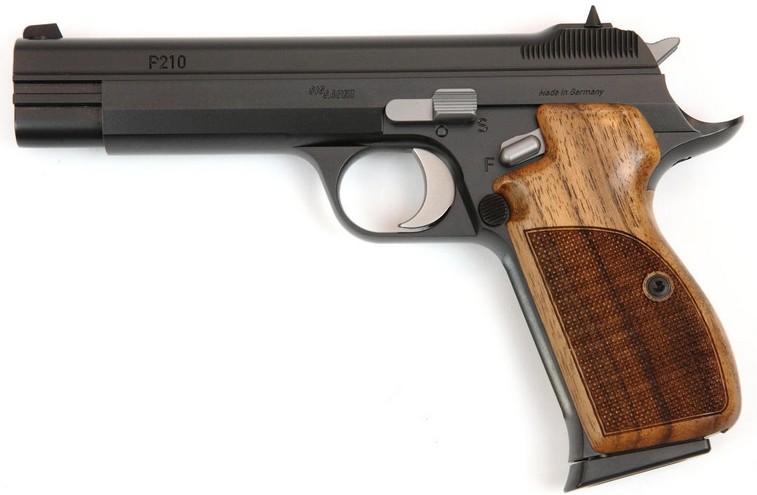
…not to mention the full-size SIG P210 (a longtime favorite of mine):
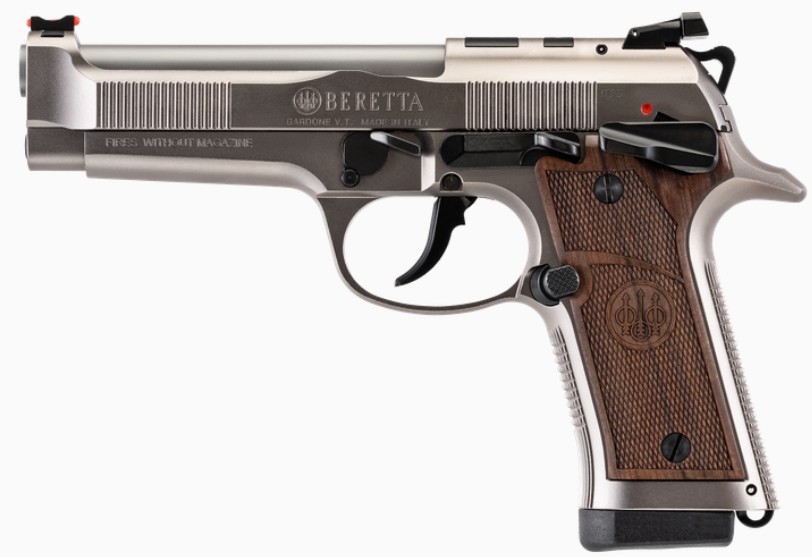
…and of course, the Beretta line (e.g. the 92X Performance):
…to mention but some.

Once you go completely over to the Dark Side and espouse such filth as the plastic guns, of course, the choice expands exponentially, and this post has gone on long enough already.

So thanks, JC;  but I’ll be sticking to my beloved 1911 .45 ACP guns.  If ever I do want to downsize, I’ll step down to the short-barreled Combat Commander type:
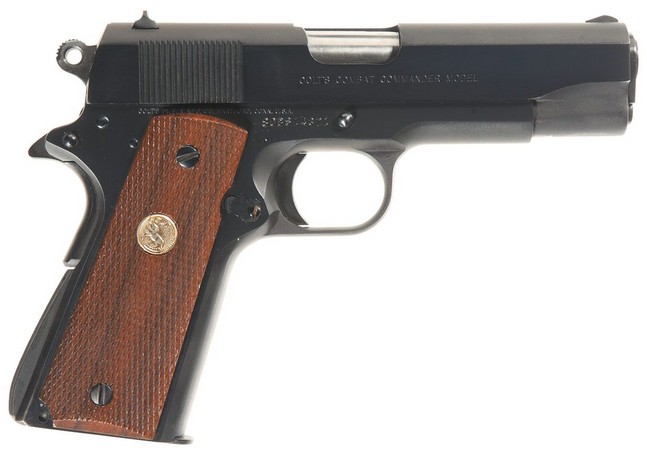
…but that’s as far as I’ll go.

Old Eyes, New Optics

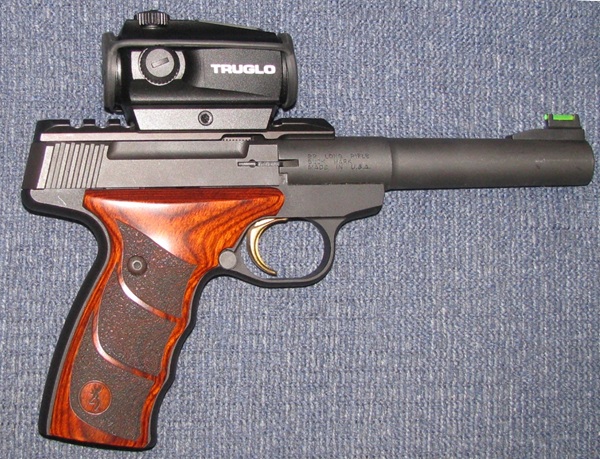
As I told y’all last week, I fitted one of these newfangled red-dot thingies to my favorite Browning Buckmark .22 pistol:

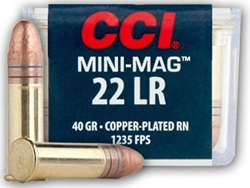
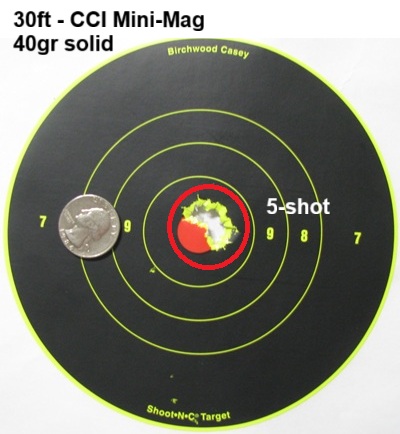
..and off I went to my neighborhood range, bearing a couple of boxes of my trusty go-to .22 test ammo (CCI Min-Mag 40gr solids).  And because this was a sighting-in exercise, I shot off a sandbag rest.

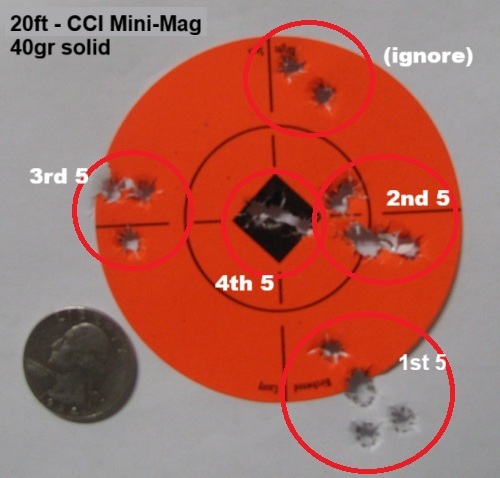
This first target was just to get the sight thingy “on paper” (with a quarter to give some perspective):

Some words of explanation are necessary.  The Tru-Glo’s adjusting turrets don’t “click” — you need to turn the screw by guesswork — thus, I was going by “feel”, so to speak.  Anyway, the first five-shot string (unadjusted) shot low and a little left.  Up we go, to String #2.  Not bad.
Then the fun began.  Adjusting the left-right screw, I realized mid-adjustment that I was moving the dot  right instead of left — because I’m an idiot — so back left I went, trying to remember how far I’d just turned the thing.
String #3 showed me that I’d cocked the thing up completely and over-compensated (yeah, like none of you have ever done something like that before).  Back I went, guessing again, and mirabile dictu, I got it right first time.  String #4 looked pretty good.

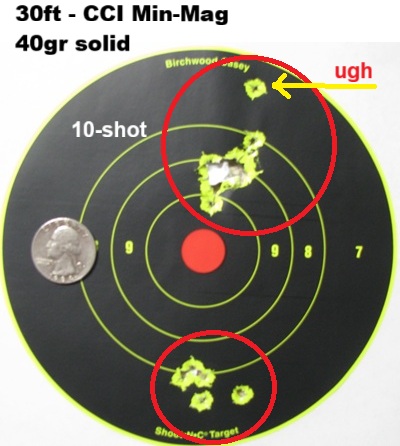
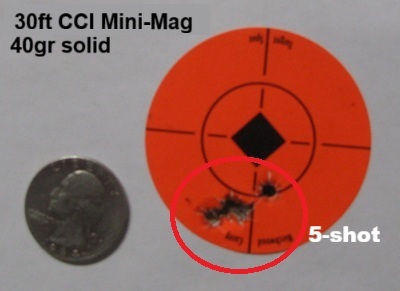
But we all know that sighting accuracy may change at greater ranges, so I sent the target paper back out to 30ft (my normal shooting distance with handguns, whatever I’m shooting).  Would it change?  Indeedy, yes it did:

The 10-shot string was done with a center-dot hold, but after I’d adjusted the sight, the 5-shot string was made with a halfway hold (halfway between the bottom of the target and the center dot).
Not bad;  I thought I’d got the thing just right.
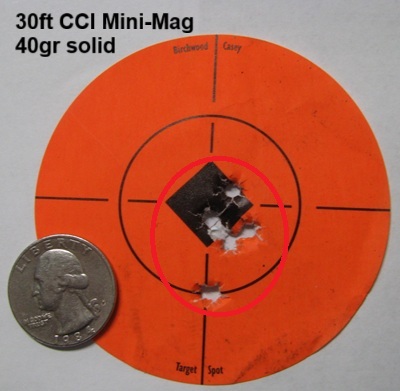
So off I went and shot the rest of that box at lots of different targets on the paper, omitted for the sake of brevity — okay, here are a couple, just for the hell of it:


(halfway-down hold)


(center hold)

Finally, I was getting close to the end of my allotted range time, so I packed up the gear to give the barrel a few minutes to cool down a bit, and then got serious, taking lots of time between shots instead of getting all impatient to get done with it (as I usually do):

That was fun.  Now to try some different ammo brands and boolet weights to see the differences…