Always A Choice

Tami talks about snub-nosed revolvers and the joys thereof in the carrying of them.  Here’s a snippet:

The point Werner (the trainer) hammered home most was that accurate shooting is crucial. My 432PD holds six rounds, and the far more typical .38 Spl./.357 Mag. has but five. Ammunition management is important; you need to make good hits.
Werner emphasized the importance of getting a good sight picture and using ammunition that shoots to your gun’s point-of-aim.

Amen and amen, and I say again:  amen.

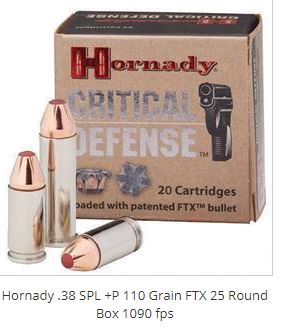
When I’m not carrying my 1911 (which is only about 20 percent of the time), I carry my S&W Airweight in its Milt Rosen holster, loaded with Hornady Critical Defense .38 Special +P (which the gun loves with a passion):
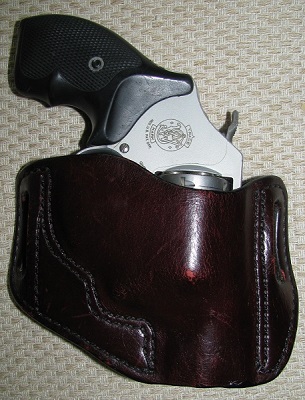
      

Over the many years I’ve owned both guns, I’ve fired more practice rounds through the 1911, but I’ve practiced far more often with the Smith — while I practice quite a bit with the 1911, I always shoot at least fifteen rounds with the 637 at every  range session, regardless of whatever other guns I’ve brought with me for the day.  Why?  The little Airweight .38Spl is far more difficult to shoot accurately than the Government .45ACP.

And in the much-lamented absence of the .357 Mod 65 in my collection, the 637 serves as my interim bedside gun.  In a bedroom SHTF scenario, you don’t want to be trying to remember how to align the sights and when the double-action trigger will let off.

Tami says it, and I repeat the advice:  if you carry a snubbie, practice shooting it more than you think you need to.
Africa Wins Again

News Roundup From Africa:

…and one lucky escapee from the African fate:

Read the full stories by all means, but if yer pressed for time, the headlines will suffice.

Then And Now

In days of old, when footballers were simple sportsmen and not the millionaire malcontents they are today, their WAGs (wives and girlfriends) were likewise a completely different sort to their modern-day counterparts.

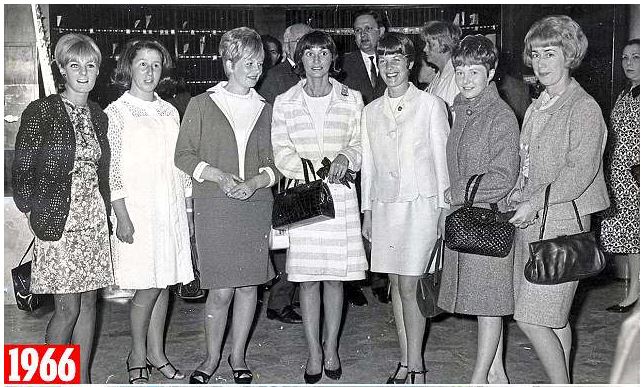
You see, dating or being married to a footballer carried no special cachet back then — even if the footballer was famous or especially talented, the salaries were modest even by standards of the time.  So if one sees photos of, say, the WAGs of the English team which won the World Cup in 1966, they look like… well, like ordinary housewives:

Nowadays, of course, footballers are paid astronomical sums of money, and consequently they attract, shall we say, a different kind of woman (as seen by a companion pic of England’s 2018 national team’s WAGs):

I’m not saying that there’s anything wrong with this situation — women have always been attracted to famous and wealthy men — it’s just that nowadays, the rich and famous men have a lot more choices, and therefore the quality of the goods on offer has improved.

Although I have to say that “quality”, if applied to the 2018 WAGs, is a polite euphemism.  To me, most of them look like they’re off to the docks  to work Fleet Week.  But that’s just another factoid which helps answer the question: “Why do men play professional football?”

Only Just Good Enough

My only quibble with this story is that the goblin wasn’t dead at the end of it.

An employee of a gas station in the 200 block of West Camp Wisdom Road, near the border with Duncanville, alerted the mother about 10 p.m. that a man was trying to get into her SUV.
She jumped into the vehicle. When the man didn’t stop, she pulled a gun from the glove box and shot him in the head, police said.
The vehicle then crashed into a utility pole.

So far, so good.  But the goblin didn’t croak, because:

“I should have just have emptied the whole clip but I didn’t. I didn’t. I just wanted to give him a warning shot that was it.”

I can’t criticize Our Heroine too much, because she stopped the danger to her kids, and that’s all that matters.  However, I just hope that the thing ends here, with the choirboy in jail for a long time — too long to come after the woman when he gets out, or too old to try this again with someone else.

Sometimes, you see, it’s better to end the thing properly, even if you aren’t a killer.

Buh-Bye

It would appear that you won’t be seeing any of these cars after the end of the year (not in new-car showrooms, that is).

None of the deletions are particularly shocking — they’re either dated or else never caught on, for whatever reason.

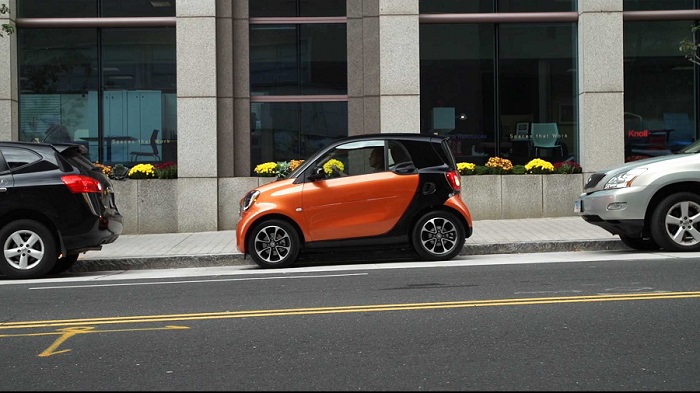
The only one I feel sorry about is the SmartForTwo, and that only for sentimental reasons:  had I continued to live in downtown Chicago, there is absolutely no question that I would have bought one, for its parking advantages if no other.

I know that a couple of you will pine for the Dodge Viper — Jeremy Clarkson, for one, will no doubt go into mourning — but while a lot of people may have liked the Viper, it was never enough for them to actually buy one.  Ditto the Chevy (Holden) SS.  Hence their passing.

As for the other 14 cars on the list… [shrug].  Ugly, dated, boring and superfluous:  it’s frankly amazing that they lasted as long as they did.  And the less said about the execrable Mercedes B-class (“no-class”, actually), the better.

One Step Better

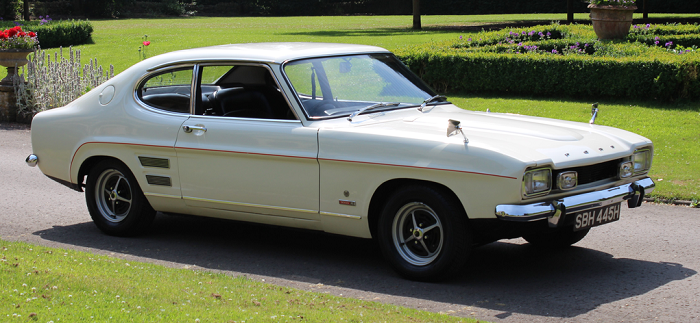
I remember that back in the late 1960s, Ford (Europe) came out with a little gem of a car which was, quite frankly, the coolest car on the block.  It was meant to be the European version of the Mustang, and to be honest, I actually preferred the Capri’s shape and styling:

Of course, most of the car reviewers sniffed and called it “Cortina’s cousin” (Cortina being Ford’s top-selling brand everywhere outside the U.S.), but the hell with them, because they knew nothing.

A buddy had one and I loved going out with him and our girlfriends of a weekend night, because the Capri not only looked cool, it was a joy to drive, with handling which rivaled the Fiats and Alfa Romeos of the time.  Even its little 1600cc four-banger had excellent performance, and was only constrained by its silly 4-speed gearbox (which was still silky-smooth, and its tiny stick-shift made gear changes quicker than any Alfa).  The Capri was, I think, the best-looking compact car of its class during the 1970s, bar none, and I wept bitter tears when Ford stopped making them.  (Hell, I wouldn’t mind one today.)

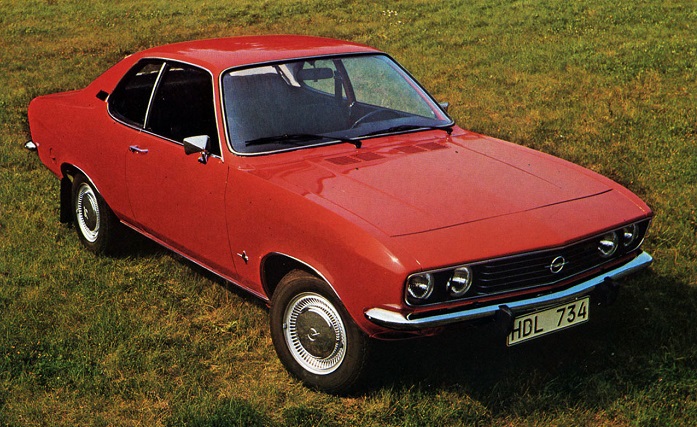
I don’t know if GM (Europe) copied the Capri or it was just coincidence, but in 1970 they released a similar model called the Manta under their Opel brand.  Here’s its first incarnation, the Manta A:

Of course, it never sold anything like the numbers of the Capri (over 1.9 million Capris, vs. fewer than 500,000 of the Manta A), but that’s not what I want to talk about here.

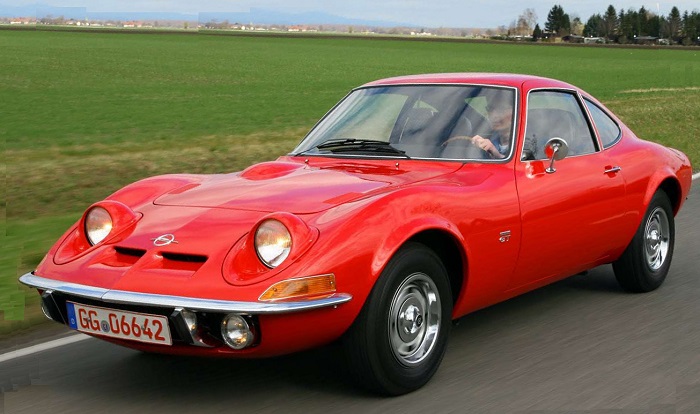
While the Capri was progressively “souped up” over its lifetime, the Manta wasn’t (except in the United States, where the imported models were often modified).  But what Opel did (and which Ford never did for the Capri) was to make a sporty GT version of the Manta.  Here it is:

Apart from the headlights, this is one seriously-pretty little car*.  I saw several of them back in South Africa, and let me tell you, they were crowd-stoppers.  (Many people scoffed at them, of course, calling them the “poor man’s Dino” but hell:  I was poor, couldn’t afford a Dino, and I would have bought a Manta GT in a flash if given the opportunity.)

Okay, this is yet another in the series of “Stuff That Kim Thinks Looked Better Back Then”, but I challenge you to find any modern-day GM (or Ford, for that matter) car that can compare with the Manta GT.  The front looks a lot like the Corvette Stingray of the the 1960s, of course, but in terms of size the Manta was a midget by comparison.


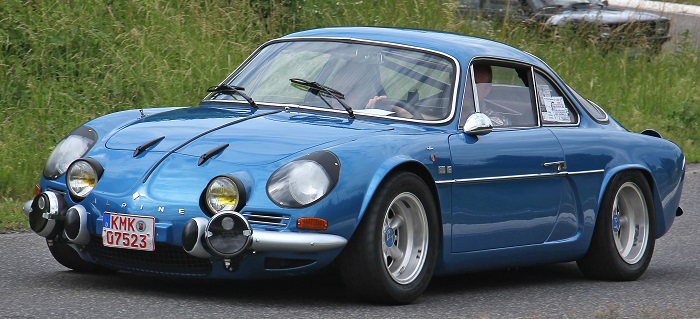
*Yes, I also know that the Manta GT looks something like the Renault Alpine A110 (also of the 1960s), but then again I think the Renault’s gorgeous too: