Challenge Accepted

A whole bunch of people have been getting worried about this development:

Liberals are notoriously loath to take their own side in a fight. But their reticence may well be changing in an age of vigilante, white nationalist terror—openly condoned and supported by an incumbent president who has suggested that his armed devotees won’t stand for his removal from office. Increasingly, the antifa left is arguing—and training—in response. They are worried not only about an armed reckoning following a contested election, but also about rising violence from the paramilitaries loyal to President Donald Trump.

Such paranoid fantasies may be familiar to heavy consumers of YouTube and Reddit, but watching them transposed on to the structures of governance is a novelty. As a result, many leftists and even some liberals are beginning to reconsider their feelings about firearms, joining a loose amalgamation of gun groups, from John Brown Gun Clubs (which take their name from the abolitionist) to the Pink Pistols (an LGBTQ group), Liberal Gun Club, and Socialist Rifle Association. Some of these organizations are moderate and traditionalist, others radical and revolutionary. But all share one implicit goal: to normalize firearms ownership and training among liberals. Some of their members hope such efforts will at least make Republicans think twice before attempting a massacre.

LOL.  They must be thinking about Spanish  Republicans circa 1937 (who, by the way were Communists) and not our flabby Murkin Republicans, who couldn’t massacre the syrup at a pancake breakfast.

Seriously:  do these tools honestly think that conservatives are going to launch a massacre of Lefties in this country?  Given the de-platforming of conservative voices, attacks on people simply for wearing MAGA hats and throwing Republican civil servants out of restaurants — not to mention the Pantifa attacks on peaceful protest marches in Portland and D.C. — I would suggest that it’s the Left  who are far more likely to trigger civil violence.

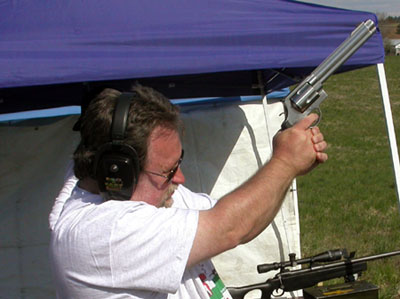
Then we have this kind of picture, which some find alarming:

Yup;  he sure looks like he means business.

To my mind, though, this doesn’t make for nervousness — it makes the whole thing interesting.

Go on, Pantifa Boys:  show us what you’ve got. Let’s see how it works out for you.

Oh, and one last thought:  if all this “preparation” by the Left means they’re waiting for conservatives / Trump supporters to begin the shooting, they’re going to end up being a lot older than the graybeard in the pic above before they get to put all that training into play.  In the meatime, we have crap like this:

The climate of vigilante violence on the right has elevated racist attacks, hate crimes, and terrorism in our political culture.

What “vigilante violence”?  Fucking shitbrains are starting to believe their own lies.

Not My Favorite

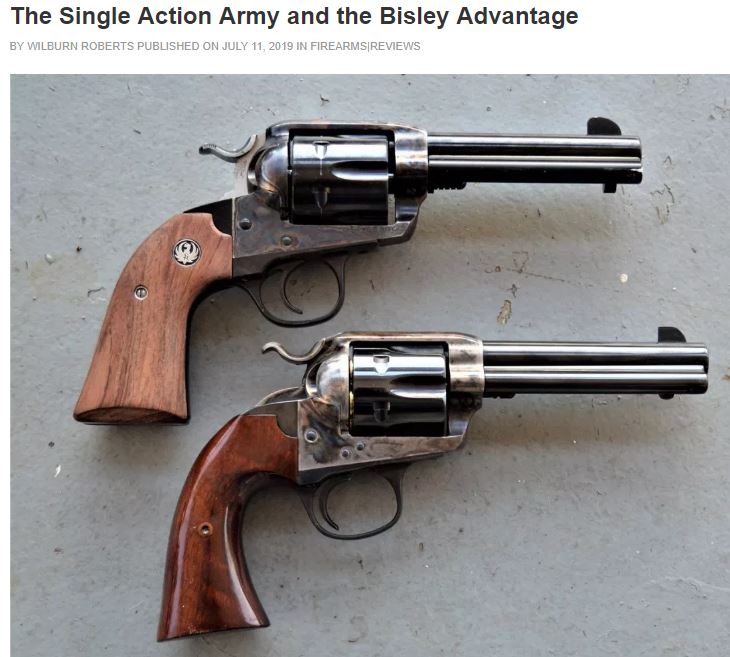
Over at CTD, I see this article:

II have to confess that I’ve owned several “Bisley-gripped” revolvers, and I was never able to shoot any of them for shit.  Something about that upright grip angle made me shoot high — not the first shot, but by the third trigger-pull I’d be missing way high.  The Bisley grip never felt quite comfortable in my hand, and so over time I got rid of all of them because there’s no point in keeping a gun you can’t shoot accurately, is there?  (Especially when someone else absolutely loves shooting my old Ruger revolvers and has never stopped thanking me for swapping them with him. )

As a matter of fact, I shoot the “regular” Ruger grips a lot more comfortably (and hence more accurately), and ditto the Smith & Wesson’s.  Here’s my GP100:

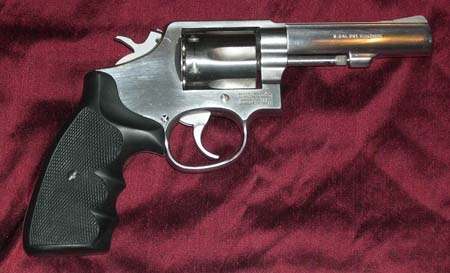
…and my Model 65 (sob):

I have the same issue with the Luger-style (which is raked too much in the other  direction) and the 1911:

The Luger doesn’t work for me, and the 1911 does.

It’s strange how just a couple degrees’ difference of rake in the grip can make such a difference.   Then again, I seldom shoot “hot” loads (as Roberts does, apparently).  The hottest handgun round I’m prepared to shoot is the “regular” 240-gr  .44 Magnum (in the right-sized revolver, i.e. Blackhawk/Redhawk).  Forget that .500 S&W nonsense:


Yeah, I’m a recoil wussy.  Sue me.

Other Work*

I need to issue a Light Posting Alert for the rest of this week.  Because where I was once one and now we are two, we’re moving from my modest accommodation:

… to more palatial digs just across the road, so to speak:

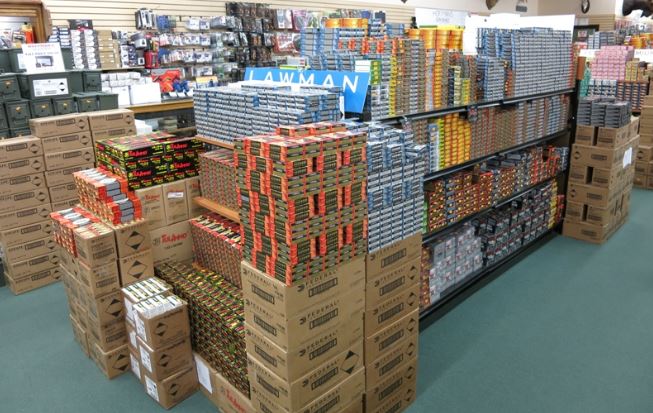
Fortunately, we have few household belongings, relatively speaking.  Ye Olde Ammoe Locquer, however…

Wish me luck.


*Note:  this post may contain just a wee  bit of exaggeration.

Oh Boo Fucking Hoo

Cue the violins:

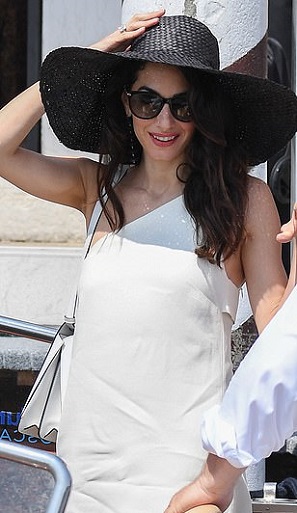
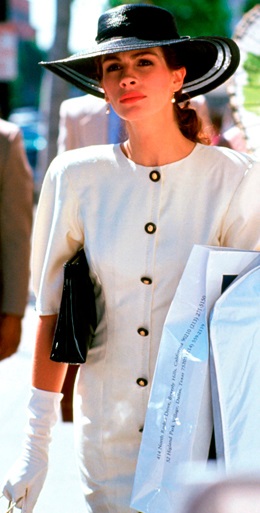
So Mrs. Clooney / Julia Roberts-lookalike Amal Clooney gets all whiny about The Donald putting the boot into the Jackals Of The Press:

Amal Clooney said President Trump ‘vilifies the media’ and makes journalists ‘all over the world vulnerable to abuse’ among other jabs during a multi-day conference in London.
The human rights lawyer was speaking along with British foreign secretary Jeremy Hunt on Wednesday when she made her first remark.
Without mentioning Trump by name, she said: ‘The country of James Madison has a leader today who vilifies the media, making honest journalists all over the world more vulnerable to abuse.’

Abuse, my suffering African-American asshole:  1) there’s no such thing as an “honest journalist” nowadays, and 2) never mind Twatter abuse, modern journalists should get daily ball-kickings or scourgings to get them pointed in the right direction.  Trump lets them off lightly, given their boorishness and naked partisan behavior.

And referring to my earlier comment:  ever wonder why Amal Clooney and Julia Roberts have never been seen together in the same room?


Face it:  if the lawyer looked like (say) Maxine Waters and was married to Wallace Shawn, the Press wouldn’t be able to pick her out of a lineup.

I can see why Clooneywife is so sensitive about the media:  without their fawning and uncritical support over the years, she’d still be signing property transfer contracts in Kabul, let alone married to Mr. Hollywood and splitting her time between an estate on the Thames and a villa on Lake Como.

Old-Fashioned? Me?

I am often accused of being an old-fashioned man.  This, despite the fact that I’m using a keyboard to enter my thoughts into a digital medium via a thing called the Internet.  And hey, I prefer brass cartridges over muzzle-loading, so I’m not that  old-fashioned (unlike some of my Readers, who believe that this brass thing is just a passing fad).

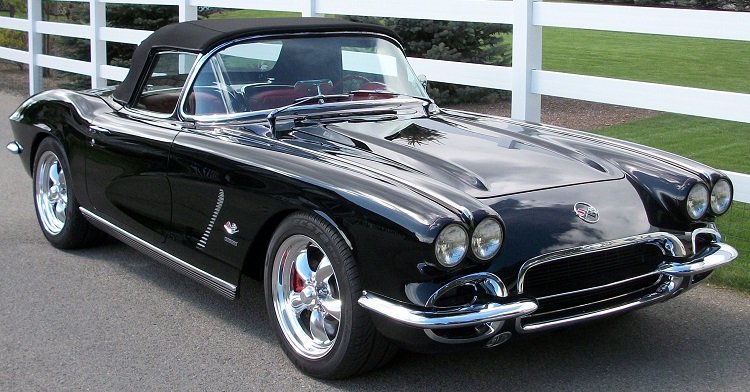
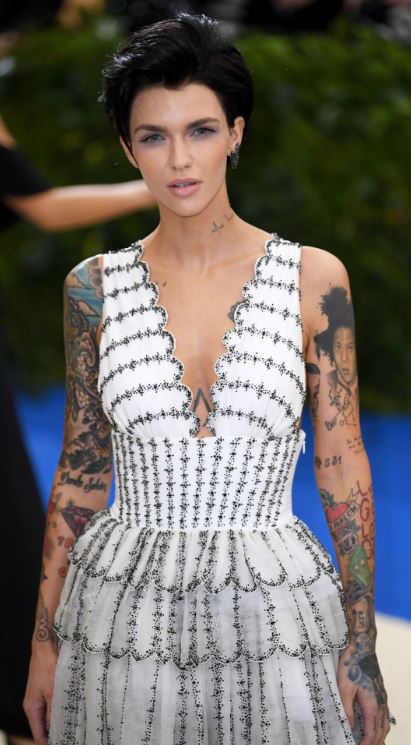
If you want to know what gets me going, however, consider the following pics, and guess why I tend to prefer tradition over modernity.  We’ll open with the modern ones:

Interior design:

Cars:

Handguns:

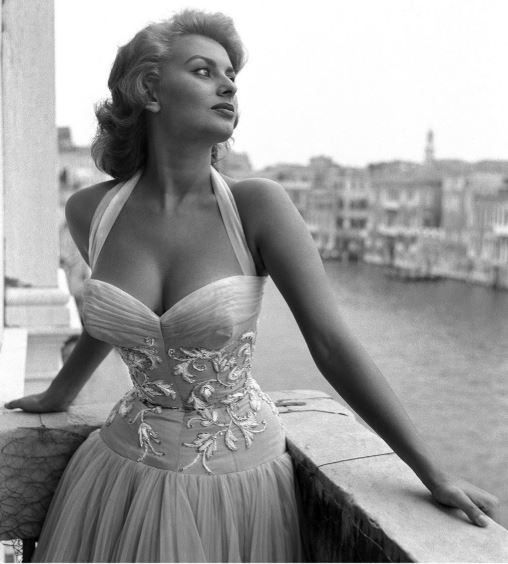
Women:

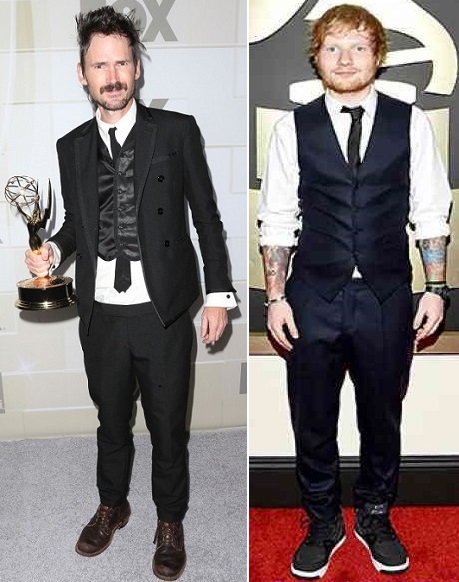
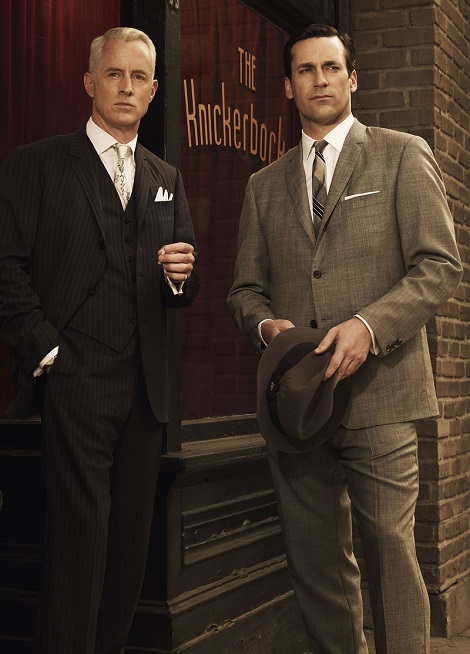
Men’s appearance:

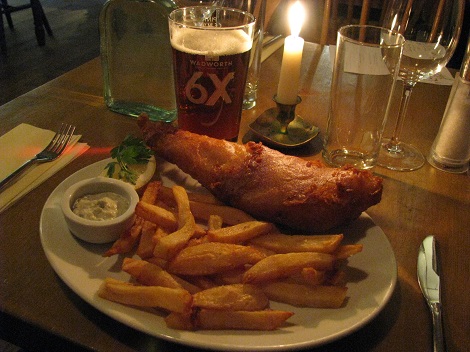
Foods:

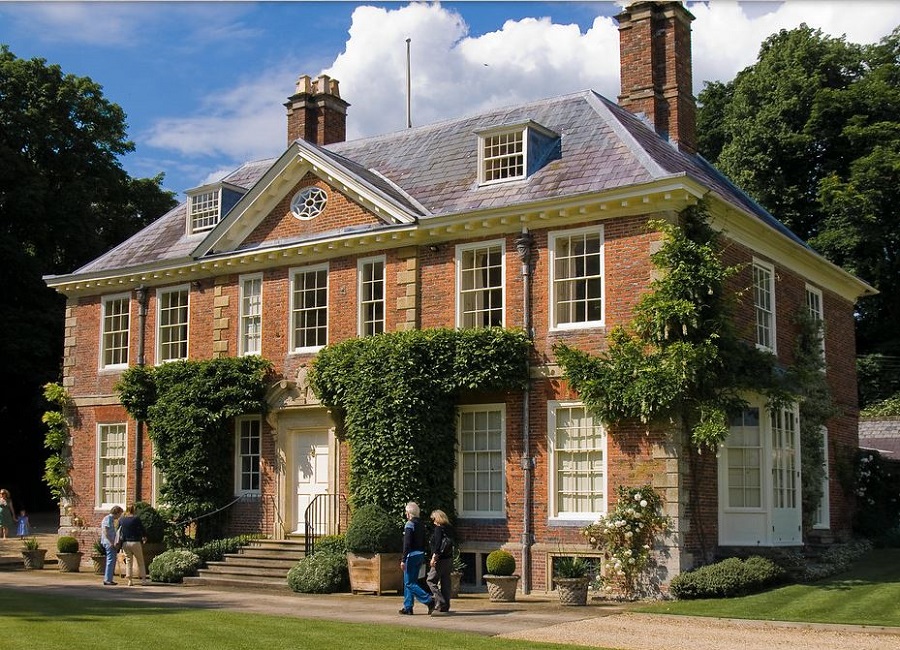
And you all know about my preferences in architecture:

So yeah, I guess I am old-fashioned.  Feel free to envy me.

Reading Lists

This article got me thinking, because it’s not something I’ve been involved with since the kids finished homeschooling (if such a thing ever happens) and went off to college.  Go ahead and read the thing first, as it sets the stage for what follows.

I’ve often been asked what books I steered my own kids towards during their schooling, so here’s the group from which I drew.  They are the books that every child should have read before age 18, in alphabetical order by category*.  It’s very biased towards Western Civilization, for obvious reasons, and is by no means comprehensive, but enough to provide a good foundation.  (The Son&Heir, for example, was so taken by Daphne du Maurier’s Rebecca  that he ended up reading everything she ever wrote.  Whatever they find interesting, let them run with it.)

Kim’s Recommended Reading List For Homeschoolers

Politics:
1984 —  George Orwell
Animal Farm —  George Orwell
Of Civil Government — John Locke
On Liberty — John Stuart Mill
Our Enemy, The State — Albert Jay Nock
The Prince — Niccolo Machiavelli

Economics:
Basic Economics — Charles Sowell
The Wealth of Nations — Adam Smith

History:
From Dawn To Decadence — Jacques Barzun (this book is required reading; it can serve as a general history work and in a pinch, can be the only  history book read before college)
Heroes — Paul Johnson (biographies)
A History Of The American People — Paul Johnson
A History Of The Jews — Paul Johnson
The Iliad, The Odyssey — Homer
The Proud Tower — Barbara Tuchman
United States Declaration of Independence (together with the Articles of Confederation; United States Constitution and the Federalist Papers)

Military History:
Carnage And Culture — Victor Davis Hanson
The First World War — Martin Gilbert (or John Keegan)
A History Of Warfare — John Keegan
The Second World War — John Keegan
A War Like No Other — Victor Davis Hanson

Philosophy/Religion:
The Bible
The Book of Journeyman — Albert Jay Nock
Confessions — St. Augustine
Essays Moral and Political — David Hume
Intellectuals — Paul Johnson
Meditations — Marcus Aurelius
Memoirs of a Superfluous Man — Albert Jay Nock
The Republic — Plato
Summa Theologica — St. Thomas Aquinas

Plays (Shakespeare):
Coriolanus
Hamlet
Julius Caesar
King Lear
Macbeth
A Midsummer Night’s Dream
Othello
Richard III
Romeo & Juliet
(Shakespeare’s major History Plays — Henry IV etc. — require a concurrent English history lesson, otherwise the characters are meaningless and the dialogue almost incomprehensible.)

Plays (Other):
Billy Liar — Keith Waterhouse (the novel is good too, but the play is the thing)
Faust — Goethe
The Importance of Being Earnest — Oscar Wilde
Lysistrata — Aristophanes
‘Tis A Pity She’s A Whore — John Ford
Waiting For Godot — Samuel Becket

Poetry:  (all their works, with recommendations)
Alfred, Lord Tennyson — The Eagle,  Charge Of The Light Brigade
Matthew Arnold — Dover Beach
Rupert Brook — The Soldier
Samuel Taylor Coleridge — The Rime Of The Ancient Mariner
John Donne — The Good Morrow and A Valediction: Forbidding Mourning
John Keats — Ode To A Nightingale
Rudyard Kipling — The Gods Of The Copybook Headings
Richard Lovelace — To Althea, From Prison
Shakespeare — all the Sonnets (as many as can be digested)
Percy Shelley — Ozymandias
Walt Whitman — Leaves of Grass
William Wordsworth — Tintern Abbey, The Solitary Reaper

Long Fiction:
Adventures of Huckleberry Finn — Mark Twain
Alice In Wonderland — Lewis Carroll
The Grapes of Wrath — John Steinbeck
The American — Henry James
Anna Karenina — Leo Tolstoy
As I Lay Dying — William Faulkner
Fahrenheit 451 — Ray Bradbury
A Handful of Dust — Evelyn Waugh
The Chronicles of Narnia — C.S. Lewis
The Count Of Monte Cristo — Alexandre Dumas
Don Quixote — Cervantes
A Farewell To Arms — Ernest Hemingway
Emma — Jane Austen
To Kill a Mockingbird — Harper Lee
The Invisible Man — H.G. Wells
Zorba the Greek — Nikos Kazantzakis
Gulliver’s Travels — Jonathan Swift
The Mayor Of Casterbridge — Thomas Hardy
The Sound and the Fury — William Faulkner
Fathers and Sons — Ivan Turgenev
Stranger in a Strange Land — Robert A. Heinlein
Les Misérables — Victor Hugo
Carry On, Jeeves — P. G. Wodehouse
Lord Of The Flies — William Golding
Crime and Punishment — Feodor Dostoyevsky
Madame Bovary — Gustave Flaubert
The Harry Potter Stories — J.K Rowling
Women In Love — D.H. Lawrence
The Complete Sherlock Holmes — Arthur Conan Doyle
Catch-22 — Joseph Heller
The Portrait Of A Lady — Henry James
The Wind In The Willows — Kenneth Grahame
Rebecca — Daphne du Maurier
Robinson Crusoe — Daniel Defoe
Sons And Lovers — D.H. Lawrence
Uhuru — Robert Ruark

Short Fiction (Authors, with recommendations):
Daphne du Maurier (The Birds, Don’t Look Now)
Ernest Hemingway (The Snows of Kilimanjaro, The Killers)
Edgar Allan Poe (The Pit And The Pendulum)
Herman Melville (Bartleby the Scrivener)
Ambrose Bierce (An Occurrence at Owl Creek Bridge)
Rudyard Kipling (The Jungle Book)
Flannery O’Connor (A Good Man Is Hard to Find, Good Country People)
Guy de Maupassant (Boule de Suif, The Necklace)
James Thurber (The Secret Life Of Walter Mitty, The Unicorn in the Garden)
O. Henry (The Gift Of The Magi, The Cop And The Anthem)
Raymond Carver (Where I’m Calling From, Little Things)
Saki (Sredni Vashtar, The East Wing)
William Faulkner (Mountain Victory, A Rose For Emily)

Erotica:
Ars Amatoria — Ovid
Delta Of Venus — Anaïs Nin
Lady Chatterley’s Lover — D.H. Lawrence
Memoirs Of A Woman Of Pleasure (or Fanny Hill) — John Cleland
The School of Whoredom — Pietro Aretino


*Please note that your opinions may vary — and indeed they should — depending on what direction you’re setting your kids along.  (For example:  if your bent is more to the religious, then obviously the Bible and / or St. Augustine will require more time and dedication, and so on.)