RFI: Replacement Barrels

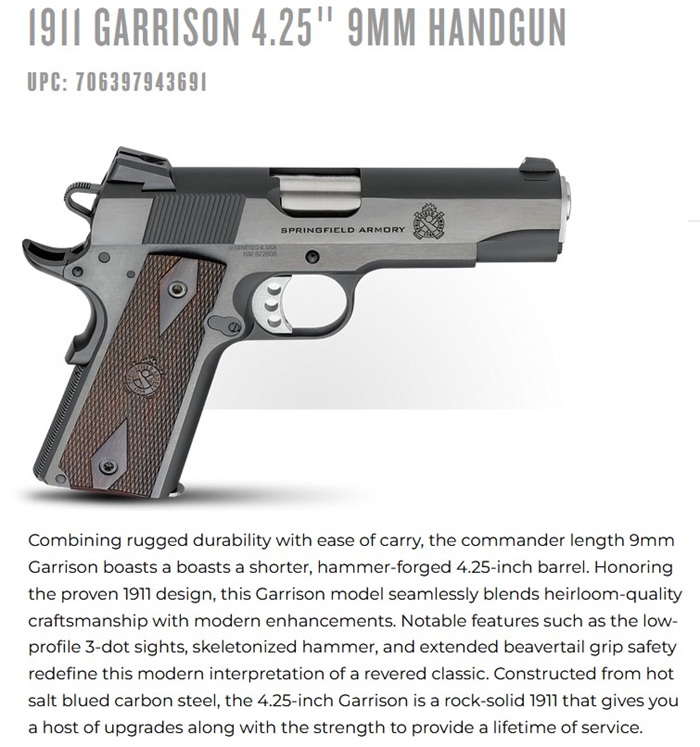
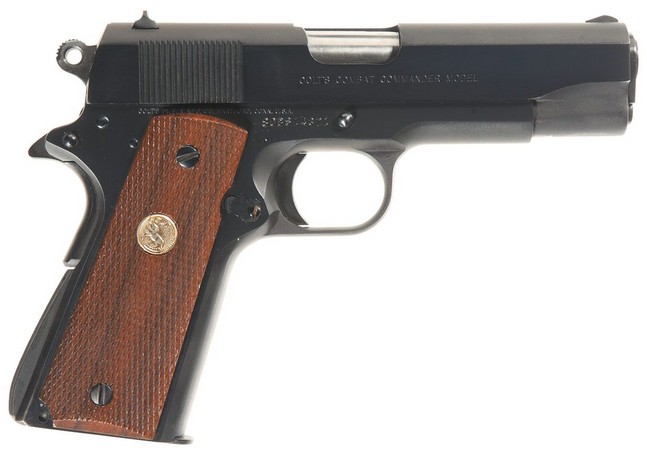
I’m thinking of replacing the barrel on my Springfield 1911 — or at least getting a backup — because it has occurred to me that after 30,000 or so rounds fired through it, it may be a prudent move.

My problem is that I don’t have the foggiest clue which barrel would be the best.  (And yes, I know that I might need a gunsmith’s services to “tweak” it into a proper fit, that’s no big deal.)

What I do know is that the more expensive barrels are often not worth the extra money, in that they’re not necessarily that much better than a plain-Jane model.  And for obvious reasons, cost is important because I’m not going to be participating in IPSC or IDPA competitions anyway.  I do insist on reliability, however, for obvious reasons.

Or should I just contact Springfield for a replacement?

All experiences in this endeavor will be welcome.


Update:  just about everyone has recommended an OEM barrel (i.e. Springfield, in this case), so it’s thither I shall be going.
Thankee, everyone.

Quit Messing With The Formula

And then there’s this development:

The Henry SPD HUSH Series is a bold evolution in lever-action rifle design, purpose-built to be run suppressed. Developed by the Henry Special Products Division—our new R&D initiative focused on forward-thinking innovation—this inaugural release reimagines what a lever gun can be in modern hunting and shooting applications. Offered in five time-tested calibers—.45 Colt, .357 Magnum/.38 Spl, .44 Magnum/.44 Spl, .30-30 Win, and .45-70 Gov’t—the HUSH Series strikes the perfect balance of traditional feel and modern performance.

Lever actions already offer excellent balance and speed, with the added suppressor-friendly benefit of a closed action during firing. Our HUSH Series takes this a step further. Every component forward of the receiver is optimized to minimize weight, keeping the rifle’s natural center of gravity intact—even when a suppressor is mounted. The result is a no-compromise suppressor host that retains the instinctive handling and quick follow-up shot capability that lever guns are known for.

So far, so good.  Then we see what this new paragon of balance and innovation looks like:

As Reader Mike S. (who sent me the link, thankee) says:

Just give me a threaded muzzle and leave the blue steel and walnut alone!

Can’t much argue with that.  But that wouldn’t make the SPD HUSH more popular with the Tacticool Set, would it?  And that means no additional rifle sales.

Still, I can’t fault Henry for doing this kind of thing — from a marketing perspective.  But let me tell you:  if they start discontinuing any of their existing models in favor of this new flavor-of-the-month, they deserve everything they get.

You see Henry already makes a wood ‘n steel that’s ready for a suppressor:

…but Alert Readers will notice that it’s for their rimfire models only.

So why not just extend that concept to the Big Boy and Side Lever models, I ask?

(They don’t have to do that to the Original Henry rifles, of course — I don’t think anyone would support that.)

Some things just shouldn’t be tinkered with.

“It’s Just A Tool”

Every time someone says this about guns, I grit my teeth.  I know it’s usually said to placate some foaming gun-grabber, I see why someone might say that, but…

It isn’t just a fucking tool.

Oh sure, it has its uses in terms of household maintenance, e.g. removing goblin filth (okay, violent burglars), squirrels that infest your attic and so on.

But nobody does this to a screwdriver:

…or this to a ratchet set:

…and certainly not this to an anvil:

To take it even further, nobody field-strips, cleans and oils their impact drill after each use.

The nearest gun that I would describe as a “tool” would be something fugly and/or utilitarian, like this:

…or this:

But you’re never going to take a hammer and drive 500 nails into a 2×4 just for fun, although you would absolutely do something similar with one of these:

So don’t give me that “tool” nonsense.  Tools are used, but a gun can be loved.

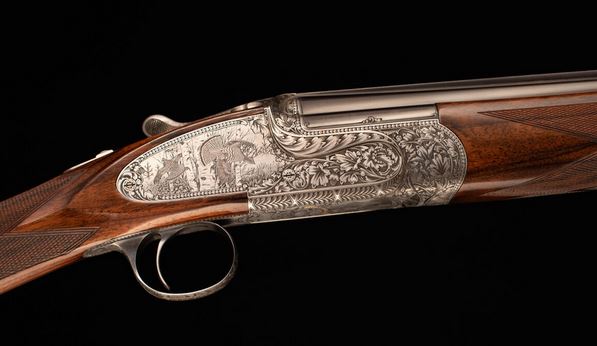
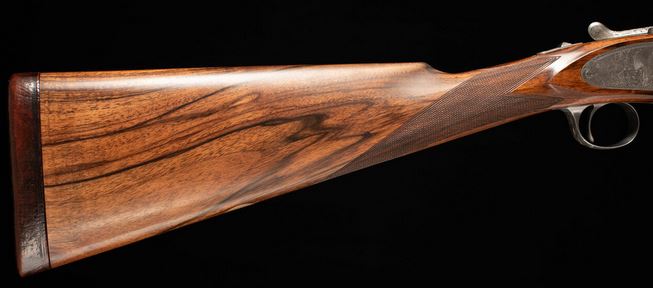
Even if it hasn’t been engraved with anything more than its maker’s name or model.

Beautiful, innit?

Old Enough

As I wrote earlier:  if they’re old enough to have consensual sex, to vote, to be drafted, to sign binding contracts and all that goes with being legally adults, they should be old enough to own and carry guns, kinda like the Second Amendment provides*.

As Iowans have just passed into law, and every state should follow suit.

*Okay, I know that when the Constitution was written and ratified, the legal age of majority was 21 — at least when it came to voting and getting married without parental consent.  But seeing as at that time you could serve in the citizen militia at age 16, let’s not go down that rabbit-hole, shall we?

Today’s time is sufficient, and I’m fine with 18.

I keep thinking of the time when my kids were at college, had night classes and had to walk unarmed to their cars in badly-lit parking lots, forced to do so by stupid laws that forbade carrying guns on campus, and gun carry denied to them in toto  because of their age.

And they were the law-abiding ones;  their 50-something Dad was the lawbreaker, as he carried a gun onto campus every time he went there, despite the law.


I should point out that I also had a mental plan in the event of a campus shooter starting his bullshit if I were in a lecture or seminar:  tell everyone — lecturer included — to overturn their desks and take cover behind them, while staying out of my line of fire pointing at the classroom door.

I remember telling one of my erstwhile professors this some time after I graduated, and he thanked me.

That Ammo Thing – Part 3

It has always pained me to sell a gun.  There are a couple of exceptions to this, of course:  when you can’t shoot the thing for toffee, when it beats your hand or shoulder up too much, when its ammo is too costly, and so on.

Then there’s the most common reason to sell a gun:  financial necessity.  But if that necessity forces one into selling a gun, then all sorts of reasons come into play when deciding which gun or guns to sell.

The first reason is sentiment.  There are guns that I love to shoot, love to own, and I shouldn’t have to explain this to anyone here.  Everyone has possessions that they continue to keep, beyond all reason — overflowing basements, attics and storage facilities all bear witness to this phenomenon — and guns are no different.  As an example, let me take the gun which I probably love the most, my Springfield 1911:  I keep it despite its ammo being expensive (relative to other calibers), despite the fact that it beats my hand up every time I fire off more than a box of ammo, and despite the fact that every time I holster the damn thing, I have to tighten my belt up by a notch (and sometimes two) because the damn thing is so heavy.  But all those are burdens which I bear gladly, because at the end of the day, my 1911 satisfies me in so many ways:  it works as well or better than any gun ever made, its cartridge works as well or better than any cartridge ever made, it’s a simple and old-fashioned answer to an eternal question, and whenever I walk outside without it I feel vulnerable.  (I know, my .357 Mag revolver is a decent substitute — for all the same reasons — but I’m not Jerry Miculek, so I’ll always be able to shoot the 1911 faster than any revolver.)

My 1911 is unquestionably the last gun — of any kind or chambering — that I would get rid of, and I cannot think of any reason other than death that would make me do so.  I have two 1911s, of course, because as any fule kno, two is one and one is none:  even John Moses Browning’s masterpiece has been known to fail, after all.  And yes [sigh], if I’m going to be away from home for a long time (road trip, etc.), I carry both. one on each hip, if for no other reason than balance.

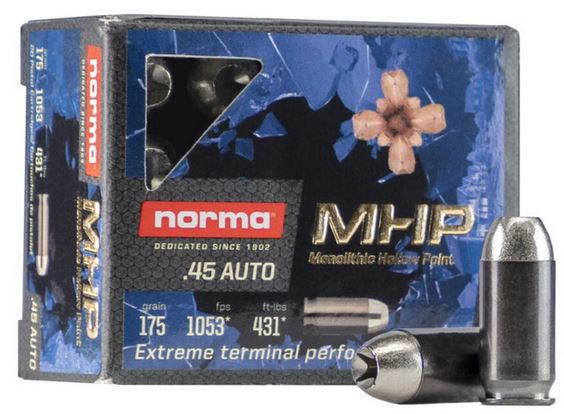
All that is the long way round to explaining why I have more .45 ACP ammo in Ye Olde Ammoe Locquere than any other caliber except .22 LR.  I have .45 ammo that I can’t shoot anymore because the 230gr. FMJ absolutely destroys my wrist after about a box or so, but I still have hundreds of rounds thereof because if push came to shove, I’d shoot it despite the pain because then I’d be in extremis.  I have more .45 ACP ammo on hand than I could reasonably be able to shoot for the rest of my life — a statement all the more sadly true the older I get.

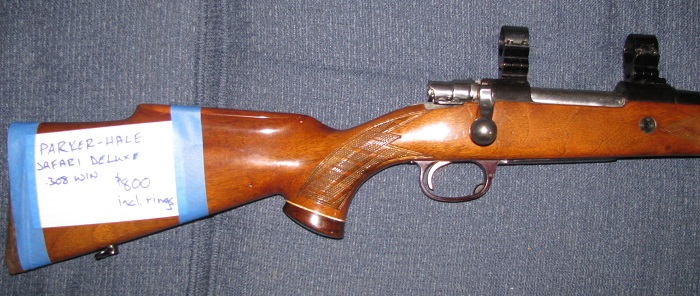
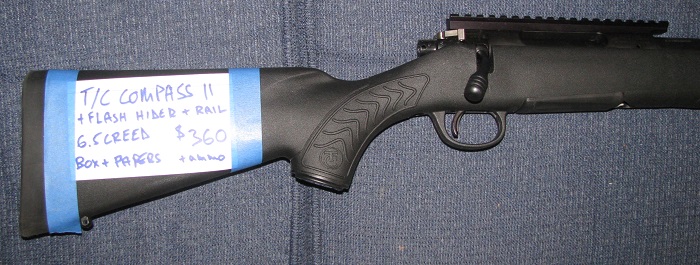
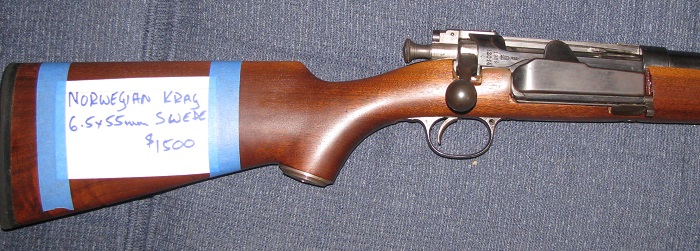
Which leads me to the next question:  which guns am I unlikely to need as I reach my appointment date with my old companion, the Grim Reaper?  That question has proved surprisingly easy to answer, which is why so many of my rifles recently went on the block.  I’m never going to go hunting again;  that itch has been well and truly scratched because I’ve killed enough game to satisfy just about anyone, and I find myself increasingly reluctant to shoot birds — so my Bucket List item to go shooting high birds with Mr. Free Market at some titled toff’s estate is probably going to remain unchecked.  So all my hunting rifles have gone bye-bye, along with a very satisfactory quantity of ammo to feed them.

Which leaves the AK-47.  I keep this for completely different reasons than I keep the 1911:  it is the ultimate SHTF gun, the gun which, as the man said, you’d want when civilization has crumbled, the jungle and its bunnies have taken over, and you need more firepower (and reach) than your handgun provides.  As with the .45 ACP, I have way more 7.62x39mm ammo than I’m ever likely to shoot in my lifetime, but that’s just a factor of my shortage fear:  over the years, every time some gun-control advocate has spewed his vile agenda, I’ve bought another few boxes or so of “39”, which is why the locker still can’t be carried except by crane or forklift.  It’s the reason behind National Ammo Day, and that reason remains as valid today as it was back then.

And that’s pretty much it.  My bedside gun, the S&W Mod 65, requires little restocking because back during the Dubya decade I found an unbeatable deal on Winchester 110gr, and I bought about ummm four large ammo cans’ worth for practice.  (At today’s prices — eeek! — that sounds indulgent, but that’s not what I paid for it then, so it still serves as practice ammo when I feel the need to shoot .357 Mag, which isn’t very often.)  I have a modest supply (about a thousand rounds) of .38 Special ammo which serves as both practice ammo for the Mod 65 and my backup Mod 637, along with some good Hornady hollowpoint self-defense ammo for the latter.  I hardly ever practice — maybe every other month or so — with both revolvers because they are, in the end, guns intended to be used at halitosis range so accuracy isn’t really at a premium.  Those couple-thousand .357 and .38 rounds are more than I’ll ever need.

And that’s it, more or less.

Alert Readers will note that in all the above, I’ve made no mention of plinking and its concomitant ammo, .22 LR.  This is because (repeat after me):  .22 firearms are not guns, but household appliances and tools like a frying-pan or a vacuum cleaner;  every home should have at least one of them, and .22 ammo is therefore a household commodity like sugar, salt or coffee.

With rimfire ammo, then, there are no limits.  In my case, I have jillions of rounds thereof because I love shooting it, I shoot it often, and it’s excellent practice as well as fun.

For those Readers who are at my stage of life and at my stage of shooting preference, feel free to use the above as a guide, if you wish.  For younger Readers who still have the hunting urge and so on, feel free to set your own limits when it comes to both the variety of guns and the ammo required.  In my own case, I used to have at least 500 rounds for each of my other guns, and a little less for each of the mil-surps which I used to collect back then (and which I seldom fired in any event).

In the end, it’s your self-defense, your survival and the guns which must guarantee both.  For those, you need not five or six months’ supply, but as much as you would need for a lifetime of shooting, shortages be damned.  You yourself must decide what works for you, so plan accordingly.

Finally, some here might think that I’m preaching to the choir on this topic, and I hope I am.  In that case, you can use it as confirmation that you’ve done the right thing;  if not, you can use it as a guide to your goal stock amount.