The Old Cartridge Question

Ron Spomer was recently challenged to name his favorite cartridges for specific animals.  The catch?  He was restricted to only those cartridges developed and commercially sold before 1950.

In case you don’t have 20 minutes to watch the video, here’s the executive summary (with my very respectful preferences in parentheses):

Elk:  .300 H&H Magnum (9.3x62mm)
Mule Deer:  .270 Win
Whitetail:  7×57 Mauser
Moose:  .30-06 Springfield (9.3x62mm)
Pronghorn Antelope:  .257 Weatherby Magnum (.25-06 Remington)
Bison:  .375 H&H Magnum
Black Bear:  .35 Whelen (.32 Win Special OR .45-70 Govt, depending on the terrain)
Grizzly Bear:  .375 H&H Magnum
Elephant:  .375 H&H Magnum (.416 Rigby)

And by the way, I have absolutely no argument with any of Ron’s choices.  My “alternatives” are a personal preference, no more.  (I’d hope that he wouldn’t have a problem with any of mine, in return.)


Of course, I have opined on those wonderful cartridges of yore, and for those New Readers or else Elderly Readers Of Fading Memory, here’s a link to that 2003 post.

Getting The Blues

Okay, I never expected to see this:

Swarms of pigs have been found with neon blue skin after ingesting life-threatening pesticides.  

The electric blue-skinned hogs were first reported in Monterey County, California in March when trapper, Dan Burton, discovered several wild pigs with blue fat and muscle.  He told LA Times: “It’s wild. I’m not talking about a little blue. I’m talking about neon blue, blueberry blue.”

The feral swine are thought to have ingested the rat poison from dyed bait or feeding off other infected species.
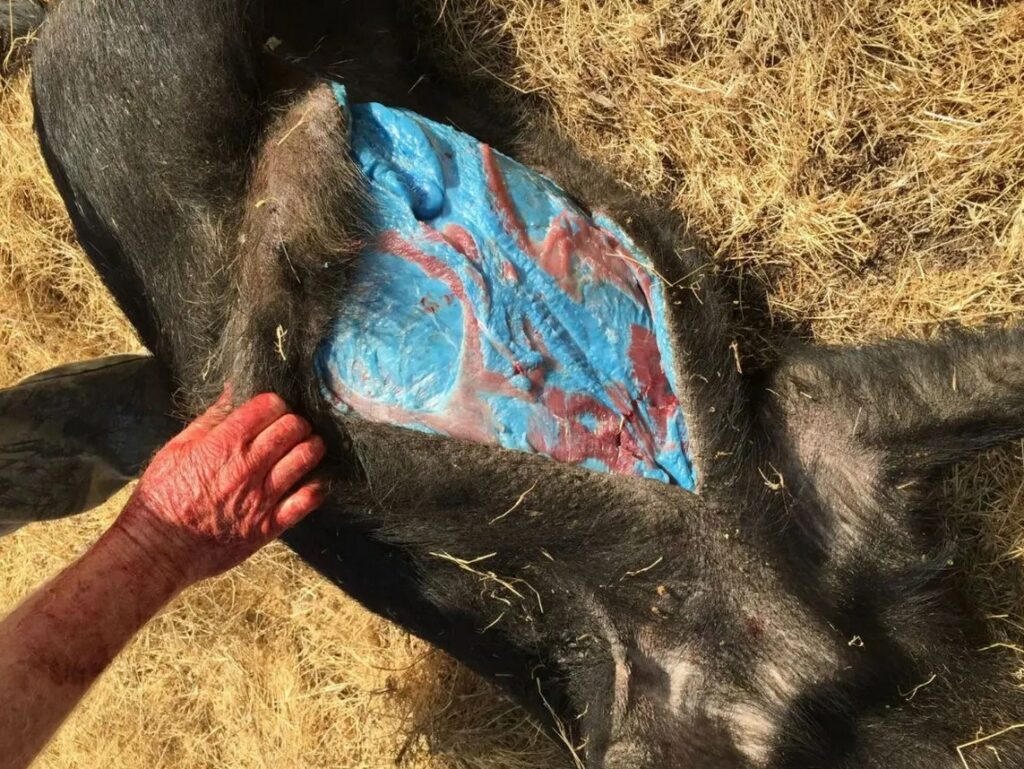
Wow.  Assuming that all the above is true and not some cock-and-bull story cooked up by The Usual Suspects, I’m not at all sure how to comment.

I’ve never supported using poisoned bait to keep vermin under control, for the same reason that I don’t support fishing with explosives:  a bullet has one intended target, whereas both explosives and poison are simply labeled “To Whom It May Concern” — i.e. it’s indiscriminate targeting.

However:  there are two known facts extant.  The first is that wild pigs are becoming a pest on a national scale.  In Texas, you don’t need a permit to hunt them, and when you do there’s no bag limit, wild pigs being regarded as vermin.  Texas farmers not only allow pig-hunters on their property, they welcome them.

The second fact is that the state of California has the same regard for hunters as landowners have for vermin.  California, more than almost any other state, hamstrings the practice of hunting with all sorts of nonsensical regulations, even in the remotest parts of the state.  So landowners, not wanting to draw attention from the state’s feral bureaucrats and law enforcement, simply use other means to control the population — such as poison.

I’m not saying I agree with the practice, but I sure as hell understand it.

But that pic is still some kind of spooky, innit?

Finishing The Job

This is interesting:

Burmese pythons, one of the world’s largest snakes, are also one of the most problematic invasive species in South Florida. First spotted in the Florida Everglades in the 1970s, the snakes were introduced, either accidentally or intentionally, through the exotic pet trade.

Since then, pythons have become top predators in the local food ecosystem. Despite the fact that they now exist throughout much of South Florida, they remain difficult to track down. That means researchers and conservationists need to find creative ways to lure them out into the open. 

And by creative, we mean really creative—and University of Florida (UF) researchers clearly understood the assignment.

Researchers led by UF professor of wildlife ecology and conservation Robert McCleery have released 40 solar-powered, remote-controlled robot bunnies in South Florida this month. The researchers replaced the plush toy’s stuffing with motors and heaters to imitate the motions and body temperatures of one of pythons’ favorite snacks: marsh rabbits.

I’m no professor of anything, but it seems to me that these boffins are missing a trick, here.  It’s all very well to “lure” these giant worms out into the open, but it’s pretty much useless when it comes to actually killing the loathsome creatures.

My suggestion:  a small explosive charge — it doesn’t have to be greater than, say, that of a large bottle rocket — inserted into the robo-bunnies, triggered by pressure on the outer frame.  This will do one of two things:  blow the snake’s head off when/if it bites the bunny;  or else blow the snake apart when it crushes the thing prior to ingestion.  Either outcome is satisfactory.

Of course, this will never happen because reasons.

Birding

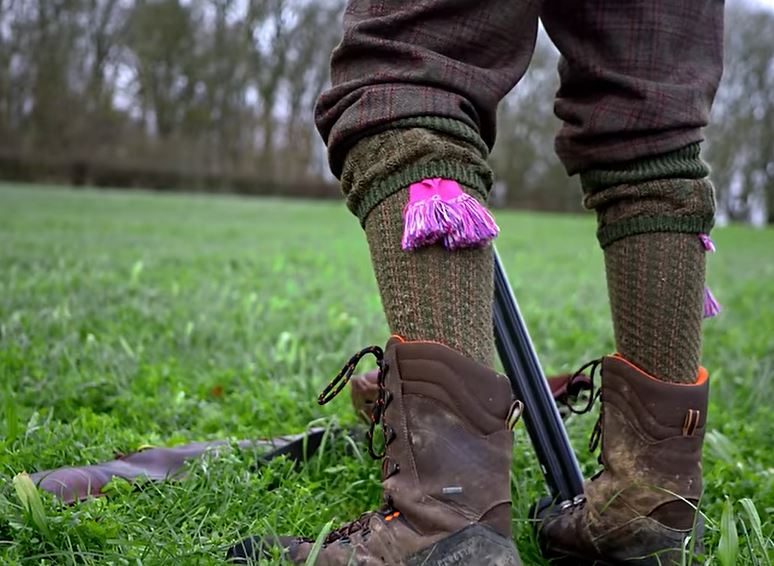
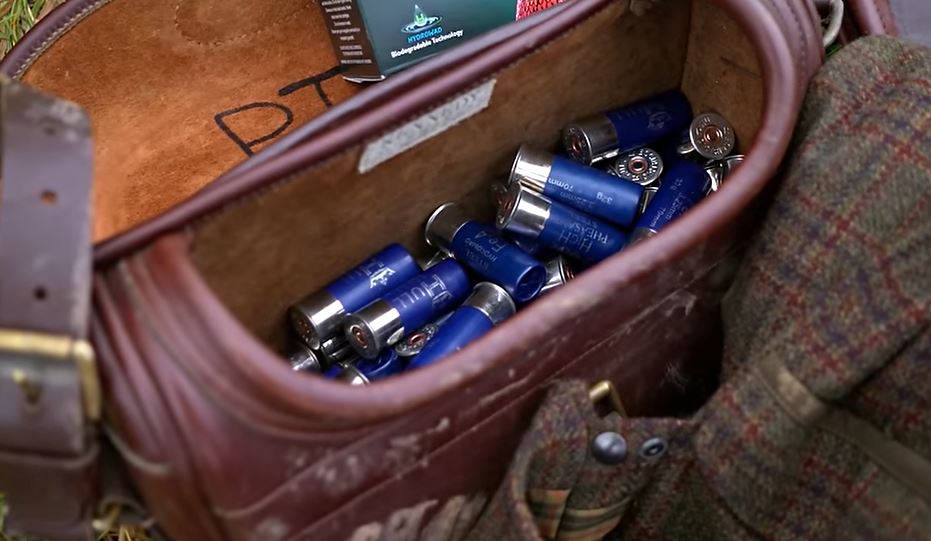
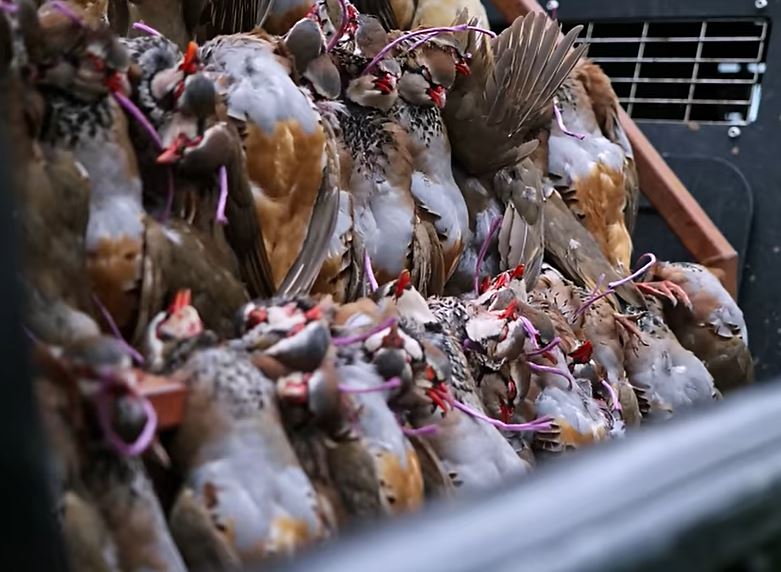
We interrupt this stream of all-politics-all-the-time posts to bring you some traditional recreation shooting, courtesy of Jonny at TGS Outdoors.

As always, action-packed shooting and tons of informative content, all delivered in his trademark aw-shucks overgrown-schoolboy manner (and terrible schoolboy haircut), and all whilst stuck in typical gloomy Britishland shooting weather.

(gottim)

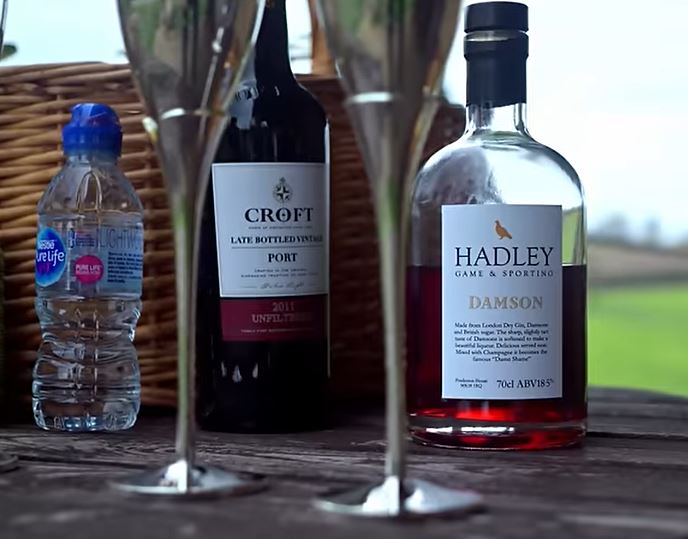
Still, there are some perks…

And the results are important, too.

Lovely.

Out Of Your Element

Whenever someone asks me what it’s like to hunt in Africa, I’m kind of at a loss for words.

The African bushveldt, you see, is pretty difficult to hunt.  Here’s a representative sample:

It’s pretty dense — not tropical jungle, though as much densely covered, and visibility is often measured in feet rather than in yards.

To give you an idea of what this means:  from a standing start, a lion can cover 100 yards in about 3.5 seconds.  Typical visibility in lion country:  about 100 feet, as above.  (Do the math.)

And death is everywhere, the minute you leave the relative safety of your Land Rover or hunting camp.  It could be a mamba, a scorpion, a Cape buffalo, or any number of things with teeth and claws, for whom a human is kinda like a marshmallow:  can’t run that fast, no tough hide, no horns or whatever to protect itself, and laughably slow reflexes and crap hearing by comparison to the typical prey animal.

Like this leopard:

Now you know.

Different Hunting

As I’ve got older, I’ve watched in the rearview mirror as my hunting days disappeared into the distance.  It’s okay, really;  I’ve done enough, and scratched that itch quite sufficiently.

Nevertheless, while I don’t really miss the hunting as such, I do miss the camaraderie of the thing:  going out with a couple-three like-minded souls to send boolets into unwary animules.

Which led me to this thought.

I can’t do the regular hunting thing anymore — all that stalking / crawling around on the belly / walking miles through rough country, you know what I mean — but that doesn’t mean I wouldn’t be up for something more sedentary or at least stationary.

My preference, of course, would be to do some high-bird shooting with Mr. Free Market, but that would involve an expense that is (far) beyond my wallet.

So I thought:  why not varminting?  Find a farmer with a gopher / prairie dog / coyote problem and offer to help him out, so to speak.  Then take one or two like-minded souls, set up a shooting table, and start popping a few of these undesirables at distances of (say) 200-400 yards.

Doesn’t sound too bad, does it?

Except that I don’t have the proper gear for such an activity.  I do have a shooting table, spotting scope and sandbags etc., but not the rifle or scope.

As things stand, my sporting long gun collection caters well to precision shooting at shorter distances — .22 LR and .22 WMR, oh yes:


…both fitted with bipods, if sandbags are not available, and both being capable of one-hole shooting up to 50 yards (.22 LR) and 75-100 yards (.22 WMR).

But if I want to shoot anything (that’s of the varmint genre) past 100-odd yards, well, there I’m sorely lacking.

The criteria are simple:  quality rifle, decent scope and cheap ammo — cheap in the sense that it costs more than .22, but less than (say) 8x57mm, .308 Win, .303 Enfield and the like (of which I have shall we say an adequate quantity).  Also, I love my shoulder and am not interested in pounding it into fragments by shooting lots of .3x cartridges, as one has to do when varminting.

Step forward the excellent .223 Remington, which I have often denigrated as a poodle-shooter cartridge, but of course I’m talking about shooting at “poodle-sized” (or smaller) varmints, aren’t I?  And even were I to go with actual .223 Rem and not the military-grade 5.56x45mm, the cost thereof is bearable.

So then:  what rifles?  I have three favorites in mind, of course, of rifles I’ve owned or shot before and that are relatively affordable.  (As much as I’d love to have a Cooper Arms or something of similar excellence, they are just too $$$pendy for someone who belongs to the Poor Of The Parish, i.e. me.)  Even so, I’ll have to sell a couple of my mil-surp rifles to be able to buy one of the candidate rifles and a fitting scope for the purpose.

Here, then, are the three candidates, all chambered in .223 Rem and sporting heavy barrels.  The first two run for about $700 (excluding the scope):

1.) Howa 1500 Legacy


Loyal Readers will recall that I used the above rifle at Boomershoot (albeit with a more manly chambering), and raved about its wonderful trigger and outstanding and consistent accuracy.  It’s definitely my first choice, subject to availability.

2.) Ruger American Predator

Like the Howa, I’ve used the Ruger at Boomershoot (once again, its larger cousin the Hunter in .308 Win), and I would have absolutely no hesitation in using this one.

Finally, we have my sentimental favorite, but at $950:

3.) CZ 600 Lux

I like everything about this gun:  that hogsback walnut (not plastic) stock, the excellent CZ trigger and faultless controlled feed — the CZ has it all, and always has.  Were it not more expensive than the other two, there would be no choice;  but as it is, that $200 premium is a hefty speed bump, and I don’t want to have to sell three of my beloved mil-surp rifles just to afford this one.

There are other brands, of course, but I’m more familiar with these, and I can’t afford to mess around.  There are some cheaper options, of course:

  • Savage Apex Predator line runs about $400, which is nice, but I don’t trust those skinny little barrels — for sustained shooting, nothing beats a heavy barrel
  • Mossberg’s MVP is priced the same as the Savage, but I’ve never shot one before so… but it does look interesting and Mossberg have that reliability thing going for them:
    I just don’t know about the trigger, and I’d hate to have to hassle with a gritty or heavy one.

As for the scope, I’d almost certainly go for a Vortex Crossfire II 6-18x44mm AO — once again, I’ve used this scope often before, mounted on several different rifles — and had excellent results each time.  (I’d like to get a similarly-powered Optika6, but $800 is way too much for my wallet.)

Practice ammo is likewise a simple choice:  PPU 55gr. (bless their little Balkan hearts).  For the actual hunt, I might go with something maybe a little more hefty, say a 60gr. pill, but that can be decided later.  (Incidentally, of the three rifles above, only the CZ 600 is comfortable shooting 5.56x45mm as well as .223 Rem, so that’s something else to be considered given the ready availability of the military ammo vs. the .223 Rem.)

All this said, I’m a little early in the game;  I don’t have a location planned, nor have I even thought much about setting up a shooting party.  But I will need to have extensive practice before I do any of that, because if there’s anything I hate more than burning up ammo to no avail, I haven’t thought of it.

So there it is:  Death To Varmints, at a time TBD.

Your thoughts and input are welcome, as usual;  and if anyone has such an excursion planned for the spring, summer or fall of this year, please consider me as a participant.

Oh, and please don’t use this opportunity to try to talk me into getting a Mattel rifle.  Bolt-action only.