Stolen This, Taken That, Expropriated Another

I’m getting heartily sick of all the bullshit surrounding this whole “stolen land” concept.  I was reminded of this while watching some Australian TV show (out of the corner of my eye:  New Wife was doing the actual watching) where the opening credits revealed that the show’s cast and producers were aware that the show was being filmed on lands that were originally the home of some unpronounceably-named tribe of Aborigines, and wanted everyone to know how they respected that “heritage”.

Given that Australia’s aborigines are amongst the most “unsettled” populations on the planet — they are nomadic to an extent almost impossible to describe — that struck me as a little rich.  Most of all, what got my goat was the tone of the statement:  semi-apologetic, cringing and guilty are the words that come to mind.

We have the same bollocks much in evidence Over Here.  The history of this entire world is a story of migration, settlement, wars over territory and Tribe A taking land from Tribe B — bloody hell, they’re still fighting the same wars in the Balkans — but it’s only recently that the arguments over who owns what have become a third-party issue rather than something that the involved parties settle between themselves.  Or, to put it in a more scholarly fashion:

Every person alive on this planet today has ancestors who were displaced by force somewhere in their lineage. Every person alive on this planet today has ancestors who displaced other people by force somewhere in their lineage. It’s an inevitable fact of human history. American natives fought with each other over land and resources, and some tribes, like the Dakota (Sioux), were notorious for attacking their neighbors. Europe’s history is rife with such, from the Vikings to the Norman invasion of Britain. In fact, few if any of the people of Europe today are the original inhabitants of the land they reside on now; the one exception may be the Basque of the Pyrenees Mountains, but even they, at some point, came there from somewhere else. The French people we know now derive their name from the Franks, a Germanic tribe, and as for the British Isles, that motley group of islands has seen so many invasions, from Picts to Celts to Romans, Saxons, Anglians, Jutes, and Normans, that it would be difficult to keep track as they go by.

Here’s the simple response to all the handwringing and aggrievement over the “stolen land” claims:  get over it, because you’re never going to get it back.  End of story.

And to a lesser extent, the same is true of “cultural appropriation”:  where White kids are somehow forbidden to wear their hair in those disgusting dreadlocks because Africans somehow have “ownership” of a hairstyle.  What bullshit.  It’s like saying that Black people can’t drink Scotch whisky because whisky is traditionally a product of the northern provinces of (lily-white) Britain, or that the Irish can’t eat chips because potatoes originally came from America.

Everyone borrows cultural artifacts and customs from everyone else.  That’s been the habit of mankind for millennia, and no cries of outrage can overturn it.

When it comes to land, the stronger group has taken it from its “original” (and sometimes not-so original) weaker inhabitants.  That this activity has become somewhat less egregious and bloody in recent times does not gainsay its basic premise — and where it has become more bloody, the weaker continue to learn its hard history — as the “Palestinians” are (re-)learning in their efforts to eradicate the state of Israel.  (They’re unlikely ever to give up, which simply means that Israel will be forced to teach them the same lesson again and again, ad infinitum.  As I’ve said many times before, the Arabs are lucky that the Jews have an inexplicable aversion to genocide, or else “from the river to the sea” could easily have changed to “from the Golan to the Suez”.  Vae victis  — a Latin expression — has particular currency here.)

So enough with the kowtowing (a Chinese expression) to the Perpetually Aggrieved.  Fuck off, all of you, and make the best of what you’ve got.  Heaven knows, most of what you can achieve comes courtesy of Western civilization.

You’re welcome.

Propaganda Effect

This was a letter sent to the Daily Mail:

I feel my whole world has turned into a dystopian nightmare. What prompted me to write was that video made by Dawn French. She put on a babyish, whiny voice to mock the agony Jewish people are going through, and reduced the horrors of October 7, 2023 to ‘a bad thing’.

It was so awful it actually made me cry.

Every day I see celebrities such as Benedict Cumberbatch signing letters of protest saying Israel has no right to defend itself – and, honestly, it’s intolerable. Do they all hate Jews so much?

All sense of security in my life has disappeared. Who I once was has gone. This is being a British Jew today in the UK.

My mother’s family goes back five generations in England and I am a typical Yorkshire lass – and Jewish. Now I feel like a stranger in the only country I’ve ever known. Just because of my DNA.

Old friends start to withdraw, get too busy to see you or just ghost you. Other friends, in all industries, are losing contracts, not been hired, ignored by workmates, abused on social media.

You switch on news reports you know (first-hand) are at best biased and at worse false. Politicians such as David Lammy and many Labour backbenchers clearly hate Israel – which is the Holy land of the Bible and the Torah. Everywhere we Jews are lied about and (even worse) narratives are changed to fit centuries-old lies.

I have a friend who is a secondary school teacher. After October 7 she endured daily racial slurs by her students. Her union and the administration didn’t support her, so she felt she had no choice but to leave her job.

I know of two people whose clients have left them as they ‘can’t work with someone who supports that country’. Israel, the elephant in the room for all Jews. Whether we feel connected or not, wherever we live, we are all judged by that.

Worldwide, Jews like me are now realising just how the Holocaust happened. A constant drip of misinformation and prejudice set the groundwork for Kristallnacht and the camps. I still cannot believe that this is happening to us – to me – as British as Les Dawson and Yorkshire pudding. But it is.

Jewish friends constantly discuss where they will go when they have to leave Britain. Where would we be safe? This in 2025 in the UK. I am so afraid, depressed, let down, stateless and terrified for the future – especially for my teenage child.

“Jews like me are now realising just how the Holocaust happened.”

Says it all, really.  What was once pretty much a “German” or even “European” thing is now international.

As for me:  anger does not begin to describe how I feel about all this.  And I’m not Jewish.  All I can say is what I’ve always said:

If you come for the Jews, you have to get past me first.

Added:  you motherfuckers.

And by the way:  don’t bother telling me that your beef isn’t with Jews, but with Israel.  That little bit of maskirovka  doesn’t work any more.

Bygone Times

Reader Old Texan sent me an email with this enclosed:

…and purely coincidentally, The Divine Sarah published Long Ago, It Must Be, which starts with the hypothesis (not hers) that time stopped in 1999, and everything that’s happened since then has been just a dream.  In that piece, Sarah talks wistfully about how 1999 was a time when some of her friends were still sane, and of other friends since passed away.

Well, 1999 was an okay year for me, I think:  living on the lakefront in Chicago with Connie, doing consultant work and traveling to Britishland occasionally:


(that’s the Bath Weir in the background)

It was a good year, no doubt about it.  But if I look back to my favorite years pre-2000, I’d have to choose 1981.

Oh man, 1981…. I had a job I loved — imagine that — which also involved travel (only all over South Africa, not the UK) and which earned me a decent salary:


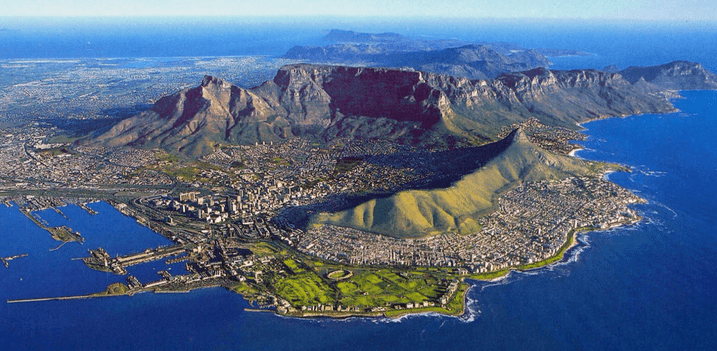
(Cape Town)


(just north of Durban:  Umhlanga Rocks, where my Mom lived)


(Port Elizabeth “PE”)


(Kimberly, with its “Big Hole” diamond mine)

In 1981, I was still playing in the Atlantic Show Band — we’d pretty much given up playing clubs and were doing gigs at proms, wedding receptions and office parties etc. — and that, believe me, was a blast.  The music we were playing?  Bette Davis Eyes, Fire, Angel Of The Morning, Stop Dragging My Heart Around, Another Brick In The Wall, Crazy Little Thing Called Love, Heartache Tonight, You May Be Right… aaah, kill me now.

I was driving a very nippy little Opel Kadett (company car, ergo free), and I was still single, with a very active Little Black Book.

I was twenty-seven years old, and I ruled my world.  If I could choose a year to relive, then 1981 beats all the others, in spades.

Feel free to tell me in Comments which year you’d like to go back to, with reasons.  (Email if Comments are still screwed up for you, and I’ll post it.)

Touching History

When we used to travel with the kids back in the early 2000s, I was always keen on exposing them to history and its various artefacts.  One time the Son&Heir commented on the age of a church in, I think, Salzburg, noting that the date of its build was something like 1124 AD;  whereupon I pointed out  that this was one of the benefits of knowing a foreign language, in that the church had been rebuilt (or else renovated) in 1124 AD, but its original completion date was some time earlier, around 980 AD.  He was duly impressed by its age, less so by my familiarity with German (that came later).

Another example is when we took them to Dachau, where they saw at first hand evidence of the disgusting atrocities inflicted on the prisoners by the Nazis, and after we’d finished walking around, we told the kids this:  “We brought you here so that when sometime in the future people might say this never happened, you will know the truth of it.”

Touching history.

But that’s not what I really wanted to talk about today.  There’s another kind of “touching history” which is a lot more common, and that involves rubbing up against fame.

In its most innocent form, this includes modern customs like taking photos of oneself with someone famous (“selfies”), getting the autograph of some “celebrity”, or holding out one’s hand to the celebrity as they pass by for a “high five” or “fist bump”.  When I  see this nonsense taking place, it reminds me of nothing so much as the New Testament story of people saying to Jesus, “Only let me touch your garment and I shall be healed” — as though simply being in the presence of a person of greater distinction will somehow boost the stature or wellbeing of the supplicant.

What really annoys me is when the request is refused and the exchange turns nasty, like the “celebrity” is somehow “too good” to grant so small a wish.  Well, yes;  except that said request is often just the latest of many thousands that the hapless celebrity has had thrown at them, and, well, enough is enough.

I encountered such an occasion once, back when I was somewhat more well-known than I am today.  In my travels I met up with a Reader for a cup of coffee in his home town, which was all very pleasant.  Afterwards, he told me he had a gun to show me — and of course I never turn down that kind of opportunity.  As it happened, it was an M1 Garand, and from its serial number I guessed its date of manufacture at about 1942 or ’43.  (Lucky guess:  1943, as the owner told me proudly.)  But that wasn’t its value.  Its value lay in its appearance;  not to put to fine a point on it, the rifle looked as though it had just left the factory the day before, and it hadn’t been reconditioned, either.  It was in absolute pristine condition, and I confess to having to wipe a small stream of drool from my mouth.

Then the guy pulled out a Sharpie and asked me to autograph its stock.

Look;  it’s not like I was Carlos Hathcock or Jeff Cooper, or even (especially) the WWII vet to whom it had first been issued.  I was, and am, just an ordinary guy who writes a blog about guns, and in no way did I feel that my signature should desecrate that extraordinary rifle.  It’s not like my autograph would enhance its value, after all — in fact, it would more than likely halve its collector appeal.

So I refused to sign the rifle;  and I will never forget the look of disappointment — followed by actual anger — on the guy’s face, and our meeting ended on a sour note.

There’s another kind of touching history, of course, and this is the expensive kind.  Modern history is replete with examples of things becoming extraordinarily valuable simply because of an item’s provenance.  You’ve all seen them:  Paul Newman’s wristwatch (Breitling? Rolex?  I forget), Steve McQueen’s E-type Jag, and the latest example, this Fender Telecaster once owned by glam rocker Marc Bolan and thereafter by Mike Oldfied, who played it on Tubular Bells.  Now let’s be honest;  a 1960 Telecaster has a great deal of intrinsic value all by itself — it’s probably worth at least five or six grand, simply because of its rarity, and they were somewhat better made than those manufactured after the CBS sellout of the 1970s (less so today, though).  But somehow, its value has been transformed by its provenance and it’s now worth close to $40 grand?

Let’s not even talk about the Ferrari 250 LM which, having won the 24-Hour Le Mans race back in 1960 or whenever, recently sold for over $60 million at auction.  I mean, really?

It’s not like you’re going to drive that thing around on the street, anyway;  your insurance company will have a collective heart attack just upon hearing about it, and there would be mass suicides if it was totaled on L.A.’s 405 or Dallas’s Central Expressway by some unlicensed Mexican driving a gardener’s truck.  (And, as Ex-Drummer Knob puts it, all those old Ferraris are total pigs to drive, regardless of how pretty they look, and he knows what he’s talking about*.)

I know, I know;  a lot of “collector appeal” is driven by ego, and if you can afford to indulge yourself, be my guest.  I know too that a lot of “collectibles” are regarded simply as investments, and once again, if you’re prepared to put up with the risk, be my guest too.

But I can’t help feeling that a lot of “provenance” value is driven by possessiveness — that childish attitude of “I have it, and you don’t”.  And as Russell Crowe’s character in A Good Year  asked his boss (the owner of an original Van Gogh, who kept it locked away in a vault because of its incredible value):  “How often do you look at it?”

It’s little better than showing off your selfie with Lewis Hamilton to your buddies:  “I stood next to him, and you didn’t.”

That’s some pretty pointless validation of yourself there, isn’t it?

Read more

The Iron Lady

It’s been just over fifty years since Margaret Thatcher became BritPM, and ever since then the Left has been acting like rabid dogs towards her — once in power, doing what was necessary to reverse the tide of socialism that had essentially held Britain in its grasp since the post-WWII Attlee Labour Government and had led Britain right up to the edge of the abyss;  once out of power (stabbed in the back by the British Conservative Party’s equivalent of the RINO cabal in the U.S.), continuing to stab her over and over again;  and upon her death, vilifying her, spitting on her grave, rejoicing at her passing, and in general acting like the animals we all know they are and have always been.

So it’s been really good to see someone redressing the imbalance — in this case the brilliant publication TCW (The Conservative Woman) — in three fine articles, all written by Paul Horgan.  If you haven’t already seen them, go there now.

Fifty Years On:  Margaret Thatcher is still demonised by the left

If a lie is repeated long enough, it will become accepted by the less intellectually-endowed sections of the populace. We see this in the denial of the Holocaust. Some really awful people with a sick agenda know that their twisted beliefs are destroyed by accepting the truth of historic facts. So to further their immoral thinking, they will deny these events ever happened and were faked as part of some global conspiracy. The vindictively superstitious portions of our population will prefer the lie, especially after its repetition.

Here in the UK we are experiencing a similar phenomenon over the premiership of Margaret Thatcher, which started 40 years ago last month. Rather than a conspiracy to lie over this, numerous people who are separately working towards the same goal realise that it is vital that they distort the Thatcher years. Those vulnerable to their propaganda are people too young to have lived through them, or to have lived through the years prior to Mrs Thatcher’s premiership when this country was known as the ‘Sick Man of Europe’ whose government ran out of money and could not borrow any more from its usual creditors.

Fifty Years On:  The big lies about Mrs Thatcher

There are two main lies. The first is that Mrs Thatcher destroyed the ‘post-war consensus’. The second is that her policies devastated communities, particularly in the North of England. Both are false. Here I discuss the first lie.

All Margaret Thatcher did was to take action based on the objective reality of the situation which was that a state-shackled economy needed liberation from the chaos that was causing the country to be ungovernable amidst accelerating economic collapse. All that is happening now is that the people who could not oppose her then are rewriting history now to brainwash anyone born after 1990.

Here I deal with the accusation that Thatcher’s policies devastated communities, when corporatist governance and incompetent planning were actually to blame.

The reform of the economy forms part of the second lie, accusing Thatcher of this devastation, particularly of those who depended on employment by state-run businesses. In fact, these communities were already devastated, and had been for years. The corporatist post-war consensus model was based on centralised economic planning, epitomised by the saying ‘the man from Whitehall knows best’. There had been calls for more central planning from the 1930s onwards by political and economic commentators and the planning started in earnest with the return of the Attlee government in 1945. It is therefore reasonable to believe that by the 1970s, whatever condition these state-dependent communities were in was as a direct consequence of state planning. However, it is clear that the planning did not include the contingency that these planned businesses on which the communities apparently utterly depended might not be able to sell to customers at a price the customers were willing to pay.

There was also the issue of the strikes, where customers, faced with unreliable supply, would take their business elsewhere. Working in an uneconomic coal-mine or loss-making steelworks was still hazardous and unpleasant, perhaps made more so by the lack of funds necessary to improve conditions, since all the money had to come from an increasingly-burdened taxpayer. The poor working men in these state businesses in this case were being subsidised to take part in a pointless, monotonous, and dangerous kind of work-based theme park, all according to a central plan made in Whitehall. It was a failure of state planning not to cater properly for change and innovation, but then all socialistic planning has that fault at its heart.

Fifty Years On:  Mrs Thatcher was polarising, not divisive

THE third big lie about Margaret Thatcher’s term in office is that she was a ‘divisive’ figure. This lie really started to be propagated in 2013 when it became the main narrative of the BBC and elsewhere after the Iron Lady died. What these media outlets probably meant was not ‘divisive’ but ‘polarising’. Margaret Thatcher presented a stark choice between consensus socialism and reformist capitalism. The voters chose the latter in decisive numbers in four General Elections. Despite unemployment, inflation and the miners’ strike, Britain still kept voting Conservative, keeping the party in power for a record-breaking 18 years.

If Margaret Thatcher had been divisive, the response of her opponents would surely have been to form a ‘popular front’, where differences amongst themselves would be forgotten in an anti-Conservative electoral alliance. In fact the precise reverse happened.

The excerpts above do not really do the articles justice;  they are there merely to whet your appetite.

Why did I do this?  Why talk about some long-dead British politician?  Just to remind everyone that Shakespeare was right:  “the evil that men do lives after them;  the good is oft interred with their bones.”

In Margaret Thatcher’s case, the good — the truth of the matter — is that she almost single-handedly saved Britain from ruin.  The “evil” is in fact how the Left has demonized her, and that evil does indeed live after her.