And This Is Why

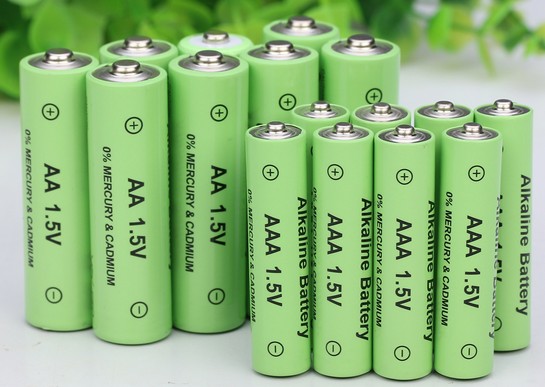
And as the car manufacturers like VW and Mercedes continue to wonder why their stupid customers are refusing to buy their little Duracell cars, there’s this report from the trenches:

Wheeler Dealers host Mike Brewer has claimed purchasing an electric vehicle was the “most stupid decision” ever made, revealing he has ditched his EVs and returned to petrol models.

Oh noes!  Whatever could have happened?

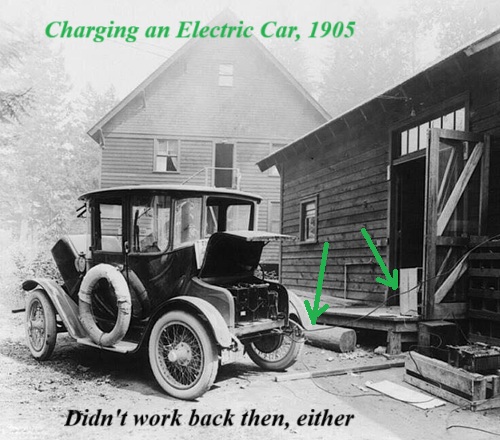
“The day I decided to sell my Porsche Taycan, which is a high-performance beautiful electric car, was the day that I couldn’t charge it. I went down to see my parents. On the way back there was nowhere to charge it, all the chargers were broken and nothing would work.

“When I did find a charger that was working, there were 12 people queued up waiting to charge their cars. The car went into ‘limp home’ mode, meaning I had to drive it at 40mph on the motorway, I realized I’d just paid £130,000 for something I was driving at 40mph on the motorway embarrassed. Why am I doing that? Why did I put myself through that anguish?

“Plus it was losing £5,000 per month at that time so it was the most stupid decision I’ve ever made.”

Is that all?

“I did buy one of those electric Mercedes recently, an EQC. 10 minutes and I’d done enough of that. That went back. I watched it lose £20,000 over the course of a couple of months and went ‘I don’t like that anymore’ and it went.”

And:

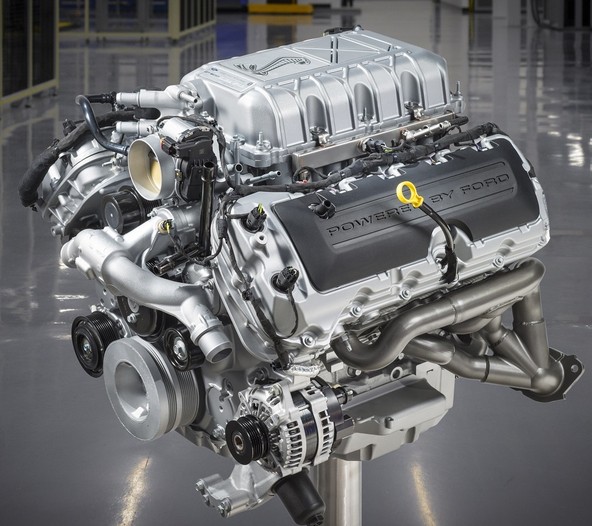
“I went very quickly back to an ICE and very quickly back to a flat-six.”

So, I think, will a huge number of his viewers.

When you can’t charge your car battery and the car’s value is depreciating faster than a Bentley’s… it’s time for a change.

…and not:


For my Murkin Readers who’ve never heard of Mike Brewer, here’s the background on Wheeler Dealers, which ran for over 20 years on Brit TV.

Modern Take

In Orwell’s Animal Farm, the pigs’ chant changed from “Four legs good, two legs bad!”  into “Four legs good, two legs better!”  and the farm changed forever.

Well, when it comes to airliners, it seems that the latter has become the norm — just substitute “engines” for “legs”, and you get the picture.

Modern engines, we are told, are more efficient and more eco-friendly (in that they burn less fuel and therefore squirt much less of that eeeevil carbon-whatever into the atmosphere), so therefore twin-engined long-haul aircraft are so much more desirable, you see, than those fat and dirty old 707s and 747s.

Amazingly, the oh-so eco-friendly Germans don’t agree (albeit for the wrong reasons), and are keeping some of their 747s:

This four-engine behemoth, first flown commercially in 1970, is no longer financially viable in an era of increasingly-efficient twin-engined jets. The final passenger-configured jumbo was delivered eight years ago, and Boeing has no plans to restart the production line.

But one European airline hasn’t turned its back on the 747 just yet. Germany’s Lufthansa, perceived by many to be aviation’s kings of efficiency, still operates 27 jumbo jets – 19 of the newer 747-8s, and eight older, slightly smaller 747-400s – and is even upgrading some jumbo jet interiors with swanky new Allegris seats as part of a £2bn Lufthansa fleet-wide refit. 

Here’s the reason:

Why the lingering attachment? Part of the reason is simple and unromantic economics. According to aviation analysts, operations out of its Frankfurt and Munich hubs are each at take-off slot capacity.

So, with flight numbers capped, Lufthansa really needs its biggest aircraft, and the 364-seat 747s-8s drop neatly between the Airbus A350 (293 seats) and A380 (455 seats).

Yeah, whatever.

I happen to prefer flying aboard the older 747s for one simple reasons, based on the old saw:  “Two is one and one is none.”  Using that as a yardstick, I happen to think that four engines are safer than two.

I know, I know;  according to the cognoscenti, modern twin-engined airliners can stay in the air if one engine breaks.  But to my way of thinking, if one engine can break, its identical twin can also break, for the same reason.  I know the chances are not high, statistically speaking;  but the chances are not zero.

And forgive me for being a little skittish about my transportation suddenly turning into a lawn dart at 28,000 feet.  Under those circumstances I’d like the odds to be somewhat more stacked on my side, and four engines are not going to fail simultaneously, or even sequentially.

I know that this is more of a moot point nowadays, when it appears that my transatlantic flying days are pretty much over.  And annoyingly, according to a cursory study, Luftwaffe  Lufthansa is persisting with the European Airbus 330 for DFW-FRA.  (Why Frankfurt?  Because if you’re going to connect at an airport in Euroland, Frankfurt is as good as LHR or CDG, to name but a couple, and better than MAD or — gawd help us — ROM.)

But the principle remains, because it’s true for any passenger, not just me.  So in my opinion, Orwell’s original thesis is true:  four legs good, two legs bad.

Circling The Drain

Wow, nobody (except for the Terminally Stupid) could have seen this coming:

Japanese automotive giant Honda is reassessing its strategy for electric vehicles as it navigates challenges stemming from the high costs of EV development, flattening EV demand, and the impact of U.S. tariffs.

In the first quarter of its 2025-2026 fiscal year (April 1 to June 30, 2025), Honda took a one-time charge of ¥113.4 billion (~$780 million) related to its EV-related troubles. In total, the impact of the EV charge and its exposure to tariffs took a toll on Honda’s operating profit during the quarter, as earnings fell to ¥244.1 billion (~$1.69 billion) from ¥484.7 billion (~$3.35 billion) just one year ago.

Yeah… who else thought that the EV industry would fail without massive government subsidies / Green-based regulation?

Well, yes.

Sanity Returns, Part XVIII

Then:

GM CEO Mary Barra said in 2021 that the company would exclusively offer EVs by 2035, citing carbon emissions.

“For General Motors, our most significant carbon impact comes from tailpipe emissions of the vehicles that we sell — in our case, it’s 75 percent,” Barra said. “That is why it is so important that we accelerate toward a future in which every vehicle we sell is a zero-emissions vehicle.”

From another GM management dweeb, Dane Parker, former GM chief sustainability officer:

“We feel this is going to be the successful business model of the future,” he said in 2021. “We know there are hurdles, we know there are technology challenges, but we’re confident that with the resources we have and the expertise we have that we’ll overcome those challenges and this will be a business model that we will be able to thrive in the future.”

Yeah, about that:

General Motors has announced plans to expand production of gasoline-powered vehicles and SUVs in Michigan as well as the manufacturing of pickup trucks.

The Detroit-based auto manufacturer said in a statement on Tuesday that it will “begin production of the Cadillac Escalade, as well as the Chevrolet Silverado and GMC Sierra light duty pickups at Orion Assembly in early 2027 to help meet continued strong customer demand.”

Yeah, it seems as though not that many people want to buy their, or anybody’s Duracell cars after all — at least, not enough to keep once-mighty General Motors in business.

And now, if you’ll excuse me, I’m off to borrow Sarah Hoyt’s Shocked Face.

But Wait! There’s Less!

In a development which should surprise absolutely nobody (with a brain and possessing the magic power of Logic), we have this shocking crisis:

The Netherlands is rationing electricity as its overloaded power grid buckles under the pressure of rapid electrification and ambitious climate goals.

More than 11,900 businesses are stuck in a queue for access to the network, alongside public buildings including hospitals, schools and fire stations. 

After shutting down production at the massive Groningen gas field last year, the Dutch government has pushed a fast transition to electric heating, solar power and battery storage. 

But the national grid has failed to keep pace, creating widespread bottlenecks and driving up costs.

…in trying to escape the much-prophesized “catastrophe” of Global Warming Climate Cooling Change©.

My favorite part of the report:

Thousands of new homes are also waiting to be connected, with some areas warned they may have to wait until the 2030s.

 Imagine buying a new house and being told that you’ll be living in medieval style for the next five or six years.  (The throngs of Muslim “refugees” from the Middle East and Africa might be able to cope, that situation being little different from back home;  the sophisticated Dutch, much less so.)

What amazes me is that the practical and hard-headed Dutch fell for the climate change hoax in the first place.  But perhaps it’s not so surprising given that the Dutch have always been supporters of the European Union;  and we all know what fuckheads those Brussels-based bureaucrats are.