More Like It

Yesterday, in the great state of Texas, I filled my tank at Kroger’s in-house gas station, and paid $1.86 per gallon.

Granted, some of this was via a discount through Kroger’s points program, but I’ll take it any way I can.

I think I’ll pop over to New Wife’s workplace and get her car filled as well.  Maybe take a few jerrycans along for the ride.

And then I’ll swing by the range, because Murka.

The Comrades Lose Control

I’ve been ranting about this issue for about as long as the nonsense first appeared with software-dependent cars.  Now it seems as though it’s for real:

Hundreds of Russian Porsche owners have found their cars immobilized across the country, amid fears of deliberate satellite interference. 

Drivers have complained that their vehicles have suddenly locked up, lost power and refused to start, as owners and dealerships warn of a growing wave of failures that has left hundreds of vehicles stuck in place.

The nationwide meltdown hit Porsche models built since 2013, which are all fitted with the brand’s factory vehicle tracking system (VTS) satellite-security unit. 

The vehicles have been ‘bricked’ with their engines immobilized, due to connections with the satellite system being lost. 

Okay:  leaving aside the paranoia concerns — it’s the Daily Mail, of course there was going to be some panic warning — let’s just go with the system failure (regardless of cause) that causes one’s normally-reliable car to quit working.

I know I’m not the only person in the world who regards this “development” as creepy and worrisome.  The fact that some situation could occur that renders one’s possession useless makes me deeply apprehensive.

As I said earlier, whether the immobilization was a factor of technology fail or else of some malignant third party is unimportant.

Note that this VTS thing is touted as a “security” feature — i.e. one that lessens the effect of the car being tampered with or stolen, a dubious benefit at best — and this supposed security guards against another feature (keyless or remote start) that seems to be all the rage among today’s cars, for no real reason that I can ascertain.  In other words, car manufacturers have made it easier to steal their cars, and then have to come up with yet another feature that can negate that situation.

While some drivers were told to try a simple workaround by disconnecting their car batteries for at least 10 hours, others were advised to disable or reboot the Vehicle Tracking System, known as the VTS, which is linked to the alarm module.

Some owners have been stranded for days waiting for on-site diagnostics, tow trucks or emergency technicians.

There are reports of Russians resorting to ‘home-brew’ fixes – ripping out connectors, disconnecting batteries overnight, even dismantling the alarm module. 

A few cars were revived after 10 hours without power, but others remained immobilized.

And they call this “improvement”?

By the way, it’s not just Porsche, of course.

Last year, MPs in the United Kingdom were warned that Beijing could remotely stop electric cars manufactured in China, as relations between the two nations deteriorated. 

The previous year, lawmakers cautioned that tracking devices from China had been found in UK government vehicles. 

Yeah duh, because China is asshoe.

As for Porsche, this makes me realize why their older, non-VTS-equipped models are fetching premium prices in the second-hand market.  I mean:

300 grand for an ’87 911?  Are you kidding me?  (Yeah, I know it’s been fully restored at a cost of about $50 grand — but even taking twice that amount off the asking price would still leave you with a $200 grand ask, which is ridiculous.  No wonder the vintage sports car market is starting to tank.)

But at least this 911 isn’t going to stop working every time there’s a meteor shower, or whenever some controlling remote entity decides that you’ve been driving it too fast or too much.

It’s a fucking nightmare.  And we’ve allowed it to happen.

Playing Sherlock

Okay, as a longtime data geek and mechanical moron, this video had me enthralled.  What was it all about?  Some guys asking themselves “Why?”

This brand new L87 engine with ZERO miles never even made it into a vehicle before it was condemned by GM. It failed one of their quality control Pico tests and we want to know why. In this video, we tear it down, take some measurements, and run tests to uncover why it was tossed in the trash — and how this single engine design ended up costing GM over a billion dollars in recalls and warranty repairs.

I don’t have the faintest clue what any of the technical pieces or terms are all about, but the search is absolutely thrilling.  It’s when these mechanics start looking at the data gathered from analysis of the different engine components that my inner data geek gets excited,

It’s the kind of stuff I used to do at The Great Big Research Company in my initial job in the Stat department:  picking at the data, looking for stuff which shouldn’t be there and is, and/or stuff which should be there and isn’t.

My favorite quote:  “These are big numbers.  Are they big enough to ruin an engine?” (He’s talking about a hundred thousandths of an inch, which in the real world would scarcely matter except when you’re looking at precision-made machinery.)

I’m not going to post a spoiler, here, but it involves the level of chamfering around some holes.

What I truly love is the level of expertise shown by all the guys in the video — and when they bring in Dave himself, his explanation of the problem is absolutely brilliant.

Go and watch the video.  It’s half an hour out of your day, and I promise you that you won’t be disappointed.  Even if you’re not the slightest bit interested in the minutiae  of engines — which would make you similar to me — the journey is worth the time.

Stupid Money

Via Insty (again), I see that Overfinch has crafted a line of bespoke Range Rovers in Holland & Holland livery:

The 2025 Range Rover Holland & Holland Overfinch’s interior is much more overtly extravagant, though Range Rover’s minimalist form language still dominates. Most surfaces are wrapped in Bridge of Weir leather, and those that are not are instead covered with open-pore French walnut veneer or real metal. The stainless-steel inserts in the doors feature the same engraved scroll work as on the “Royal” shotguns, the engraved diamonds embedded in the veneers in the doors echo those on the guns’ stocks, and the Holland & Holland crest is inlaid on the front and rear center consoles, the latter housing a Champagne cooler and a pair of Champagne flutes.

The leather seats feature a unique quilting pattern that also echoes the Holland & Holland diamond motif and features illustrations of game birds stitched into the backrests. In the duo-tone colorway the front seats are trimmed mainly in Harris Green and the rears mainly in London Tan.

Sounds like something an Arab oil sheikh would want to putter around his Scottish estate in, playing a Laird.  Still, I like that interior.

Of course, from the outside the thing is 2025 Rolls-Royce-level Fugly:

…but not as ugly as its price of $650,000.

To put it into perspective, that’s just over the price of three new H&H Royal and a couple-three of their secondhand Royal shotguns.

Lovely as all get-out, but not even with a lottery winning would I be tempted.  And that’s by any of them:  the H&H Range Rover or the H&H shotguns, which taken as the package above would set you back about a million bucks.

Maybe the parvenu status-seekers of today’s ultra-wealthy set would be tempted by such blatant brand-harvesting… hence the title of this post.

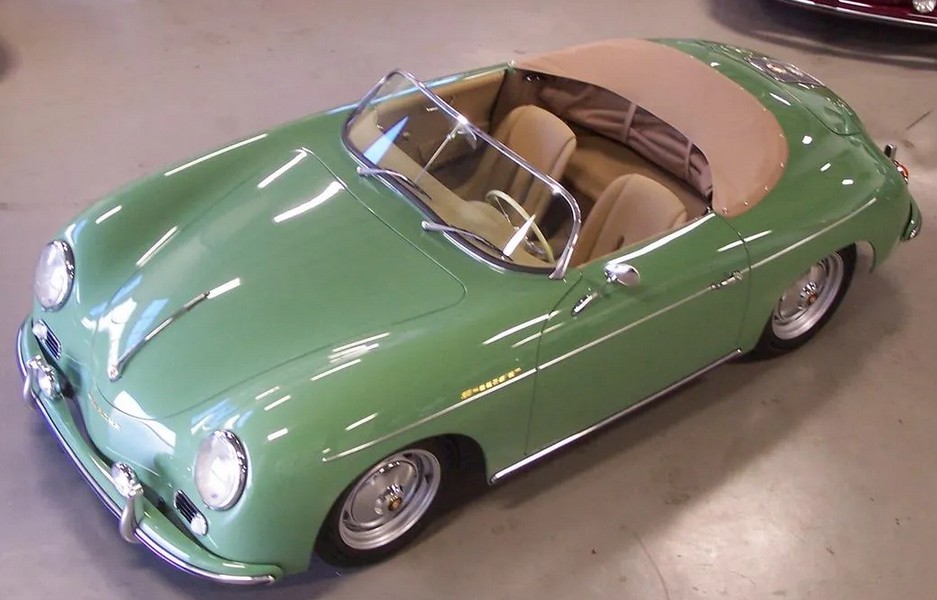
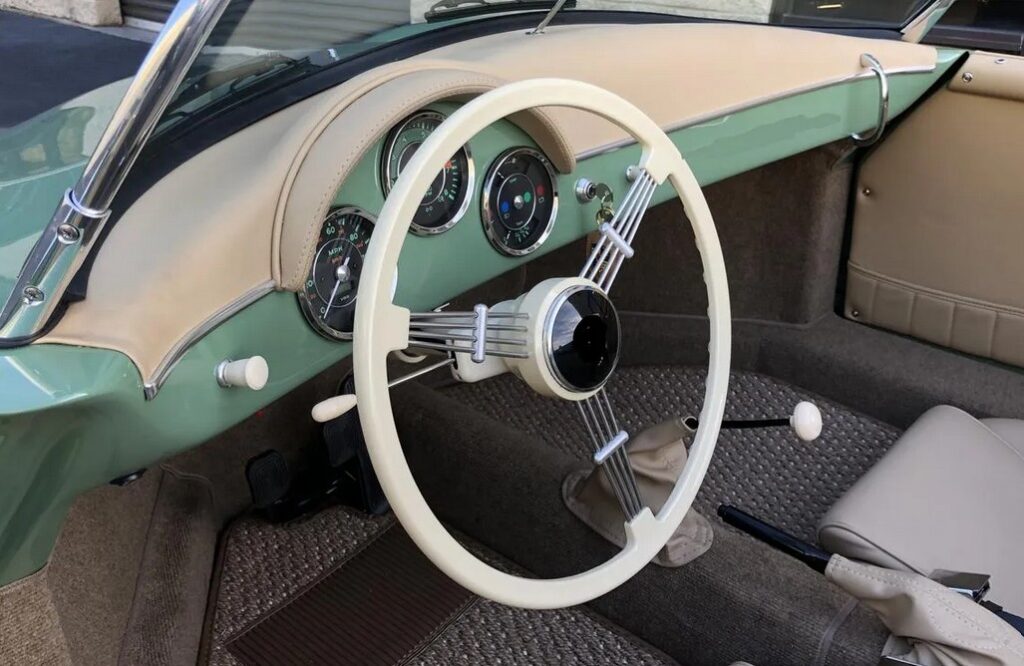
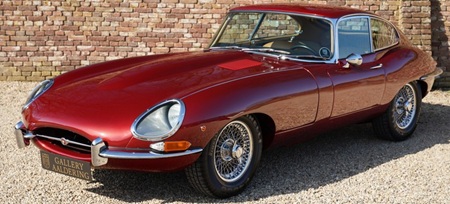
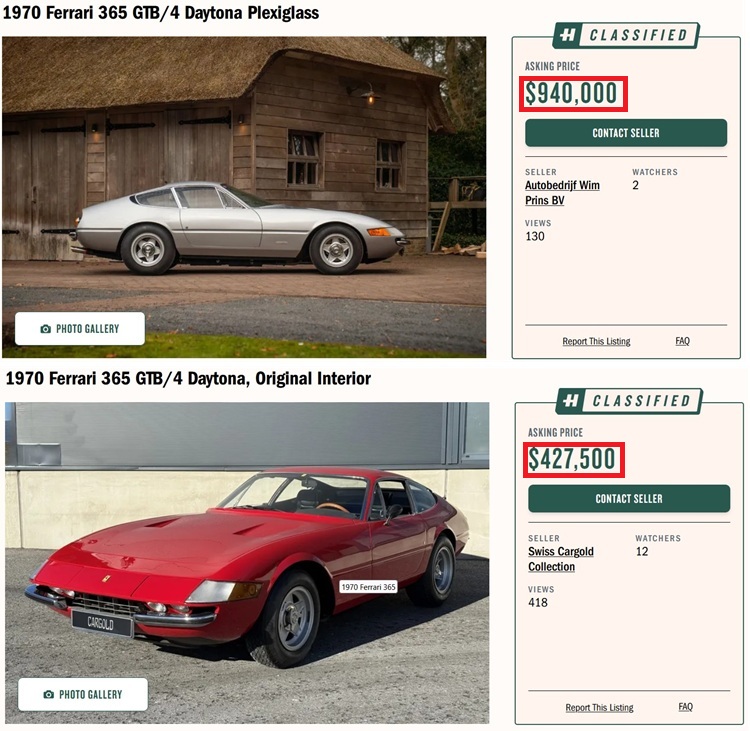
As for myself (given a lottery winning as above), my choices are below the fold. Read more

Tempting Wheels

Right off the bat, I’m going to say that I was never a fan of the old VW Beetle back in my yoot, even though I did own one briefly #Poverty.  Yes they were cute, but the body shape was ugly and the interior did nothing to excite me.  Best of all was the Beetle’s famed reliability, but that wasn’t enough to get me to keep it.

But I have to say that this one at Hemmings caught my eye:

It’s a 1964 vintage body, fitted with a ’74 1600cc engine.  That engine, for that time and for that company, was quite a beast, most assuredly compared to its predecessors.

And I love that candy-apple red color and those rear wheel covers.  The only thing missing are the flip-out indicators on the door column, then and now a lovely feature of the Beetle — I’m not sure whether they’d been taken off by 1964, though.

The listed price is just under $23,000.  Ask me whether I’d rather drive that than a secondhand “modern” car for the same price…

Vulnerability

And the hits just keep on coming:

Volkswagen will pause production of one of its most important cars next week amidst growing concerns of a chip shortage that could cripple its outputs.

Chipmaker Nexperia has frozen supply in a fallout from the ongoing US-China trade dispute, causing major disruption for the German automotive giant.

The Dutch government – under pressure from the US Trump administration – seized control of Chinese-owned Nexperia last month, citing intellectual property concerns.

In response, China curbed exports of its finished products that are needed by European car makers.

Of course, VW lies like a Democrat politician:

Volkswagen said earlier this week that it had ‘long planned’ to pause production of the Golf hatchback – its longest-running model and one of its biggest-selling products – at the Wolfsburg factory from next week but initially denied any connection with chip supply chain concerns. 

However, on Wednesday the car maker told workers at other plants it cannot rule out assembly line stoppages due to the ‘dynamic situation’.

Yesterday, VW issued an internal letter to staff saying production had not yet been affected by chip shortages, but it could not ‘rule out an impact on production in the short term’ over supply chain issues. 

And I get mocked for hankering after the good old days…


Oh, you wanted color?

Q.E.D.