Small Limits

Via Insty, I see this trend, and I’m not happy about it:

While data from 2019 to date shows the compact category has consistently had the greatest sales performance, hovering around 40%, the biggest changes have occurred in the micro-compact category. From 2019 to date, the micro-compact market has grown from an 18% to 25% share, making them a quarter of the 9mm semi-automatic handguns sold. Also notable is the fact that micro-compacts have taken a majority share in the combined sub-compact/micro segment.

Almost all, of course, in the 9mm Europellet chambering.

I’ve tried quite a few of these belly guns in the past, and never found one that suits me — unless in a smaller caliber like .32 ACP.  And frankly, if you’re going to use a belly gun (thus named because its use is to stick it into your target’s belly before pulling the trigger), I think the actual difference between calibers is irrelevant because a 1.5″ barrel develops no muzzle velocity past that created by the powder charge itself.

I understand that some people may find a large frame carry pistol to be too heavy and cumbersome and all that.  While I don’t have a problem carrying a 1911 myself, I can see that someone else might want something smaller but still retaining more oomph than a 1.5″ barrel throwing out [sic]  a 9mm bullet.

Allow me, then, to suggest something like Colt’s excellent Combat Commander, which differs from the full sized 1911 only insofar as it has a 4.5″ barrel, an inch or so shorter.
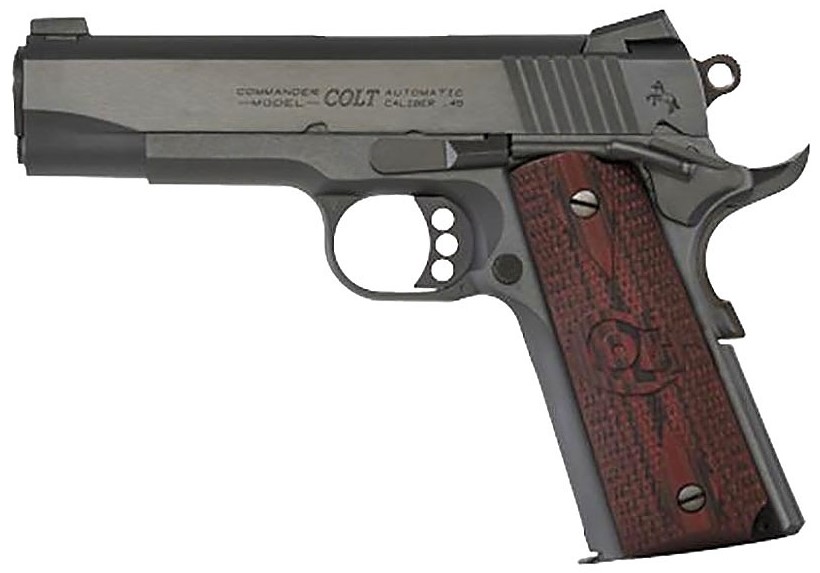
Longtime Readers will know that I dislike the “extended” grip safety which seems to be what all the cool kids are asking for these days:
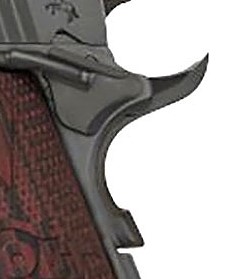
…but which is easily swapped out for a normal one, the only irritant being to add about $50 to the cost of ownership.

The Commander-sized 1911 is pretty much the only compromise I’d be willing to make in the “ease of carry” argument, so forget those teeny lil’ pocket guns.  Especially in 9mmP.

If I wanted a real belly gun, I’d get a Bond Arms Derringer in .45 Colt / .410ga:
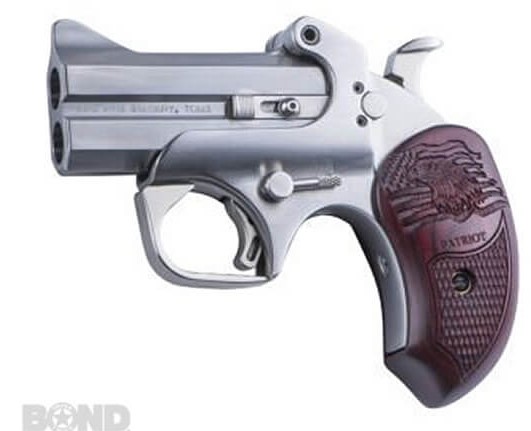
Now that’s going to leave a mark in some goblin’s belly, you betcha.  And it fits nicely into a pocket, too.

Monday Funnies

Time to face the outside world again…

Ugh.  Nemmind, we gots funneeez.

And speaking of one-night stands, here are a few suggestions:

Get outta here, and face the day like men.  And that goes for my Lady Readers as well.

Weekend Car Musings – Part Two

As we saw last week, there’s really not a good reason for a car to have a jillion horsepower — one of those “just because you can doesn’t mean you should” situations.  Lots of power on the racetrack:  good.  Lots of horsepower on roads and streets:  ehhh maybe not.

And when looking at cars on this here back porch o’ mine, can older cars be far behind?  Remember, they’re grouped into “taking the family out for a drive” (saloon cars) and “I’m taking my best girl out for a picnic or date” (sports cars).  So here are my choices, from a bygone age.

Saloon Car:

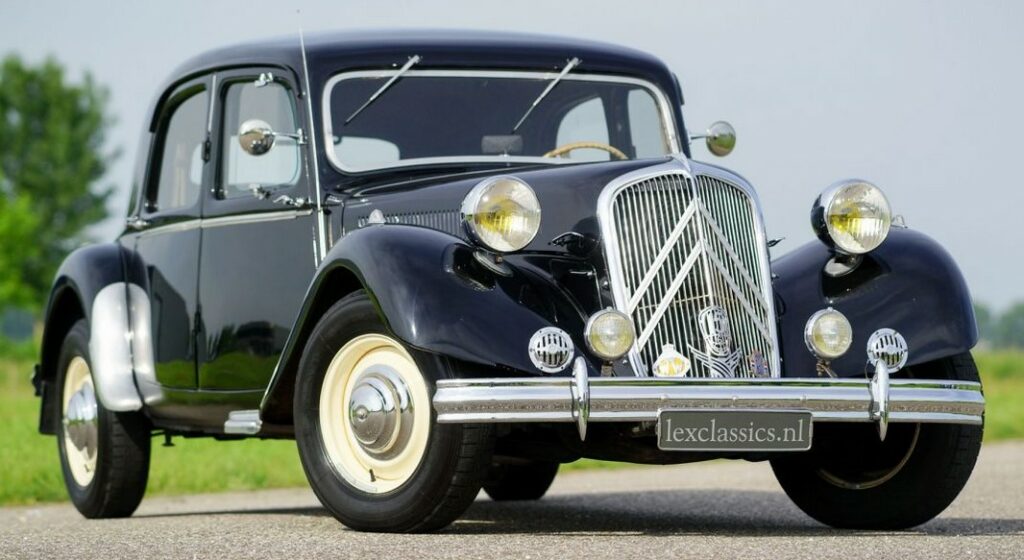
Citroën Traction Avant 15/6 Normale (1949)

I know:  the earlier Traction models (pre-1938) were horrendously underpowered, but the later 15/6 version had a 2.9-liter inline 6 engine which boosted its initial 32bhp to a stratospheric 60bhp, and this yielded a top speed of about 70mph.  I know:  I wouldn’t be able to take this splendid creature onto an interstate, but then why would I want to?  Country roads at 55mph, city streets (drawing admiring looks from everyone).  It’s still one of the classiest cars ever built.

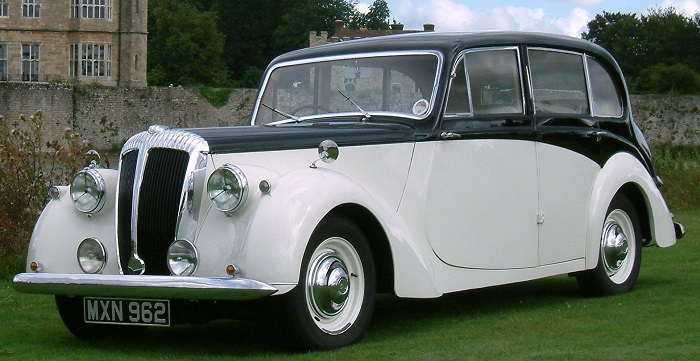
Daimler Consort (1952)

Let’s see:  heavy, underpowered (2.5-liter engine / 70bhp) and supremely comfortable — sounds like my kinda car, and it is.  And it’s gorgeous, so much better-looking than modern saloon cars, and classy (which no modern car is, to the same degree).


Sports Car:

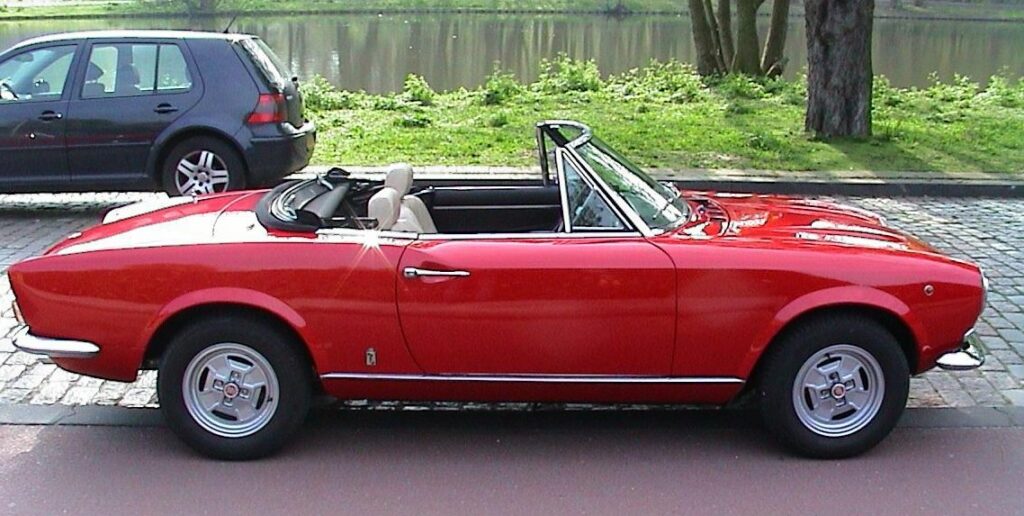
Fiat 124 Sport Spider (1966)

Built by Fiat, design by Pininfarina, the 1400cc engine developed 89hp (once again, enough for country lanes and pootling around city streets).

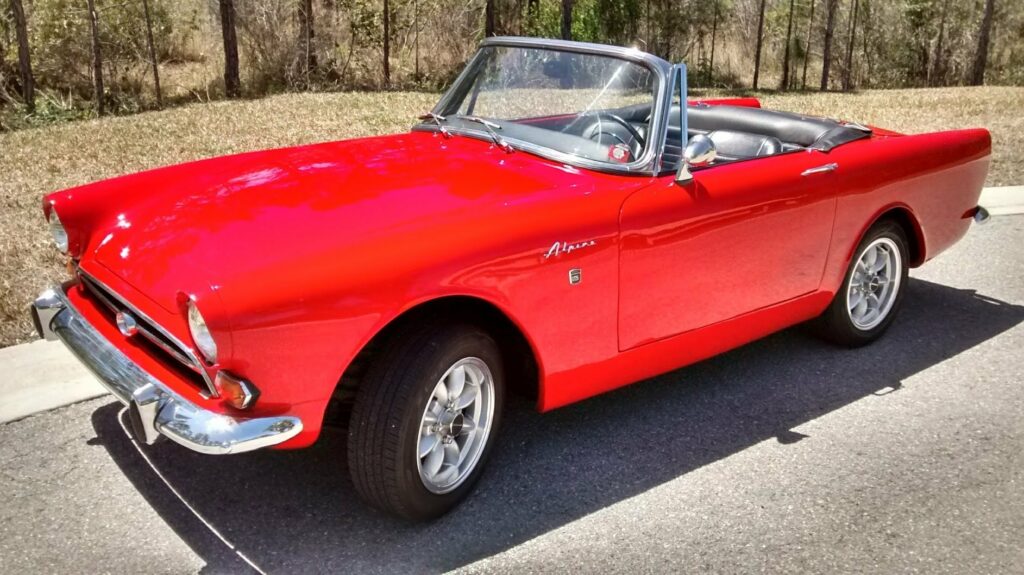
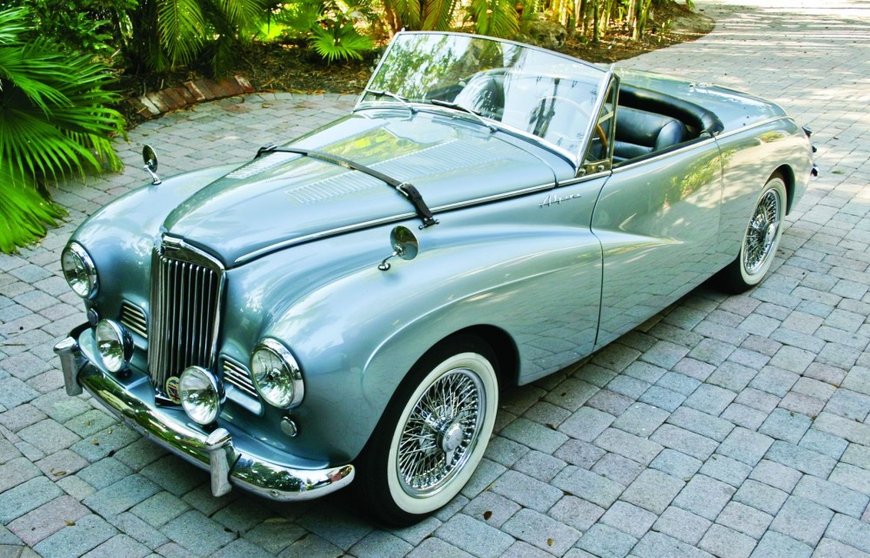
Sunbeam Alpine Series III (1967)

I have to admit a serious crush on this model, with its snappy little 1725cc / 96bhp engine.  It’s beautiful, cheeky and nippy, despite its underpowered engine.  Of course, it’s not as classy as its predecessor:

Sunbeam Alpine Mk I (1955)

This is the car that Cary Grant used to seduce Grace Kelly in To Catch A Thief, but I have to admit that its 2.2-liter / 96bhp engine, while larger than the later Mk III, had to move a chassis which weighed nearly three times as much.  But hey, I don’t do drag races.


Go ahead, laugh all you want at the above.  But I’d have an ultra-luxurious drive in the first category, and a super-fun drive in the other, whichever the choice.  I don’t need a massive, loud, gas-guzzling engine to do either;  but most of all, the cars are all stylish, in a way that modern cars cannot compete with.

Remember:  these are cars of their times, not for today, so don’t apply modern-day standards to either — although I’d happily drive any of them today, given the chance.

Gratuitous Gun Pic: Lee-Enfield No.4 Mk I

As much as I always loved my old Smelly:

…I have to admit that the sights are not the best.  That teeny little V at the rear makes quick acquisition of the target a little problematic.

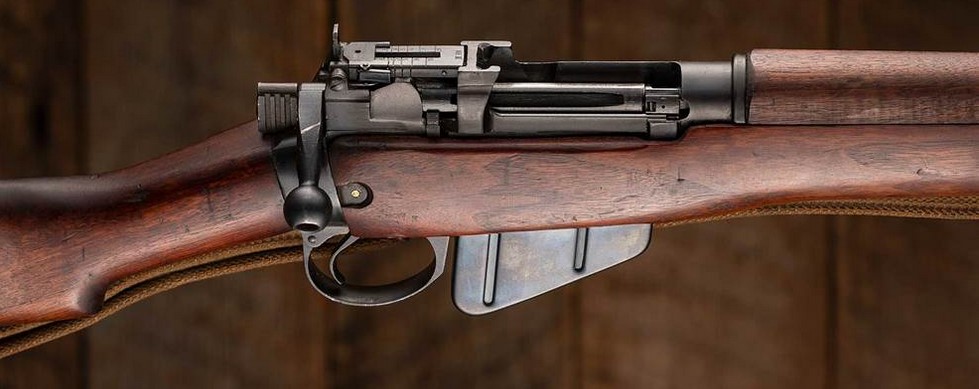
Such is not the case with the SMLE’s successor, the Rifle No.4 Mk I:

With the exception of the semi-automatic Garand, the No.4 was probably the best battle rifle of its era, because with its aperture sight and 10-round magazine, it combined firepower with combat-level accuracy, and its silky-smooth bolt action made for a fearsome weapon.

I’ve fired many a No.4, and never had a bad time with any of them.  My only regret is that I’ve never actually owned one.

Which makes this article all the more painful.

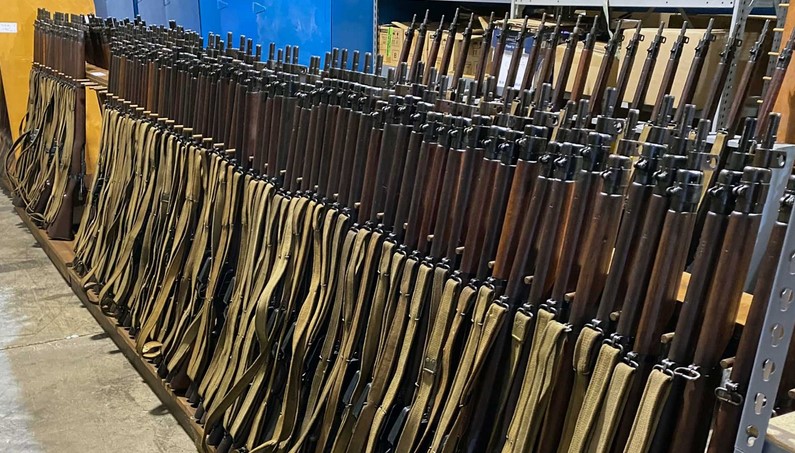
Early on a Sunday morning in June, a tractor-trailer backed into the rear parking lot of the Navy Arms warehouse north of Martinsburg, W.V. Inside the truck’s shipping container were four huge wooden crates containing a long-forgotten batch of British No. 4 Lee-Enfield rifles with a unique history. Two green, military-style chests, each brimming with plastic-wrapped bolts, accompanied the wooden containers. Inside the warehouse sat cardboard boxes filled with newly made No. 4 rifle magazines, waiting for their recipients to be offloaded. Valmore Forgett, III, president and CEO of Navy Arms, had shepherded these guns from their storage spot in France to this final point on a long journey that first started on C-47s, B-24s and B-17s flying over war-torn France.

As the crates were forklifted out of the shipping container, eager hands pried nails and loosened screws securing the plywood lids in place. Finally, the crate cover slid off, revealing a sea of bubble-wrapped rifles filling each box to the brim. It took the team at Navy Arms about a week just to unpack the carefully cocooned guns, while Val’s sons unwrapped each individual bolt from its plastic packaging, recorded its serial number and matched it to its rifle, wherever possible. After a brief wipe-down, quick swab of the bore and import-marking, the rifles were moved to a rack, where they awaited their moment under the camera lights.

Aahhhh… have mercy.

I don’t wanna talk about it no more because it just hurts too much;  you’ll have to follow the link for details, and more pics to drool over.

I’ll just go over to the corner and pout.