Well, you could choose to go through all this hassle:
The world’s richest known lithium deposit lies deep in the woods of western Maine, in a yawning, sparkling mouth of white and brown rocks that looks like a landslide carved into the side of Plumbago Mountain
But like just about everywhere in the U.S. where new mines have been proposed, there is strong opposition here. Maine has some of the strictest mining and water quality standards in the country, and prohibits digging for metals in open pits larger than three acres. There have not been any active metal mines in the state for decades, and no company has applied for a permit since a particularly strict law passed in 2017. As more companies begin prospecting in Maine and searching for sizable nickel, copper, and silver deposits, towns are beginning to pass their own bans on industrial mining.
“Our gold rush mentality regarding oil has fueled the climate crisis,” says State Rep. Margaret O’Neil, who presented a bill last session that would have halted lithium mining for five years while the state worked out rules (the legislation ultimately failed). “As we facilitate our transition away from fossil fuels, we must examine the risks of lithium mining and consider whether the benefits of mining here in Maine justify the harms.”
Advocates for mining in the U.S. argue that, since the country outsources most of its mining to places with less strict environmental and labor regulations, those harms are currently being born by foreign residents, while putting U.S. manufacturers in the precarious position of depending on faraway sources for the minerals they need.
Geologists say there’s also likely a lot more lithium in spodumene deposits across New England. Communities that haven’t had working mines in years may soon find themselves a key source for lithium and other minerals needed for car batteries, solar panels, and many of the objects people will need more of to transition themselves off polluting fossil fuels.
There are good reasons for U.S. communities to have healthy skepticism about mining projects; there is no shortage of examples of a company coming into a community, mining until doing so becomes too expensive, then leaving a polluted site for someone else to clean up. There are more than 50,000 abandoned mines in the western United States alone, 80% of which still need to be remediated.
But of course, there’s no story without there being rayyyycism, and the Injuns:
Environmental concerns aren’t the only problem with mining, Morrill says. The history of mining in the U.S. is linked to colonialism; Christopher Columbus was looking for gold when he stumbled across North America, and as Europeans expanded into the continent, they took land from Indigenous people to mine for gold, silver, and other metals.
Today, mining in the U.S. often encroaches on Indigenous land. Under mining laws in the U.S. that date to 1872, anyone can stake a claim on federal public lands and apply for permits to start mining if they find “valuable” mineral deposits there. Most lithium, cobalt, and nickel mines are within 35 miles of a Native American reservation, Morrill says, largely because in the aftermath of the 1849 gold rush, the U.S. military removed tribes to reservations not far from mineral deposits in the West. In one particularly controversial project, the mining company Rio Tinto wants to build a copper mine on Oak Flat, Ariz., a desert area adjacent to an Apache reservation that Indigenous groups have used for centuries to conduct cultural ceremonies.
…and on and on it goes. (Read it all until you begin to glaze over; we’ve had these arguments so often that everyone knows what’s going on.)
OR:
We could just continue to use oil to power our cars and trucks, figuring that the gross pollution difference between batteries and electric cars (production and consumption) and using internal combustion engines is pretty much a wash.
But then that wouldn’t be an insane choice made by gibbering eco-lunatics now, would it?






















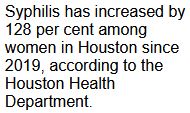 ...isn’t that just...inflation?