Grand Place, Brussels 2004
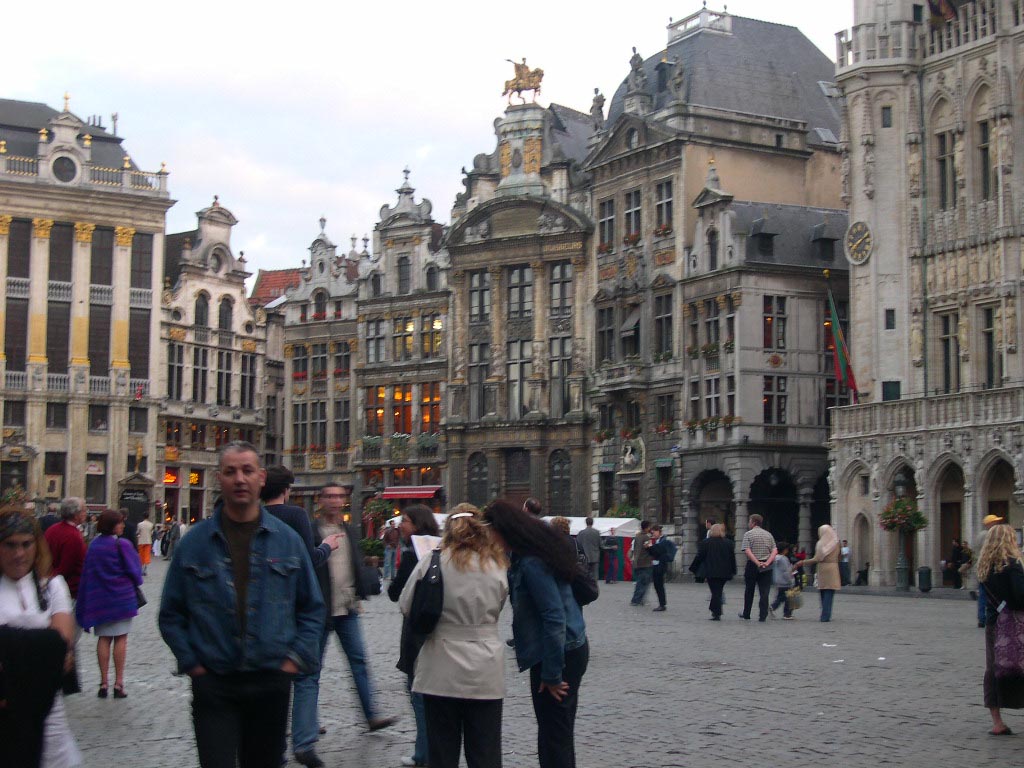
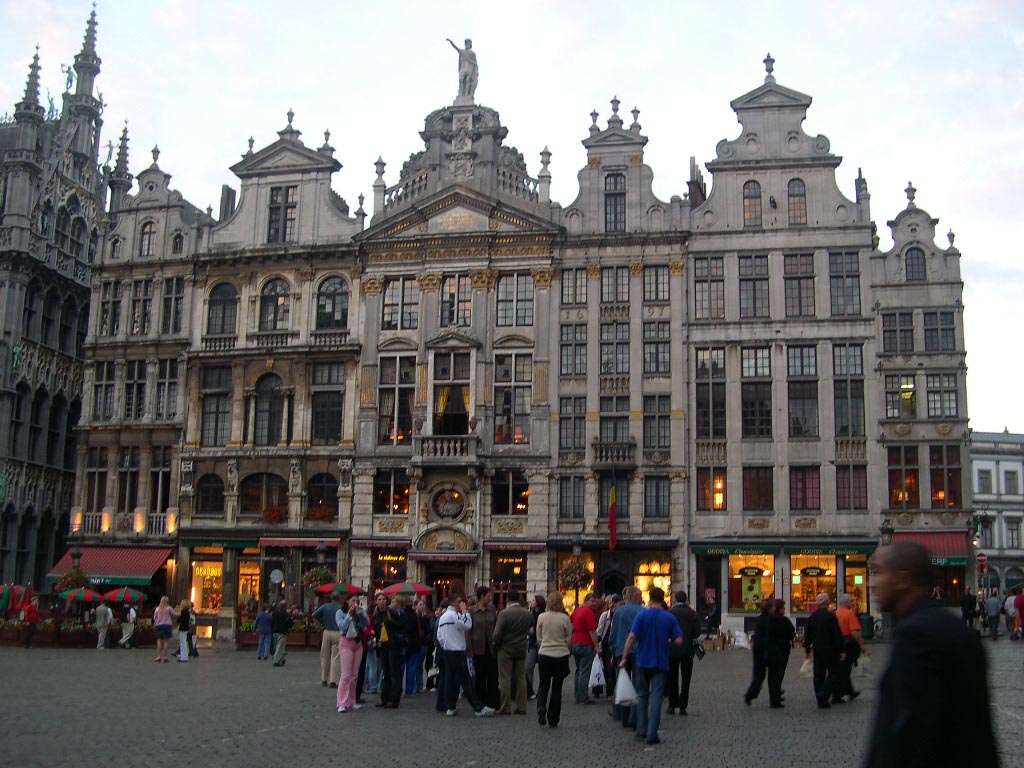
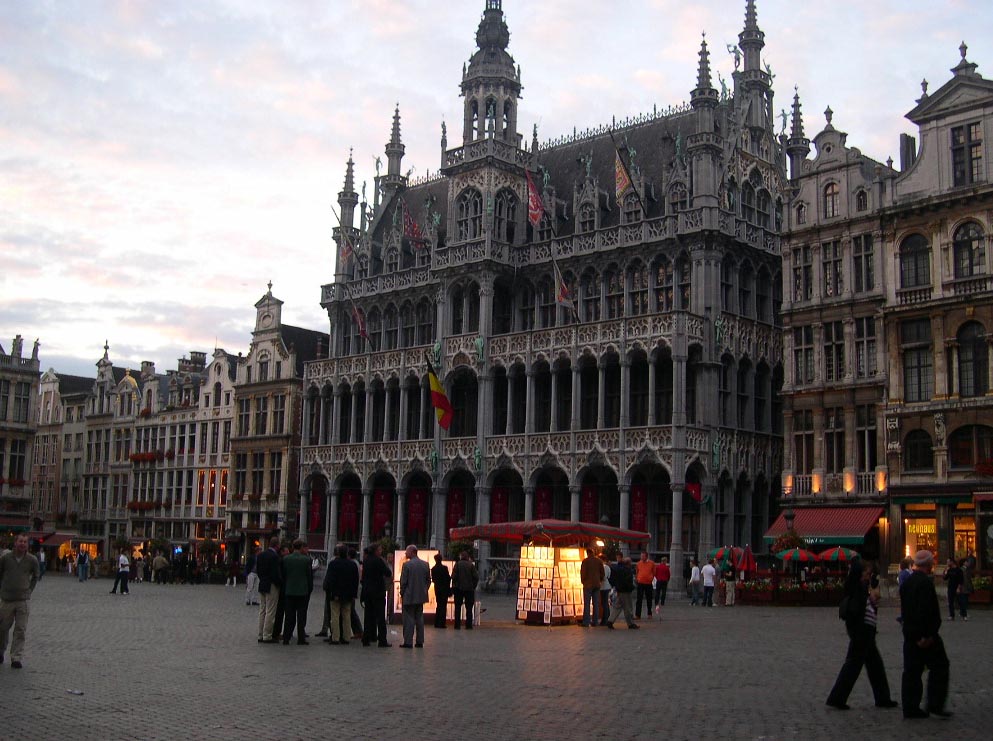
Sadly, no pictures can do this place justice. You just have to see it to experience its immensity and grandeur.
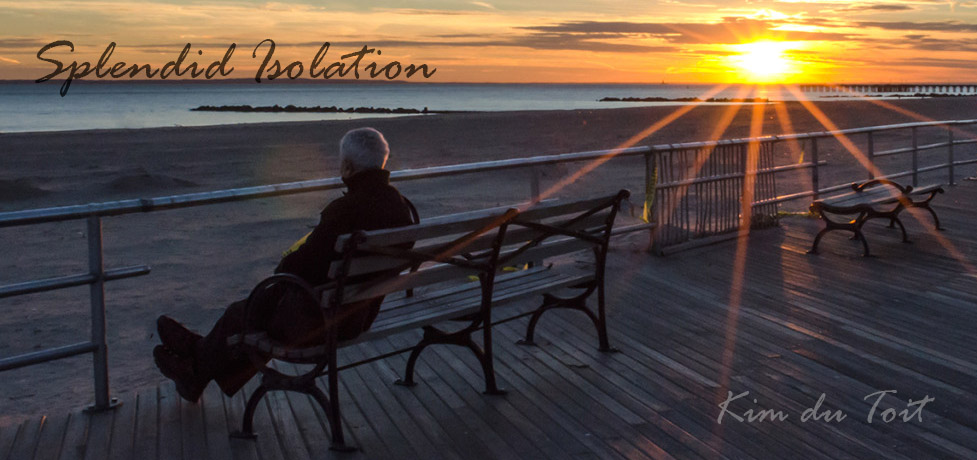
Grand Place, Brussels 2004
Sadly, no pictures can do this place justice. You just have to see it to experience its immensity and grandeur.
A long time ago, I was in Brussels on business. It was to be my first time there, so as always I did a bunch of research on the place: things to see, places to visit and (of course) places to dine (yes, that’s a major part of my love of travel).
Just off the Grand Place is a street (Rue des Bouchers) lined with restaurants standing cheek-by-jowl together; so what better way, thought I, to compare the various menus before making a decision to dine?
Bloody hell.
What the oh-so-helpful guide did not tell me was that outside every restaurant stood an extremely aggressive “tout”, who implored, begged and almost kidnapped the unwary diner into the establishment they represented. Seriously: one guy actually grabbed my arm and tried to drag me inside, releasing me only when I bunched a fist and threatened to clock him, hard.
The upshot was that none of the restaurants along Restaurant Row got my business that night. Instead, I found a very nice little pub just off the Grand Place and proceeded to eat (lots) drink (even more) and make merry (to the max), as was my custom in those heady times.
After the experience in that Restaurant Row, therefore, I was overjoyed to read about this action, in Lucca, Italy:
The walled city has experienced a significant increase in visitors this year, particularly after emerging as a ‘timeless gem’ on social media.
Last year, Lucca reported a record number of one million hotel bookings, and in the first four months of 2024, saw notable rise in visitor numbers.
The city’s leaders have grown increasingly concerned that the influx of tourists and the associated activities are negatively impacting its unique character – now, they’re declaring war on ‘worrying’ restaurant tactics such as touting.
Touts – known locally as ‘buttadentro’ – are often employed to stand outside restaurants to try to entice passersby to dine there.
Though they are responsible for attracting customers, some are reported to use persuasive or even aggressive tactics.
On 10 July, the municipality adopted an ordinance prohibiting the promotion of restaurant businesses in public areas and on public land outside restaurants, bars, pizzerias, and similar establishments.
Mayor Mario Pardini and Councilor for Commerce and Urban Decor, Paola Granucci, said in a joint statement: ‘Lucca is a city with a strong historical, artistic, and touristic identity, and must be experienced with respect and style. Our ordinance does not restrict commercial activity, but protects the urban beauty and safeguards the authentic experience of residents and visitors. We reiterate that promoting one’s services is legitimate, but doing so in an invasive, insistent, or unfair manner is incompatible with the image we wish to preserve for our city.’
Ben fatto, Signori! Now please get those assholes in Brussels to do the same — you know, in the time-honored EU fashion of sharing laws and regulations across national borders.
And while we’re there: this?
Rue des Bouchers in Brussels is a lovely narrow street that is lined with restaurants. On display lie mussels, lobsters and oysters, all nicely decorated, awaiting hungry tourists.
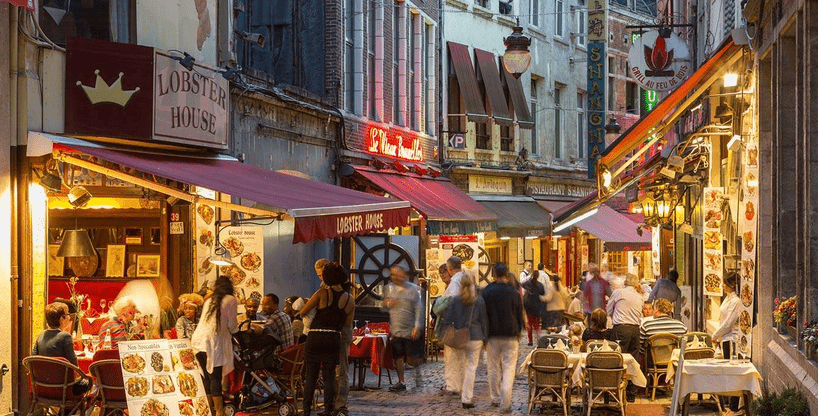
It’s a big fat fucking lie. The only hungry people there are the touts — money-hungry, that is.
Caveat cenator.
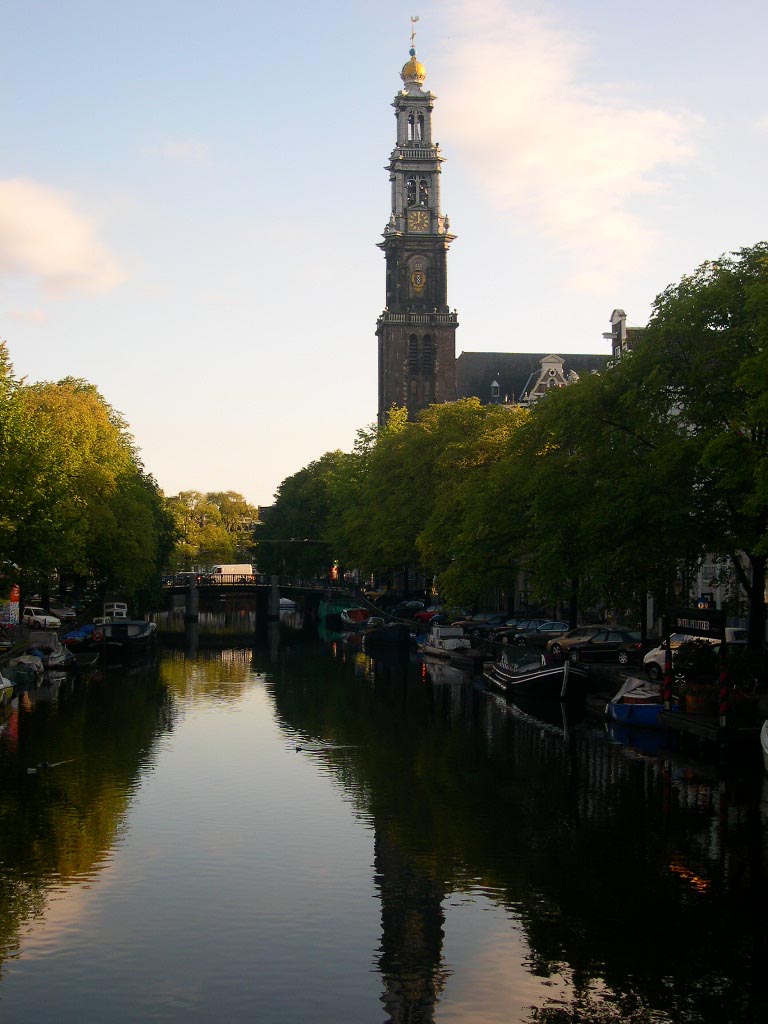
Amsterdam, September 2004
After Connie died in 2017, I was really adrift. Apart from the bereavement, I really had no idea where or how I wanted to live. Fortunately, any immediate problems about accommodation were taken care of by Doc Russia, who took me in immediately after I sold the Plano house, and then by Mr. Free Market, who most graciously ensconsed me in one of his spare suites at Free Market Towers.
Towards the end of my stay at the Towers, I went to Frenchland (okay, Monaco) to spend some time with Former Drummer Knob, who lives thereabouts. While driving around that exquisite part of the world known as the Midi, I discovered that as long as I didn’t try for a sea-facing apartment, I could actually have afforded to live there.
I found a (very) small one-bed/one bath apartment just north of Antibes which fitted the bill.
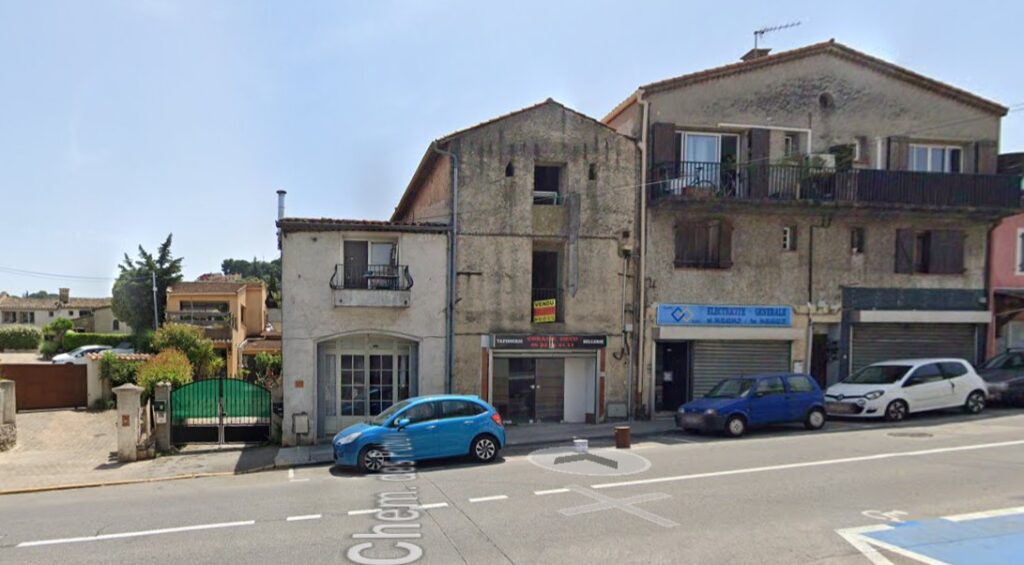
(just over the blue sign)
Modest, but not a slum; the exterior looks totally foul, but the interior was okay — sort of like a typical student’s digs. The monthly rent was about 1,400 euro — say, $1,600 (about what I’d pay for the same thing in Dallas) — but unlike Dallas, the rent included water and electricity, and the apartment came furnished. (There’s a caveat, in that the “free” utilities thing was for a specific amount of w&e per month; higher and you pay quite a lot, but I would have come in under that limit quite comfortably.)
Just in passing: at the time, my French was reasonably fluent and would have become completely so within a couple of months anyway. My fluency and French last name would have eased my ability to get a short-term residence visa, I was assured by a local official. My U.S. passport was no big deal because apparently quite a few Murkins do that kind of thing in that part of the world anyway, she said.
Yes, in case you’re wondering: I did a fair amount of research into this because, as I said, I was at something of a loose end during that time, so all options were on the table.
And yes, the apartment was quite humble, but it didn’t matter because once you leave the apartment you’re in frigging France, FFS, with bistros, boulangeries, patisseries, charcuteries, estaminets and all those things that make life in France unforgettable.
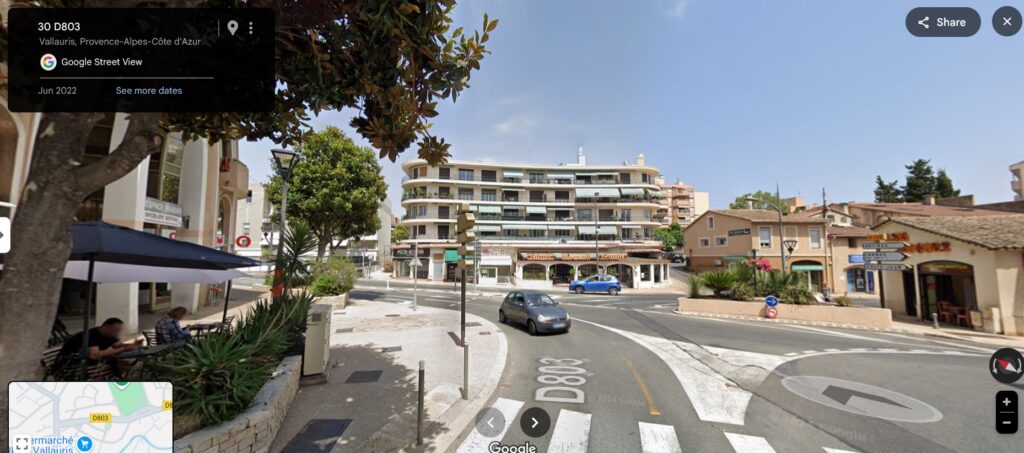
All the above were brought to mind when I read this article, which purported to list the cheapest countries to live in as an expat.
Of course, when people say “cheapest” they mean just that. If the list is topped by Vietnam… well, you get the picture.
And here’s the problem with this “expat” thing, and the reason I ended up coming back to the U.S. of A.: what articles like this never mention is that cost isn’t the only reason to live elsewhere. Hell, it should only be Reason #4 or #5.
The biggest reason to live somewhere else — and by this I mean in a furrin country — is that you have to adapt to the culture and lifestyle of the place. And that’s no small thing. It’s all very well to live somewhere cheap, but when the free TV sucks and the cable/satellite option is either limited or expensive, or both, that’s not a good thing. And getting around and getting on with the locals can be quite a task, or even impossible. Expats often talk about “conversation fatigue”, which is the stress you face when you’re constantly translating a foreign language mentally in order to understand what’s being said to you, or before you open your mouth to speak. It’s fine if a lot of the locals can speak English, and are prepared to do so. This is sometimes the case when living in one of the larger cities — which are not cheap to live in, as I can attest — but in small villages or towns, that’s not the way to bet, as I discovered in my various travels around Europe, and most especially not in France.
Once again, I had little problem reading the newspapers and books in French, and that could only have improved; but it was still going to be a chore, experienced daily. Now imagine doing that in, say, Vietnam, where the language is not only foreign, but the text is of the “chicken scratch” variety.
I would have been unutterably lonely; even though Knob lived but a few miles from that apartment, seeing him would have meant catching the train to Monaco every time because forget buying a car Over There. Oy. And he worked, which meant he wouldn’t be available all the time.
I was in my early sixties. Had I been much younger and coupled with a woman willing to try the experience with me: who knows? But no, it was not to be.
So it was with only a little regret that I decided not to stay in France.
One thing I do know: I was really, really glad to get back home, and only realized how glad when Doc picked me up at the airport, and casually tossed over one of my handguns in its holster with the comment: “I thought you might want that.”
The inhabitants of various European tourist “hot spots” have recently been rebelling against the incursion of said tourists who, they claim, are making their home towns unaffordable and unbearable. (I talked about it here, some time ago.)
Well, it seems as though they’re getting what they asked for:
Bookings in some of Mallorca’s most popular summer holiday resorts have slumped by as much as 20 per cent, say hoteliers on the Balearic Island, suggesting holidaymakers are voting with their feet following anti-tourism marches.
The hoteliers association that represents the resorts of Alcudia and Can Picafort say their key markets have slowed in recent months.
The news comes following major anti-tourism protests across mainland Spain and its islands this year – with another huge protest march in the pipeline for Mallorca’s capital next weekend.
Last week, thousands of defiant anti-tourism protesters vowed to bring the streets of Palma to a standstill on June 15th, with representatives of around 60 groups saying they’re planning to march.
Well, let’s hope all the “death to touristas” thing doesn’t kill the destinations altogether. I suspect the locals would not care for that either.
Then there’s this take:
Hate to say it, Pablo me old mate, but the kind of tourists who jump at the bargains are more likely to be the kind of tourists you don’t want.
This silly article in the Daily Mail (is there any other kind?) prompted a thought or two from me. But first, an excerpt:
Despite years of obsessive searching, I’m yet to find the perfect suitcase. It’s as elusive as a desert mirage. My attic is filled with discarded luggage experiments, lurking in the dark as memories of a different life and far too impractical for my current one.
I used to have that same problem, back when I traveled a lot (50+ flights per annum, on United — mostly — out of O’Hare). A simple overnighter? No problem, a decent garment bag generally sufficed. Anything more than a couple/three nights, however, and things started getting a little more problematic.
And back when I was constantly flying to Yurp and Britishland, the problems increased exponentially.
I remember once giving in to the nylon/canvas “duffle bag” trend, and oy…never again, even with wheels. (Without wheels? Nope, never again in this lifetime. No wheels — on any luggage choice, no buy.)
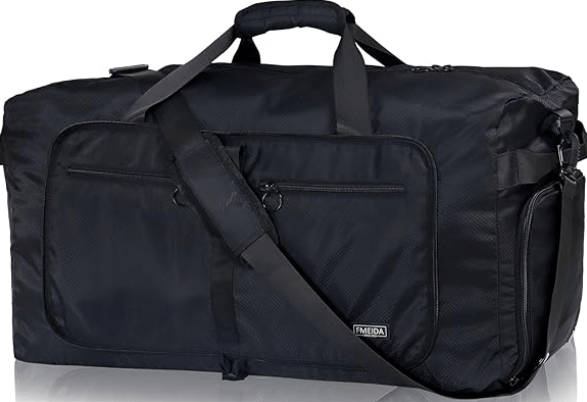
The only good thing to say about duffle bags is that they start off light, whereas suitcases start off being heavier. And of course, if you’re carrying anything that’s not an anvil, the soft duffles afford no protection for your stuff whatsoever. But if you’re going to use the wheeled duffle bag, just remember that the extendable handles need a structure to hold them when not in use, and that structure means that the bags will end up being about the same weight as a soft-sided suitcase.
Now add to all that the journey through the tender ministrations of baggage “handlers” at any airport…
 (thanks,Kenny)
…and you’ll see my point.
Then there’s this little temptation:
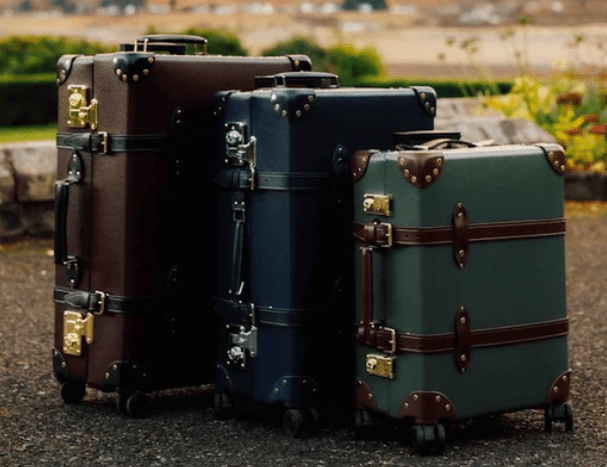
I would love to indulge myself with really expensive, luxury suitcases such as the Globe-Trotter Safari:
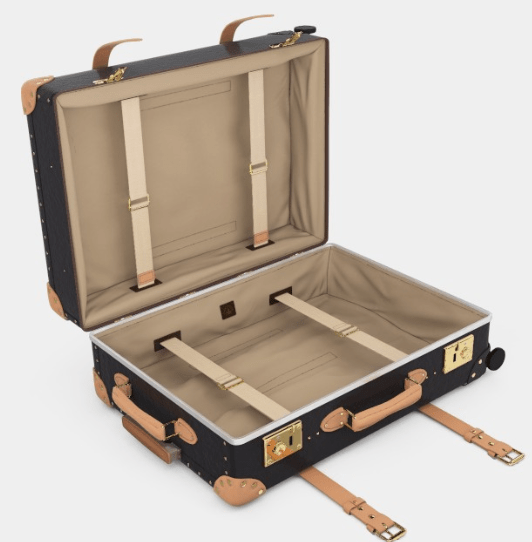
…but at around $3,000 per piece, and remembering Kenny’s pic above, you’d be better off — maybe — just shipping your luggage via FedEx or something. (Don’t laugh; I knew a guy of considerable wealth who used to do just that: ship his heavy luggage from one destination to the next, leaving the hotel’s concierge to handle the details.)
Or you can do what I used to do, when doing expense-account / client-funded travel: buy cheap-ish luggage, use it once and then toss it in the trash after you get home. Repeat as necessary. (It actually adds to the pre-trip excitement, by the way; buying luggage for your trip is an event all by itself.)
One last option is to see your luggage as a challenge to baggage handlers of the Delta/American/United ilk, and go with aluminum suitcases:

Just be aware that this stuff can cost a lot more than the hotel bill from your trip to Amsterdam or Tokyo. And baggage thieves know how much this stuff costs, so the chances increase greatly of having your luggage simply stolen for its container rather than its contents.
Lastly, you can always just go with a steamer truck (or as they’re sometimes called, footlockers):

Just remember that unless you’re going to a place that has porters on call, you’ll want to make sure to get that thing with wheels. (Another of my buddies uses one for travels with his wife; they pack all their clothes and such into the one trunk, and he just pays the weight penalty on his air ticket, saying that the reduction of hassle is worth the extra cost. I don’t believe him, by the way; if you’ve ever seen Planes Trains And Automobiles, and watched John Candy struggling with his trunk, you’ll understand my skepticism.)
Trunks, by the way, are pretty much indestructible, even for airlines. I once used one to get a large and expensive crockery set back from Britishland, just checking it in at Heathrow or Gatwick (don’t recall which one). I expected to lose a couple of pieces to breakage, but nary as much as a chip, let alone a breakage. Trunks are also less likely to be stolen because they’re just too heavy to carry easily, and too bulky to be hidden away somewhere.
And unlike Alexandra Shulman, I don’t care about features like “compartments”; just a sufficient volume will do just fine.
Afterthought: one of the besetting problems with airline luggage is that most options (like Ford’s Model T) come only in black, which makes it a chore to distinguish your luggage from all the others on the baggage carousel. One option is to go with something like this camping trunk:
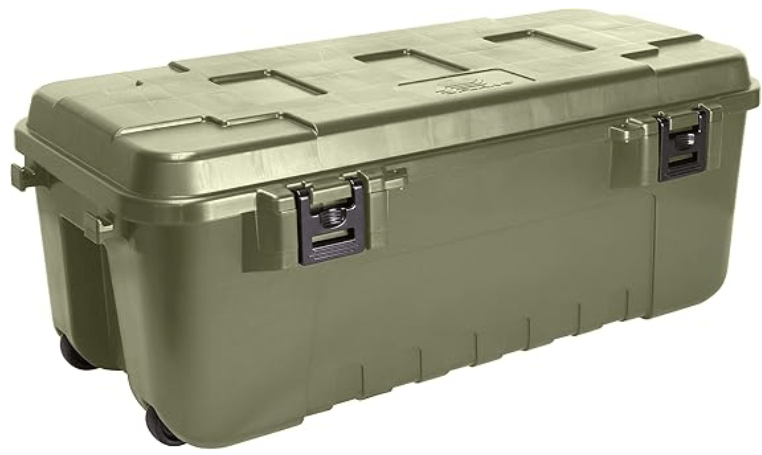
…which should be strong enough to survive the trip, and it generally costs (and weighs) much less than the average suitcase — $50 compared to $200-$300 for ordinary suitcases. And it’ll stand out like a dog turd on the black tablecloth of carousel luggage.