Our Thanksgiving 2023 weekend seems to have been a busy one, flight-wise. Here’s Sunday, when everyone went home:
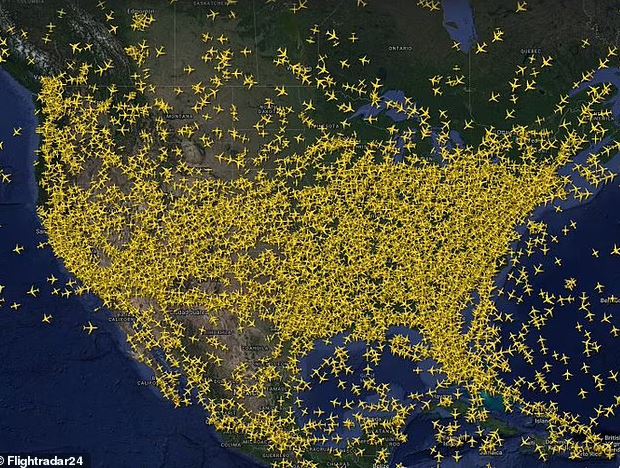
…and not a collision amongst them.
Well done, you.

Our Thanksgiving 2023 weekend seems to have been a busy one, flight-wise. Here’s Sunday, when everyone went home:
…and not a collision amongst them.
Well done, you.
Apparently there’s this German guy who visits the same city in Britishland each year for his vacation, and has done so for the past several years. (My Brit Readers can be excused for going “Huh?” when they discover which city has so enthralled our Frequent Visitor.)
Which leads me to ask the question:
Is there any city in the world that you would re-visit for two weeks exclusively each year for the next, say, decade?
(I’m going to assume long lives for the Olde Pharttes among us, bless ’em, who could always just substitute “…for the rest of my life” if they so choose.)
Give reasons, in Comments. It could be a furrin city or a Murkin/NorMurkin one, your choice. In the spirit of the thing, it has to be a city, not a region or a resort. Play the game.
My choice is below the fold:
As I mentioned in last week’s post about winning a lottery, there would be travel. Lots of travel. And I have to say, this one would feature towards the top of the list.
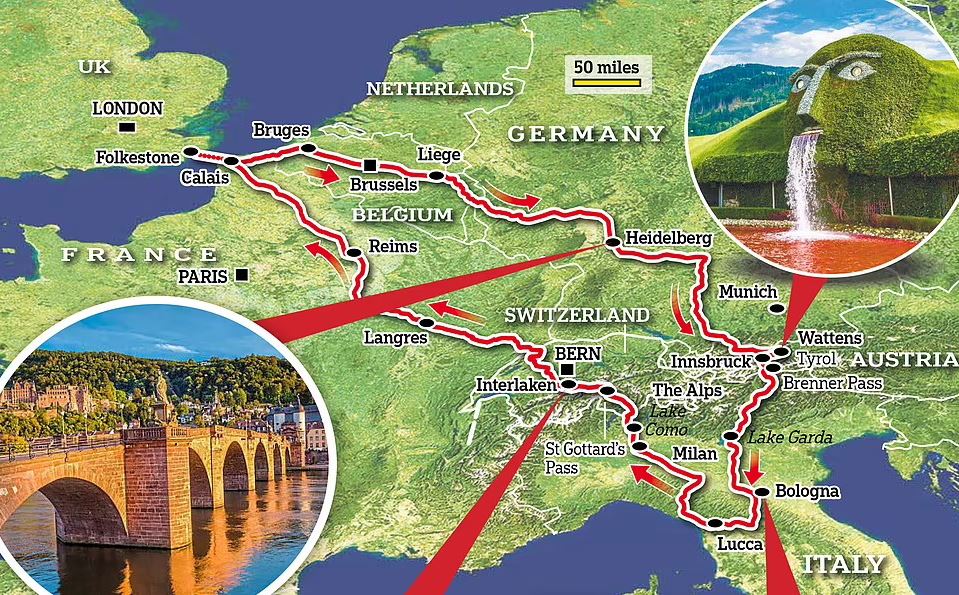
By the way, you’ll want to hit the above link, because (unusually) the article contains some of the most beautiful travel pics I’ve ever seen.
My route would differ only slightly:
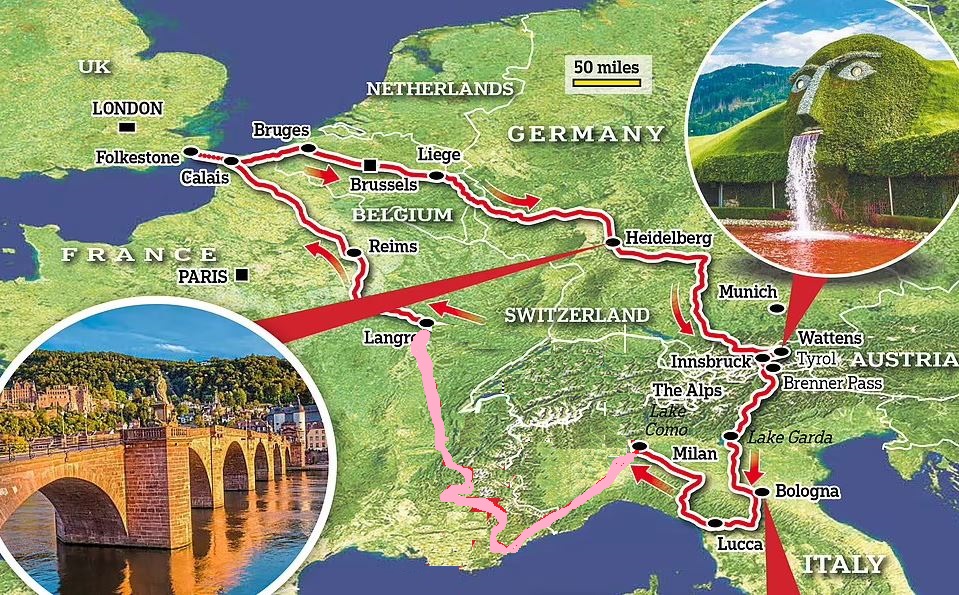
…in that I’d leave off Switzerland –great scenery, but horrible people and fanatically-enforced speed limits — and take a trip instead up the Rhône Valley via Nice.
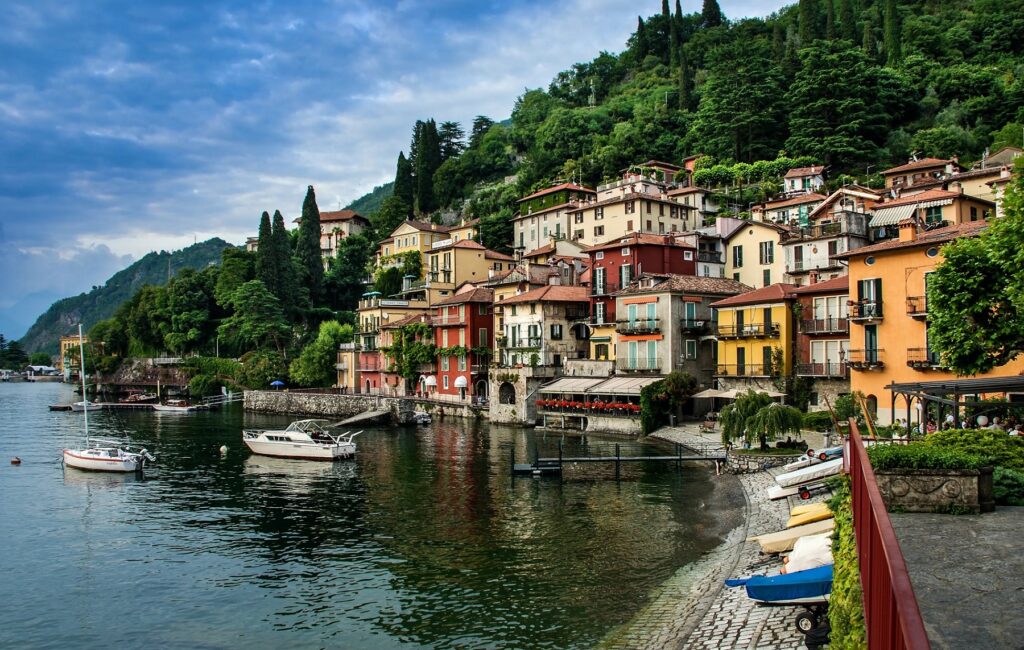
I’ve been to a couple of the places mentioned, and I’d be very happy to see them again (take a bow, Heidelberg and Innsbruck). The others (Bruges, Liège, etc.) are all on Ye Olde Bucquette Lyste anyway, but I’d add Como (north of Milan) because reasons.
As for which car I’d take? My current heartthrob, the BMW Z8 (4.9-liter V8 engine generating about 400hp, you betcha):

Nice and reliable, with looks that rival its spiritual predecessor, the 1958 BMW 507.
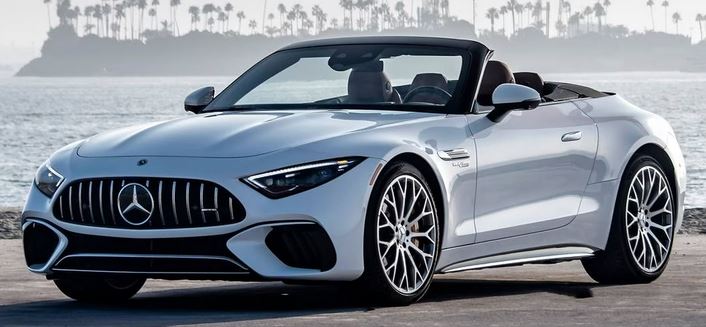
Or if shipping it over is too much hassle, I’d just buy something Over There that’s modern and boring but equally reliable, like a Mercedes SL:
A fortnight that trip is supposed to take? Try four weeks, or even longer.
When I first visited the U.S. of A. back in 1982 (honeymoon with Wife #1), I decided to do a LONG drive trip around the eastern U.S. — a four-day drive from NYfC to Boston and into New Hampshire and Maine, then back down to Manhattan for a day or two, and then carrying on down to New Orleans, then to Florida (Disney World), and back up the eastern seaboard to NYfC before flying home to the old Racist Republic. The trip ended up taking us just under a month.
Bear in mind that I’d never driven on the right-hand side of the road, and there was no Wayze or GurgleMaps, just a Rand-McNally atlas.
That wasn’t a problem. This was.
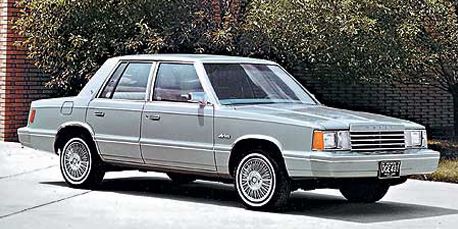
In South Africa, there are no concrete roads; all are asphalt, and at least as far as the freeways are concerned, very smooth. Imagine then my surprise when I got to the Greatest Country On Earth, set out on the interstate highways and had to endure three weeks of “ker-chunk-ker-chunk-ker-chunk” as the highway joints chattered away under the tires of the rented Dodge Aries, driving me to near-insanity.
WTF? I’ve heard all the arguments in favor of concrete as a road surface, and none of them make up for the most unpleasant driving experience on Earth. As for the “concrete lasts longer in extreme heat conditions than asphalt” argument, please note that in South Africa (where sweltering heat is not exactly an unknown weather condition) the asphalt roads bear up perfectly well.
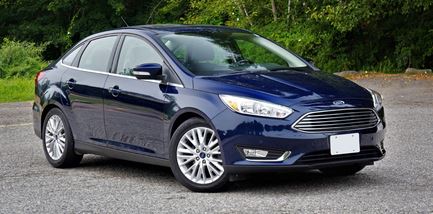
Indeed, when I went back to Seffrica back in 2017, I had occasion to drive from Johannesburg to Pretoria and back (about 140-odd miles) on the N3/N1 motorways, which were in perfect condition AND being asphalt, there was no road noise. (Ditto of course in Britishland, where I’d been likewise driving around Hardy Country in a Ford Focus.)
This was brought home to me quite recently when I discovered that Plano has started covering some of our concrete suburban roads with asphalt. The change in the driving experience (and therefore my mood) has been dramatic. My only gripe is that the process isn’t going fast enough, and to my dismay I notice that all the road repairs currently underway [20,000-word rant deleted] are being made by re-laying concrete slabs, rather than just covering the affected areas with asphalt.
Whichever American first made the decision to go with a concrete road surface over asphalt should have been thrown into a revolving concrete mixer for a week.
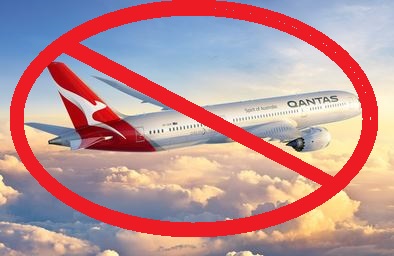
Why am I not surprised that Oz airline Qantas screwed up yet again?
Fed-up Qantas passengers who were forced to sit on the tarmac for six hours before their flight was eventually cancelled have unleashed on the airline.
Flight QF93 from Melbourne to Los Angeles was cancelled at 3 am on Tuesday after it was decided the plane was too heavy to take off due to strong winds. The doomed flight had already been delayed before customers boarded.
‘We just wanted to get off. We were tired, there was no water, we weren’t even offered any food, we weren’t allowed to get out of our seats.’
‘This isn’t their first rodeo, they didn’t have any contingency plan and they’re never on the front foot. You’ve got to get on the phone to them, you’ve got to chase them up, you’ve got to be the one that tries to get your compensation or get your complaint in.’
And:
A Qantas spokesperson has since apologized for the inconvenience to customers.
Frankly, I’m amazed — at the apology, not at their behavior.
Qantas is one of the several reasons why I’ll never visit Australia. They have a near-monopoly on flights to that foul country, and their arrogance has become legend among frequent travelers. After our first flight to Sydney was canceled because of the WuFlu, Qantas refused to give me a refund because they’d put a two-year restriction on refunds — and as the OzGov only opened the gates after three years, Qantas told me, in almost these terms, to go and piss up a rope.
Of course, I’m also still furious at the bastard OzGov for their inefficiency and intransigence when they cocked up my trip to visit my family in Sydney a while ago — a cock-up which cost me nearly $4,000, by the way, and which made me swear never to go Down Under, ever.
(Apologies to Readers Biwoz and Bluey, amongst others — it’s not your fault, of course.)
As for Qantas, my advice is that if you have to fly to Oz for whatever reason, fly any other airline — Qantas’s prices are always high anyway — because you’re less likely to be treated like shit. It’s worth taking, say, Cathay Pacific or Emirates even if you have to connect (and wait some time) in another airport, because that hassle is likely to be more pleasant than dealing with Qantas. If Qantas is “the spirit of Australia” as they claim, Oz is pretty much fucked.
Caveat viatorem.
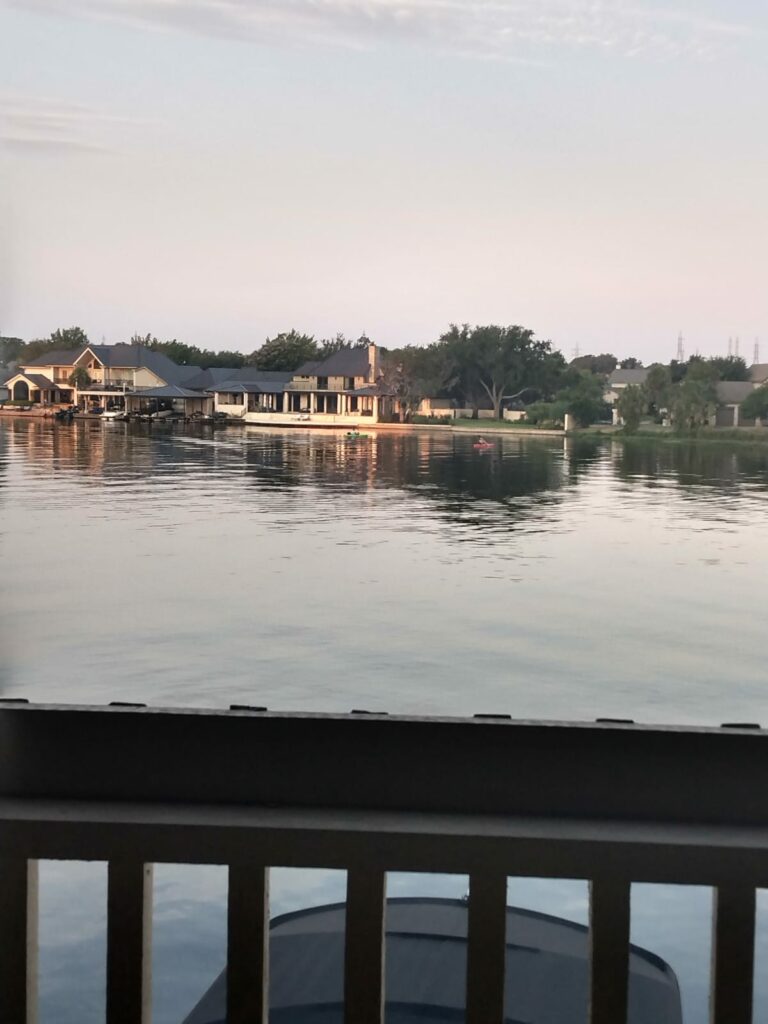
Sorry about the paucity of posts. New Wife had to get away from work for a while, so we spent the long weekend at Horseshoe Bay:
More posts to appear throughout the day.