Hollies

No, not the 60s Brit vocal band.  I refer here to that ancient bed warmer known as the hot water bottle.

With the advent of electricity, the humble hot water bottle (known to many from childhood as a “holly-bolly” or the derivations thereof) fell from favor, hanging on mostly as a palliative for things like muscle strains and sports injuries (filled either with hot- or icy water, depending on need), and the world switched to electric blankets and so on.

Well, this is all well and good;  but when the electricity fails, what then?

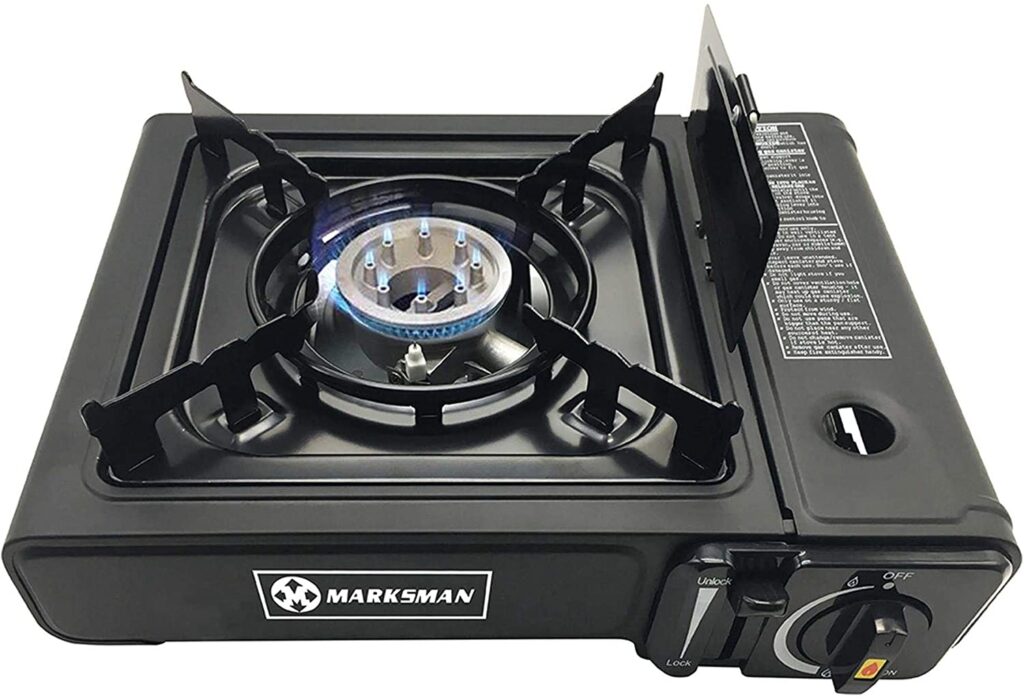
One of the SHTF necessities I’ve mentioned often before is a butane-powered camping stove, or its smaller (and cheaper) domestic equivalent like this one:

You can of course go with the two-burner Coleman type (which is better if you’re needing to cater to a family, for instance), but I’ve always found the single to be perfectly adequate, plus it’s safer to use indoors for short periods.

Now what does this have to do with the holly?

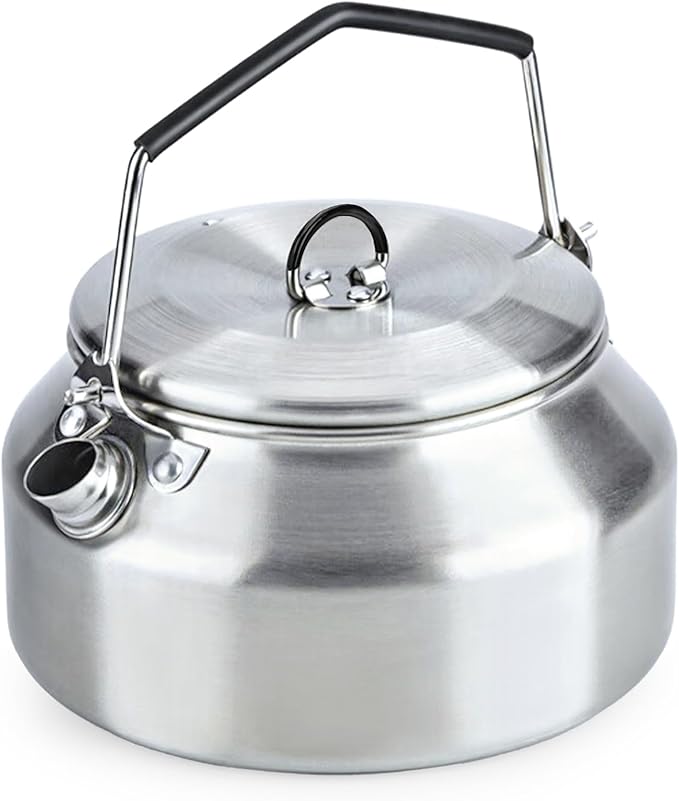
Well, coupled with a camp kettle:

…this means that when the power goes and you don’t have access to any other heat source like a fireplace or gas heater, all you need to do is heat up some water on the camp stove, fill the holly and huddle under the blanket / duvet / whatever to keep warm.

I know, this sounds so self-evident that it invites ridicule;  but at the same time, back in 2015 when most of Texas was without electricity for nearly three weeks(!), our family was caught short in the personal-heating department because we had no hot water bottles.  (Of course, we had lots of electric blankets and foot warmers, a leftover from our sojourn in Chicago;  but in Chicago they can handle brutal winters.  Texas?  Not so much, thanks for nothing ERCOT.)

New Wife and I have one each, and when this cruel winter is over I’m going to get another two.  (Why?  Because two is one and one is none, that’s why.  And hollies wear out, especially when you fill it with very hot water — that rubber perishes, ask me how I know this.)

Yet another example of how sometimes, the old things just work better when modernity comes up short.

When The Elites Start To Panic

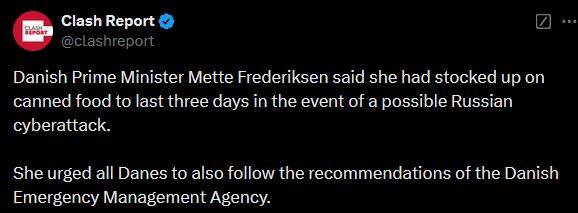
This little episode made me giggle:

Three days?  Three DAYS?  Does she think that a miracle will occur, or the disaster have passed, by Day Four?

As I recall, the BritGov suggested the same time period — probably using the same asinine reasoning, if it can be called that.

At the risk of sounding repetitive on this topic, three months’ worth of supplies sounds more realistic, and still longer would be better (assuming that one has the storage space to hold all that stuff).

But no politician is going to suggest such a holding, of course, for two reasons:

  1. it may cause the population to panic, and
  2. it would suggest that the government might fail in its primary obligation (to protect its citizens).

…and we can’t have that, can we?  Far better to suggest a paltry three days, and allow vast numbers of people to perish from starvation, etc.

Of course, in unarmed Europe, “going shopping with my AK card” is not possible because of civilian disarmament and stringent gun control laws.

It’s a recipe for disaster, as any fule kno, but it couldn’t happen to a nicer bunch of neo-socialists.

That List, Again

Faced with imminent risk of flooding over in Britishland, the Met Office has provided a helpful emergency list for those Brits at risk of same:

“Think about putting together an emergency flood kit with essential items that will help you cope in a flood, including: Insurance documents and list of contact numbers; torch and spare batteries; first-aid kit and any prescription medicines; warm waterproof clothes and blankets; bottled water and snacks; battery or wind-up radio and if it applies to you: supplies for looking after your baby or pet. Make sure that everyone knows where to find this kit and what to do if flooding happens.”

Of course, what isn’t mentioned is whether the flood risk involves home evacuation or simply being isolated at home (surrounded, say, by floodwaters).

I have a couple of grab ‘n go chests ready if I had to leave home, and they contain all the above along with more serious survival stuff, to be supplemented only with things I keep in the house, e.g. Rx meds, rain gear and of course my laptop computer (which contains all the documentation I need to run my life).  And as long as I have sufficient gas in the car, the power inverter I keep inside it will provide all the power I’d need.  Of take-along guns we will not speak, of course, but most Brits don’t have any of those, so their supplies are pretty much there for the taking by anyone (e.g. a criminal or police officer [some overlap] ) who can simply commandeer whatever they need.

As for staying in place at home, I think we could survive for about a month, maybe even two before being seriously inconvenienced.

In other words, I’m not too worried about the problem — unless the disaster strikes (as it usually does in Texas) during a severe winter storm, in which case things might be a little more tricky, but not insurmountable.  As our apartment is on the ground floor and overlooks a large lawn, I could always park the car next to the patio railing and use the inverter for emergency power inside the apartment if necessary.  (The complex has all sorts of rules about outdoor cooking on the patio etc., but in a SHTF situation I’d ignore pretty much everything that stood in my way anyway.)

Feel free to run over all the things you’d need to get through a catastrophe of the above nature.  It’s a good mental exercise even if you believe you’re adequately prepared, and who knows, you might find that you have a few things to attend to, e.g. getting in some more batteries or non-perishable foods.

Disaster prep:  if you don’t do it, you deserve everything that hits you.

Unsurprising

Our economy is sick.  I’d spend a lot more time doing an in-depth analysis, but I don’t think it’s necessary because the signs are all there for anyone to see:  high inflation, high unemployment — both shielded behind the usual lies and statistical sleight-of-hand tricks — and let’s be honest, the flood of illegal immigrants is not helping matters. The housing market is circling the bowl.  Add massive overspending being subsidized by money-printing by the federal government, and it doesn’t take an idiot to see that there’s a reckoning a-coming.

Small wonder, then, that the money boys have taken notice:

Wall Street nosedived on Monday, as fears of the United States tipping into recession following weak economic data last week rippled through global markets.

The bloodbath began in Japan as the blue-chip Nikkei index saw its biggest one-day rout, plunging 12.4%, since the infamous Black Monday meltdown in 1987.

It soon cascaded to the US on the heels of Friday’s troubling jobs report and growing concern that the Federal Reserve was moving too slow in cutting decades-high interest rates.

The Dow Jones Industrial Index plunged more than 1,033 points, capping a drop of nearly 10% since hitting a near-record 41,183 last Wednesday afternoon when Fed Chair Jerome Powell hinted that rate cuts were “on the table” for September.

The tech-heavy Nasdaq slid 3.4% as Apple, Nvidia and the other so-called Magnificent Seven companies that used to be the stars of the stock market continued to wilt.

I don’t have to say that electing a socialist president and vice-president in November will not help anything — in fact, that could be the tipping point into a black swan scenario.

Frankly, I’m not even sure that President Trump Part II will help matters, although it could make the stock market rebound a bit.  Our economic problems, however, go far deeper than the stock market, which is driven by institutional investment and the wealthy anyway.  They would be largely inured from economic collapse;  but the rest of us?  Draw your won conclusions.

I’m assuming that all my Readers have emergency supplies and -contingency plans laid in, because the next few months are not going to be pretty.

Vote Of Confidence

…or not.  No sooner have the Commies won the UK election when we see articles like this one appearing:

Escape from Keir’s Britain with the experts’ definitive emigration guide: The best places for sunshine, big houses, high wages, no crime and top-notch healthcare – plus the hotspot with NO income tax

Of course, the smart money has already made that plan and the moolah has long ago flown over the white cliffs of Dover.  But on to the list.  Some of the countries are a lot more difficult to gain entry to, especially for permanent residence so getting there requires a lot of wishful thinking.  I’m also assuming that the target market folks are either well-off retirees or else have remote-friendly work-from-home jobs where location is irrelevant.

European countries:  Spain (a favorite already), Portugal (close second), France and Italy.  Never been to Spain, don’t care much for Italy (except in the north, which is spendy) but I could certainly do southern France.  Which is Mediterranean, as are Greece and Cyprus.  I would have a serious problem with either, because I have a problem with non-Western European alphabets, and unlike many others, I would never insist that the host people have to learn my language.  My problem, not theirs.  (I should point out that this is not the typical attitude of most Brit expats.)

Sweden:  what?  I mean, winters, dude.  Not to mention taxes (from the article:  “Income tax varies depending on the local authority, ranging from 29-35 per cent. Earners above a certain income pay an additional 20 per cent.”

Canada:  see Scandi countries above.  And speaking of socialist countries…

Oz/New Zealand:  no language barrier (more or less), but fleeing Starmer’s nascent socialist regime for the established (and venal) ones in the Antipodes doesn’t seem like a decent exchange.  (Hello, Covid lockdowns.)

South Africa:  someone has a sense of humor.  Except that South Africa is way beyond a joke. There’s a reason that Zimbabwe, Malawi and other African paradises aren’t on the list, and putting Seffrica on the list is simply a stupid nod to what the country used to be, and not what it is.  A really smart guy once said to me, many years ago, “If I went to my CEO and suggested investing in South Africa, he’d fire me.”

Texas and Florida:  leaving aside the almost impossible-to-crack legal difficulties of establishing U.S. residence, I am amused that only two states made the “cut”.  (No Tennessee?)  Whatever, I think the author has woefully underestimated the cost of living in both states.  Then again, of aaaaaaallllll the countries on the list, once you’ve established residence in either TX or FL, you can buy a gun and protect you and yours without any problems at all.  Which has to count for something.

So much for the Mail’s list.

Conspicuous by their absence from the list are some other countries.

Of course, one would think that Switzerland and Monaco would be obvious options, but they aren’t:  cost of entry, cost of living, and some really high barriers to residence take them right out of the running. Basically, the guys who could afford to move there already have.

When it comes to bang for the buck, so to speak, the Caribbean or Central American countries like Domenica, Belize and the Virgin Islands stand out way ahead of, for example, Sweden.  I’m amazed they weren’t on the list.

Your thoughts in Comments.