Big Iron

Whoo-ee, this is tasty:

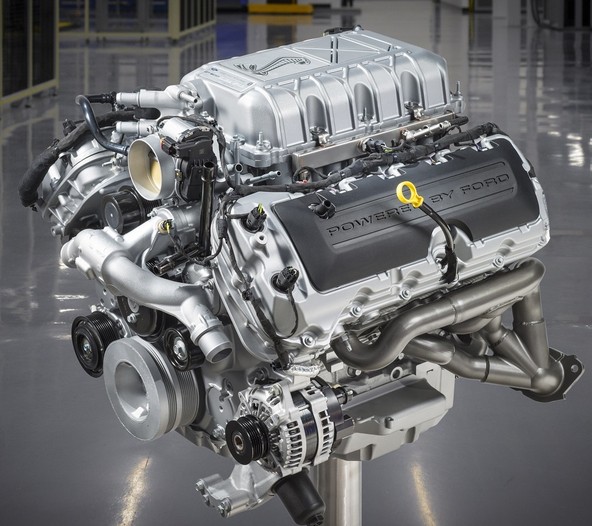
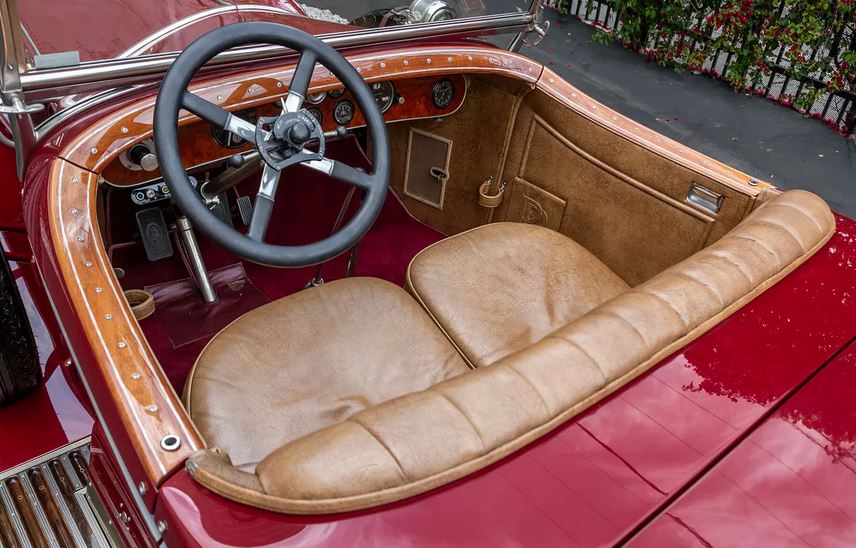
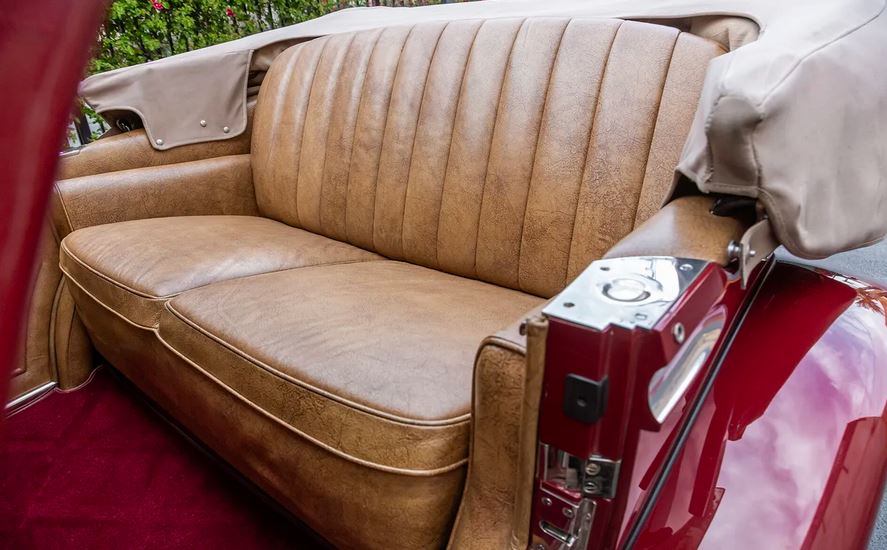
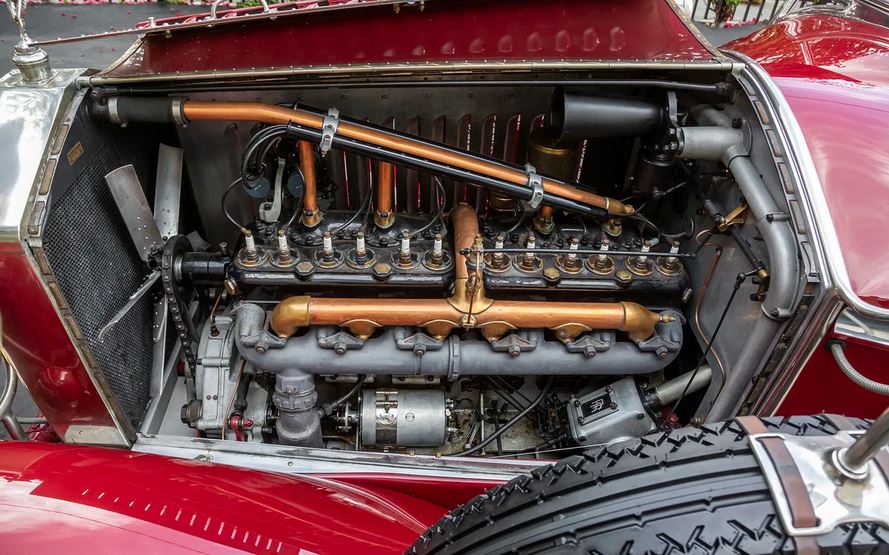
1957 Chevrolet Bel Air (283 CID / 4.6-liter V8)


(click pics to embiggen)

I have to say that the ask of $105,000 is a little too steep, but the seller is probably trying to recoup the restoration costs (protip:  you never recoup your restoration costs).

All that said, if I were a wealthy collector of late-50’s Murkin Big Iron, I might be tempted because this is one Californian that deserves a home in Texas.  What a peach.

It’s three years younger than I am, and I don’t look half as cool.

Proper Kit

Here’s another one of those “Just suppose” scenarios.

Your Uncle Ernie has passed away, childless and single.  You are his sole heir.  In his will, he has left you his well-established farm — 500 acres in western Montana, with grazing, a couple hundred head of cattle and a dozen horses.  His only stipulation is that you may not sell it for ten years after his death.

So you visit the place, and find it in really good shape — good fences, barns, stables, corrals and what have you;  it’s a going concern, and won’t need much other than good management to keep it going.

Unfortunately, for various reasons, you are not in a position to move there for the next few years, so you’ll have to find a manager.  That’s all well and good, but your best prospect is a younger guy who in turn has only one condition:  that you replace Uncle Ernie’s clapped-out pickup truck with something that will start and run without a full-time mechanic on hand.  (Ernie did all the maintenance himself, but it’s actually almost a full-time job.)  You scan the Used Truck ads, and reject all of them because they’re all pretty similar to the late Ernie’s.  So it’s a new one, then.

Your truck choices are as follows (click on link for specs):

Ford F-350 XLT (6.8-liter V8)

RAM 3500HD (6.4-liter V8)

Chev Silverado 3500HD (6.6-liter V8)

And the ringer:

Toyota Tundra TRD Pro (3.4-liter V6 turbo hybrid)

Which one would you pick for your farm manager, and why?  Be as technical and opinionated as you want.

And here’s some proper background music while you consider your choice.

Blast From The Past: 70s Roadtrip

Time to wax nostalgic (again).  The setup:

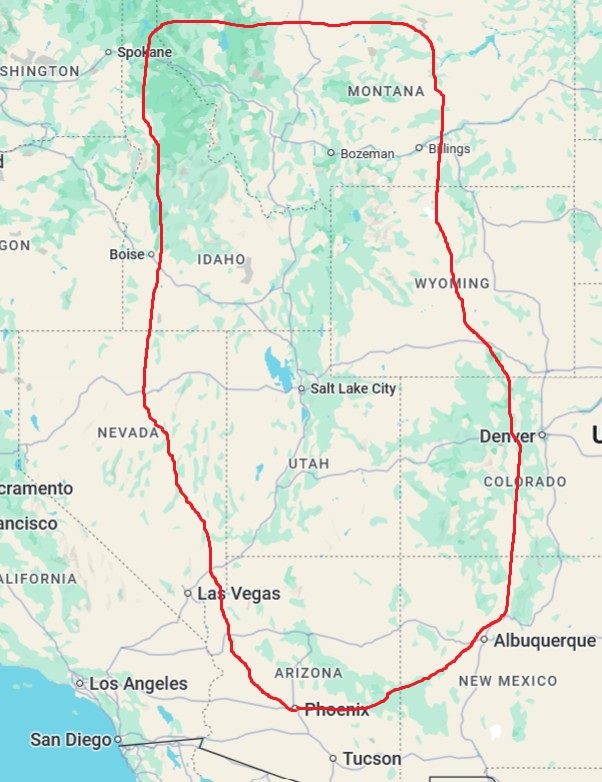
You are going back to 1973 to make a trans-continental car trip from Savannah GA to Monterey CA:

For the sake of convenience, let’s say that the trip will take place in the early summer (mid-May to mid-June), which would be months before the Arab oil embargo was imposed later in the fall.  In other words, gasoline prices and availability will not be an issue.

You need not take any particular road (the above map is just a guideline), and you can take up to two weeks to complete the journey.

Your choice of companion is up to you:  a buddy, your wife, your girlfriend, the girl of your dreams, or even that rather skanky-looking thing you picked up at the gas station while filling up before setting off.  Your call.

As with all these little games of mine, imagine that your car will prove to be 100% reliable (as much of a stretch as it may be to imagine, in some cases).

Your choice of 1973-model cars comes from the following list (no substitutions are allowed):

Dodge Challenger 

BMW 3.0 CSi

Chevy Corvette

Mercedes 450SL

Ford Mustang Mach 1

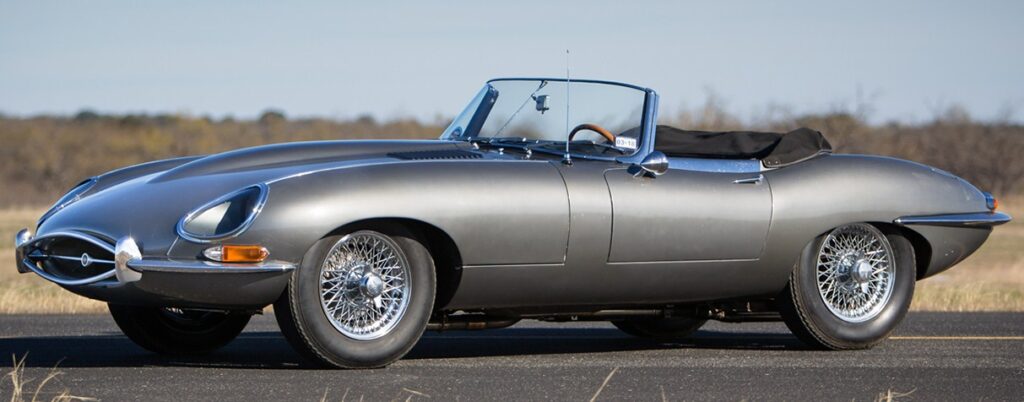
Jaguar XKE

Plymouth Barracuda

Ferrari Daytona GTB4

Pontiac Formula 455

Porsche 911T Coupe 

Choose wisely, O my droogies…

Read more

Sanity Returns, Part XVIII

Then:

GM CEO Mary Barra said in 2021 that the company would exclusively offer EVs by 2035, citing carbon emissions.

“For General Motors, our most significant carbon impact comes from tailpipe emissions of the vehicles that we sell — in our case, it’s 75 percent,” Barra said. “That is why it is so important that we accelerate toward a future in which every vehicle we sell is a zero-emissions vehicle.”

From another GM management dweeb, Dane Parker, former GM chief sustainability officer:

“We feel this is going to be the successful business model of the future,” he said in 2021. “We know there are hurdles, we know there are technology challenges, but we’re confident that with the resources we have and the expertise we have that we’ll overcome those challenges and this will be a business model that we will be able to thrive in the future.”

Yeah, about that:

General Motors has announced plans to expand production of gasoline-powered vehicles and SUVs in Michigan as well as the manufacturing of pickup trucks.

The Detroit-based auto manufacturer said in a statement on Tuesday that it will “begin production of the Cadillac Escalade, as well as the Chevrolet Silverado and GMC Sierra light duty pickups at Orion Assembly in early 2027 to help meet continued strong customer demand.”

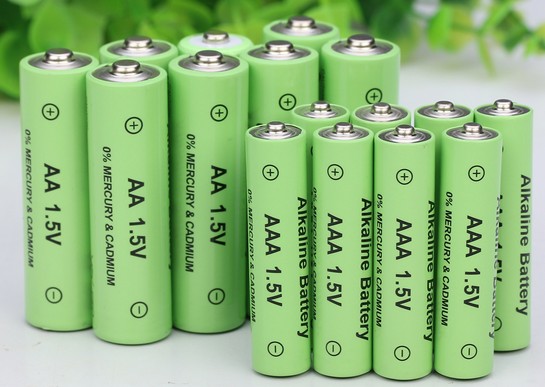
Yeah, it seems as though not that many people want to buy their, or anybody’s Duracell cars after all — at least, not enough to keep once-mighty General Motors in business.

And now, if you’ll excuse me, I’m off to borrow Sarah Hoyt’s Shocked Face.

Interesting Thought

Couple nights back I had dinner with Tech Support II, who was in town for some geek convention or other, and in the course of our (long) evening together, I asked him what car he was currently driving, and was not really surprised when he said “Tesla SUV”.

Of course he would drive a Tesla (because he’s a techie), and of course an SUV (because he has a family).

But along the way something really interesting came up.  He’d recently driven the Tesla (with the family) from Florida to Houston (because he’s also a space geek, duh).  The interesting part is that by his estimation, he didn’t drive about 90-95% of the 1,600-mile drive at all;  he simply left it to the Tesla’s auto-drive program.

When I asked why, he said simply, “Because the Tesla is a better driver than I am.”

The thing about the Tesla self-drive function is that every trip made by every Tesla is recorded and uploaded to their system at headquarters (or wherever they store it).  What that means is that Tesla can not only combine all that data into a global “behavioral” database, but they can also create subsets of that to, say, a “Florida-Houston” drive, with all the characteristics of said trip — choke points, places where accidents frequently occur, speed data and so on — all combined to make the next Florida-Houston drive trip all the safer for any Tesla driver because those characteristics are then folded into the Tesla self-drive computer in the car.

All very interesting, especially for an old retired data geek like myself.

But what TS said next is what stopped me in my tracks.  When I asked him why he’d elected for the self-drive, he admitted quite simply, “Because the Tesla is a better driver than I am.”

He’s not a bad driver, just so you know;  in fact, he’s an excellent driver.

I myself have admitted on these very pages that at age 70, I’m no longer as good a driver as I once was when I was, say, 30 or even when I was 50.

And it makes me think:  would I not be better off by delegating the driving to someone (or something) else?

Of course, this isn’t limited to owning a Tesla (because #Duracell car), and in any event in my case this is purely a hypothetical “If I won the lottery dream” because I could afford neither a driver nor a Tesla.

Nevertheless, it’s a different and quite disturbing thought for me, because it goes against a whole bunch of personal philosophies, viz.  distrust of electric cars, not being in control of my driving, losing my independence of action, being spied on as I drive — to name but some.

And make no mistake:  this would not be an action born of conveeenience, but of safety concerns.

As I said, it’s an interesting thought, even if nothing ever comes of it.

Stripped Down

In a random rant about modern cars the other day, Reader JQ made this observation in Comments:

“I’m finding that the lottery dream car is typically a pre-1970 offering with few if any electronics other than an analog radio.”

And another thing:  there have been a number of stories and articles about the potential dangers and chaos after an EMP attack — against which a car with no electronic doodads would be immune.  Here’s a decent list of stuff which might survive, but I’m going to concentrate on the cars only.

  • Toyota 4×4 Trucks 1985-and earlier
  • American-made pre-1980 trucks, SUVs, and commercial vehicles
  • Dune Buggy and similar kit cars (e.g. Caterham/Lotus Seven)
  • Pre-1980 Jeep and Land Rover

There’s a huge overlap between these, and the type of car specified by JQ.

And to the surprise of absolutely nobody who has ever pulled up a chair on this here back porch of mine, I am completely on the same side.  To me, simple beats complexity when it comes to cars, and although I will freely admit to being an Olde Phartte with a certain degree of technophobia, I don’t think the principle is altogether wrong.

The list of must-haves (but more specifically must-not-haves) would probably exclude most of today’s car models.

So allow me to suggest a two-part list:  the first part would be to satisfy a need for simplicity (which I touched on before, here), and the second to address a post-EMP apocalypse.  There can be some overlap, of course.

If you know enough about cars to be able to fix them yourself, the list of “simple” (i.e. pre-electronic) cars is practically endless, especially if you’d like to derive some actual pleasure from driving the thing.

One of the features you’d have to do without is electronic fuel injection, i.e. carburetors are mandatory, which keeps your date range pretty much to pre-1972.

Sticking with Murkin cars (because parts for older Euro cars like Mercedes might be difficult to come by), my top 3 (and 3a) would be the following:

1967 AC Cobra

1965 Ford Mustang

1963 Chevy Corvette C1

And the 3(a):

1956 Porsche 356 replica (w/ VW engine)

(I know, it’s furrin — but VW parts and spares are as common as GM stuff nowadays, and the simpler “crate” VW engines are practically bulletproof anyway.)

In the second category — we’re talking about post-SHTF survival here, where your vehicle might actually need to be able to do some work — here are my top 3 (plus non-Murkin) choices:

1966 Ford F100

(I’ve always had a soft spot for these good ol’ boys, sue me.)

1948 Willys Jeep M38

You can get one of these, fully restored without mods, for under $30k.  Cool factor is off the charts, and transistors hadn’t even been invented back then.

1965 Chevy El Camino

These are regarded as kinda déclassé  nowadays, but I like them anyway.

And my not-so-token 3(a) Euro option:

1970 VW Panel Van

I’ve spoken before of “Fred”, my old Brazilian-made VW.  It had no creature comfort fiddle-faddle, no seatbelts even, and it withstood the travails of carrying practically all our band gear and three passengers, without complaint, for over 170,000 miles.  Had it not been thus punished, it might not even have needed a new clutch at 80,000.

It’s actually my #1 choice, over all the others, and if I could somehow resurrect Fred as taken off the showroom floor, I’d be the happiest man in Christendom.  (I’d have to leave Texas, though, because no a/c…)

And an afterthought (3b):

1968 Toyota HiLux

Argue with this choice, I dare ya.

Your ideas in Comments, please.