More Backtracking

This one had me giggling like a little girl:

Bentley has decided to delay its electric vehicle plans.

The historic carmaker that’s headquartered in Crewe, Cheshire, has opted for a shift in strategy as they now plan to renew three models with petrol engines, instead of electric.  The company originally planned to transition to a fully electric lineup by 2030 – under its Beyond100 strategy.  These previous plans included offering only plug-in hybrids and EVs by 2026, then eventually phasing out hybrids for a zero-emission lineup.

But why, oh why are they seemingly defying the EU/BritGov’s NetZero diktat ?

Bentley CEO, Frank-Steffen Walliser, said: “There is a dip in demand for luxury electric vehicles, and customer demand is not yet strong enough to support an all-electric strategy.

“The luxury market is a lot different today than when we announced Beyond100.

“Electrification is still our goal, but we need to take our customers with us.”

That last sentence is just to appease the Greens.

Frankly — given that Bentleys have stood for “luxury + power” ever since they won several Brooklands and Le Mans races in the 1930s — there’s little reason to think that a typical Bentley customer should be any different in, say, 2030 (or ever) than they’ve been since those halcyon days in the 1930s.

Massive engines — gasoline/petrol-powered — with ripsnorting power and “sufficient” speed are a Bentley trademark.  Hell, many Bentley customers — current and potential — are still seething about the company’s decision to dump the W12 in favor of a turbo V8.

And just as a reminder:  Bentley is owned by Volkswagen (the W12 is actually a VW design from the Phaeton).  VW is also the owners of other brands… and what are they doing?

Porsche, another brand that is owned by the VW Group alongside Bentley, recently announced plans to delay the launch of its latest EV due to low demand.  Instead, the iconic German sports car marque plans to focus on internal combustion engines and innovative technologies such as wireless charging — recently demonstrated with the upcoming Cayenne EV.

Similarly, Audi, yet another VW brand, has abandoned its goal of becoming an all-electric brand by 2033, instead opting for flexibility based on market conditions.

Oh.

Yeah, and those “market conditions” are being signaled by their respective customer bases with a common voice:  “Screw those stupid Duracell motors:  we want real engines in our performance cars.”

I could have told them this would happen, and in fact I did on these very pages.

And hey, I don’t own stock in VW — but if I did, I would have dumped it the very second they announced their stupid all-electric / electric-only initiative.

And This Is Why

And as the car manufacturers like VW and Mercedes continue to wonder why their stupid customers are refusing to buy their little Duracell cars, there’s this report from the trenches:

Wheeler Dealers host Mike Brewer has claimed purchasing an electric vehicle was the “most stupid decision” ever made, revealing he has ditched his EVs and returned to petrol models.

Oh noes!  Whatever could have happened?

“The day I decided to sell my Porsche Taycan, which is a high-performance beautiful electric car, was the day that I couldn’t charge it. I went down to see my parents. On the way back there was nowhere to charge it, all the chargers were broken and nothing would work.

“When I did find a charger that was working, there were 12 people queued up waiting to charge their cars. The car went into ‘limp home’ mode, meaning I had to drive it at 40mph on the motorway, I realized I’d just paid £130,000 for something I was driving at 40mph on the motorway embarrassed. Why am I doing that? Why did I put myself through that anguish?

“Plus it was losing £5,000 per month at that time so it was the most stupid decision I’ve ever made.”

Is that all?

“I did buy one of those electric Mercedes recently, an EQC. 10 minutes and I’d done enough of that. That went back. I watched it lose £20,000 over the course of a couple of months and went ‘I don’t like that anymore’ and it went.”

And:

“I went very quickly back to an ICE and very quickly back to a flat-six.”

So, I think, will a huge number of his viewers.

When you can’t charge your car battery and the car’s value is depreciating faster than a Bentley’s… it’s time for a change.

…and not:


For my Murkin Readers who’ve never heard of Mike Brewer, here’s the background on Wheeler Dealers, which ran for over 20 years on Brit TV.

Beating Around The Bush

Yup, it’s time for yet another of Kim’s Insane Trip challenges.  This one, however, is completely different.

Your trip is to drive along this course, taking as long as you want, during the months of June and August.

The starting point is Phoenix AZ, and you are at liberty to take either the easterly side (in an anticlockwise direction) or the westerly side (clockwise).

Now Alert Readers will note a couple of things about this trip, namely:

  • while the proposed route goes close to major cities, it doesn’t actually allow you to go into any of them (not that one would want to), and
  • there are no interstate highways involved.

Which is a critical part of the challenge, because:

There will not be any paved roads.  The route will consist of gravel, rural or tracks only, and will include shallow river crossings, mountain passes, steep climbs and descents as well as long stretches of desert or semi-desert roads.  The route, while testing, will not include any of the ridiculous “climb over boulders” or “cross that ravine” nonsense.  Any of the vehicles listed below can make the trip easily.

Each car will be fitted with a GPS device that will prove that you actually drove through the various checkpoints that will be scattered along the route.

The cars/trucks may carry spare tires and a decent complement of spare parts of things that are most likely to break.  You may stop along the way in any of the small towns you get to for gas, running repairs, oil changes etc., but the costs are out-of-pocket.

In the finest Top Gear tradition, you will be accompanied by a maintenance / repair vehicle (which has to be able to follow you on your chosen road) to make medium-serious repairs en route.  (Think:  modern-day Range Rover or Toyota Land Cruiser.)

You may take as many or as few companions for the trip as you wish, constrained only by the passenger capacity of your vehicle.  (Suggested list:  best friend, mistress/wife/girlfriend, mechanic etc.)  Or you can just go solo, for that matter.  Specify in Comments.

Overnight accommodation will be provided as needed, or you may want to just pitch a tent and camp wherever you are.  Remember:  there is no time limit.

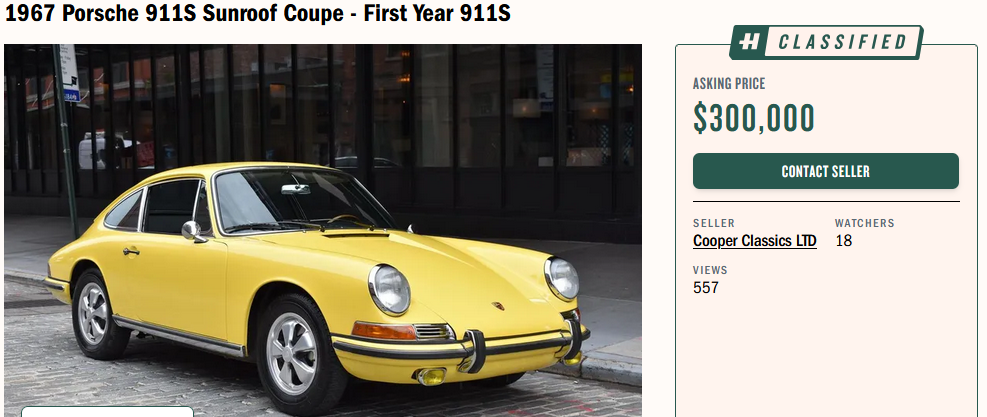
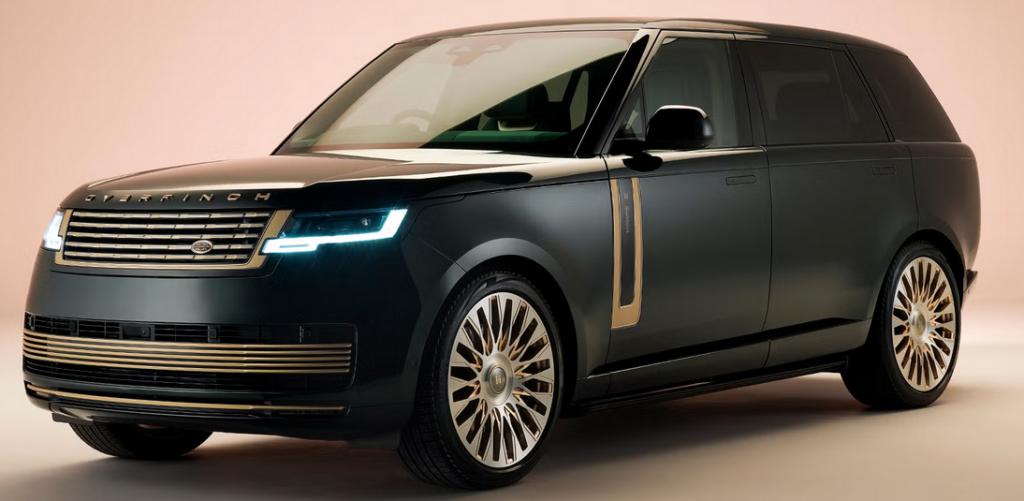
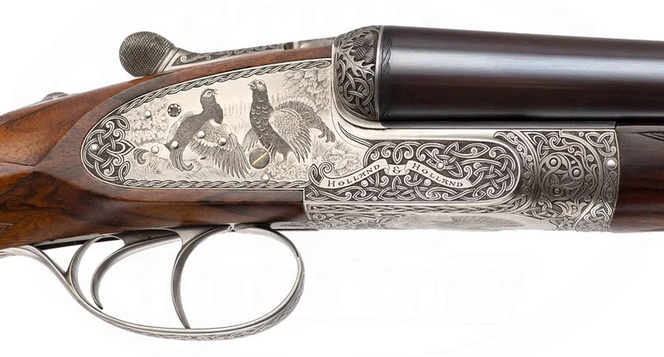
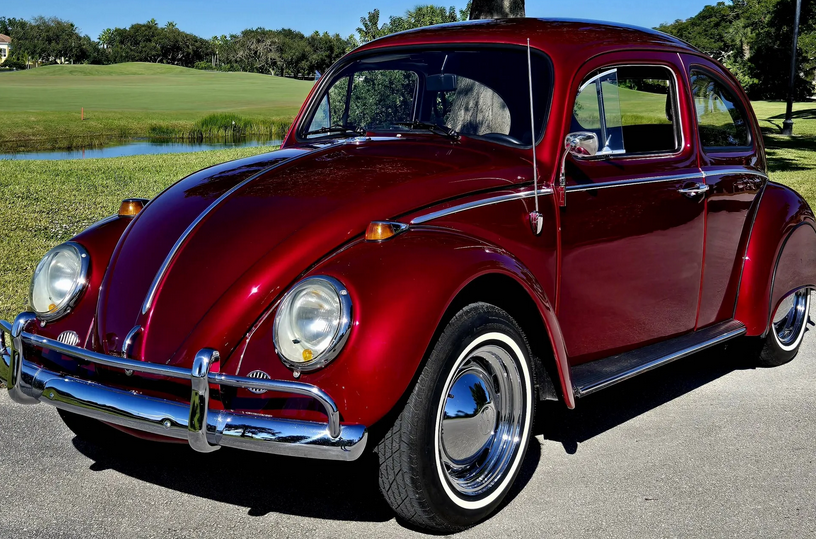
Now what kind of vehicle, you ask, should you consider to make such a trip?  The choices are listed below, and they come to you gratis (see below for the stipulations).  In other words, when you follow the link (in the pic) to see the car’s specific details, ignore the price.  What you’re looking for are the following:

  • will it make the trip?
  • will you be able to drive over fairly rough country roads?
  • will you require back/kidney surgery afterwards?
  • will you be able to fix it en route if something breaks?
  • have you always wanted to drive one of these?
  • etc.

Needless to say, this being my challenge, there are no new cars — in fact, there are no cars made after 1995 — although some of them are ground-up rebuilds or restomods, but there ya go.  And you may not make any substitutions:  stick to the list.  Also, whether pictured or not, each will be fitted with a winch of sufficient power.

And while this is not a race, if you make it back to Phoenix inside a certain time frame you get to keep the car.  It’s your choice whether you want to race for that prize, or just enjoy the trip for as long as it takes.  What the hell, it’s a free car, right?

Finally, assume that all vehicles are in top-class running order.

Here, then, are your choices.

Read more

The Peak Car Discussion

Harry and Jeremy talk about cars in one of the most entertaining videos ever made — and I’m in total agreement with practically everything they say.  (Feel free to watch it before continuing with this post, because it will make things a lot clearer.)

Where I’m intrigued is when the discussion turns to the concept of “peak car”, which I’ve alluded to on several occasions:  that time when new cars came with sufficient horsepower and a sufficient amount of technology which makes driving enjoyable for the average driver.

The two of them reach a sort of agreement on 2015 as the year when cars reached the apogee of performance/technology.

I have a slightly different take.

I think that “peak car” depends on the brand / model.  Here are a few examples to illustrate the point.

Sports cars

1998-2005 Acura/Honda NSX

The car that redefined “sports car” from “that fantastic-looking thing that’s wonderful to drive… when it starts and doesn’t break down all the time”  to “that fantastic-looking thing that’s wonderful to drive — period.  All the performance anyone could possibly need, used a manual gearbox, and the only technology missing is satnav. [#retrofit, if needed/wanted]
Here’s the thing:  I know that the newer model NSX probably handles a little better than the first incarnation thereof, and is more efficient in terms of fuel consumption, etc. etc.  My question is:  in the hands of an average driver (e.g. myself), would one even notice the difference?  And more to the point:  even allowing for inflation, are all those improvements worth the extra cost of the new car?

1996-20002 Ferrari 550 Maranello

After the 550, Ferraris became too big, too powerful and too full of unnecessary geegaw technology.  And the 550 was the last Ferrari to offer a stick shift.
The newer Ferraris are undoubtedly more powerful, faster, better-handling etc. than the 550.
But here’s the thing about this:  ignoring appearances, we would all know that the 550 is a far better car than, say, a 1960s-era 275 — faster, much better handling, and all that.  But are the newer 2020-era Ferrari models (e.g. the F12) that much better than the 550 as the 550 was to the 275?
I don’t think so;  and the added complexity of actually getting the newer cars to run does not improve the driving experience (See Clarkson and Metcalfe’s take).

Saloon cars

1994 Jaguar XJ40

The last XJ model produced before Ford turned Jaguar into Fords, the 1994 model was Jag’s highest-quality saloon car, which is why they still command a premium on the resto market.  The 1994 model featured a V-12 engine, and its Daimler counterpart was wonderfully named the “Double Six”.  I would humbly suggest that the XJ40 was Peak Jaguar.  Sumptuous ride and as much power as anyone would need in a family car, it was Jag’s answer to Mercedes and BMW.  And speaking of Mercedes…

1980 Mercedes 450 SE (W116)

I would also suggest that the 4.5-liter V8-powered 450 SE was Peak Mercedes (among their luxury saloons, that is).  The hydro-pneumatic suspension made an already-comfortable ride an exquisite one (matched only by the similarly-suspensioned Citroën), and the engine provided all the power that this heavy best needed to get up there.  And given that the W116 also featured rack-and-pinion steering (a new feature for Mercedes, amazingly), the 450 SE was streets better than its Mercedes predecessors and the equal of any of its competitors.  Sure, the modern S-series Mercs are excellent vehicles — but at a price that is more than two-thirds higher than the 450, and whose capabilities are nowhere near 1.66x better.  (And we shall not speak of the 450SEL “6.9” with its 6.8-liter engine which demolished any other saloon car of the time and could outperform most sports cars withal.  But they made fewer than 8,000 of them.  And yes, I’d take one today, in a millisecond.  The 6.9 would definitely compare quite favorably to the modern S500 series.)

Harking back to the Clarkson/Metcalfe video for a moment:  Clarkson reckons that the original BMW M2 is far better — in terms of driving experience — than the newer M2 model, because the newer ones have just too much electronic crap which take away from the fun of it.

Most tellingly, neither Jeremy nor Harry are interested in buying a new model car of any brand or make (like me).  Now I know that they’re a pair of old farts (also like me), but there’s no discounting their love of performance cars and their profound knowledge thereof (unlike me).

All three of us — and I suspect, a great many others — would quite happily take one of the “peak” cars over the latest model from that stable, especially at the prices of yesteryear.

So… which do you think represents “peak car” among your favorite car manufacturers?