
Oh boy, for a bunch of White boys, Rare Earth sure could play some funky blues.
Latest Posts
Texas Angels
Some background: Longtime Reader and Buddy Dave L. and I have known each other for years, and along the way, we’ve swapped stories back and forth, talked guns and such, and shared good times and bad.
Both of us lost our beloved wives to illness, I only a couple of years before he did, and we’ve taken it in turns to talk each other away from the abyss. You know, what friends do.
Another thing we have in common after our respective losses is that somehow, without trying, we both lucked upon women who were prepared to take the enormous risk of marrying a pair of cranky old widowers — I already did, and he will be doing it too, later this year.
Anyway, a couple of days ago he sent me this email, which I’m posting almost unchanged (other than anonymizing it a little) with his express permission, because it is just too damn good a story not to share, and Dave is an excellent storyteller.
Hi Kim:
I want to share a story with you about the goodness of two people that I encountered last week. As with all Dave stories it’s a little long and involved but you’re an observer of all that’s wrong with our society so I hope that this brings a smile to your face.
A couple of weeks ago the “soon-to-be-wife” and I decided that we needed a little “us” time. I’ve lived in Oklahoma for 42 years but I’ve never made the detour south of Amarillo to check out Palo Duro Canyon. We decided to drag our small camping trailer out to the canyon for a couple of quiet days.
I want to lay the foundation for the story. I have an 18-foot single axle camper. It’s about six years old and is in very good condition. I have less than 15,000 miles on the unit. I’ve never overloaded the trailer and I’ve been very careful about inspecting the tires and maintaining the proper inflation pressures. In short, I’ve done about all that I could to keep the trailer safe and in good order. (I later learned that most of the new trailers come from the factory with a set of cheap Chinese tires that are commonly called “Chinese Time Bombs”. These tires look okay but literally disintegrate at the six to seven year mark.)
We were heading down I-40 last Monday afternoon. I tow with a 2020 F-150 that has the towing package and is a well maintained truck. We were running at about 65 — I don’t feel comfortable driving much over that when towing — and we’d just crossed the Oklahoma/Texas border when I heard a loud bang and saw pieces of tire flying from my wheel. We got the rig shut down and I found just a little rubber and lots of steel cord on the wheel rim. Last Monday afternoon the temp was about 95 but STBW and I managed to jack up the trailer and change out the bad tire for the spare.
While we doing this a typical Texan (God bless him) pulled up behind me in a big dually Dodge and helped us with the job. We were on our way to finishing the job, but when you’re 71 years old and out in the hot sun, any help is sure appreciated. I noticed that he was wearing a blue polo shirt (this becomes important later). I offered to buy our friend a beer or lunch but he wouldn’t hear anything of it. So I gave him a bottle of cold water and we went on our way.
About two hours later we’re south of Amarillo heading toward the canyon and I heard another loud bang. Yes, the second tire decided that it was at the end of its useful life and let go as well. So now we’re stuck without a spare and I’m looking for a place where I can park the trailer on the jacks and find a couple of tires late in the afternoon.
A guy who ran a local landscaping business saw our trouble and came out and suggested that we park the trailer right there in his yard. He said that we could leave the trailer on his locked property and he’d help us with it in the morning. That sounded like a good idea so we found a motel room.
On Tuesday morning we used the landscaper’s floor jack to get both wheels off and I made a trip to Discount Tire for two tires which were not made of Chinesium. Total time spent doing all this on Tuesday morning was about two hours. I insisted that the landscaper guy have lunch on us, and that was the best $50 I’ve ever spent.
Now for the good part. The second guy was also wearing a blue polo shirt. Your mileage may vary, but I’m convinced that in Texas, angels wear blue shirts.
All the best,
Dave
New Wife and I will be going to Dave’s wedding in a few months’ time. After all these years of friendship, it will be the first time we’ve actually met in person, and I cannot wait.
News Roundup


And still talking a load of Bols:
From the Everybody Panic!!! Department:

...that’s “monkeypox” to you and me, but it was changed to “Mpox” lest Al Sharpton got offended.
In the Department of Health:

…
From Straight Talk Central:

...of course he’s right, but that’s soooo intolerant not to mention rayciss. And speaking of raycissm:

...so is the U.S. Olympic Basketball team proof of Reconstruction legacy, then? Asking for a friend.
From the War Department:

...and why not? Are they not the equals of men?
#MeToo

...and let’s draft her first.
#WaitWhat #ElvisPresley
From the Travel Agency:

...and all that money wasted on a Third World airport.
From the Ministry of Truth:
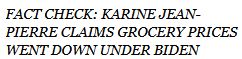
...if he were the President of the Planet Zarg, perhaps. But here on Planet Earth:

...I wonder how he got that done?
In Election News:

...can’t keep a good woman down, can ya?

...guess he discovered the truth of Hymietown. [/Jesse Jackson] Also:

…“but but but the Jews have always voted for us before!”
Let’s indulge in some contemplation of 




 ...when life imitates The Matrix.

...never mind the heartbreak, here’s the lissome Olivia:





And that’s all the news worth spreading.
Not Alone
Seems as though I’m not the only one out there who is looking askance at the current “dressing down” (or as I refer to it, “prole drift”) of society. The redoubtable Laura Perrins of TCW* Magazine has an even more jaundiced view than I:
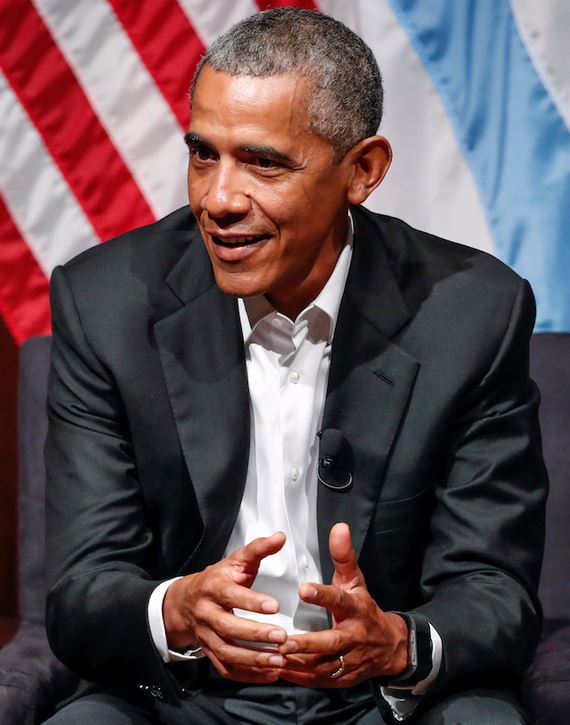
Never trust a politician without a tie
I’d post an excerpt, but her entire article is just too delightful for words, so go there now.
And while she uses Oily Little Shit Tony Blair as her exemplar of the Untrustworthy Politician genre, there are several Over Here, too. Like this fucking asshole:
Q.E.D.
*stands for The Conservative Woman — and has nothing to do with the Brits’ version of our Stupid Party.
Caption Competition #348

Your suggestions in Comments.
Here Comes Another One
It will help if while reading this piece, you hum the tune to the above title (as recorded by Monty Python on their final album).
It was only last week when I slotted this little item into a News Roundup:

…and here’s an update, with a younger member of the Nostradamus Tribe being a little more cagey, timewise:
A man who has been dubbed the ‘living Nostradamus’ claims ‘the worst is yet to come’, suggesting the world is teetering on the edge of WWIII.
Athos Salomé, 36, who is a trained parapsychologist from Brazil, is often referred to as a psychic due to the accuracy of his insights and predictions, after previously foreseeing the coronavirus pandemic, Elon Musk buying Twitter, now called X, and even Queen Elizabeth II’s death.
Now, as people worry about the escalation of conflicts and humanitarian crises, he warns that ‘a small incident’ could set off a series of terrifying events.
Key phrase: “trained parapsychologist” (one could be snarky and add “Brazil”, but if we’ve learned anything, it’s that these loons can pop up anywhere).
If these Nostradami actually worked as advertised, they wouldn’t be hammering on about global catastrophes — at least, I wouldn’t, if endowed with these magical powers.
I certainly wouldn’t be blathering on vaguely about nonsense like “And there shall be a great pestilence come upon the land” [at some unmentioned date, in some unmentioned country].
No, I would be ensconced in the Presidential Suite at the Hôtel de Paris in Monte Carlo, paying for my accommodation (not to mention more than a few unsavory indulgences) by plonking a grand or so on 27 at the Casino’s roulette wheel each night. That’s at least a useful application of the magic power, and not providing fodder for some crappy newspaper’s This Week’s Things To Panic About! section.
But perhaps I’m being too dismissive.
Sarajevo, anyone? As Bismarck once said, it will be just some damn thing in the Balkans… now that was an accurate prediction.