Give me the old stuff any day, and you can stick all yer modern shit right back up yer ass.


Give me the old stuff any day, and you can stick all yer modern shit right back up yer ass.


I have often — and it must be said, not unreasonably — been accused of being an old stick-in-the-mud who too often prefers the old days and old ways to much of modern life. Here’s an example.
Back when I first lived in the Chicago suburbs (circa 1987-92), I drove an ancient 1970s Subaru GL like this one (only in nowhere near as good condition):
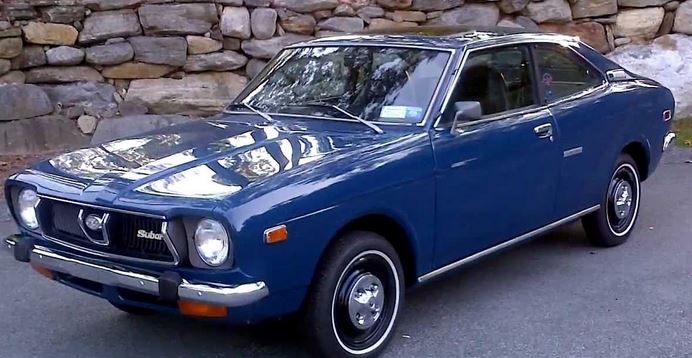
I don’t remember exactly how many miles it had been driven before I got it, but I suspect it was around the upper-120,000 mark. This car had the advantages of a) being fully paid-off and b) having astonishingly-frugal gas consumption.
Reliability was likewise excellent, in no small part due to its regular maintenance at the hands of Dave, the cheerful owner of Eurocar Services in Des Plaines. It was Dave who would call me to explain yet again how this or that part was starting to fail, always mentioning how long I could continue to drive it before it actually did, how much it would cost to fix it, and his recommendation as to when I would have absolutely no choice but to do so. (He also taught me how to “cheat” my way past the strict Illinois emissions test, because there was no way it would have passed without said cheating.)
In this way, I managed to drive the “Scoobydoo” (his affectionate name for it) for about four more years before finally having to get rid of the thing; because when your clothes start to smell of exhaust smoke when you get out of your car, it’s usually a sign from God or whoever that The Time Has Come.
I should point out that while Dave owned a computer diagnostic machine for the newer cars which could accommodate it, he was just as happy to work on ancient cars like mine that didn’t.
The above memory was triggered by this little story:
More than a million Range Rover and Jaguar drivers could face huge delays in getting their motors repaired after a devastating cyber-attack crippled Jaguar Land Rover.
The British car manufacturer has become the latest big-named firm to have been hit by hackers.
Bosses at Jaguar Land Rover (JLR) were forced to scramble on Sunday, hastily shutting down global computer systems to protect sensitive information.
Efforts are still ongoing to reboot the company’s stricken systems, with the fallout effectively paralysing dealerships and garages, which can no longer order new parts from JLR.
Mechanics across the Indian-owned firm’s franchised dealership network rely on JLR’s diagnostic tech to identify faults and electronic catalogues to order replacement parts.
However, with these systems still crippled, it means owners of vehicles like the Range Rover, Discover and Defender models, as well as Jaguar sports cars, that need to be repaired are now stuck in limbo.
JLR has insisted it is working to resolve the issue but warned its retail and production activities have been ‘severely disrupted’.
It is unclear how long it will take the car builder to restore its IT network.
This would never have happened to my friend Dave, because of course he used to order parts by phone from a local supplier, or (as happened more than once) actually driving over himself to a supplier or junkyard to get what he needed.
Was it as efficient as the process is today? Of course not. Was it as vulnerable to outside interference as today’s techno-dependent process? Also not.
Here’s my take. If it were possible, I’d drive a 1974 Subaru GL (assume new or low-mileage secondhand) today long before I’d drive a JLR product of any variant — not the least because if your driving needs are relatively modest (as are mine), you can get by very well indeed without all that modernistic, expensive and vulnerable bollocks.
As long as there was a Dave around to maintain it. And I know that Dave is a vanishing breed; but I also know that he’s not extinct, and never will be — because there will always be some guys who take pleasure in tinkering with mechanical stuff, and gawd love them for it.
Okay, there are a couple of Jaguar (not “JLR”) cars I’d be equally happy to drive, but they would require a winning lottery ticket.

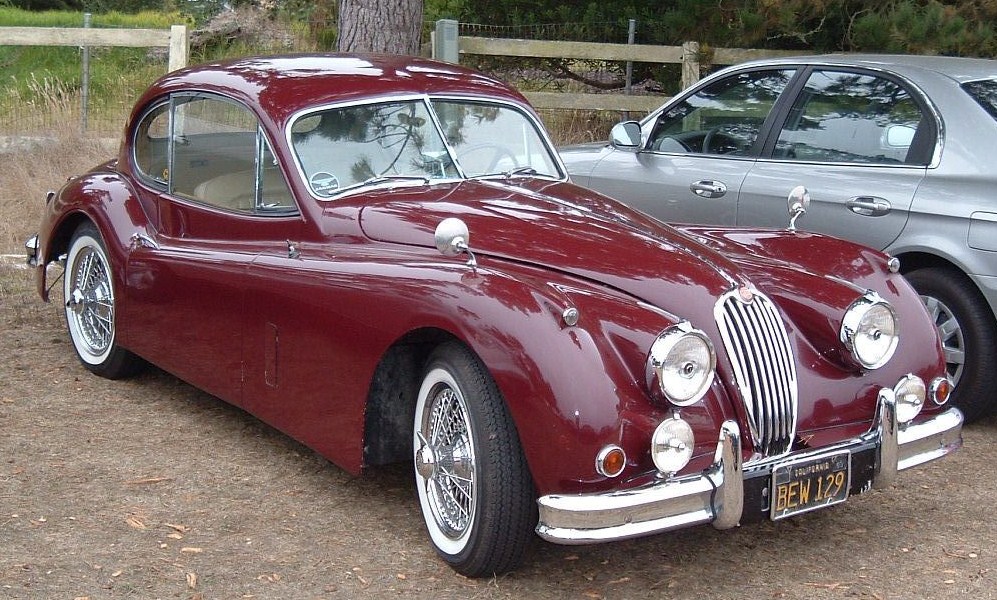
…and nary a computer chip to be found anywhere in them. For these cars, there will always be a Dave.

In a promo piece from Kohl’s (normally the squarest of Midwest retailers):

JHC.
Well, I won’t be buying any of those.
The other day I was confronted by a situation that has become depressingly familiar: an allusion to someone who is clearly well-known to many, but whose existence had hitherto been completely unknown to me.
In this case, it was the redoubtable Tom Knighton, whose substack efforts are definitely worthy of subscription in general, but sadly out of my reach because #Poverty. Writing a very Kim-like essay (minus Kim’s swears), he was talking about the evils of technology being used to spy on people and control their lives — in this case, electricity supply — which is an issue near and dear to me, as Loyal Readers will be aware.
However, towards the end, Knighton writes this:
When I thought I wanted a cyberpunk future, I meant with Dina Meyer running through the streets of some city while we tried to find a cybernetic dolphin, not this crap.
Who?
It turns out that this Dina Meyer is an actress who has had a fairly long and interesting career, with appearances in many, many movies and TV shows: none of which I’ve ever watched, other than (in the TV case) a few episodes of a show in which she may have appeared but clearly didn’t register with me. Here are a few examples, just to illustrate the situation.
Apparently, Miss Meyer started off her career in Beverly Hills 90210, of which I’ve never watched a single episode. She’s also appeared in some movies (Johnny Mnemonic, Starship Troopers, Saw I-III, Dragonheart and one of the Star Trek movies), none of which I’ve seen because their genres (sci-fi, fantasy, horror etc.) have absolutely no appeal to me.
While Tom Knighton clearly knows who she is and uses her as some kind of cultural reference, it’s perfectly possible that as good an actress as she may be, Dina Meyer has heretofore floated completely under my finely-adjusted and alert Totty Radar, however much of a cultural lodestar she may be. Lest others find themselves sailing with me on board the same Ship Of Ignorance, therefore, I submit the following:


It seems somewhat strange that she’s survived and prospered thus far (into her late 50s, good grief) without my ever having spotted her before, but it’s a factor of her role- and genre choices rather than my inattentiveness.
Anyway, there’s no need to thank me: it’s all part of the service.
Couple nights back I had dinner with Tech Support II, who was in town for some geek convention or other, and in the course of our (long) evening together, I asked him what car he was currently driving, and was not really surprised when he said “Tesla SUV”.
Of course he would drive a Tesla (because he’s a techie), and of course an SUV (because he has a family).
But along the way something really interesting came up. He’d recently driven the Tesla (with the family) from Florida to Houston (because he’s also a space geek, duh). The interesting part is that by his estimation, he didn’t drive about 90-95% of the 1,600-mile drive at all; he simply left it to the Tesla’s auto-drive program.
When I asked why, he said simply, “Because the Tesla is a better driver than I am.”
The thing about the Tesla self-drive function is that every trip made by every Tesla is recorded and uploaded to their system at headquarters (or wherever they store it). What that means is that Tesla can not only combine all that data into a global “behavioral” database, but they can also create subsets of that to, say, a “Florida-Houston” drive, with all the characteristics of said trip — choke points, places where accidents frequently occur, speed data and so on — all combined to make the next Florida-Houston drive trip all the safer for any Tesla driver because those characteristics are then folded into the Tesla self-drive computer in the car.
All very interesting, especially for an old retired data geek like myself.
But what TS said next is what stopped me in my tracks. When I asked him why he’d elected for the self-drive, he admitted quite simply, “Because the Tesla is a better driver than I am.”
He’s not a bad driver, just so you know; in fact, he’s an excellent driver.
I myself have admitted on these very pages that at age 70, I’m no longer as good a driver as I once was when I was, say, 30 or even when I was 50.
And it makes me think: would I not be better off by delegating the driving to someone (or something) else?
Of course, this isn’t limited to owning a Tesla (because #Duracell car), and in any event in my case this is purely a hypothetical “If I won the lottery dream” because I could afford neither a driver nor a Tesla.
Nevertheless, it’s a different and quite disturbing thought for me, because it goes against a whole bunch of personal philosophies, viz. distrust of electric cars, not being in control of my driving, losing my independence of action, being spied on as I drive — to name but some.
And make no mistake: this would not be an action born of conveeenience, but of safety concerns.
As I said, it’s an interesting thought, even if nothing ever comes of it.
If ever you wanted to see how different generations operate, take a look at these two pictures of actors (Sean Connery in 1964, and Thomas Brodie-Sangster in 2024) both taken when they were 34 years old.

The 1964 man played James Bond, effortlessly. The 2024 man couldn’t play Bond if he tried.