
Category: Music
Memoirs Of A Busker — Chapter 6
(Previous: Chapter 1, Chapter 2, Chapter 3, Chapter 4, Chapter 5)
Chapter 6: Building Pussyfoot
Along the way, we’d decided on a name for the band: Pussyfoot Show Band, which was a triumph of 70s attitude over sound marketing principles. I have to admit that I don’t remember who came up with the name, but I do remember being its most ardent supporter. Knob was the first to voice an objection: “Who in their right mind,” he asked, “is going to book a band with a dirty-sounding name?” (Not many, as we were to find out.) Still, there we were.
Of course, we also didn’t have a “show” of any description, unless you counted the bassist leaping all over the stage like some demented animal while the other front three stood like statues, intent on getting their parts right.
And speaking of parts: one of the benefits of having Mr. Filthy Perfectionist in the band was that we were — considering we were a band who’d only been playing together for a few months — a tight sound, and quite well-rehearsed. It helped the others overcome their stage fright somewhat; I, on the other hand, was brimming with confidence — confidence being that feeling you have before you know any better, of course.
Anyway, we arrived at Rob’s (and Cliff’s) old high school a full hour and a half before we were due to start Because Kim Insisted We Did. (I had, and never lost, a dread of us arriving at a gig only to find out that we’d left something behind, or a car carrying gear broke down en route, or some piece of equipment didn’t work: I feared all the many things that would prevent us from starting at the time we’d agreed. And in my mind, not starting on time was the infallible mark of an unprofessional band, so we would always arrive very early for a gig, even years later when we’d got the off-loading / setup thing down to a fine art and could do it all within half an hour.)
So right at 10am, the MC of the show (who looked about nine years old) opened the proceedings with a couple of announcements, then handed the thing over to Pussyfoot. There was a massive crowd, nearly three hundred kids (with a lot more to come) and the auditorium was jam-packed.
We would go on to play countless gigs after that one; but nothing ever topped this high school party, for all sort of reasons. For starters, we could play anything, any song at all, even the ones we’d written off as unsuitable gig material, and whatever we played, the kids danced their asses off. A couple of honorable mentions: Golden Earring’s Radar Love (which had taken us ages to learn, not because the music was difficult, but because all the tempo changes and different phrases were complex, confusing and difficult to remember in sequence), Santana’s Soul Sacrifice — the Woodstock version, sans Hammond organ(!), but complete with drum solo from Rob — and of course songs like the Doobie Brothers’ Long Train Running and Listen To The Music, Fleetwood Mac’s Albatross and Man Of The World, and Sweet’s Fox On The Run (which nearly caused a riot, and which we performed exactly like the original, complete with castrati harmonies).
Of course, you can have too much of a good thing, and we soon learned why. After the third hour, my fingertips were so painful that every note was torture: I half-expected to see blood running out from under my fingernails. Donat and Kevin were likewise stricken, because we had not prepared for this kind of thing and we were, to put it mildly, taken aback by the strain of prolonged playing (fifty minutes on, ten minutes off, according to the rules of the dance marathon).
And here, the aforementioned Soul Sacrifice deserves a line or two. We’d learned it so that we could feature Rob’s fine drumming, even though drum solos, in a gig context, are generally death to any dance floor activity. However, on this occasion, I figured that the kids wouldn’t mind too much, so I called the song (to the utter consternation of the others), and off we went. However, the version we played that day was a little different from Woodstock in that during the drum solo, I motioned Ken and Donat off the stage and setting down our guitars we went off for a pee break, leaving Knob and Cliff on stage (the latter beating the hell out of a pair of congas) for what seemed like ages. Then we finally sauntered back on stage, picked up our guitars and at the appropriate time launched into the finale of the song. Fortunately, its extended length ran right up to the fifty-minute mark, so we took a break.
I had never seen the normally-cool, unflappable Knob sweat like that. Nor had I ever heard him cuss us out so profusely.
It wasn’t all smooth sailing, of course. Cliff’s voice gave out completely early during the third hour, which meant that the three of us had to carry the vocal load together for the rest of the performance. This was not something we’d rehearsed, and it put a level of mental strain onto us that persisted for years, and not to our benefit either, as you will see later. For my part, I was absolutely furious at Cliff, as much for his attitude as for his failure at his only job. He seemed to just shrug it off with a “What can I do about it?” expression. Not for the first (or last) time, I wanted to punch him in the face. But the band couldn’t quit; that would have been the height of unprofessionalism, so we soldiered on. From that day on, however, Cliff’s days in the band were numbered, although I was the only one who knew it at the time.
The final hour of the gig saw five exhausted musicians pretty much going through the motions — we were more tired than the dancers — and indeed the last set list was just a rerun of all the songs I’d judged had been the biggest crowd-pleasers so far. Anyway, we played the last song, whereupon the 9-year-old MC bounded back on stage and said simply, “We’d like to thank Pussyfoot — ” and his voice disappeared into an earsplitting storm of screams from the three hundred-odd girls in the audience. Good grief, it sounded like the Beatles had just finished a concert. On and on it went, and when I glanced over at the other guys I saw just the same reaction from all of them: astonishment, and embarrassment. Kevin was blushing so deeply that his skin was the same color as his hair, and Donat was looking at the ground, shuffling his feet. Even Knob just sat behind his drums, his mouth open.
So that’s what it was like to be rock stars.
After the excitement of that gig we took a week off from practice, as much out of exhaustion as to give our aching fingers a chance to recover. (Knob, by the way, hadn’t escaped unscathed: he had four massive blisters on his fingers courtesy of his drumsticks.)
But when we did finally get back together, we were faced with an inescapable fact: we needed a keyboards player. But we had no clue where to get one.
Here’s what had happened. The guys in the band had become friends (well, except for me and Cliff), and without ever talking about it, I think we shrank subconsciously from inviting a stranger to share our little partnership in case it didn’t work out. From my time with the Trio in Margate, I knew what it was like when nobody in the band liked the others, and I’d shared that with the guys much earlier on. It was all very frustrating; but in the end it was Cliff (!) who came to the rescue. Apparently, he had a buddy who’d just finished his draft commitment in the Army, and said buddy knew a guy in his unit who was a keyboards player. So the phone lines hummed, and at our very next practice came Mike (“Pussfaze”, a play on his surname), complete with a massive Hammond organ and Leslie speaker.
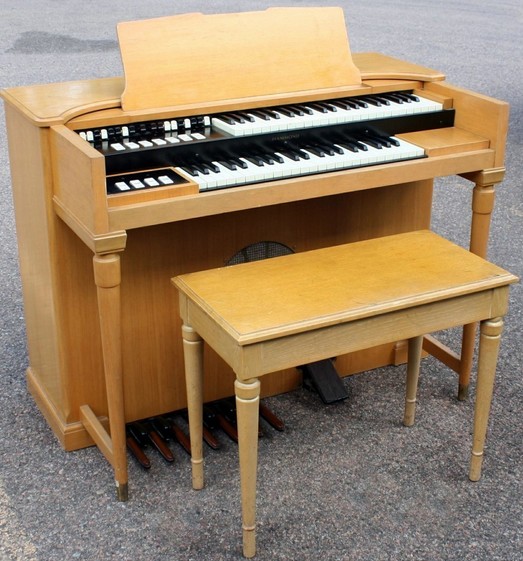
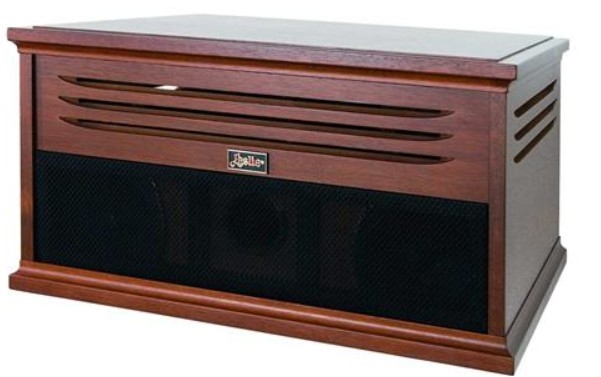
Mike was a very short, wiry guy with, we were to discover, a sharp and incisive sense of humor and a no-nonsense way of looking at the world that was something quite different from the rest of us dreamers. While not the most creative of keyboards players, he was absolutely rock solid when it came to playing what we’d rehearsed, and in fact I do not recall a single occasion, ever, when he made a mistake during a gig — I mean, he never once played a dud note over the next decade or so that we played together. And he was a brilliant organist: there was not a single organ part, from Deep Purple’s John Lord to Uriah Heep’s Ken Hensley to Santana’s Greg Rolie that Mike couldn’t play, note-perfect. In that regard, he was a monster.
Way back, I’d learned to play Booker T’s Time Is Tight, and so on this day, without any preamble, I launched into the bass intro. To my delighted astonishment, Mike just started playing the organ part, perfectly, and Rob, who’d not been expecting anything like this, picked up the drum part. Then we stopped to let Kevin figure out the lead solo — he knew the song, but he’d just never played it before — and of course within a few minutes he had it down pat. So we played the whole song from beginning to end, then played it again, and it too became a permanent part of our repertoire.
There were a couple of songs I remembered from the Margate gig, and wonderfully, Mike knew them too. So Gershwin’s Summertime and Nat King Cole’s Fascination came up and were dealt with, with almost contemptuous ease.
We knew after that very first practice that Mike was going to be a keeper, and even though I got some astonished looks from the others, at the end of the practice I said, “So Mike… do you wanna join us?” He thought for a moment, then nodded. And that was that. We had a keyboards player.
Which led us to the next issue. Up until now, we’d been able to carry all the band’s gear in each of our cars (Knob borrowed his mother’s Passat station wagon to carry his drum kit because his own car was a Daimler 250 2-seater). But with Mike’s Hammond and Leslie speaker… he’d borrowed a small truck to get his gear over to my house for this first practice, but he wouldn’t be able to do that in the future.
Clearly, we were going to need a van… but how could we afford one? Well, we couldn’t; but fortunately, there would be a couple of months before we would get our next gig. Then I saw the answer to our dreams. Brazil had started making cheap copies of the early-1950s VW panel vans, and VW South Africa saw the success of that business and started importing them, and selling them at a ridiculously low price. It didn’t matter because none of us could afford the deposit, and as students / low-paid workers, none of us had a credit rating that would enable us to finance the thing.
My father had been listening to us play — he could hardly have not heard us without leaving the house and going far away — so one night I was talking to him about our troubles with the gear when he said, “You boys have been working really hard, and it’s a shame that you might not be able to get around to play at parties and such. So here’s what I’ll do: I’ll take care of the deposit for you, if you’ll handle the monthly payments. And after it’s paid off, you can just continue the payments until the deposit is repaid.”
Thus: Fred joined the band.
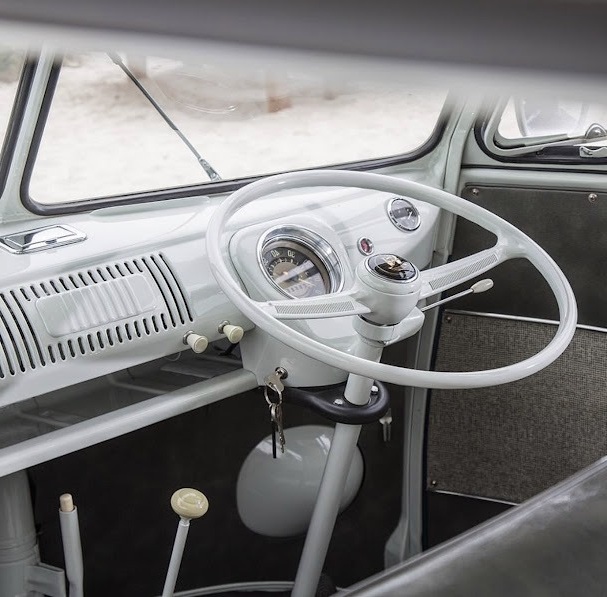
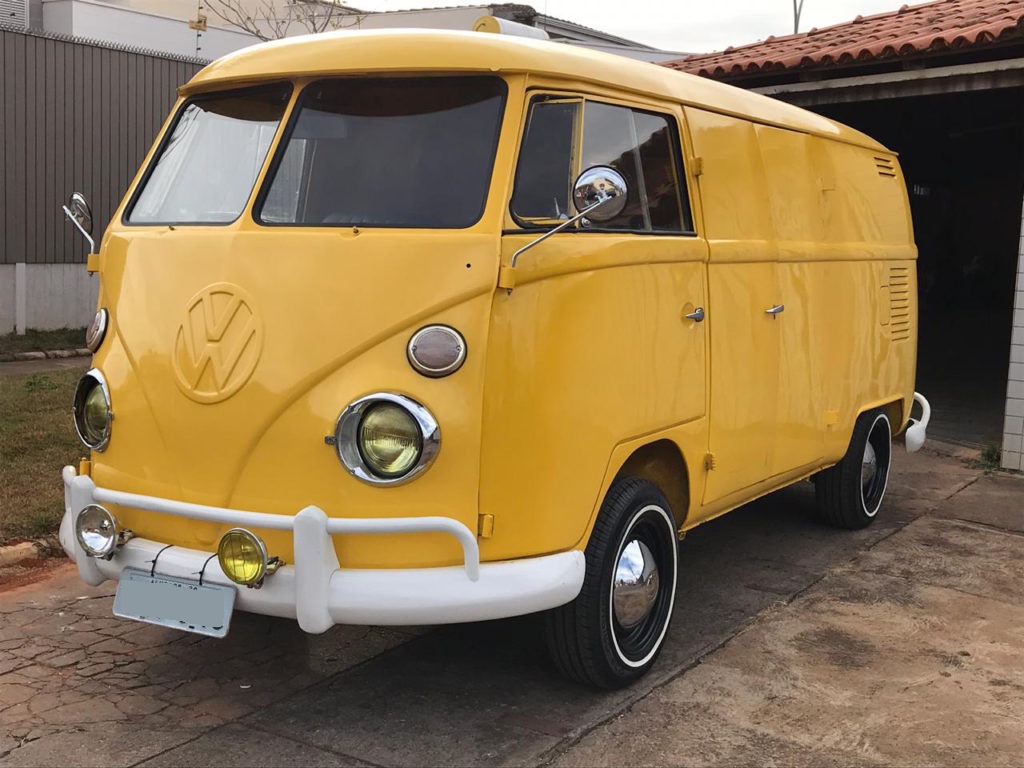 (not the actual Fred, but the color is correct and yes, there were swing-open back doors, sliding windows and a split windscreen)
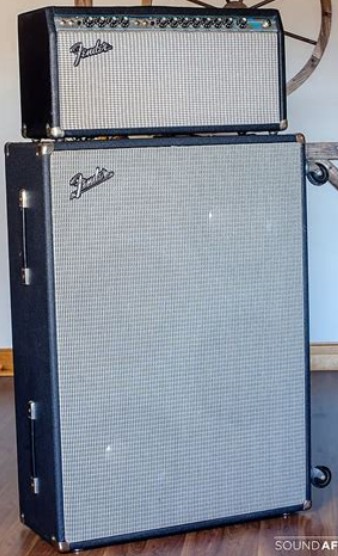
I think that it was at this time that both Donat and Kevin decided to get bigger amps, and no doubt spoiled by Fred’s capacious interior, they got the same amp: the huge Fender Dual Showman stack, which stood almost head-high and contained four giant 15″ speakers:
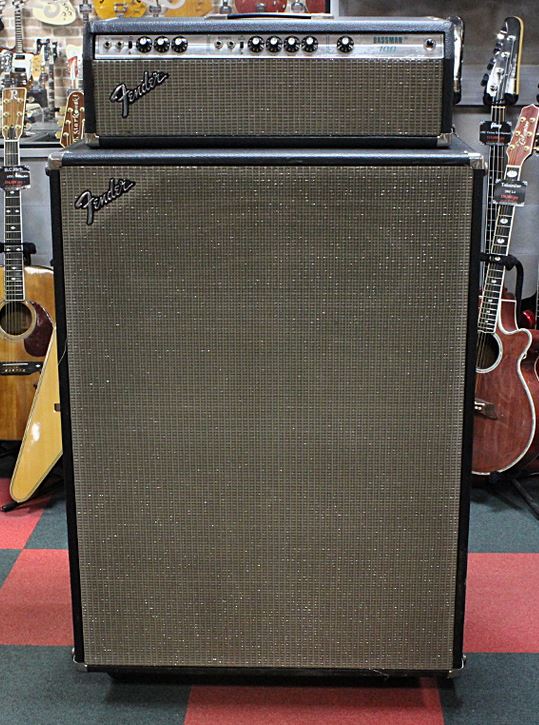
I too had splurged, and got a Fender Bassman 100 stack, which was almost as big, containing as it did four 12″ speakers in its cab:
Now we could play loud, baby. And we did.
But the greatest change came when Kevin and Don started complaining about my bass sound — not sharply, but like after practice when we were having our customary hamburger at the local steakhouse, one or the other would sigh and say things like “I just wish your bass sound was more… punchy.” Then one day I got sick of it all, and said, “Okay, what bass, exactly, do you think would make my sound better? I already have the right amp.” There was a long pause, then from Donat: “The Rickenbacker, like Chris Squire plays.” I thought about it for a moment, then said, “Okay; I’ll see if I can get one. Just don’t expect me to play as well as Chris Squire.”
When I went into Bothners and asked Eds Boyle about a Rickenbacker, he just grinned. “You’re not going to believe it, Kims… one just came in. I haven’t even taken it out of its packing case yet.”
And thus did I get — at huge expense that I couldn’t really afford — my next (and last) bass guitar:
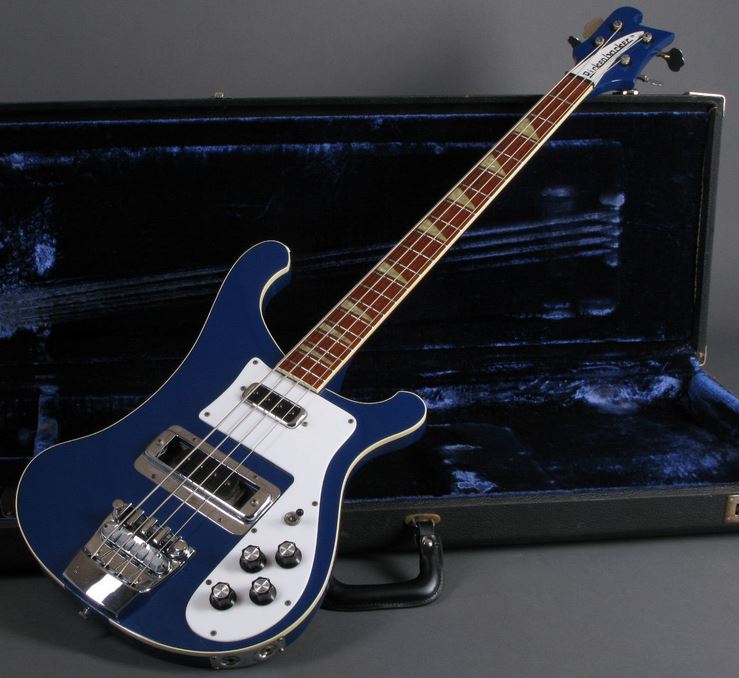
(Okay, Kim, you may ask: how expensive was it? answer: it cost
only a couple hundred dollars less than Fred.)
But the change the Rick brought to the band’s sound was immediate and life-changing. Finally, we were starting to get our own unique sound.
With all that taken care of, we started to expand our repertoire, big time, and were no longer constrained by the lack of a keyboard player. First came Santana, and most of the songs off his Abraxus album — a permanent fixture was the exquisite Samba Pa Ti — and then we taught Mike Soul Sacrifice — minus the extended drum solo — and to our amazement, he nailed the organ part after only a few repeats. So we could finally play Soul Sacrifice in the manner it deserved.
But without any gigs on the horizon, we concentrated on playing music that would extend us as musicians, and so along came songs like Camel’s Six Ate and Uriah Heep’s July Morning. (We were never to play the latter at any gig because it was just not a “gig” song: too many stops and starts, too many tempo changes — but that never stopped us from learning it, or playing it for months thereafter.)
Side note: I don’t think that people nowadays can tell how difficult it was to gather material back then. There was no YouTube, no Spotify, no kind of streaming music whatsoever. Basically, what we (and I think other bands) used to do was either buy the 7″ single record or tape the song off the radio, if you could get to it in time, and then we’d pass the tape or record around the band for each member to learn their specific parts: a long and time-consuming effort. (Remember too that back then, even cassette tapes were A New Thing — my old Fiat had had an 8-track cassette installed, for example.)
Paradoxically, I quietly started to steer the band towards gig songs that wouldn’t tax Cliff’s voice: stuff like Hedgehoppers Anonymous’s Hey and Stevie Wonder’s Isn’t She Lovely (suitably lowered in key, of course).
Still: no gigs.
One day I was in Bothners — trying hard not to spend any more money that I didn’t have — and when I complained to Eds about the no-gig thing, he looked shocked. “Have you spoken to an agent yet? No? Why the hell not?” and he produced a card with “Morris Fresco (The Don King Organization)” printed on it.
So the telephone wires hummed, and we arranged for Morris to come and listen to us. For the occasion, as my parents had taken off for a long weekend’s vacation, we cleared out the living room and set up on the one side, playing towards the couch we’d left at the other for Morris to sit on. And when he arrived, we launched into what we thought was a good sample of our repertoire.
And we blew it.
Not because of our playing, mind you: everything we played, we played flawlessly despite our considerable nervousness. But instead of playing the kind of songs that would get us gigs — the dance tunes, the pop songs, the ones people would recognize, we were too good for that, oh yes we were — we played all the heavy stuff, the complex songs because, you see, we wanted to impress this Great Big Important Agent and dazzle him with our musical ability.
Had we been auditioning for a club gig, mind you, this might have been a decent approach. But none of the stuff we played would have worked at a wedding reception, or office party, or any kind of mainstream occasion.
So at the end of it all, Morris complimented us on our sound and our ability, and took his leave, saying he’d be in touch.
I don’t think we ever got a single gig from the Don King Organization.
But we didn’t know that at the time, of course, so we carried on rehearsing. And now I think it’s time for everyone to see this Pussyfoot Show Band:
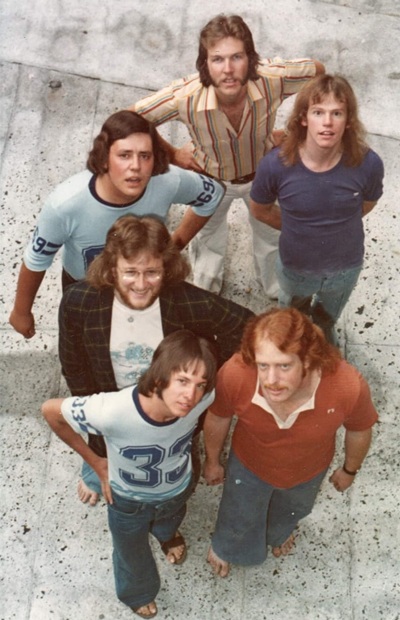
(from top left, clockwise: Cliff, Knob, Donat, Kevin,
Mike and Kim)
Yeah, we didn’t look much like a rock band, but at least we sounded like one. And our next gig was not at some party or other: it was a residency, in a restaurant.
– 0 –
Today’s Earworm
The Pig plays the blues, with the incomparable Mick Abrahams on guitar.
Today’s Earworm
Memoirs Of A Busker — Chapter 5
Chapter 5: Putting It All Together
As I’d managed to fail my first two freshman years at Wits University, utterly and completely without a single credit to my name, my long-suffering father decided (with some justification) that he was done paying for my tuition, and if I wanted to stay on and try again, I’d have to pay my own way. That, or subject myself to my military conscription, which I’d thus far escaped with a student exemption. The South African Army? No frigging way. So I launched myself into a series of dead-end minimum-wage jobs, ending up working at three or four simultaneously. These, while earning me quite a substantial income, would leave me absolutely no time to devote to my studies, even if I wanted to study anything (which I didn’t). So instead of beating my unwilling head against the wall of university, I took the low road instead and enrolled myself at the Johannesburg Teachers’ Training College. My First from St. John’s College was an easy qualification to the TTC, but I had no intention of becoming a teacher, so I attended only as many courses and seminars to keep me from being expelled. Most days, when I wasn’t working, I used to go back onto the Wits campus and hang out with my buddies.
If not there, I’d lock myself in my bedroom and practice on the bass. I didn’t bother with scales or anything like that. Instead, I set out to learn songs — i.e. to be able to play as many rock songs of the day that I could with some confidence — by listening to music over and over, identifying the bass part and getting it down, note-perfect. (It’s not as easy as it sounds; even though I was quite accustomed to close listening from a classical music perspective, rock music was another story altogether — especially when a guitar and bass were playing the riffs together.) But I stuck to it, starting with the simplest ones (50s rock ‘n roll) and rolling upwards into music like that of Credence Clearwater Revival and Status Quo, just as I had when learning to play guitar back at the College. By the middle of the year I’d managed to put together a playlist of about fifty songs. None of them were current hits, by the way, because who knew if I’d ever play any of them?
Then one day on campus I happened to meet a guy named Robbie Kallenbach; a quiet, very gentle man of immense musical talent, he was doing a business degree while doing what he really loved: composing movie scores. A few weeks later, he asked me to give him a lift back to his apartment because his car had broken down, and I had a chance to listen to his latest work, which had been accepted for some movie (since forgotten). Then as I was leaving, he said, “I forgot. Are you still interested in putting a band together? Yes? Well, there’s a guy in one of my classes who wants to do the same. He’s a drummer, and his buddy is a guitarist. Let’s meet up soon and I’ll make the introductions.” And thus I was introduced to Rob (or “Knob”, as we nicknamed him).
At the time, I was still living at home in my parents’ large house in Johannesburg’s eastern suburbs. One feature of the house was that there was a thatched cottage beside the pool — actually designed as a party room, there was a bar counter inside, and lots of room for dancing. My mom was using it for her yoga classes, so it was the matter of a moment for me to commandeer the place for band practices, provided that at the end, all the gear would be packed away and the dozen or so mats restored to their original places.
So that fateful Sunday arrived for our first practice. Knob arrived with his guitarist buddy Don (“Donat”, spoken as though with a cleft palate) and their gear: a set of British Premier drums for Knob, and a Gibson Les Paul guitar and some strange Yamaha amp for Donat. And then there was a surprise guest: a chubby redheaded American named Kevin, together with his ’63 Fender Stratocaster and a Fender Twin Reverb amp.
“I just brought Kevin along for the jam,” Donat explained. “He’s already playing with another band, but I thought it might be fun.”
We’re going to be spending a lot of time with these maniacs, so they each deserve a few words.
Donat was a student at the Tech, en route to his electrical engineering degree. At the time , he bore an uncanny resemblance to Steve Howe from Yes (and still does, by the way). He was, I soon discovered, a filthy perfectionist when it came to putting songs together, and any mistake, no matter how small, resulted in him stopping playing and raising his hand up in the air. It pissed us all off — me most of all — but in fact, it was Don’s insistence on perfection that made the band better than any garage band. He was not a good lead guitarist, but an excellent rhythm guitarist and his chops were both incisive and wonderfully clear.
Knob was not one of those powerhouse drummers, because he’d learned and practiced drums in his parents’ townhouse and thus never played loudly lest he irritated the neighbors. But what he lacked in volume he made up for in technique: he was one of the most competent drummers around, playing literally any kind of music whether rock, jazz or ballads. He also had an excellent baritone voice, along with an astonishing falsetto which reached higher even than mine.
Kevin was a shy, self-effacing man of extraordinary talent. An American by birth, he spoke with a soft Detroit accent, even having lived in South Africa for over a dozen years. I was to learn that there was absolutely no guitar part he couldn’t play — Clapton, Beck, Page, Hendrix… it didn’t matter, Kevin nailed everything thrown his way with ease, on a ’62 Fender Strat. And he had a very pleasant tenor voice, much suited to ballads and softer rock songs, and he could harmonize any part. Alone among us, he had an actual job as a lab technician at a hematology business.
Of the four of us, I was by far the worst musician. Fuck. Still, I managed to keep it together by using my playlist as a basis for the jam, when we weren’t doing slow blues or Chuck Berry. So I didn’t sound as bad as I really was.
What happened, by the end of this practice, was that we discovered that we simply grooved. In some songs, it sounded as thought we’d been playing as a band for a long time, so well did we mesh together.
And when we finally decided to end, I did the first thing I could to stamp some kind of authority over the band.
“Kevin, you’re going to have to quit that other band,” I said firmly. There was a stunned silence from the others, and then Kevin said, “I don’t know if I can do that.”
“I don’t care,” I said. “This band is going to sound better than the other one ever will, and it’s going to get there quickly.” Considering that I’d never before heard Kevin’s band play, it was something of a leap. Kevin looked around at the other two, and to my surprise, both nodded in agreement.
At our next practice the following week, I waited nervously for the others to show up, and to my everlasting relief, Kevin came in with a sheepish grin. “I told them I was quitting,” he said, and blushed. So we jammed again, this time playing a few songs that we didn’t know all that well, or that only one or two of us knew, and I soon realized that I had a lot to do just to keep up with these guys.
Here we go again, Kim.
But to my surprise, the others didn’t treat me like Mike du Preez and Dick the dick had. Rather, when I tried and failed to master a bass line, I’d say simply, “Sorry, guys; I’m going to have to work on that one by myself. Can we try it again at the next practice?” To my amazement, they’d all agree, and we’d move on. At some point, we ran dry of songs to play, so I decided to grab the bull by the horns.
Treating the lack of material as a fait accompli, I said, “We need a repertoire, because we’ll never get work playing the stuff we’ve just been jamming.” And then I played my “I’ve played a pro gig before and you guys haven’t” card: “When I was in Margate, we drew from a list of over a hundred songs. We’re going to need at least that many if we’re going to cut it as a gig band that people will want to hire.”
So we sat around a notepad, and each of us took turns in suggesting songs we’d like to play. I of course drew extensively from my old playlist, which was fine because while the songs were “old”, we were still in the early 70s so they weren’t that old: Rolling Stones, Credence, Kinks, and other guitar bands of that ilk. Those songs were also proven crowd-pleasers (e.g. Honky Tonk Woman etc.), so there was no problem there.
Then the others started in on the songs they’d like to play. Whoa. Curved Air? Wishbone Ash? Genesis? Yes? Led Zeppelin? Doobie Brothers? Lynyrd Skynyrd?
I was dead meat.
A lot of these songs, though, could not be played by our fledgling band because we didn’t have a keyboards player. This shortcoming, it turned out, would soon be solved, albeit at a price.
Knob and Donat both suggested that we get a lead vocalist. I was a little against this, because I thought that between the four of us, we had enough to carry most songs, especially those requiring lots of harmonies. But they were insistent: they knew a guy who had a fantastic voice, and they were going to invite him to join us at our next practice regardless of what I said. Kevin, of course, went along with their idea, so I begrudgingly agreed.
Enter Clifford (Cliff).
Oh dear. My problem was that I took an immediate dislike to Cliff — I don’t know why, but his whole attitude rubbed me the wrong way. But there was no argument: he did have a good voice, and it did improve the band’s sound. So we started to put a repertoire together, and it was pretty good. (See below for examples).
One song, by the way, caused us endless problems: Zeppelin’s What Is And What Should Never Be (off LZ II; use it as background to what follows). Fortunately, John Paul Jones’s bass guitar part wasn’t too difficult (unlike almost all his others), so I managed to battle my way through this. Of course, Kevin nailed the lead guitar solos (as he did every lead solo, regardless of whose), and Knob ditto with Bonham’s thunderous drum part. Cliff sort-of managed Plant’s vocals, but after we’d gone to all the trouble of learning the thing and eventually being able to play it to Don’s satisfaction, I brought it all to a screaming halt by saying: “I love the song and it sounds great. But let’s face it: it’s not a song we could ever play at a gig.” (And we never did.)
But we all agreed, though, that just because there were songs that we might never play, we should play them anyway because learning and playing them would make us better musicians.
There were a couple of issues, though, that still had to be resolved. Firstly, Don was playing on a borrowed amp which had been lent to him by a couple of his buddies — twin brothers, actually — who’d lent it to him without reservation except for one: his band would have to perform at their twenty-first birthday party, which was due to take place in a scant couple of months’ time. So if we weren’t to make complete fools of ourselves, we’d need to be able to play at least thirty songs — and I was insisting on forty — because we had to treat this gig as though it was a paying gig. On that issue I was absolutely adamant, but fortunately everyone fell in with this so we set about doing that — I think we ended up with over two dozen songs, which sucked, but when we did the gig I lied like a maniac and announced over the PA: “I know we’ve already played this one, but we’ve been asked to do it again.” (I think we did the Doobie Brothers’ Listen To The Music about four times, come to think of it.) One song which went down really well, by the way, was Hendrix’s Fire, in which Donat did a very creditable rendition of Jimi’s voice — and his Mick Jagger’s Honky Tonk Woman went down equally well.
There was a second issue which we needed to address really quickly. In the previous paragraph I made mention of a “PA” system, which is not strictly true because we had no PA system, and had to plug our microphones into the guitar amps. This proved hopelessly inadequate and we ended up screaming the vocals. We were only saved by the fact that the 21st party took place at the twins’ parents’ house and we couldn’t play that loudly anyway. But the screaming took its toll on us: we were all completely hoarse by the end of the gig; but to my horror, the worst casualty of all was Cliff’s voice, which had completely vanished by the end of the second set (of the five we ended up playing).
Side note: the old Hofner Beatle bass was turning out to be a real problem.
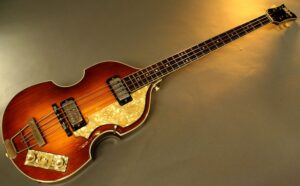
Its neck had become bowed to the point where it was completely unplayable above the sixth fret, and I was in constant fear of it breaking completely. I needed to get a new bass guitar, and quickly.
In the interim, I should mention that I’d finally found a decent full-time job as a computer operator at a Great Big Insurance Company, a job which not only paid well but which included many, many hours of overtime — so much so that at one point I was actually earning as much as my father — and this money was now going to help the band out, big time.
Anyway, I went to one of the few music stores that catered to professional musicians, Bothners Music in the downtown Carlton Center mall, and there I met Eddie (“Eds”) Boyle, who was not only a superb salesman but also the bassist for The Rising Sons, one of the country’s biggest name bands. (Keep Eds in mind, because he will feature a great deal, further on in this tale.)
I ended up with a new bass — a Fender Mustang:
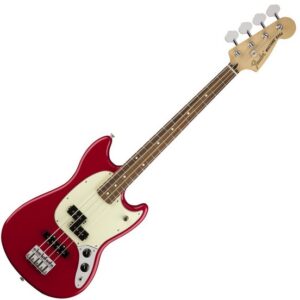
Like the Beatle bass, the Mustang didn’t have a full-size bass fretboard, but a ¾-scale one. (I was under the — mistaken — impression that my fingers were too short to handle a full-size bass, hence that choice. Also, it was the only one I could afford at the time.)
As a result of that trip to Bothner’s, the band also ended up with a PA system, or at least a PA amplifier, an 80-watt Dynacord Eminent II:
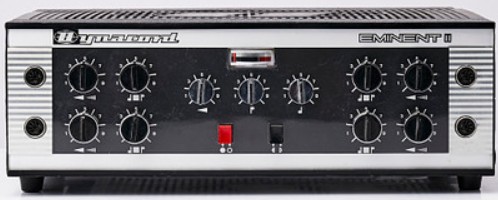
Like all German amps of the time, the Dynacord sounded wonderful: warm tones, with a splendid frequency response. Unfortunately, that 80-watt power amplifier would prove to be woefully inadequate for any large gig, as we were soon to find out. But we kept it for years, only finally replacing it many years later with a 2,000-watt amp (but that’s a story for a later date).
We couldn’t afford proper PA speakers, so we ended up buying eight cheap 50-watt speakers and building our own cabinets. (Actually, my father built the cabinets for us, but to our specifications.) For speaker cloth, we used some ghastly curtains from a thrift store.
Anyway, we carried on rehearsing, twice or three times a week, building up that repertoire, but we kept banging our heads against a wall — that wall being that we didn’t have a keyboards player, which not only restricted the kind of songs we could play, but also the type of gig we could play as well: you can’t play a wedding reception with a repertoire that includes Sweet Home Alabama but doesn’t include waltz tunes and songs of the kind I played with the Trio in Margate.
That didn’t matter all that much for our next gig, which was arranged by Knob. His old high school was putting on a fundraiser in the form of a dance marathon — the kind where the kids are “sponsored” by the number of hours that they can dance. This was to be our first actual paying gig, so we approached it with great anticipation; also with great trepidation because we learned that the actual marathon would last at least eight hours and we had, at best, enough material for three. This gave us all the incentive we needed to practice still harder: I think that by then we were doing three practices a week for the next three months. We ended up with over fifty songs, a number which would have been a lot greater, except did I mention? Donat was a filthy perfectionist and his attitude had spread to Knob and Kevin as well.
Well, it would all have to do; so on the appointed Saturday morning, off we went to that high school’s auditorium.
– 0 –
Memoirs Of A Busker — Chapter 4
Chapter Four: How A Band Works
In case it hasn’t been clear in this narrative so far: I had a dream and an ambition, but not a single clue how to make that happen. To call me “clueless” would imply that I had even the faintest idea of where I could find a clue, or any inkling of a clue’s existence.
But when I discovered Shalima, the Palm Grove’s resident band that year, I started to get the picture.
Let me first, however, list the dramatis personae who comprised Shalima, because almost all of them would be important to me (pics courtesy of Max):
Pete The Drummer
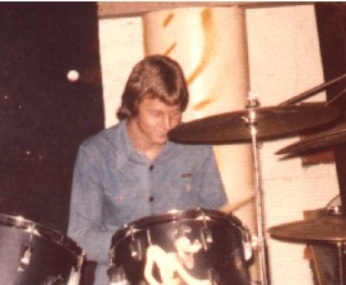
A rock-solid drummer who kept perfect tempo, and put down a lovely beat.
Richard The Bassist
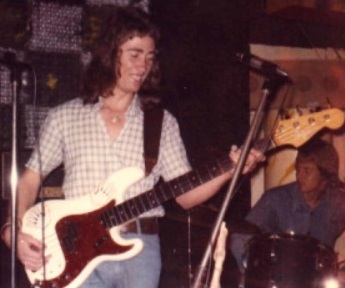
Richard was a wonderful bass player. Good grief, looking at the ease with which he played his Fender Jazz Precision bass, sometimes so inebriated that he could barely stand (to be explained later), I nearly quit on the spot.
Jeff The Lead Guitarist
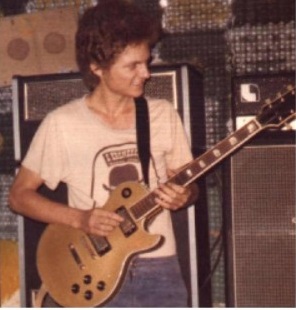
Jeff was just as good on lead guitar. It seemed like there was no guitar part he couldn’t play, note-perfect. If he had a fault, Jeff was shy and self-effacing, so much so that I think he would occasionally hold back a little with his lead solos – but when he did cut loose, it was an awesome experience.
Tommy Sean The Vocalist
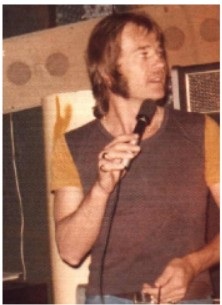
Tommy Sean (whose surname I include because it’ll be important later) had a powerful and very distinctive voice, but which he seemed to lose as the evening went on. Clearly, he hadn’t been vocally trained at all, because he’d wear his voice out fairly quickly. The immense quantities of beer he’d consume during the evening couldn’t have helped much, either.
Rory (“Max”) on keyboards
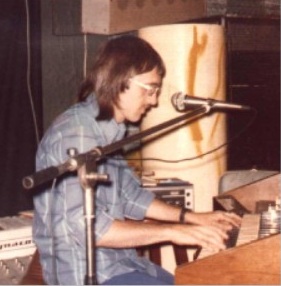
Finally, there was Max. If ever I’m asked, as I have often been, who most influenced my musical career, it would be Max — not so much for his considerable musical ability, but through the way he managed the band and the different personalities to keep them on track. Max had started out as Shalima’s bass player, but when Richard arrived on the scene he moved to keyboards.
Sheila (the pregnant book-reader, and Max’s wife) featured occasionally on keyboards and vocals.
Now, their music; and man, this bunch of Rhodesians could play. Of course, as with all club bands in South Africa at the time, their repertoire consisted of covers of hit records, and only hit records. They didn’t play any of their own stuff (if indeed they had any), but what struck me the most was that every song sounded precisely like the original artist’s recording, with only the occasional variance being of course the vocal sound.
Incidentally, one of the first songs I heard them play was the 3 Degrees hit When Will I see You Again? and the (very) pregnant Sheila had a voice of lovely clarity, absolutely the equivalent of the song’s original lead singer. That was impressive by itself; but what stunned me was that Shalima’s backing harmony vocals mimicked the soprano voices of the 3 Degrees perfectly.
I told you earlier that I had no idea, and in this case I had no idea that male singers could sing female voices, in a rock context. Of course I knew about falsetto – I could sing pretty much any female vocal part myself that way – but I’d never known it could be used in performance, and especially in rock music. Like I said: no clue.
Anyway, the band played the first set, each song impressing me more than the previous one, and then they took a break, going over to sit at a table clearly reserved for their use on the side of the dance floor. And then they each proceeded to drink three beers during the next fifteen minutes.
Back on stage, they continued on with the performance, and more drinks during the breaks, and so on.
I wanted to talk to them, but I felt somewhat intimidated because, let’s be honest, I wasn’t musician enough to walk on stage with them let alone play what they did. Finally, though, as the evening started to wind down at about midnight and I’d had a couple beers myself, I plucked up some courage and walked over to Richard, having prepared a question about his amp and guitar as a conversation-starter.
He was polite but a little diffident, but when he asked me what had brought me to Margate and I told him, his attitude changed completely. “You’re in Mike du Preez’s band up in the hotel? Wow!” Clearly, I wasn’t just some fan-boy or drunkard off the street; I was a musician. “Come and meet the rest of the guys,” he said, and pulled me over to the band’s table.
And thus started a relationship which was to last years, and which helped me get into professional rock music more than just about anything else.
I learned so much just from watching these guys. From a playing perspective, they were consummate professionals: never late to get on stage, always playing the music most guaranteed to fill the dance floor, no messing around between songs, in fact they had none of the bad habits that bedevil “garage bands”, and I was extremely impressed.
Also, Max was the band’s leader and driving force: no arguments on stage, no nonsense of any kind: his decisions were policy, and the band had to fit in. As a keyboards player, he was more than competent, but considering that keyboards were essentially his second instrument, it should be known that he never held the band back, musically speaking. (That’s not always the case, by the way, as you will see later in this narrative.) Unsurprisingly, he ended up being a piano teacher many years later.
Over the next few weeks, I learned from these guys how to play in a band — and more importantly, how a band worked: not just the playing, but the management and attitudes.
In the first place, I was only nineteen, but all the others were in their thirties (except Jeff, who was a little younger), and they’d already been playing either professionally or semi-pro for over a decade. I had no idea that one could do this. I mean, I knew about other famous South African bands who’d been around for a while (the Staccatos, the Rising Sons, the Blue Jeans, Four Jacks and a Jill… the list was long); but while they’d been around for years, they’d all had top 10 records on the South African hit parade, which to me justified their longevity. Yet here was Shalima, of whom I knew nothing, and they’d been playing music as a full-time job in club after club, year after year.
You could have a career in rock music without having a record contract or hit record.
This made all the difference to me, because I’d always thought that a career in rock music required a hit record — and I also knew that the number of hit records (and the bands that played them) were only the top 2% of the bands. (As with all things, whether sports, music or any activity, only a very few end up being truly successful.)
So one didn’t have to be a rock star to make a living. You only had to be as good as, well, Shalima. And all you had to do was get good enough to play on the club circuit. Once again, as a teenager I’d been woefully ignorant of the club scene — thank you, boarding school — but listening to the Shalima guys talk, I realized that there were lots of opportunities around, far more than I’d ever imagined.
Then, a brief splash of cold water.
I mentioned to the others in the Trio how much I liked Shalima, how impressed I was with their musicianship, why I’d never heard of them before, and why they hadn’t played in Johannesburg. Dick the dick scoffed. “They’re what I’d call a good gig band,” he said. “Maybe high school dances, weddings, that kind of thing. But in a Joburg club? No way.” And to my amazement, Mike du Preez nodded in agreement.
I didn’t believe them. So the next time I was down in the Grove, I asked Max why they hadn’t played in Johannesburg. “We’re not good enough to play Joburg,” he said bluntly.
Bloody hell. Clearly, there was more work to be done if I was going to make a go of being a pro.
At this point, some two weeks after I’d started playing in the Trio, I started to get better on the bass. No longer did I have to play “find the note” or search my memory for what song it was; it all started to become a little easier, I stopped approaching each night with something akin to dread, and I actually started to enjoy myself. Paradoxically, as I relaxed the whole thing came more easily.
But that “not good enough to play in Johannesburg” warning had stuck; so I started to practice, really practice on the old Hofner Beatle bass. One day I decided to teach myself how to play what’s known as a “walking” bass line, whereby the notes are played four to a bar, but “walking” up and down the scale. (Ah, so this was why we had to practice scales: now it all made sense.) It took me more than a few days, because of course you have to learn the scales for each of the keys in the key signature (A, A-flat, A-sharp, B, B-flat etc. all the way up to G. And then of course the minor keys thereof.) But I stuck to it, concentrating especially on the more common keys the Trio was playing, and eventually I could play the runs with some confidence. Then I taught myself the classic rock ‘n roll bass riffs — the Chuck Berry / Albert King / Bo Diddley standards — and with my newfound fluency, they came quite easily.
Then, kismet. One of the songs the Trio played was the old Art Blakey song Moanin’. (I invite y’all to listen to it now, as background for this part of the story.) I’d struggled mightily with this one in the beginning, because Jazz. But once I figured out the scales and walking thing, it became relatively easy to play. So one night I asked Mike, ever so casually, “How about Moanin’?” He nodded, and played the opening riff — then stared at me open-mouthed as I walked my way around the complex melody. Even Dick was impressed when I managed to scratch out a rudimentary bass solo — the first I’d ever played. For the first time since we’d opened, the Trio really hit a groove.
Unfortunately, this meant that Mike started to play ever-more difficult jazz standards, but to my amazement they weren’t all that difficult. I’d figured it out. That’s not to say I was any good at it, of course; but I was well on the way to becoming somewhat competent.
Musical interlude: One day I was sitting by myself at a cafe somewhere in “downtown” Margate (there was one main drag) drinking a cup of coffee when I happened to glance out the window and saw a familiar car being parked right next to the cafe. I knew the car, a Mini, because it belonged to my old schoolfriend and GROBS bandmate Gibby. So of course I raced outside, grabbed him and pulled him in for a cuppa. His family owned a seaside cottage in a little town south of Margate, and he had come up to do some grocery shopping, I think. Anyway, we spent the rest of the day together, and then I remembered that Sunday night at the Grove featured “talent” competitions — dancing on Sundays being streng verboten in ultra-Christian South Africa back then — and so I dragged Andy off to participate. I don’t think either of us cared about the competition, though: it was just a chance to play on stage together.
Anyway, I introduced him to the Shalima guys, but Max didn’t want to let us enter the competition — “Kim, you’re a pro and pros aren’t allowed” — but I prevailed upon him by saying that I didn’t want to compete; I just wanted to back Gibby and play on stage with him. So Max relented, and we played, I think, Santana’s Evil Ways with Gibby improvising the whole thing on Max’s Hammond organ, and doing an excellent job of it, too.
As it happened, he didn’t win the competition; it was won by a tiny, pint-sized girl named Ingrid (“Ingi”) who played a thunderous, virtuoso number on Pete’s drum kit, accompanied by the other Shalima guys. (We’ll hear more of Ingi later.)
Then one Saturday afternoon the Trio was playing an “extra” set in the dining room — I think it was a wedding reception, booked earlier in the year — when the good stuff happened.
The Shalima guys had never heard the Trio play because our bands’ set times always coincided. On this occasion, however, they had the afternoon off, they heard the music coming from the dining room and set out to investigate.
I’ve mentioned that our “stage” was really just an area between the small dance floor and kitchen entrance, separated from the latter by an indoor lattice covered with plastic ivy. So it was behind this screen where Max, Tommy Sean and Richard hid, to listen to us play.
As it happened, Mike had just dropped a piece of sheet music in front of me and asked, ever so casually, “Think you can busk your way through this?” (If memory serves, I think it was a pared-down version of Deep Purple.) So seeing that it was a really slow ballad, I just nodded and made sure that I had the key established and off we went. About halfway through the song I became aware of some half-whispered comments coming from behind the screen, and realized that the Shalima guys were there. Of course, this made me sweat, but somehow I made it through the piece.
Then Mike winked at me, and launched into the intro to Moanin’. (He has a special place in my heart for that little act of kindness.)
As it happened, that was the last song of the set, so I put the bass down and went to chat to my friends. The first to speak was Tommy.
“You can read music?” I nodded. Then came Richard.
“Kim, you’re a fucking lying liar.”
“Why?”
“You told us you couldn’t play the bass, you asshole.”
“Eh, you caught me on a good night.”
Then Max: “Was that the first time you’d ever played that slow song?”
“Yup. Mike likes to throw different stuff at me sometimes.”
“Cool.”
So my meager stock rose, at least with the guys I wanted to impress, and along with it, some small degree of self-esteem. I was still very conscious of my shortcomings, even though I’d come quite a long way in the past weeks.
I’d settled into the life of a professional musician very easily, especially so in the company of the Shalima guys. During the day we had nothing to do, so we screwed around, constantly: darts matches in pubs, putt-putt competitions, girls, and always, beer in monumental quantities. This was how we spent our lives together in Margate. As the wedding reception had been a “side gig”, the Trio had been paid separately from our hotel gig, and to my astonishment I ended up with about 200 Rands as my share. This was more money at one time than I’d seen in the past two years, so of course I blew it all on the aforesaid beer with the guys, not to mention ill-advised bets on the darts matches (Tommy was an absolute wizard, I discovered to my chagrin, and I only managed to get a little back playing putt-putt because I was if not the best, then at least close to being the best player of all of us).
Then one night, after the Trio and Shalima had finished for the night, Max and I went out for a drive in my Fiat, just to chat away about this and that. Then at about 3am I asked him, “Do you want to listen to some new music?” His response was immediate. “Of course I want to listen to new music. This is my job.” (Lesson learned: if you’re going to be a pro, you have to immerse yourself in music and treat it as part of your job.)
I played him a tape of Bad Company’s first album. Max listened to it without comment, then said, “Play that first song again.” Then: “Can I borrow this tape?”
The next night I went down to the Grove, and at the end of the song they were playing, Max said over the PA, “This next one’s for Kim,” and Shalima launched into a note-perfect cover of Can’t Get Enough. They’d learned it already. (Another lesson learned: you’ve gotta stay current, and be good enough to learn a new song quickly.)
One side note: just before Christmas, the Trio had a very brief hiatus. Dick the dick went back up to Johannesburg to get married (!), and returned the very next day with his new bride, a pleasant, mid-forties auburn-haired woman named Moira, and his freshly-high-school-graduated daughter. I took to Moira immediately — I had no idea what she saw in Dick — and as all four of us were now sharing that tiny cottage, I also took the opportunity to deflower his daughter one afternoon, because Musicians Are Scum. (Moira will feature briefly later on, hence my mention of her here.) Fortunately, I was able to keep away from the now-besotted daughter because the Trio was really busy, and when not playing I was always racing off to hang out with Shalima.
About two nights before the gig was coming to an end, I walked into the restaurant to find a stranger sitting with Mike and Dick. “Hey, Kim, this is Barry,” was the casual intro, “He’s a bassist I know from Johannesburg.”
So I invited him to play a couple songs with the Trio, because that’s the gentlemanly thing to do, of course; and Barry proceeded to play that old Hofner like it had never been played before. Very humbling.
At the end of the evening, I was just getting ready to leave when I heard Dick whisper to his wife: “If Mike had known Barry was available before we came down, he’d have fired Kim on the turn. Hell, if we’d known he was available after the first couple of weeks we’d have replaced Kim anyway.”
Even more humbling. Clearly, there was a cold-blooded side to professional music too.
At that point, though, it wasn’t that important, because the New Year came and with it, the end of the gig, my first gig — professional, even — as a bass player. As I said my sad goodbyes to that ragged bunch of Rhodesians, I made them promise to look me up should they ever get a club gig in Johannesburg or Pretoria.
Somehow, I was going to have to get it together when I got back to Johannesburg, and I had no idea how I was going to do that.
– 0 –