Kettle Woes

New Wife is a tea drinker.  Actually, to call her a “tea drinker” is akin to saying that her husband rather enjoys shooting guns, except that she drinks tea more often than I shoot a gun.  Hell, she almost drinks more cups of tea than the number of bullets I send downrange in a typical session.

As I’ve mentioned before, she drinks Yorkshire Gold tea, which is my fault because I turned her onto it when we were together in Britishland all those years ago, and she prefers it over all others.  Fortunately, the teabags are fine — unlike my children, she’s not a teapot fetishist, thank goodness — so we just buy the bags in bulk and all goes well.

Except for the kettle.  We use a cheap ($25) electric kettle with an auto cutoff switch rather than a stovetop-with-whistle type simply because it’s more convenient, in that when we go on a car trip, we take both kettle and teabags with us (plus my small Keurig, but that’s a story for another time).

(Aside:  I should divulge, en passant, that I make the tea in our house simply because I’ve been making tea since I was seven years old — I used to make it for my mother every day because she too was a guzzler rather than a sipper, and I enjoyed spoiling my Mom, just as I enjoy spoiling New Wife — and I make tea better than anyone I know, including Daughter and New Wife, whether using bags in a cup, or loose tea in a pot.  I also make it when guests come over, even if they know little or nothing about tea.)

Recently, however, the kettle started to misbehave:  not switching on consistently, leaking a tiny bit, not switching off automatically at the boil, and so on.  So off I went to Amazon to order a new kettle, which is where the problems started.  Here’s the executive summary.

All kettles, whether electric or stovetop, are made in China nowadays.  All are crap (probably for the aforesaid reason) in that they are quick to rust, break early and often, don’t work as advertised, and so on. Even the so-called “Japanese” kettles are made in China, and suck.  Ditto Le Creuselt, the snobby Frog brand, which is now made in China, and for $75, I would expect them to last forever and never break — except that according to the consumer comments, they’re as bad as the rest of them.  When you consider that a kettle has only ONE JOB — boiling water — this is obviously a matter of concern.

Well, I wasn’t going to be put about like this, so I decided to buy a high-quality stovetop kettle, made somewhere other than China.  Of course, the first place I looked (Williams-Sonoma) did indeed have a quality kettle not made in China, except that it costs $400, no doubt because it’s made in England[pause to recover from the fainting spell]

Never mind kettle, what was needed was Ketel One.

However, a glass of gin and a moment’s reflection provided me with the solution.

I have had the current (faulty) kettle now for just on two years.  Given the number of cups of tea that New Wife imbibes on a daily basis, an approximate calculation revealed that this El Cheapo kettle has boiled water around four thousand times — and is only now starting to show signs of age/use?  I’ve had guns that didn’t last that long, and they’re made of stainless steel and everything.

So I went back to Amazon and bought another kettle just like it (down to the color even), noting that the price ($25) was about the same as the first one I bought back then.

Yeah, it’s made in China, but they’re all made in China so there you go.  I should point out that if there were a kettle of comparable standard made in the U.S., I probably would have spent double the amount — and if we in America cannot make a simple and reliable electric kettle carrying a retail price of $50 because of greedy unions, burdensome government regulations, high operating costs, etc., then we deserve to have the Commies make all our stuff.

Let’s just hope the fucking thing doesn’t break on Day 3.  New Wife will be severely pissed at having to do without her Yorkshire Gold while I go and find something else (not made in China, FFS) to replace it.

Bad Choices, Lousy Consequences

It’s not often that a post falls into so many of my categories (see above), but this one certainly does:

Actions have consequences. So do inactions. Just ask Minnesota Governor Tim Walz.  Walz had asked the federal government for $500 million to help the city of Minneapolis rebuild after riots destroyed or damaged more than 1500 buildings. The government refused.

Excuse me for a moment…

Ooooh, the Schadenboner is great with this one — all the more so when we hear the sniffling and whining:

“The Governor is disappointed that the federal government declined his request for financial support,” Minnesota Gov. Tim Walz’s office said in a statement. “As we navigate one of the most difficult periods in our state’s history, we look for support from our federal government to help us through.”

…and the response:

In a statement, a FEMA rep confirmed the request had been denied, saying it was determined that “the impact to public infrastructure is within the capabilities of the local and state governments to recover from.”

Yup.  You fucking loony Lefties thought you could fuck around and play your little utopian games without consequences, and now you’re going to have to pay for the repairs yourselves.

And for those who think that this will cause Trump to lose Minnesota in November:  the people who are in the deepest shit now weren’t going to vote for Trump anyway, and the right-thinking people of Minnesota are probably just as pissed off with Walz and his cronies as everyone outside the state is.  In the cold-blooded electoral calculus, this will probably turn out to help Trump, not only in Minnesota but everywhere else.  The Left needs to have the effects of their lunacy and misgovernment rubbed in their noses good and hard, and most of all, publicly.

Wait till New York hands in its bill… if they have the nerve to do so, after this.

In the meantime, I’m going to have a couple-three quiet lunchtime cocktails of this stuff.

In Praise Of Eccentricity

In one of my favorite scenes in Bull Durham, Crash Davis upbraids rookie Nuke LaLouche for having filthy shower shoes along these lines:  “When you’re in the Majors, you can have dirty shower shoes and they’ll call you ‘eccentric’.  Until that time, you’re just a slob.”

Nuke’s not alone.  The awful Gwyneth Paltrow, for example, is often called “eccentric” by the fools in the entertainment media;  but what doesn’t show in the photographs is that because she hardly ever showers or uses deodorant, she has body odor that can stop a buffalo.  Ditto Johnny Depp, who seems to confuse his Jack Sparrow character with real life.  Apparently he seldom brushes his teeth,  which means the unfortunate female co-stars who have to kiss him in a love scene should demand danger pay because of his toxic bad breath.

They’re not eccentric;  they’re just slobs.

I love eccentric people — or to be precise, I love people who do eccentric things.  The above two don’t qualify, but the other night I watched a Brit TV series called A Stitch in Time, in which a “fashion historian” gets period clothing made for her by a team of seamstresses so that she can see what is must have been like to wear them.  But the seamstresses don’t make the clothing using modern technology or material;  they make them by hand, using only the tools and materials available at the time.  So, for example, cotton thread has to be run through wax so that it doesn’t fray or come apart, and buttons and such have to be manufactured to be as historically accurate as possible.  (New Wife was astonished that I would not only watch such a show, but enjoy it utterly;  but as I explained to her, I’m a historian, and seeing how clothing was made and worn is as interesting to me as seeing how contemporaneous weapons were made and used.  It’s all history, and I’m quite promiscuous about the topics thereof.)

And they were very ambitious projects.  Here are a couple of the dresses they made:

The Amalfini Portrait

La Chemise De La Reine

What I loved about the show was not just the garments, lovely though they were.  What got to me was that this group of seamstresses has spent literally decades learning how people made clothing in every period of history, not just contenting themselves with the tailoring skills, but learning all about the materials, the dyeing processes and the constraints which faced the tailors and seamstresses of the various eras.

And it wasn’t just them.  At one point, the head seamstress pulled a book off the (very full) shelf, and I caught the title of the book next door to it, entitled something like “Dressing Customs In The Restoration”.  I asked myself:  “Who would be driven to write a book like that?” And there were lots of books on the shelves, in similar vein.

That, my friends, is true eccentricity:  doing something that’s so different, so outside the modern idiom that perhaps only a few people in the whole world have done it, let alone mastered it.

Here’s another example of eccentricity:

A Victorian-obsessed graduate has snubbed the 9-5 life to pursue her dream of living like a 19th century duchess in a country mansion.
Jacqueline Brown, 25, from St. Louis City, Missouri always thought she’d take an office job after university, but decided to pursue her passion for the Victorian era after coming across the opportunity to be the live-in caretaker of a 19th century manor house.
The graphic design graduate, who estimates she has spent over $5,000 on period clothing in the last three years, whiles away her days showing guests around the 1853-built Oakland House and tending to the property’s upkeep.
And her time staying at the house has made Jacqueline re-think her ambitions and she now hopes to move to the home of the Victorians themselves — Britain — to work in a museum devoted to her favorite period in history.

Here she is:

Jacqueline said: ‘Living in a Victorian mansion was never my original career plan, but it has allowed me the opportunity to live my dream.
“I’ve been the caretaker here for just under two years and I don’t want to leave. I’m in love with everything about the Victorian era. The clothing is my favorite thing. I love the shape of the dresses. I love that women were feminine and I love the romance of courtship. I try and dress in a historical way whatever I’m doing and I almost never wear trousers.”

Is this not wonderful, this eccentricity?  Is she not magnificent?

I have often said that if it were possible, I’d like to live as a gentleman in the Edwardian era (1900-1913) in Britain or the U.S., because I like everything about the period:  the manners, the clothing, the way of life, the conservative outlook, everything.  I might not live that life openly — I don’t wear the clothing and so on — but in every other way, I am as obsessed with the period as young Jacqueline is about the Victorians.  I’m not eccentric, at least not truly eccentric.

Compared to the people above, I’m nothing.  But at least I am never a slob.


A Stitch In Time is on Amazon Prime.  And by the way, I always believed that the merchant’s wife in the first painting was pregnant.  She isn’t.  Watch the show to see why.

Temporary Living

A little while ago I talked about how I used to dream about living in various cities around the world, and realized that I wouldn’t do it even if I could, because freedom and guns and stuff.

But then I saw this photo essay about Amsterdam, and I have to admit I felt a tug.

You see, I’ve actually stayed in a hotel on this very canal — I have several pics similar (in subject matter, not in quality) to this one — and so maybe, just maybe, I could live here:  not forever, but for just a few months.  Long enough to submerge myself in the city’s ethos, not that long where I start to get twitchy about not being in America anymore.

Which got me to thinking.  In my dreams of what I’d do after winning the lottery, travel would of course be a definite;  and with sufficient funds, “travel” would mean an extended stay rather than just my normal five days.  (I’ve always thought that you can figure out a city, any city, in about three days.  Add another couple-three days, and you can pretty much say you’ve seen it all.)

But a longer stay — say, for three or four months — would enable you to really dive into the city, beyond visiting museums (a must-do in Amsterdam, by the way) and the usual “places of interest”.  Renting a decent apartment for that long a time, as opposed to just staying in a hotel, would mean having to get to know the city properly:  where to shop for food, which foods to buy, finding restaurants whose menus you love and are therefor worth multiple visits, the best places to buy clothes and shoes, and so on.  (Best would be to arrive with empty suitcases, to be filled during your stay.)  Finally (and this is important), a longer stay would require you to learn more of the home language than just which foods to order off a menu.

Having spent so much time over the years in London, I already know all these things about the place.  I have favorite restaurants, shopping destinations, places simply to walk around, and of course pubs.  That doesn’t mean I couldn’t find more of the same — London is amazing in that regard — but my deeper knowledge of London, I think, needs replicating in other cities around the world.

So a list of major cities to be visited in such a manner would include, in order:  Amsterdam, Vienna, Paris, Prague, Budapest, Milan, Barcelona and Lisbon.

Smaller cities (with a stay of only a month or so) would be, once again in order:  Porto, Dubrovnic, Graz, Bruges, Bratislava, Nuremberg, Brest, Bristol and Valetta.

Alternative suggestions (from experience) in Comments.

Rules

This article got me thinking — or rather, its title did:

Rules for a deconfinement dinner party

I thought about it for a while (about 30 seconds), and came up with Kim’s Rules For A Post-Lockdown Party:

  • invite a group of really good friends, or family members you get along with, or both
  • have an ocean of fine booze at the ready — in my case, Glen Morangie single malt;  Sipsmith gin;  champagne (for New Wife, her favorite tipple);  a case of Barefoot wines, in different colors;  two cases of decent beer;  a bottle or two of Tawny Port;  Richelieu brandy;  and whatever the guests want to drink (prearranged)
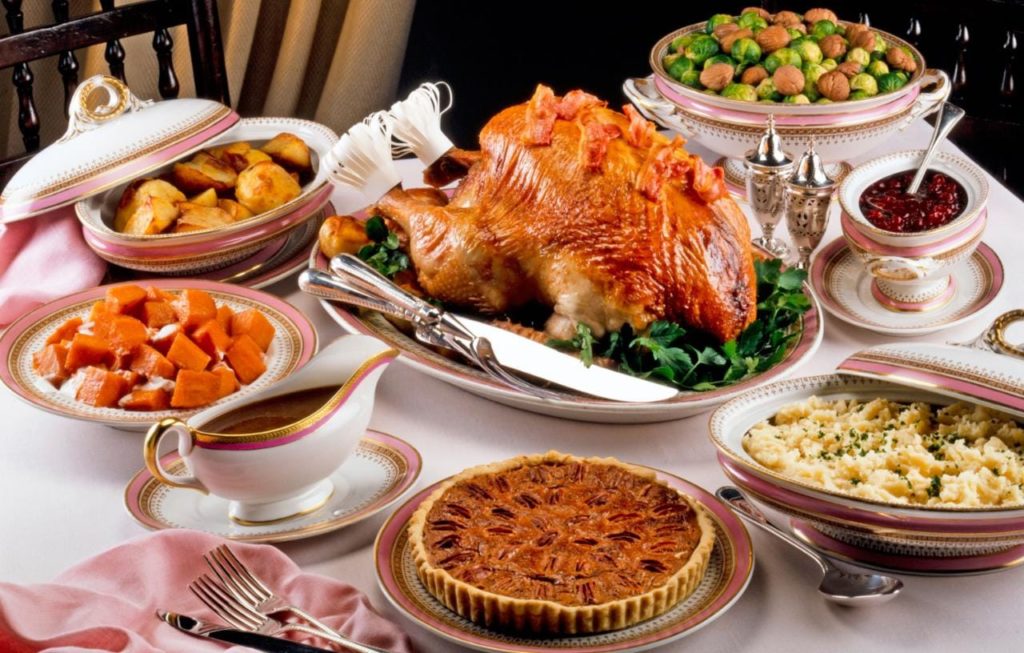
  • a huge rib roast (or leg of lamb), accompanied by roast potatoes and -parsnips, asparagus, and some other veg TBD by New WIfe, along with crusty French bread and farm butter;  with peach cobbler dessert and vanilla ice cream (dieters, vegans and teetotalers, needless to say, are persona non grata).

And that’s it. Good food, lots of booze and good company, all seated together round the dinner table at the proper social distance (12″-18″ apart), and have at it.

Of course, those are my ingredients for any decent dinner party, but let’s not get all bogged down with details.