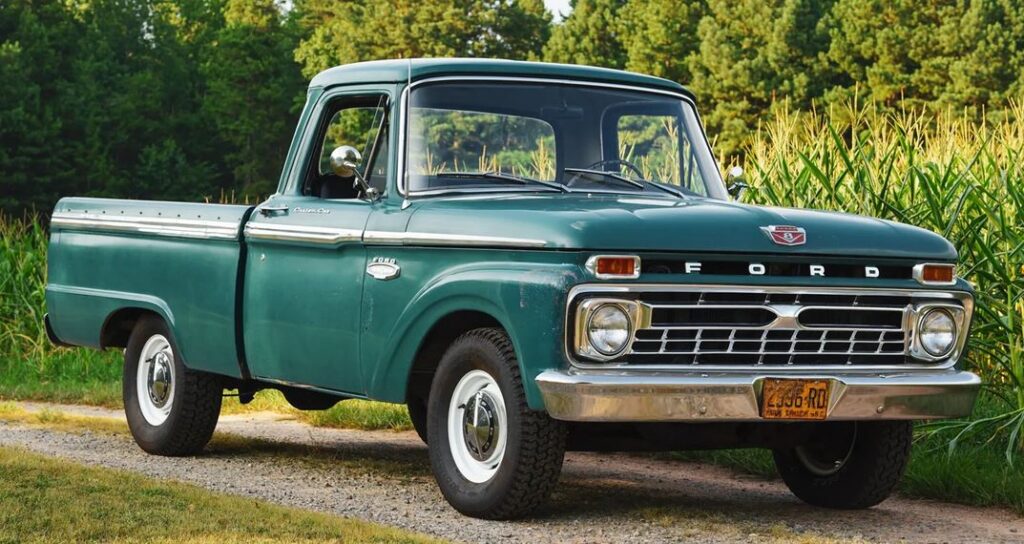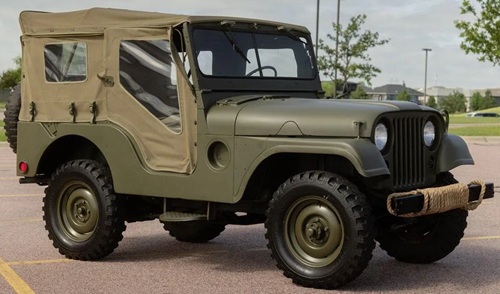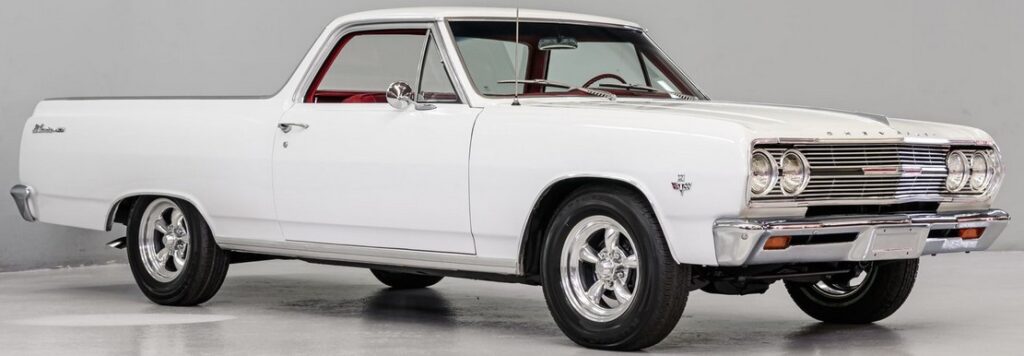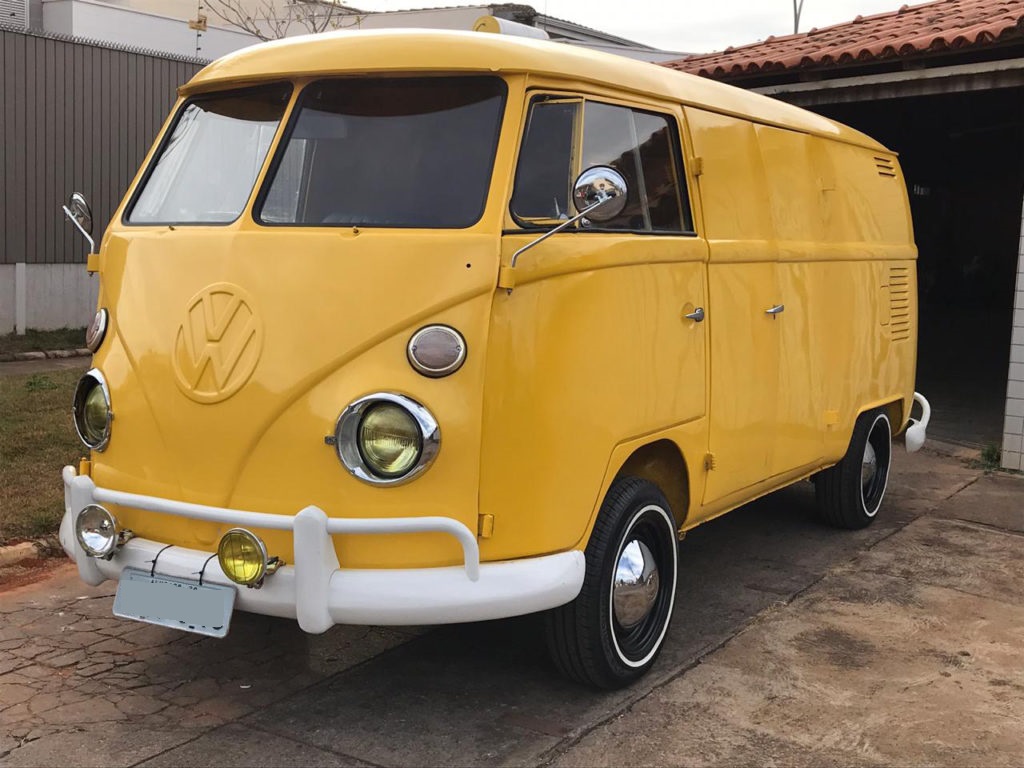
Sucker

I can’t be the only one who has this problem.

Every time Iain Tyrell fixes a car up and then takes it out for test drive, I want one.  Even when, as here, it’s a notoriously capricious and finicky Ferrari Berlinetta Boxer.

The worst thing the world’s most erudite car mechanic ever did to me, though, was rekindle my love for the Dino 246 GT, after fixing one up and taking it for a spin;  this, despite my having driven a 246 many years ago and being utterly unimpressed with its stiff clutch and clunky gearbox.  And when he talks about setting up the car’s door handle to perform, in his words, “like a hair-trigger on a rifle”, then I really, really want one.  Again.  Even if it would set one back close to or over a half-million dollars.  Pshaw.

The utter bastard even teaches one how to buy a Dino.


That one’s only a measly $375,000… a bargain — not — when the original 1969 Dino would have set you back $5,000 (or about $35,000 today.)

So yes, I am a complete and unashamed sucker when it comes to this stuff, and I blame Mr. Tyrrell completely.  Feel free to share your own inexplicable automotive crushes in Comments.

Another Crap List

I don’t know why I subject myself to these things — pure masochism, probably — but here’s yet another flawed list of stuff as per the Daily Mail:

The 50 greatest British cars of all time ranked by experts

Okay, let’s start with some definitions, specifically the meaning of “greatest”.  Are we talking most popular in terms of sales, most memorable, most iconic, best performance… which?  Any?  All of the above?

Let’s not even start talking about a list that includes models from Toyota and Nissan.  (Ford, however, gets a pass because Ford UK has often gone their own way, in terms of both design and performance not reflected in the US company’s models.)

Sheesh, I’m not even sure that Britain has ever produced as many as 50 cars that could be called great.  My list will be confined to 25.

Still, it’s no use criticizing someone else’s list without putting forward your own, with supporting arguments.

Here’s Kim’s List of Top 25 British Cars

#1:  Mini.  Can’t argue with this one.  It’s quintessentially British, punches way above its weight class, typified the spirit of an era and not even the Germans could mess it up when they bought the company, although they tried.

#2:  E-type Jaguar.  No argument here, either.  Easily one of the most beautiful cars ever designed, and performance that even today measures up to modern sports car standards.

#3:  Land Rover Series/Defender.  Quite possibly the most iconic British car, internationally.  Can still be found chugging around the Third World, in both private and military service.  Was the most popular UV until Toyota introduced their Land Cruiser.

#4:  Range Rover.  Created the entire class, and was the benchmark for the term “luxury sports-utility vehicle”.

So my top 4 is the same as the Mail’s top 4.  Here’s where our opinions start to diverge, however.

#5:  Aston Martin DB5.  Thanks to James Bond, to many people it’s more the quintessential British sports car than the E-type.

#6:  Rolls Royce Silver Ghost.  The first true luxury sedan, made to the most exacting standards, and a car fit for kings.  Before the First World War, after which kings became somewhat redundant (more’s the pity).

#7:  MG T-Series.  Made silly little British sports cars enormously popular in the U.S., starting during WWII when visiting American soldiers discovered the concept of “open-top fun driving”, and took the TA and later the TC models home with them.  They were an absolute mainstay of British exports during that period, and helped Britain’s war-ravaged economy immensely.

#8:  Jaguar XK120.  Another stalwart export for Britain, the XK120 was also wonderfully fast for its time, and it always amazed me that in a country known principally for its rain, so many cars were “drophead” soft top models.

#9:  SS-100.  The first of the breed, the 1930s-era Standard Swallow (later Jaguar) Model 100 was a snorting monster more suited for the then-new German autobahns than the pitiful British country lanes of the period.

#10:  Bentley Blower.  Competed in (and won many of) the early Le Mans 24-hour races in the 1930s, sometimes in 1-2 finishes.  (The DM‘s list puts this baddest-of-bad-boys at #29, which just shows you what idiots the judges are.)

Those are my Top 10.  Now for the nochschleppers.

11.  Jaguar MkII.  I’ve spoken about this car before, noting its outstanding good looks, luxury and wonderful performance — and all for a price well below what similar luxury cars demanded at the time.

#12:  Austin Seven.  Known as the “Seven” because its 747cc engine put out a princely seven horsepower.  It may surprise some people, but back in the 1920s, the pace of life was much slower and the power of seven horses was still quite marvelous.  It was Britain’s answer to Ford’s Model T, and Austin ended up selling just under three hundred thousand of them.

13.  Morgan Plus 4.  It was made for 70 (seventy!) years, almost unchanged since 1950, and should still be in production but it isn’t.

#14:  Ford Cortina.  An unassuming little saloon car, the lightweight Cortina became a common view in the road races of its time.  I’m showing the rear view of this Mark 1 because of its trademark rear light setup.

#15:  Lotus Seven / Caterham.  “Add lightness” was the brilliant designer Colin Chapman’s famous dictum, and nothing embodies this better than the bare-bones Seven.  And in their Caterham incarnation, they’re still being made and sold either as DIY kits or fully assembled.

#16:  Morris Minor.  Designed in 1948 by the same guy who designed the Mini (#1) and manufactured until 1971 (!), the Minor was the first British car to sell over a million units (actually, 1.6 million altogether), and for a very long time, defined “Britishness” in the minds of many.

#17:  Alvis Speed 25.  The wonderful Speed 25 doesn’t even appear on the DM‘s list, hence the “crap” epithet in the title.

#18:  Austin Healey 3000.  I’ve spoken before of my affection for this lovely beast, and it took a mighty effort of will not to put it in the top 5.

#19:  MGB GT.  Beloved by everyone who ever owned one, the GT was another of those quintessentially British sports cars.

#20:  AC Ace.  The Ace was in a class of its own:  a 120bhp engine covered by a token body and begrudgingly, a seat for the driver.  It still looked wonderful, and in addition to a 100+mph top speed (rare during the mid-1950s), it was the progenitor of Carroll Shelby’s mighty AC Cobra,

#21.  Ford Escort.  Like its predecessor the Cortina, the Escort became the 1970s (and -80s) solution to the need for a small, economical family car.  And like the Cortina, it became a mainstay of street- and even rally-car racing.  Unlike the Cortina, however, Ford UK sold over four million Escorts from 1967 till 2004.  And the Cosworth-powered RS2000 model was an absolute monster which could keep up with the Dino Ferrari of similar vintage in a light-to-light drag race.

#22:  Jaguar XJ6.  Like its earlier saloon predecessor the MkII, the XJ6 combined power, extreme luxury and excellent styling.

#23:  Triumph TR4.  Yes, another sports car.  Except that anyone who’s ever driven a TR4 will still tell you how great it was.

#24:  Rolls Royce Silver Cloud MkII.  Was there ever another car which described “class” and “luxury” better, and was there another car of such ilk ever so instantly recognizable?  Unlikely.

#25:  McLaren 720S.  Alert Readers will have noticed that I’ve given short shrift to modern British cars, and that’s because nowadays they all look and behave like cars from other countries.  [250,00-word rant on modern cars deleted]
However, the 720S deserves a spot on this — or any — list of great cars, because it was built with absolutely no compromises.  It had to be super-fast, super-light and (comparatively speaking) super-reliable.  Oh, and it had to be able to carry a passenger and handle lots of luggage as well.  So the legendary Gordon Murray produced this beast, which even put the driver’s seat in the center of the chassis (for the no-compromise driver experience), relegating the two passenger seats to the rear.  And until the arrival of the ridiculous (and vanity project) Bugatti Veyron several years later, the 720S was the fastest production car in the world.


I know, I know:  British cars are unreliable, there’s Lucas Electrical, they fall apart and they leak rainwater.  However, there’s one thing the Britishlanders can do as well or better than any other nation on Earth:  design wonderful cars.  (The execution of such design magnificence, however:  hello, British Leyland.)

But when it comes to creating something beautiful, astounding and occasionally world-beating, few nations can compete with (in Jeremy Clarkson’s memorable expression) some British guy named Trevor in a shed somewhere in Blackpool.

Here’s the TVR Coupe of 1958:


(TVR = “TreVoR” Wilkinson)

Ever wonder why almost all Formula 1 cars’ headquarters are based in Britishland?

‘Nuff said.

It’s Not Just Humans

Yeah, people in the Western world have been getting taller (and fatter) over the past century or so, mostly as a result of improved diet — or a fuller diet, so to speak — and as a result, the widthwise expansion is seen as A Very Bad Thing by the Perpetual Scolds who bedevil our society.

I don’t know whether this growth is a good thing or a bad thing — I mean, the skeletal look is deemed attractive by the fashion designers and homosexuals [some overlap]  and by the very rich, who despite looking like they’re starving, are of course in no danger thereof.

However, in doing some research for a future post, I came across this pic of Range Rovers, as introduced and what they look like today:

…and it triggered an immediate flashback to my earlier post on bloat, in which I took aim at pretty much everything.

Am I the only one who thinks that the Range Rover on the left is almost dainty — a word which could never be applied to any Range Rover of any generation — and subsequently more attractive?

I know, I know:  the modern Rover is drenched with wondrous technology and (mostly government-mandated) safety devices compared to its predecessor — and I leave it to you to decide how desirable / necessary those additions are — but seriously?

Have we humans — or, to be more specific, the target demographic for Range Rovers — got so much fatter that we now need a double-wide to accommodate our Lizzo-like asses?

The 4 and 5, Explained

Of course, it’s Iain Tyrrell talking about Aston Martin’s DB4 and DB5, and the differences thereof.  Here’s the DB4:

…and the DB5:

Along the way, you’ll also learn the difference between the SU and Weber carburetors, and why the early Sixties saw cars become more reliable and less prone to breakdown than their predecessors…

…and then there’s Iain having a Gentleman’s Moment as he gets a DB4’s engine to howl.

Delightful.

Time For Another

…All-American Road Trip.  (To see the actual East/West Coast route options, go here.)  As for the first trip, your choices are limited to cars — in this case, of the 1950s — and women of U.S. origin.

Your car / companion choices are from the following pairings (no swaps or substitutions):

1) 1950 Hudson Hornet
Gillian Anderson


2) 1957 Willys Overland
Jennifer Morrison


3) 1957 Chevrolet Cameo
Connie Britton


4) 1957 Studebaker Silver Hawk 
Mariska Hargitay


5) 1950 Willys Jeepster
Emma Stone


6) 1957 Ford T-Bird

Sarah Shahi


7) 1958 Chevrolet Impala
Winona Ryder


8) 1956 Chevrolet Bel-Air
Ali Larter


9) 1959 Cadillac Eldorado
Diane Neal


10) 1957 Chevrolet Corvette
Ashley Graham

There ya go.  Your choice in Comments.  Mine will appear on Monday.