Owning, Or Being Owned?

Several Readers (thankee) have pointed me to this article at American Thinker:

There was a time — not very long ago — when the automobile represented one of the clearest expressions of individual choice in a free society. Limited only by fuel, roads, and imagination, a person could choose where to go, when to go, and how to get there. The car was not merely a machine. It was mobility made personal — an extension of autonomy and freedom.

Sadly, that is no longer the case. Increasingly, this same instrument, once a tool to facilitate individual independence, has been repurposed into a system of monitoring and control. Though advertised as safety measures for the consumer, these measures were clearly designed to empower the state.

Modern vehicles are no longer just mechanical devices; they are computers on wheels. Embedded sensors track speed, braking patterns, seatbelt usage, location, and even driver attention. Event Data Recorders — commonly referred to as “black boxes” — have been standard in most new vehicles for years. Originally justified as instruments to reconstruct accidents, these devices record data in the moments before a crash. Few object to understanding the causes of collisions. But it is worth noting that once data exists, its use rarely remains confined to its original purpose.

Insurance companies now seek access to driving data to adjust premiums. Law enforcement agencies have used vehicle data in criminal investigations. Courts have admitted such data as evidence. Each of these developments can be justified in isolation. Together, they represent a quiet but unmistakable shift: the automobile is no longer simply your property — it is a source of information about you.

More recently, legislative developments have accelerated this trend. The federal infrastructure legislation passed in 2021 includes a mandate for advanced impaired driving prevention technology to be installed in all new vehicles within the coming years. While often described in benign terms — systems that passively detect intoxication or driver impairment — the practical reality is that these systems must continuously monitor driver behavior in order to function. Monitoring creates data. And data, once created, rarely remains unused. It takes on a life of its own.

Proposals and discussions around remote vehicle disablement — popularly referred to as “kill switches” — have raised further concerns. While proponents argue that such features could prevent high-speed chases or stop stolen vehicles, the existence of remote-control capabilities introduces a fundamentally different relationship between the individual and the machine. A car that can be disabled remotely is clearly not under the control of its owner.

I’ve ranted about this little bit of rampant evil on many occasion, and the gist of all my screeds has been all around this concept:  giving up control — to anyone, for even the most laudable purposes — will, inevitably, end your freedom.

I’m unlikely ever to buy a new car, and certainly not a “modern” car which would contain all the electronic snoopery and filth as discussed above, and most especially at today’s bloated and excessive prices.  But if I were ever to be forced into buying a replacement for the Tiguan or the Fiat, and given that no matter what I buy, it would carry a horrible price tag withal, then why would I just not get a much older car that while expensive, at least allows me the freedom that cars of yore gave me?  Something like this one, for instance:
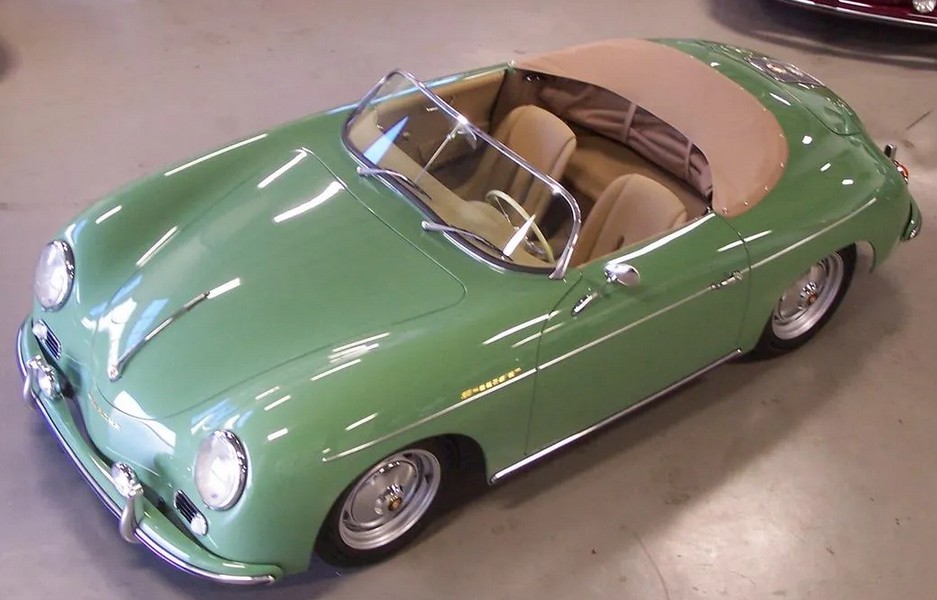
I know, fifty-odd grand for what is in essence a gift-wrapped VW 2300cc engine may seem excessive to some;  but I don’t need much more than 145hp (especially on that featherweight chassis), and it least it doesn’t look like every other car on the road (#WindTunnel).  But most of all:
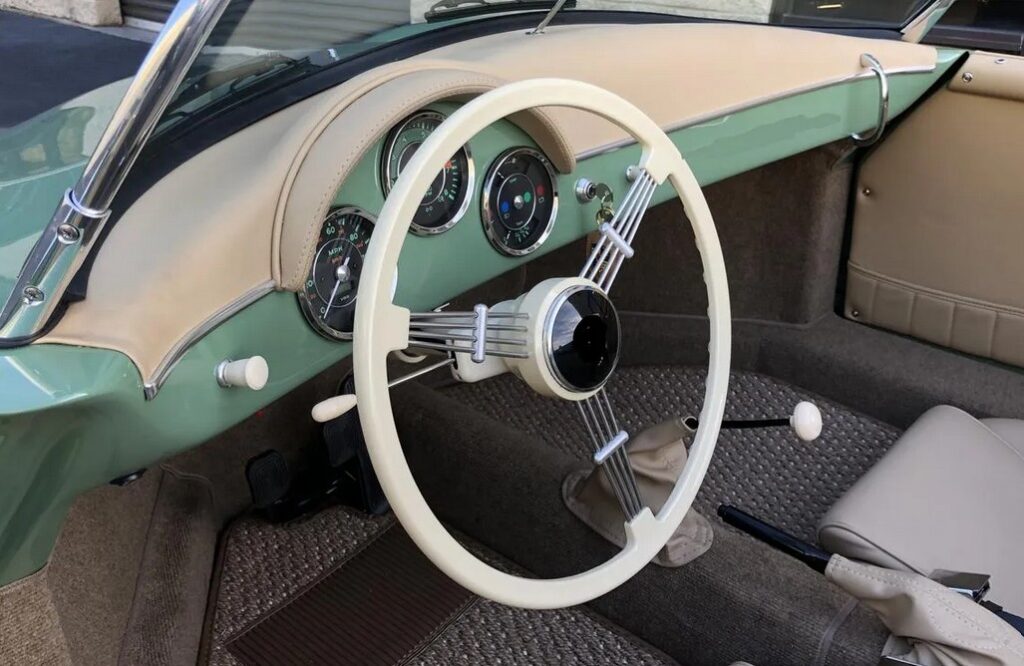
…please note the refreshing absence of all the modern electronic geegaws which bedevil today’s automotive offerings.  The only thing missing (which I’d add with alacrity) is air conditioning. (#TexasSummer)

For the faint of heart, let me point out that a new VW Tiguan base model will set you back close to $40,000, and a Jetta (with a stick shift!) only five grand less.  And you can bet your ass that both the VWs will come equipped with all the latest in snoop-‘n-control electronics.

Sorry, but no.  To hell with all that.  I want simple, and I want freedom.
Unwelcome Newcomers

At first, I didn’t think too much about this development:

America’s largest gunmaker, Sturm Ruger & Co., accused the parent company of Italian arms firm Beretta of trying to stealthily seize control of the Connecticut-based business through “self-serving demands” such as cut-price stock buys and veto-like board power.

The Todd W. Seyfert-led giant hit back on Monday at the historic firm’s proxy fight, which was first reported by The Post on Feb. 25, that branded the move as a thinly-veiled threat to launch “a war” and complete a full takeover.

Ruger claimed Beretta quietly built a large stake, refused to halt purchases during negotiations and sought perks that could break US antitrust laws that prevent companies from unfairly dominating markets.

“At that meeting, Beretta’s chair indicated a long-term plan to combine Ruger with Beretta but made no formal proposal,” Ruger said in a statement issued via a spokesperson.

“Beretta’s chair also indicated that he had no interest in the status quo and that he would find a way to increase his position if Ruger remained resistant,” the company added.

Looks like the usual corporate dogfight, dunnit?

Then I looked at some of the small print:

Beretta announced plans two weeks ago to nominate four new members to sit on Ruger’s nine-member board after the publication of The Post’s exclusive story.

The names are William Franklin Detwiler of Fernbrook Capital, Mark DeYoung, the ex-Vista Outdoor CEO, Frederick Disanto of Ancora Holdings and Michael Christodolou of Inwood Capital.

Oh, how nice.

And what do capital funds typically do?  Under the guise of “giving more value to shareholders”, these fucking vultures systematically strip and sell assets from companies they come to control.  And having four out of nine directors means they can pretty much do whatever they want — unless of course, the other five directors can hold the line and kick back against them, with shareholder support.

Sounds good, but that’s not the way to bet.

So what can we do, as ordinary folks?  Not a whole bunch, except make Ruger a priority or a first choice on our next gun purchase.  I wish there was more we could do, but there it is.

I have a bad taste in my mouth and a bad feeling in my gut…

Changing Cards

Last Monday morning I went out to run some errands — nothing fancy, just dropping off a document at the tax guy, paying for the sooper-seekrit mailbox, and a quick trip to Kroger for some top-up items.  Basically my spend was less than a hundred dollars, but I knew I had way more than that in the bank account, so no big deal, right?

Wrong.  I got home, check the email and there was a warning message from the bank saying I had less than $100 in my account (I am so glad I have this feature).  When I looked at the account, there was an ATM charge from some company for $336 dollars — a company I’d never heard of nor visited, and when I looked at the details, it noted that the transaction method was a “tap”.

Didn’t happen.

I then called the bank and told them about the fraudulent claim, which got the wheels turning.  Net result:  they changed the transaction to “pending”, but then the crap began:  policy is to issue a new card number/card, which takes ta-da!  up to five business days to process and deliver.  So basically, I end up without an ATM card for that period, plus I have to contact all the autopay vendors and give them the new card number so that my life can continue uninterrupted, without such things as wifi being disconnected and so on — you know the deal.

What disturbs me about all this is that apparently there’s no guarantee that a fraudulent transaction can be “clawed back” if it’s been made against a checking account — it’s considered your problem — but with a credit card, however, it’s the bank’s problem and they have all sorts of ways to get the money back.  Seems weird, but that’s banks for you.

I remember seeing one of those EeewwwChoob videos a while ago wherein some smart money guy said that he refused to use an ATM card, ever, and only used a credit card because of just such a situation.

Here’s my take:  I don’t owe a lot of money on my credit card, and thanks to an upcoming tax refund I could pay it all off without any problem.  (I normally pay 6x the “minimum” each month, so I don’t get stung too badly by their loanshark interest rates.)

I am thinking, now, that maybe I should do what the Smart Money Guy said, do away with the ATM card and treat the paid-off credit card like it’s an ATM card, and just pay the balance in full each month.  (I don’t spend a lot of money on the Visa card so this shouldn’t be a problem, and our income — from New Wife’s job and my SocSec gets automatically transferred out of our current accounts into an interest-bearing account anyway, so we never have that much cash in the current accounts.)  I have full faith in my and New Wife’s self-discipline to do this, by the way, so on that score there should be no problem.

My question for y’all:  if I do the above and pay off the credit card balance in full each month, is there a risk that Global MegaBank Inc. will realize that they’re making no money off their loansharking, only from their transaction fees, and cancel my credit card?

All input is welcome.

Bring Back The Killing

This kind of crap really throws sand in my gears:

The US Army’s declining warfighting lethality is not a mystery—it’s a direct consequence of a feudal promotion system that rewards bureaucratic survival over bold leadership, misaligning senior-level priorities with the core mission of closing with and destroying the enemy. This patronage-based structure, decoupled from lethality metrics, incentivizes risk aversion and ethical compromises, eroding the force’s combat edge even as technology advances. We’ve invested billions in cutting-edge gear—Next-Gen Squad Weapons, advanced optics, and precision munitions—yet lethality is tanking. Fewer hits at Combat Training Centers (CTCs), slower quals, and dismal first-run crew scores tell the story. The root? Not tech.

Organizations host two groups—mission-dedicated (Type 1: warfighters) and bureaucracy-dedicated (Type 2: careerists). “The second group will gain and keep control,” Jerry Pournelle asserts, crafting rules that prioritize self-preservation over goals. In the Army, Type 2s dominate, sidelining Type 1s who champion core principles like honest readiness. They lose their “seat at the cool kids’ table,” as the system favors patrons over performance.

And:

Promotions rely on feudal patronage—loyalty to superiors, not lethality. As one analysis puts it, it’s a “bargain and sale” dynamic, decoupled from warfighting. Resources improve, but lethality drops because rewards measure compliance, not kills. We’ve optimized for career survival, not victory.

Read the whole thing if you need to have your good mood spoiled.

SecWar Pete Hegseth needs to get on top of this bullshit, and quickly.

New Direction, Wrong Direction

Sometimes I wonder how people stay afloat.  Here’s the latest example:

Mercedes’ upcoming baby-G was supposed to be the cute, chunky electric-only gateway into G-Class ownership. But the automotive market is changing fast, and so are Benz’s plans, as it reacts to cooling demand for EVs in some markets, especially for its own electric cars. As a result, the boxy SUV will now come with hybrid power.

Internally nicknamed Little G, Autocar reports, the compact, GLB-sized, two-row off-roader is due in 2027 and will still be available as a pure EV. But a companion hybrid model is now in development, using the turbocharged four-cylinder from the latest Mercedes-Benz CLA sedan.

The change speaks to a wider reset inside Mercedes. The company has stepped back from its earlier EV-only plans, with CEO Ola Källenius confirming it will keep selling combustion models well into the 2030s to stay flexible across different markets. Tepid demand for the electric G-Class has, by most accounts, helped concentrate minds.

Okay, I would ordinarily be crowing at MB’s total stupidity in chasing after the Net Zero-inspired push to all–electric-and-only-electric mantra, and gleefully pointing at their corporate privates at having to change course.  Been there, done that.

But here’s where stupidity crosses the line into gibbering idiocy, because about that four-banger they’re going to use?

The hybridized 1.5-liter unit is designed by Mercedes and built by Horse Powertrain in China, a joint venture involving Geely and Renault.

So much for that vaunted German engineering and manufacturing prowess, hey?

Now let’s just talk a little about MB’s other idiocy, this time in marketing:

After years of speculation and teasers, Mercedes-Benz’s smaller G-Class is finally edging closer to production, The compact G-Wagen sticks closely to the blocky proportions of its full-sized counterpart, aiming to carry over much of its tough, go-anywhere character.

Shrunk in scale but not in identity, it’s being positioned to take on Land Rover’s downsized Defender in the growing premium off-roader market.

The whole point of the G-wagen is that it represented a badass vibe:  mil-spec toughness, powerful engine, and serious offroad capability.  The fact that it had the aerodynamic qualities of a brick and used gasoline faster than you could throw it out the window in 5-gallon cans was just another middle finger to the eco-fairies, and the G-wagen’s stratospheric price made its target market all the more likely to be use it mostly in suburban commuting rather than where it outperformed almost every other UV on the market:  in challenging offroad adventuring.

In short, the G-wagen was always just an exercise in conspicuous consumption (both of money and of fuel), as was (and is) the Range Rover.

What I find quite risible is that MB is going to use the “Baby G” (good name, guys) to compete with the effeminate new version of the Defender (on which I have poured scorn before).

Here’s what’s going to happen:  Baby G is going to cannibalize sales from Big G, not from the Defender.  And as Big G’s sales start to dip, the marketing rationale for Big G will likewise start to erode until MB has to pull it off the market.  And the massive profits currently earned by Big G will be replaced by the much-smaller profits from Baby G.

You heard it here first.

Plan Vs. Reality

Via Insty, I saw this little snippet over the past weekend:

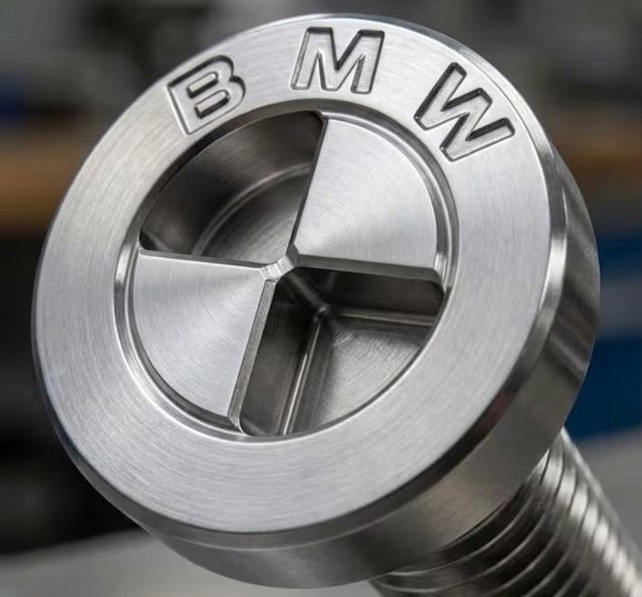
BMW Patent Reveals Branded Screw Design That Limits Access to Vehicle Repairs

BMW has filed a patent for a new fastener design that underscores the automaker’s long-standing willingness to chart its own path, even when that path complicates ownership. The newly revealed screw head is shaped like BMW’s roundel, creating a proprietary design that standard tools cannot engage.

Unlike familiar Torx or hex fasteners, the patented screw uses a circular head divided into four quadrants. Two of those quadrants are recessed to accept a matching driver, while the remaining sections remain flush. The BMW logo is embossed around the perimeter, leaving little doubt about the fastener’s origin or intended exclusivity.

Uh-huh. While I like Glenn’s thought (everyone needs a damaged-screw extractor), that’s not how this will play out.

Here’s a preview of the timeline, as I see it:

  • BMW gets patent for new screw design approved
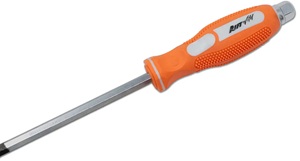
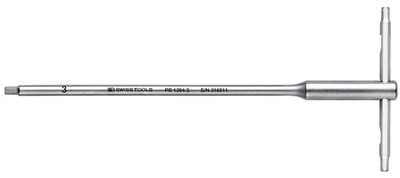
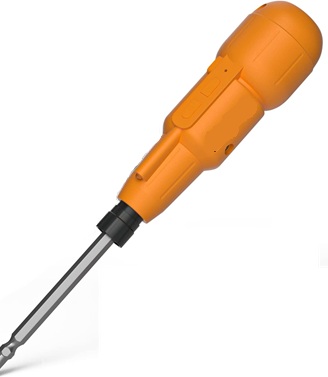
  • 24 hours later, you’ll be able to buy the following BMW screw-design screwdrivers at Amazon.com, all made in China:

Regular handle ($4.99)

T-handle ($7.99)

Cordless ($24.99, with charger included)

As usual, the marketing- and engineering assholes at BMW (a.k.a. the Control Freak Division) will be handed their asses by the market.

You saw it here first.