Thursday Landscapes

In last week’s post about breakfast additives, Mrs. TrueBrit made the following comment:

One full English breakfast from the Farm Shop, Boscastle (you know where I mean, Kim).  One large mug of proper Cornish Tea. Done.

Just to let everyone else in on the joke, here’s the aforementioned Farm Shop & Cafe:

And down below in the valley, Boscastle itself:

…where Mr. and Mrs. TrueBrit and I once spent a quiet, intimate weekend together, so to speak.

Nazzo Fast, Guido

I’m not so sure that this is a good idea.

President Donald Trump told reporters on Sunday that his administration is considering importing beef from Argentina to lower its price at home and help Argentina stabilize its struggling economy, which he described as being in critical condition.

Dear  King  God-Emperor Donald:  Those are both laudable goals, i.e. to help a loyal ally and simultaneously help U.S. consumers who are being flattened by stratospherically-high beef prices at home.

However, I can’t help but think that you should also consider trying to ease the crushing burden of federal regulations that beef farmers — actually, all farmers — have to deal with, regulations that are a legacy of the Leviathan State you’ve inherited.  That will lower their cost of production, and should make beef less expensive.

Lowering beef prices through imports will simply make our beef farming less profitable — not that it’s all that profitable to begin with — and frankly, I care more about our farmers than about the Argies.

After all, it’s Make America Great Again, not Make Argentina Great Again.  With all due respect to Señor Presidente Milei, he has to deal with problems of his country’s own making, just as we have to beat back the Commies Over Here.  We can and should help him, but not at our own expense.

Just a thought.

Nazzo Fast, Guido (Part 2)

I also have reservations about this one.

President Donald Trump and Australian Prime Minister Anthony Albanese signed a rare earths and critical minerals deal Monday at the White House.

On the surface of it, this is a Good Thing in that it very much loosens the stranglehold that the fucking ChiComs have on rare earth production, which they have signaled as a boycott threat in dealing with the U.S.

However, I note with some displeasure the comment also made after the signing:

Secretary of the Interior Doug Burgum praised the deal.

“Critical mineral independence is essential to our national security, and thanks to @POTUS, America is finally prioritizing the resources essential to our defense, technology, and energy sectors!”

That statement is quite true… but there are a couple of home truths we have to deal with here.

The first is that when it comes to rare earth reserves, the United States has the largest such in the entire world, much larger than the next two or three countries combined.

The second home truth is that while we have all the rare earth minerals we need, we are prevented from producing it because of the raft of ecological and NIMBY regulations and barriers hamstringing its mining.

So it’s all very well to sign agreements with countries like Australia, but that’s not actually “mineral independence”, is it?  Lest anyone forget, the Australia of today is far from the Australia of, say, post WWII.  Now their government is a bunch of frigging Commies — politically speaking, OzPM Albanese is at about the same level as Nancy fucking Pelosi, their diplomats are just as bad — and I don’t trust Commies of any stripe, furriners especially.

Of course, I mean no disrespect to my several Oz Readers, because judging from the tone and temper of their many emails to me, I gather that they (and many other Strylians) have an even deeper loathing for their Lefty government types than I do.  But these politicians, lest we forget, have nevertheless been elected by the populace, so my Oz readers are in the distinct minority.

From a global realpolitik  perspective, of course we should strengthen our ties with nations like Australia who are threatened by ChiCom expansion plans.  But let’s also tread carefully all the same, because in the end, Commies are Commies and there’s no telling how they may behave in future.

Nazzo Fast, Guido (Part 3)

The problem with Sen. Rand Paul (R-Ky) is that he’s a firm believer in this Constitution Nostra.  In a way, he’s like the Constitution Goblin that sits on our shoulder whispering, “Show me where in the Constitution it says you can do that”.

As he does now.

Sen. Rand Paul (R-KY) claimed President Donald Trump’s military strikes against suspected drug boats were not legal.

Host Kristen Welker said, “President Trump has authorized military strikes against suspected drug boats in the Caribbean, as you know, so far more than 20 people, senator, have been killed in six different strikes. Do you believe that these strikes against these suspected drug boats are legal?”

Paul said, “No, they go against all of our tradition. When you kill someone if you’re not in war, and not in a declared war you really need to know someone’s name, at least. You have to accuse them of something and you have to present evidence. All of these people have been blown up without us knowing their name and without evidence of a crime. For decades and if not centuries when you stop people at sea in international waters or in your own waters you announce that you’re going to board the ship and you’re looking for contraband, smuggling or drugs. This happens every day off of Miami, but we know from Coast Guard statistics that about 25% of the time the Coast Guard boards a ship there are no drugs. So if our policy now is to blow up every ship we suspect or accuse of drug running, that would be a bizarre world in which 25% of the people might be innocent.”

And I agree with him.

In the first place, these are not Venezuelan Navy ships that our boys are sending off to that Big Drydock In The Sky;  they’re privately-owned.  And yes, they may have been sponsored by that godless Commie VenPres Maduro, but we don’t really know that, do we?

Me, I’d rather have the Navy board a ship when intercepted, and if they find evidence of drugs — like, sacks of cocaine powder in the hold — they should thank the ship’s crew politely, get off the ship… and then blow it the shit out of the water.

I don’t agree with this part of ol’ Rand’s little diatribe, though:

“The other thing about these speed boats is they’re 2,000 miles away from us. If they have drugs they’re probably peddling drugs to one of the islands of Trinidad or Tobago off Venezuela.”

Don’t care where the destination of the drugs may be:  la coca  is illegal in pretty much every country on earth — oh, and by the way, just because the drugs may be headed for Trinidad or Tobago, that doesn’t mean that those islands are their final destination:  they might just be a stop over, en route to the U.S. (and probably are, being just part of the distribution network).

I also suspect that the “25%” of the time statistic is because the drug runners see the USN or USCG ships coming, and dump the contraband overboard — which is fine because whatever, the drugs aren’t going to reach their destination.

I know why The Donald is doing this:  it’s to create a negative incentive for drug smuggling, a way to persuade these assholes to find another way to earn a living.  It might work;  but it’s not legal.

And we’re not (yet) at war with Venezuela, last time I looked, and given the craven nature of Congress as it stands right now, I doubt very much whether they’d give the go-ahead to nuke Caracas, tempting though that prospect might be.

It’s a tough problem, but I’m not sure that bombing ships out in the middle of the ocean is the correct one.  Rand Paul doesn’t;  and I think in this case, he has the right of it.

I am prepared to hear opinions to the contrary, of course.

Driving The Shape

Last Saturday I posted a link to a discussion on classic car prices and the market thereof, and  threatened  promised a followup post.  Here it is.

Right off, I’m going to suggest that anyone who’s happy with their 1979 Ford Bronco truck and can’t see the need for even having a discussion which features luxury classic car collecting may feel free not to comment.  This post is not for you.

Let me start this off by looking at an anomaly:  the BMW 507 from the late 1950s.
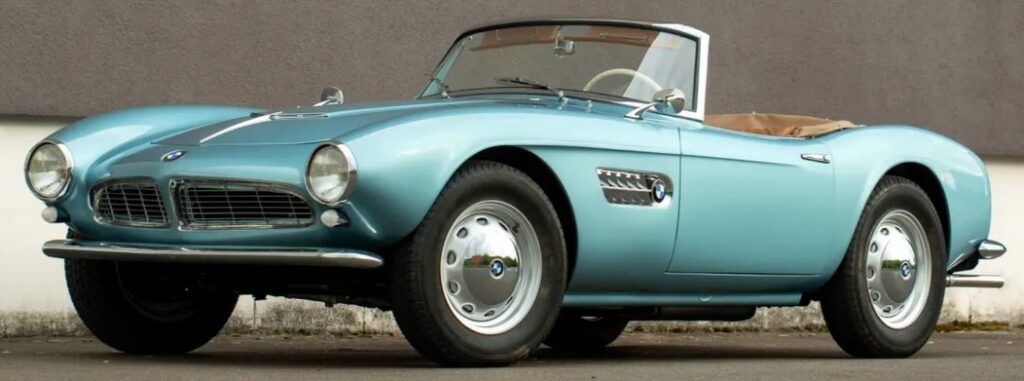
As anyone should know, this was BMW’s competitor to the Mercedes 300 Gullwing, in that it had a 3.2-liter V8 inside a lightweight chassis.  It nearly bankrupted BMW back then because the market wasn’t willing to spend what amounted to a king’s ransom back then on a car that wasn’t a Gullwing, or (in the U.S.) a similarly-powered Corvette that cost a lot less.

It’s a great pity, because while BMW has pretty much always produced “handsome” cars (as opposed to drop-dead gorgeous ones), many people thought this was a beauty.  Not enough people thought that, of course, which is why hardly any 507s were ever produced, and were bought by only the very wealthy (like Elvis Presley).

Nowadays, of course, it’s a whole ‘nother story, which is why the little thing pictured above sold earlier this year for just over $2 million.

Let me change course for a moment, while I talk about the Porsche 356.

Unlike the 507, Porsche made a zillion of the various sporty 356 models, because they were relatively inexpensive and for the time quite reliable, albeit underpowered.  Because they were inexpensive, not much care was devoted to their upkeep, so they became somewhat scarce through pure attrition.  Then in the mid-2010s people started to remember the 356 with great fondness, and a renewed interest followed, which is why the above-pictured 1958 356 (only two owners, 84,000 original miles, restored but not modified) is currently for sale for around $400k.

Well, that’s just silly, say a couple of people, which is why you can nowadays get a replica of the 356 — looking exactly like the original, down to the badges — with a fiberglass body and a better-than-the-original VW or Subaru engine with better efficiency, reliability and performance.
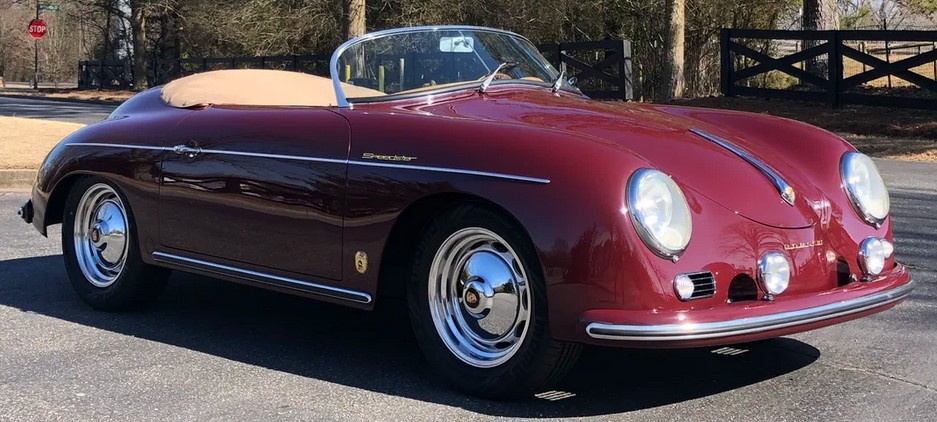
Cost:  just over $70k.

Now to the puristi, of course, this is an anathema:  it’s not a “real” Porsche, etc. etc. and I can see their point.

But what if you just want to drive a classic, beautiful car that is in good running order, will not cost you an arm and a leg to maintain and looks brand-new?

In other words, you want to drive the shape of the thing, and all the other stuff is irrelevant because of the steep cost of parts, service and so on.

It’s not too dissimilar with fine art, for example, where a decent print of a Monet — in acrylic rather than oil — can cost you mere hundreds, as opposed to the millions demanded for an original Claude.  And honestly, to the non-art history major, it’s just as pretty hanging on your wall.

Still another example is that of the Land Rover Defender.  The old joke about them is that if you want to go into the bush, you take a Land Rover;  but if you want to come back out of the bush, you take a Toyota Land Cruiser.

The chronic unreliability of the Defender is so legendary that it’s a joke in and of itself.  (In the UK, Land Rover drivers acknowledge the oncoming Land Rover drivers by flicking their headlights:  a rueful admission, as the story goes, that yeah, I’m also an idiot.)

Nevertheless, many, many people love the Land Rover (I’m one of them), but are frightened off from buying one because they want to own a truck which doesn’t break down every hundred miles, has headlights and windshield wipers that only occasionally work, isn’t plagued by the usual , and won’t fall apart with rust.

So why not get a truck that looks like a Land Rover Defender, but has a galvanized steel chassis, reliable electricals, and is powered not by the cranky and underpowered original Rover engine but by a nice modern Cadillac 5.3-liter V8?

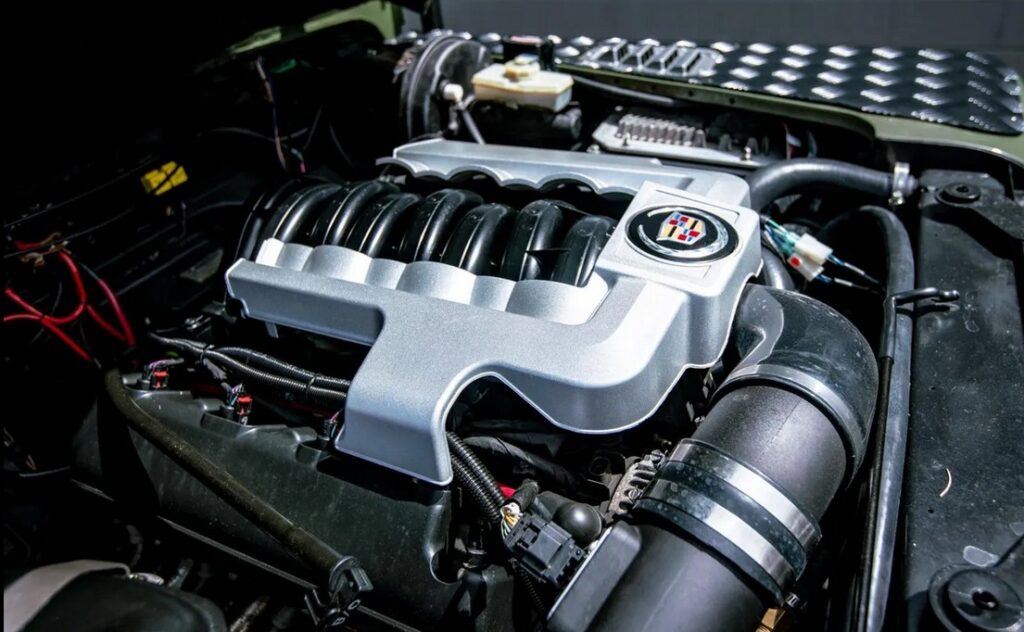
Cost of the above monster:  just over $100k — pretty much in line with modern-day Defenders — and the mileage on the engine is in the hundreds, not thousands.  (Excuse me for a moment while I wipe off the drool.)

In other words, “driving the shape” shouldn’t cost you an arm and a leg, because you’re not driving the all-original heritage, just its appearance.

Which brings me back to the BMW 507.

There’s no industry around to make replicas of the 507, but some guys did make one — and a purdy lil’ thang it is too — with a handmade aluminum body, dropped onto an original BMW 502 chassis and powered by an original 5.2-liter V8, putting out about 150hp.
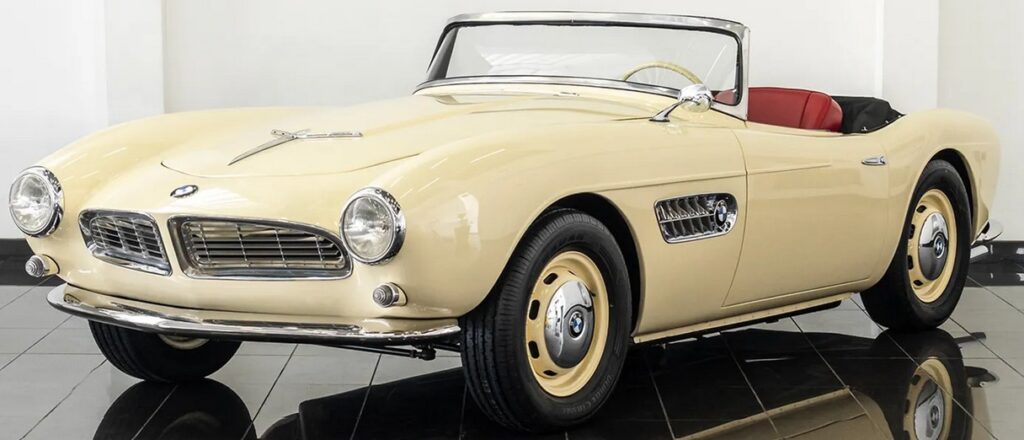
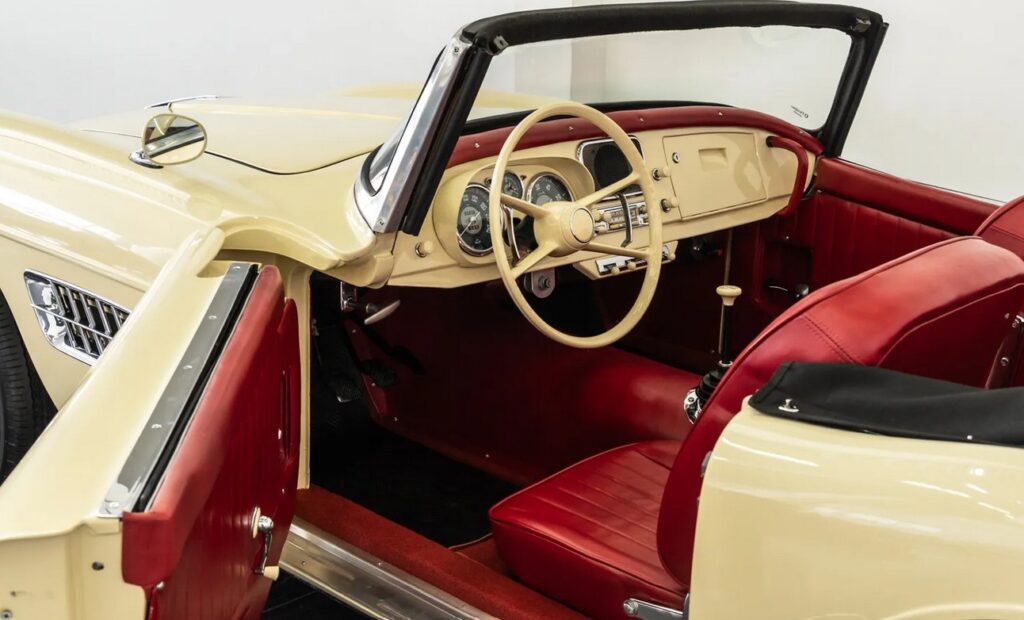
The thing is, though, that it’s not a replica, but an attempt to re-create the original.  Hence its price:  $540k.

The dealership selling this idiocy is in Dubai, which figures.  Maybe some Arab oil sheikh will be tempted into splashing the cash for it.

Me, even if I won a mega-lottery?  Never in a million years.  I love the 507’s shape, but that’s all I’m interested in driving.  This little luxury plaything?  Nope, no matter how beautiful.

Oh, and in terms of the market:  people who would be enamored of the BMW 507 are in my age bracket — i.e. not much longer for the world, so what you’re left with are people who look on luxury cars purely as an investment.  And I suspect that the market for that era of luxury cars is going to disappear, just as the market for pre-WWII cars has also dipped precipitously as their nostalgia effect dies with the owners thereof.  Even the stratospheric prices for Mercedes Gullwings is softening, or else it’s taking a lot longer to sell them.

I myself would be perfectly happy to own that 356 replica and the Defender restomod.  I’m only interested in shapes;  the rest is irrelevant.