
I have often — and it must be said, not unreasonably — been accused of being an old stick-in-the-mud who too often prefers the old days and old ways to much of modern life. Here’s an example.
Back when I first lived in the Chicago suburbs (circa 1987-92), I drove an ancient 1970s Subaru GL like this one (only in nowhere near as good condition):
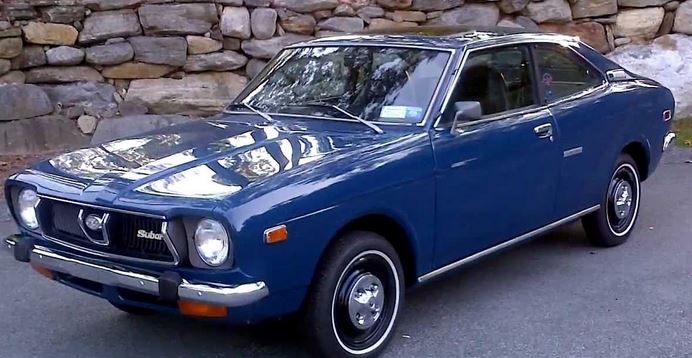
I don’t remember exactly how many miles it had been driven before I got it, but I suspect it was around the upper-120,000 mark. This car had the advantages of a) being fully paid-off and b) having astonishingly-frugal gas consumption.
Reliability was likewise excellent, in no small part due to its regular maintenance at the hands of Dave, the cheerful owner of Eurocar Services in Des Plaines. It was Dave who would call me to explain yet again how this or that part was starting to fail, always mentioning how long I could continue to drive it before it actually did, how much it would cost to fix it, and his recommendation as to when I would have absolutely no choice but to do so. (He also taught me how to “cheat” my way past the strict Illinois emissions test, because there was no way it would have passed without said cheating.)
In this way, I managed to drive the “Scoobydoo” (his affectionate name for it) for about four more years before finally having to get rid of the thing; because when your clothes start to smell of exhaust smoke when you get out of your car, it’s usually a sign from God or whoever that The Time Has Come.
I should point out that while Dave owned a computer diagnostic machine for the newer cars which could accommodate it, he was just as happy to work on ancient cars like mine that didn’t.
The above memory was triggered by this little story:
More than a million Range Rover and Jaguar drivers could face huge delays in getting their motors repaired after a devastating cyber-attack crippled Jaguar Land Rover.
The British car manufacturer has become the latest big-named firm to have been hit by hackers.
Bosses at Jaguar Land Rover (JLR) were forced to scramble on Sunday, hastily shutting down global computer systems to protect sensitive information.
Efforts are still ongoing to reboot the company’s stricken systems, with the fallout effectively paralysing dealerships and garages, which can no longer order new parts from JLR.
Mechanics across the Indian-owned firm’s franchised dealership network rely on JLR’s diagnostic tech to identify faults and electronic catalogues to order replacement parts.
However, with these systems still crippled, it means owners of vehicles like the Range Rover, Discover and Defender models, as well as Jaguar sports cars, that need to be repaired are now stuck in limbo.
JLR has insisted it is working to resolve the issue but warned its retail and production activities have been ‘severely disrupted’.
It is unclear how long it will take the car builder to restore its IT network.
This would never have happened to my friend Dave, because of course he used to order parts by phone from a local supplier, or (as happened more than once) actually driving over himself to a supplier or junkyard to get what he needed.
Was it as efficient as the process is today? Of course not. Was it as vulnerable to outside interference as today’s techno-dependent process? Also not.
Here’s my take. If it were possible, I’d drive a 1974 Subaru GL (assume new or low-mileage secondhand) today long before I’d drive a JLR product of any variant — not the least because if your driving needs are relatively modest (as are mine), you can get by very well indeed without all that modernistic, expensive and vulnerable bollocks.
As long as there was a Dave around to maintain it. And I know that Dave is a vanishing breed; but I also know that he’s not extinct, and never will be — because there will always be some guys who take pleasure in tinkering with mechanical stuff, and gawd love them for it.
Okay, there are a couple of Jaguar (not “JLR”) cars I’d be equally happy to drive, but they would require a winning lottery ticket.

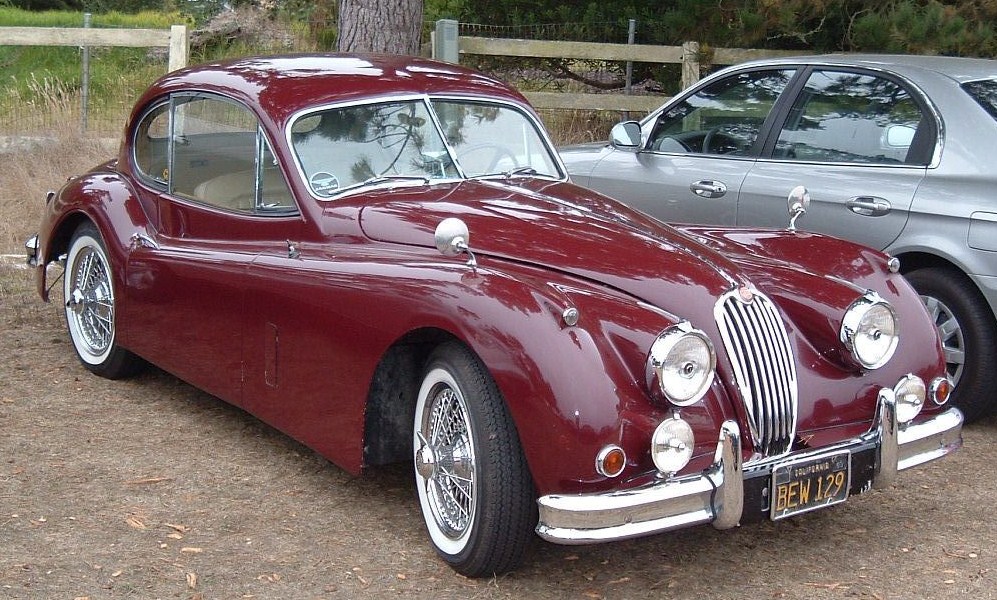

…and nary a computer chip to be found anywhere in them. For these cars, there will always be a Dave.
I am Dave, well, not in name exactly, but definitely in spirit. First car I adjusted the valve clearances on was dad’s 1959 Standard Vanguard, this was I think in 1968. The tool kit in the boot had ALL the tools necessary to service the vehicle, they fit in a roll up canvas holder.
Since I have rebuilt a Jaguar E type FHC and done all the work except paint myself. That project took 7 years and about a dozen visits to England for parts (which happily were paid for by my then company, which kept sending me there for business). Not to mention Fiat, VW, and Benzes in between, along with a long list of American iron, mostly V8 and sadly now, 6 and 4 bangers.
So the short of it is, yes, we “Daves” are still about but sadly, getting long in the tooth.
BTW, if you run across a 1965 Chevrolet Impala wagon, do let me know. A rust free TX unit would be my last car to fix up and drive, because there is nothing on it that uses silicon other than maybe the diodes in the alternator and possibly the radio, it it has one.
Those are like hen’s teeth. Even the ’58 convertible is more available.
Making diagnostic tools dependent on HQ was an intentional choice, and a bad one at that. I’m 100% certain that a sane voice of resiliency was shouted down or dismissed in committee.
There are always sane voices. When conditions are such that they cannot reliably prevail, the problem is systemic.
Or else executive managers are retarded, driven by IT’s “efficiency” claims and/or Accounting.
One wonders how many latter-day Daves are quietly patching (and restoring) the supervisory software – for cash customers, of course.
If I had wanted to live in the Balkans, I’d have gone there.
.