(Previous: Chapter 1, Chapter 2, Chapter 3, Chapter 4, Chapter 5, Chapter 6, Chapter 7)
Chapter 8: The End Of Pussyfoot
I think that one of the definitions of a band is that it’s an association of people who are loosely attracted to each other by a love of music, bound together by affection and respect for each other’s musical ability, and driven by a common goal.
Now let’s parse those terms a little.
“Love of music” — What kind of music, exactly? Classical musicians don’t form bands with rock musicians unless they’re called ELO, Jethro Tull or Genesis, etc. Jazz musicians tend to group together with other jazz musicians and not blues- or rock musicians unless they’re called Blood, Sweat & Tears or Chicago. Or if they do, they don’t last too long. Country musicians… well, if you ain’t authentic, you ain’t country. Rock musicians prefer to play with other rock musicians, but they’re all mostly scum, morons and psychopaths. (Serious boffins like guitar virtuoso Brian May and his astrophysics doctorate are so far off the musical universe bell curve that they’re more scarce on the ground than unicorns. The typical rock musician is going to be someone like Axl Rose, to be honest.)
“Affection and respect” — You can play with other folks whom you don’t like, but respect their capabilities; and you can like the other guys despite the fact that they aren’t as good as you are. But to find a group of guys whom you both like and respect — i.e. you’re more or less at the same level musically and you don’t want to punch them in the face every time you get together on stage or in the practice room — trust me, it’s a rare mixture indeed.
“Common goal” — Do you want to play together just as a hobby, jamming in someone’s basement or garage? Or do you want to play one-night gigs, and if so, are you confined to a specific area by other life issues like jobs, family and so on? Or do you want to play semi-professional, playing club gigs with lengthy contracts, but keeping your day jobs for the steady (or more remunerative) income? Or do you want to become full-time musicians and dedicate your lives to playing music and looking for fame, success and wealth?
When you look at all the above — and there are probably a lot more combinations and permutations, by the way — it’s an absolute wonder that any band can stay together for any longer than a few weeks. Even the Beatles went through a drummer (Pete Best) and a bass player (Stu Sutcliffe) before they settled on George, Paul, Ringo and John. And even all that musical talent, artistic development, fame, success and wealth that the Beatles thing provided weren’t enough, at the end, to keep the band together for more than a decade.
In the case of Pussyfoot, I was the one driven to become a full-time professional musician, to play clubs all over the country, as was Kevin, I think (and future events would prove me right). I think Mike would have come along with us, had the opportunity been enough to offset his day job’s income. Knob might have gone along with the plan, provided that we only played in and around Johannesburg; but he was driven by business success and not much else, so he wasn’t ever going to go along with that, long term. Pro music in a small market like South Africa was never going to make anyone rich, unless the band was extremely talented and lucky enough to get the break they needed.
As it turned out, Donat didn’t want to do any of the above. He wasn’t interested in turning pro (of any description) or playing gigs as often as we planned on doing, and I think with the routine of practice and time that the band was eating up, he had other plans.
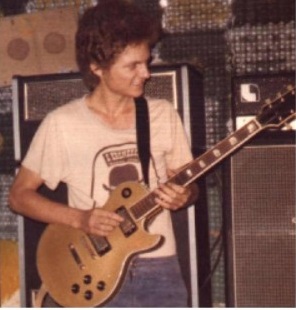
So he quit. But unlike with Cliff’s departure, there was genuine regret from the rest of us, because we’d all become friends at that point, and who wants to lose a friend? (Just in the band sense, of course. Sure, we were going to miss that lovely sound of his Gibson Les Paul and his excellent rhythm guitar, but that was just part of it.) Now, of course, we had to rejigger the band a little, to replace his contribution.
We briefly discussed finding another rhythm guitarist, but ultimately decided against it because we’d earn more money individually, but not replacing Donat’s contribution just meant that Kevin and Mike had to play more comprehensively: which they did, although our choice of new songs was necessarily more limited. What helped was that Mike bought more equipment, notably a strings keyboard and later a massive synthesizer, which filled out our sound very well indeed.
And the gigs started increasing, too: we were playing at country clubs, wedding receptions and towards the end of the year, even a couple of office parties, and our first New Year’s Eve gig. The great thing about NYE was that there weren’t enough bands in town to fill the need: everyone threw a bang-up New Year’s Eve party, and it seemed that every hotel was looking for a band for the occasion. I don’t remember where we played, but it lasted until the wee hours, which meant a substantial overtime bonus.
Side note: I forgot to mention that very early on I’d drawn up our contract so that we had some kind of legal protection in case the client stiffed us. It took me an hour or two, and when I’d finished I showed it to my buddy Leosh, who was just wrapping up his law degree. He read it, went pale and said:
“I wouldn’t sign this.”
“Why not?”
“Well, basically it says that you can play whatever the hell you want. And the client has no say over anything you might not want to do.”
“Yeah, but it does guarantee that we’ll play 45 minutes of the hour, for four hours.”
“Yeah, and past four hours he has to pay through the nose.”
“That’s because if the gig ends at midnight we only get home well after 3, what with packing up and unpacking. Truthfully, we don’t want to play after midnight; so if they want us to play for longer, it’s got to be worth our while.”
“Uh huh. Basically, if I read this right, when you play two extra hours, you double your take for the night.”
“That’s right.”
Most New Year’s Eve gigs, we played two and sometimes three extra hours. And with Don quitting, that bonus was going to be split four ways instead of five.
And at long last, we were each starting to make money from the band — at least to the point where the income more than covered the monthly cost of the equipment payments to Bothners. And speaking of Bothners, there were a couple of clouds coming over the horizon.
The manager at Bothners was a weaselly little shit named Rob Cameron. Over the past year or so, Eds Boyle and I had become good friends, and he’d persuaded the manager that he needed an assistant in the department, but I suspected he’d kind of oversold me so that I could get the job — and the proof of that was soon forthcoming. My take on my role was that I’d be the guy who would take care of all the one-time customers and small transactions that would free Eds up to take care of the professional musos. But after only a few months at Bothners I was called into The Weasel;’s office and basically told off for my poor performance in sales. When I pointed out that my sales numbers were pretty much the same as Eddy’s, only made up with much more transactions, Cameron yelled that I hadn’t brought in any of the “new, young bands”. I was of course surprised, because this had never been part of my hiring — but it was, because that was how Eds had pitched me to Cameron; he’d just forgotten to tell me about it.
Oh, shit.
Whenever I’m blindsided by events, my normal attitude is to respond aggressively; and so it was in this case. I snarled back at Cameron that I was doing the job I’d been hired for, my sales figures were good — the profits from all those “small” sales were far greater than my salary, for one thing — and the way I was going, I expected to make even more over the next couple of months, “And I’m going to beat Eddy’s sales figures for the first time.”
The result was that I was put on notice — basically, The Weasel told me that if I didn’t do what I said I would, he’d fire me on the turn. My prospects, then, were looking bleak and I left his office steaming.
Three days later some young guys came into Bothners with an older man. Eds pointed to them and said, “Some customers for you, Kims,” and scuttled off to “do a stock check” (our shorthand for “These idiots will be a waste of time — you deal with them”). Well, it turned out that these four kids had started a band, and had worked so hard that their respective fathers had agreed to sponsor them and buy them all the gear they needed to put the band together, because they’d been booked to play at a small rock concert in a town to the west of Johannesburg and couldn’t do the gig with the paltry equipment they had on hand.
I told the father that they’d come to the right place, because my band had suffered through the same problems — only we hadn’t lucked out with a sponsor so we’d had to buy the whole band’s gear ourselves, pretty much from scratch. And because we’d had to pay for it, we’d bought cheap equipment, then later finding out that we had to to replace it with better gear — in essence, buying everything twice. (I was only exaggerating a little, but the crux of the story was quite true.) The older man seemed impressed by my analysis, and said, “Well, I and the other dads aren’t going to pay twice. What do you recommend?”
So I took the guys through the whole setup I thought they’d need, member by member: bass guitar, amp, lead guitar, amp, keyboards, amp, and the PA system to bring the whole thing together — all top-of-the-range equipment. (The drummer had a decent kit, so I told him not to replace it but just add to it with better cymbals and a quality snare drum.) The father’s eyes widened when he saw the total, but I reminded him of buying everything twice; and after showing Eds the total, he approved a five percent discount on the spot.
The total of this single transaction was greater than the department’s total sales had been for the past two months.
Even better, after the kids played their concert, a couple of other young bands came to me for help in improving their gear, with the result that my sales for the following month were equally impressive.
So after the dust had settled and the numbers added to the balance sheet, Cameron called me into his office to congratulate me on my success, and I handed in my resignation. Why?
I don’t respond too well to an ultimatum at the best of times, so when I’d been told to sell more or I’d be fired, I’d started sniffing around at the other music stores in town for an alternative job. And the manager of one such store — much smaller than Bothners, but wanting to grow — was extremely interested in having Bothners’ “top” salesman come to work at his little shop (yeah, I showed my sales results over the past two months, skipping over the earlier ones and making out that this was my normal performance: remember I was a salesman). I told him that I would have to work out my notice through the month of January 1977, but I could start in February.
What I didn’t tell him was that I’d just received my call-up papers for my National Service commitment — yes, the Army had caught up with me at last, and I’d been informed that I would get no more deferments: “We’ll see you in July, and that’s that!” was the gist of it. So I’d only be working for the small store for a few months until mid-year.
Anyway, when I presented my resignation to Cameron, he took it kinda badly. In fact, he let me go on the spot. So I’d miss the Christmas sales boom and the commission thereof. Even though that was a shitty thing to do, I didn’t care too much; my bonus for the past two very successful months would be more than sufficient to tide me over until I started my new job.
I’d heard through the grapevine that Shalima were once more playing at the Palm Grove in Margate, so as Pussyfoot was going through a bleak period with only two office parties booked for early December, and then no gigs until New Year’s Eve, mid-December found yours truly setting out for Natal’s South Coast in Fred — so my accommodation needs therefore quite adequate. (I’d slept in the back on several occasions in the past, when visiting my girlfriend, over long weekends camping, and so on.)
I met up with the Shalima guys, and Max and I renewed our acquaintance with great joy, and a vast quantity of beer was consumed. As it happened, I’d been misinformed: the band playing at the Palm Grove was an Irish band called Kelly Green, who played mostly R&B songs. They were brilliant, and I was most impressed by their vocalist — who had a voice that sounded like Dave Ruffin of the Temptations — and the lead guitarist, a Scottish guy named Alex Dawson who played like jazz great Larry Carlton. Anyway, I spent a week down there, listening to Kelly Green and drinking with Max. It was my first actual holiday in close to four years.
After that little trip, I went back up to Johannesburg for the New Year’s Eve gig with Pussyfoot — a great success in every sense because not only did our performance go down well, but we played until dawn, swelling that night’s fee almost indecently. It’s a good thing too, because our bookings for the first part of 1977 were… let’s just say unimpressive — okay, pretty much nonexistent.
Anyway, flushed with all that earlier success, money and the fun and games of the South Coast, I went to see my new employers in early January to tell them I could start work before the agreed date in February — and was told they’d declared bankruptcy and were about to close the shop.
Oh shit, again.
For the first time since my student days, I was unemployed, with no prospects for another job — no one was going to hire me with a looming call-up in my future — and I had very little chance of earning enough to pay my bills with Pussyfoot gigs because as I’ve said, we hadn’t any bookings for at least the first three months of 1977. Also for the first time in my life, I was on my own, with no prospects whatsoever.
I panicked.
The only thing I could think of doing was finding a pro band to play with — at this point, playing bass was pretty much my only marketable skill — and so I called Morris Fresco (remember him?) at The Don King Organization. I told him everything that had happened to me with absolute candor, and ended up by saying, “Morris, you’ve heard me play and sing before, so you know I can handle myself on stage. I’ll take any gig, anywhere in the country, with any band, as long as the money’s okay.”
Morris thought for a moment and said:
“Actually, I do have something for you, if you want the gig. Ever hear of a band called Kelly Green?”
“Yes — I’ve just seen them at the Palm Grove. They’re great.”
“Well, their bassist had to leave the band — something about his work permit no longer being valid. Think you could fill his position?”
Fuck, no.
“Of course I can. Are they still in Margate?”
“Actually, not. They’re in Rhodesia — Bulawayo, at the Las Vegas nightclub.”
“Ummmm… okay. What about a work permit for me?”
“Don’t need one seeing as it’s a short-term gig, only until the end of their contract. Longer than three months, we’d have a problem, but not for this. So… can I book you?”
I called Knob to tell him I was taking leave of absence from Pussyfoot, and two days later I found myself at the Las Vegas nightclub in Bulawayo, playing with Kelly Green.
Except that it wasn’t Kelly Green, at least, not as I knew them. Apparently, the work permit problem had affected not just the bassist, but also the lead vocalist and keyboards player. What was left was the drummer (Ivan), who for some reason no longer wanted to play drums, but be the lead vocalist, and the Larry Carlton-like Alex Dawson.
Who, I soon found out, was even worse than Dick The Prick from the Mike du Preez Trio.
Okay, this was the situation I found myself in. Not only was the band essentially a three-piece affair — Ivan had found a drummer to replace him, except that the new guy was nowhere near Ivan’s ability — but I had to learn (again) a whole new repertoire of utterly unfamiliar songs. It was Margate 1974 all over again, only this time I wasn’t going to play to an empty room in a sleepy little hotel restaurant in a remote vacation spot; Bulawayo was a city, and the Las Vegas a serious nightclub that was open for business six nights a week from 9pm until 3pm.
It was, in short, the worst experience of my life. My bass playing was totally inadequate for the sophisticated R&B and modern jazz music — I was moving from playing Credence Clearwater Revival and Uriah Heep to Stevie Wonder, Mahavishnu Orchestra and Tower of Power, for gawd’s sake — and I had to learn it all in a tearing hurry, and fucking Alex was being an absolute shit about it all.
He was a dour, unpleasant asshole, who regarded every other musician in southern Africa as “crap” (even those musicians I knew were anything but), and he was very much unimpressed by me. Worse yet, he had the ear of the nightclub’s owner, another unpleasant piece of work named Bobby Fraser, who not only owned the club but who thought of himself as a Frank Sinatra-type singing star (he wasn’t), and on top of everything else I had to learn his material because he did a set every night at the club.
So all my efforts at playing bass at the Las Vegas were not only being subjected to constant ridicule and scorn from Alex, but that opprobrium was being relayed to the club’s owner, constantly.
Still, I was under contract for at least a month so everyone had to put up with it. I was in a strange country on my own, no way to contact any friends or family (no Internet, of course, and the phone service was appallingly expensive and unreliable), and for the first time in my life I was lonely. I couldn’t just mail in my performances at the club every night: pride, and that stubborn credo of professionalism just made that impossible. But when I wasn’t playing, there was nothing to do, nobody to hang out with and nobody to share in my misery.
Then, to my great joy, South Africa’s superstar rock band came to town on their tour of Rhodesia. I knew all the guys from Rabbitt, of course, especially their (genuine) superstar lead guitarist Trevor Rabin (later of Yes and composer of Owner Of A Lonely Heart). They played two nights over three days in Bulawayo, playing two concerts a night: an early one from 6pm to 8pm, and a second one from 10pm to midnight. I wangled a ticket from their manager Simon Fuller (whom I also knew quite well, thank you Bothners) for an early show, and went off to see them. I’d seen them long before that when they were still the house band at the Take It Easy nightclub in Johannesburg, and they were good back then. I remember having a jam with Trevor and a couple of other guys some time later at the club, and was blown over by their musicianship; but now, some three years later, the band was an absolute powerhouse.
Of course, after their second show the guys had to “come down” and drink a few (okay a lot of) beers somewhere, and as the Las Vegas was literally across the road from their hotel, my place of torture and hell was a natural stop.
Aaaargh. So that one night I stumbled through a set, and then went and sat with Trevor at a table. Thanks to the booze, I was completely uninhibited, and I poured out all my troubles to Rabbitt’s virtuoso lead guitarist, telling him that I was total shit, and that this was probably going to be my last gig.
Trevor listened patiently, then said something that would change everything.
“Kims, listen to me. You’re a bloody good bass player — I’ve seen you play, and I’m not lying now. And I know you hate this shit music you have to play here — you’re a rock musician, not some R&B guy. And you’re being an absolute pro: let me tell you, I wouldn’t want to do what you’re doing, filling in with these other guys, playing music that you hate. But you’re doing it, and you’re doing a damn good job of it.”
Here’s the thing. Trevor didn’t have to say that. He was a big rock star, and ten times the musician I was (and would ever be). He could have just fobbed me off with some polite bullshit; but he didn’t. He sympathized with my situation, made me feel better about myself and my playing, and restored my badly-damaged self-confidence. In retrospect, he gave me a second life and added eight years onto my musical career, and for that he will always be a special human being to me. He has probably (and understandably) forgotten who I am, but I will never forget him.
All that didn’t matter, though. The very next day Kelly Green (in its last iteration) was replaced by a new band called, I think, Tricycle; Alex joined them — doubtless with the assistance of Bobby Fraser — and everyone else was canned. The only good thing to come out of that was that I was paid in full for the duration of the contract. (Thanks, Morris.)
So I flew back to Johannesburg, filled with excitement to be going home and rejoining my band…
…only to find that in my absence they had changed the name of the band to Atlantic Show Band, added a new guitarist from a well-known club band, replaced me with some other bassist, and were now playing a club gig at the prestigious Boulevard Hotel in Pretoria.
Now what?