Connectivity Assholes

Normally I reserve the above epithet for people who have their phones surgically attached to their hands, or bosses who insist that employees Stay.In.Touch.At.All.Times., yeah even unto night time, weekends, and vacations.  (Just because you’re attending your sister’s wedding or mother’s funeral — requiring use of paid time off [PTO] instead of compassionate leave, FFS — doesn’t mean that your boss shouldn’t be able to demand your time to attend to That Pressing Corporate Need.)

No, the connectivity assholes I refer to here are “services” like GM’s OnStar, Hyundai’s Blue Link, NissanConnect, AcuraLink and Toyota Connect.  Via Insty, I see the following is happening (from the annals of Corporate Automotive Bastardy):

Connected services is a catch-all term for everything your car can send and receive over the internet. It includes features such as automatic 911 call-outs after an accident, roadside assistance after a breakdown, over-the-air (OTA) software updates, vehicle health reports which can be sent to your dealer, wi-fi hot spots in the vehicle, and phone apps that allow you to connect to and even control some of your car’s functions.

They’re also big business. Most connected services require a paid subscription once the free trail (usually three months to a year) runs out. As more and more of them are added to your dashboard, automakers hope to make billions of dollars annually just on subscriptions. That doesn’t mean older vehicles will be supported forever, though.

Anyone who’s ever touched a device with a computer chip in it knows that device will eventually be obsolete. Cellphones, even if they still work fine, will eventually stop receiving software updates. Right or wrong, this is the way of the world. The average American, though, keeps their car for much longer than they keep their phone, and the average age of a vehicle in America is nearly 13 years old. Meaning, a lot of people could potentially be affected if other automakers follow Acura’s lead in cutting off cars newer than the average. And that’s not to mention those who own used examples of older models.

While it’s arguably bad customer service, there’s no law or contractual obligation requiring automakers like Acura to continue supporting older models with outdated hardware and software. In fact, it’s quite the opposite.

Yeah, click HERE to accept the (300 pages of) Terms & Conditions Of Service.  (Wait;  you all do read those before clicking, right?)

Somebody tell me how many times I’ve ranted on these pages about people handing over their privacy and freedom of action in the name of “conveeeeenience”, because I can’t be bothered to look it up.

This is why, in all my lottery dreams, I am convinced that I would never buy a modern car, but would pay a premium (in service / maintenance costs etc.) just to own a car that is completely and utterly under my personal control.  I have actually come to the point where I would buy any car — in reasonable working condition — that has an ordinary key to start it, whose operating system contains not a single chip and does not send my usage data to just anyone who wants to see it, for whatever reason — which includes insurance companies, the police, the State, the advertising industry and all the other forms of bureaucratic bastardy that have infested our personal lives like some creeping fucking cancer.

A pox on all of them.
My American Car Experience Part 3: The Greenhouse

In planning for  The Great Wetback Episode Of ’86  my emigration to the U.S., I’d made prior arrangements with a rental car company to reserve and pre-pay a 3-month rental, so that I wouldn’t be stuck without wheels on my arrival.  I went with a prepay so that I could pay in rands and not in dollars because #CurrencyConversionRape, and would only have to pay the sales tax when I turned it in.  (In those days one could do such a thing because the rental companies loved getting paid in advance, especially — as was the case here — when made using a corporate club card e.g. Hertz #1 Club or Avis Preferred, National Gold etc.  I don’t think you can do this anymore.)

So I arrived at the airport in Austin, and made my way to the rental counter clutching my prepaid contract with some confidence because the club card showed that I was an employee of one of the company’s largest clients worldwide.  The rental counter lady looked at the contract and gave a little frown, causing my heart to sink, but it turned out I needn’t have worried.

“We don’t have any of that group’s cars left, but we can give you another, so if you don’t mind [smile], we’ll just upgrade you, and as you’ve prepaid, there’s no extra charge.”
“Okay.  What car will you give me?”
“I’m afraid the only one left is a Chev Camaro,” she said, and looked at me anxiously.  “Will that do?”

Then she gave a puzzled look at the sight of a customer sinking to his knees while uttering an apparent prayer of thanks.

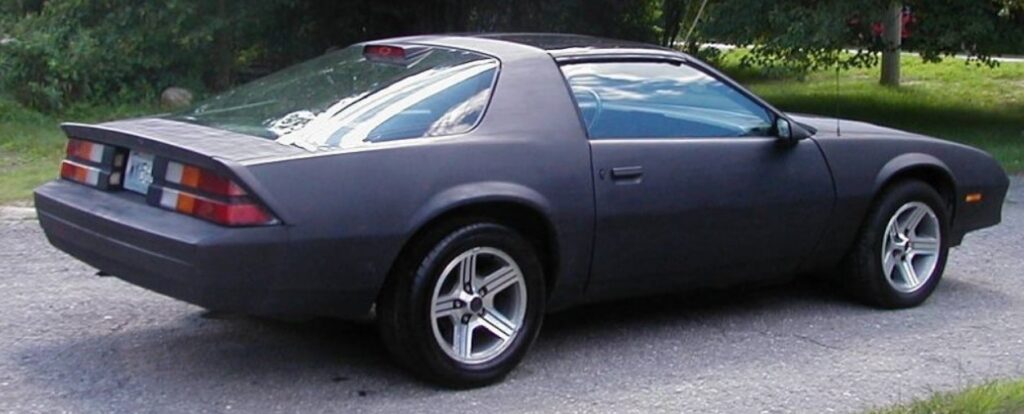
It looked like this, a Camaro Sport Coupe, only in black:

In retrospect, when I sank to my knees I should have been asking “Why me, Lord?”, because this was the beginning of a three-month ordeal.

As I tootled around Austin with Trevor — who had himself emigrated some eight months earlier — a couple of things became apparent.

a) A Texas summer should not be coupled with a black car, of any size or description, and b) the enormous rear window actually had a greenhouse effect on the car’s interior.

In other words, Gentle Readers, driving this thing around Austin was akin to driving around in an oven set to Broil.

Worse yet, the Camaro had an anemic V6 engine, so like my earlier experience with the Silver Bullet, it had no poke whatsoever.  Trying to coax any kind of speed out of the thing simply meant that the need for a gas refill would appear sooner rather than later.

Of the handling, we will not speak.  Okay, do let’s talk about it because it didn’t have any.  It slewed around corners at any speed, the steering was vague and imprecise, and because the car was wider than a blue whale, maneuvering through traffic was a nail-biting experience for one not accustomed to driving such a beast.  I don’t know how Trevor felt about it, but all I can recall is several instances of sharply-indrawn breath and muttered “Fucking hell, that was close.”

How I survived the three months without a fender-bender or a scratch on the car is a testament to both luck and the ability of other drivers to avoid this sweating maniac’s clumsy driving.

And have I mentioned how hot I was, that summer in Austin?  I soon found that the only way to get into the car without fainting from the heat was to open the front door, start the engine, then get out quickly, close the door and scurry back to our apartment for about fifteen minutes to allow the Camaro’s A/C (which was excellent, I will admit) to bring the interior temperature down to, say, 98 degrees.  Some might say that I should have just lowered the windows to allow the breeze to cool the thing down, to which I should remind everyone that it was June/July/August in Austin, Texas.  (I remember driving back from a trip to San Antonio, and passing one of those signs outside a bank which showed the temperature to be 95, at 2am.  So don’t talk to me about daytime temperatures and lowered windows.)

Amazingly, when I was ferrying any of the local girls out to dinner or lunch (it happened a few times), they didn’t seem to be bothered by the heat.  Clearly, they were acclimatized and I wasn’t — despite having just come from Africa.

Anyway, the time came for me to hand the thing back to the rental company, and while I was left without transport for a few weeks (#VisaDelay) it wasn’t as big a problem as I’d thought it would be because as it happened, I was shacking up with one of those local girls and she had no problem with lending me her car on the few occasions when I needed one while she was at work.

Then my visa was approved and I left Austin to take up my job at the Great Big Research Company — just in time for my first encounter with a Chicago Winter.

But that’s another story.

My American Car Experience – Part 2: The Silver Bullet

I’ve talked about my first experience of driving an American car, and this was the second.

A quick background to the story:  I first met Longtime and Very Dear Friend Trevor when we worked together at a small ad agency in Johannesburg.  He had just returned from a trip to the U.S., as had I, and so over the following months we swapped stories together and in the process, built a friendly relationship.  Sadly, my other relationship (with Wife#1) had foundered on the rocks of divorce, made somewhat more difficult by virtue of the fact that she worked at the same Small Ad Agency, but I left the company soon enough, so that wasn’t too bad.

Some months later I went to an art gallery opening in Johannesburg, and by chance Trevor was there.  I had planned a solo trip to the U.S. as a sort of post-divorce present for myself — just a month this time — and I started crowing over said trip to him.  Whereupon he confided that he too had planned a solo trip Over There, and when we compared notes, found that the dates overlapped quite a bit.  I couldn’t change my dates because I’d squeezed in the time between conferences and client meetings;  but Trevor had no such problems in that regard, and so the two solo trips became a double-header, so to speak.

I had made no plans at all for my solo trip, intending to wing it completely upon arrival at JFK, but Trevor had made plans to stay with a friend in Newport RI, and as I’d met her when she’d visited Johannesburg a little earlier and we knew each other, it was no problem for her to put us both up on the giant couches she had in her capacious living room.  Getting to Newport was another story.  I didn’t feel like renting a car just yet (particularly out of JFK #LongIslandTraffic), so our trip to Newport was as follows:  shuttle bus to Manhattan, cab to Grand Central Station, train to Providence, Trailways bus to Newport, where Maryann would pick us up in her totally-inadequate and tiny Fiat 124 convertible.  (As Trevor later put it:  “We missed traveling by hovercraft, but that’s about all we missed.”)

Anyway, we took care of jet lag in Newport for one of the most delightful weeks of my life:  eggs-n-bakey at Crazy Gigi’s for breakfast, clam chowdah at Christie’s Dock for lunch, lobstah at the Canfield House Restaurant for dinner, parties at the Boom-Boom Room [sic], flirting with lonely divorcees, and all washed down with huge quantities of bee-ah.  July in Newport is not an experienced to be missed.

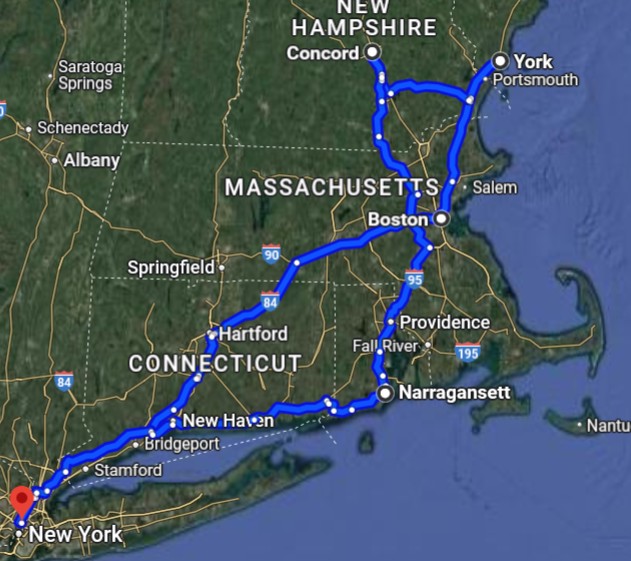
Anyway, the time came for Trevor and I to begin what was to be the first of many, many trips around the U.S.  Here’s the itinerary:  Newport – Concord NH – New Orleans – Austin and back up to New England.

The map routes do not do justice to the trip we actually made, because we tried to avoid all interstate highways wherever possible (e.g. to get around major cities, which neither of us was interested in doing), using roads like the Blue Ridge Parkway and so on.  (The only major city we actually ventured into was Washington D.C., but our adventure there is a whole ‘nother story involving Congressmen, their various staff members and their family members, and I’m not sure the statute of limitations has expired for the telling of that episode).

Anyway, the car.

This time, because the rental was being picked up by my employer back in Johannesburg on the company’s account (another story), I’d reserved a mid-size car because why not? and when we picked it up at the Avis office in Newport, we discovered it to be the largest car either of us had ever driven in, an Oldsmobile Cutlass Supreme Coupe*:


…which featured a 3.8-liter V6 (not the later 5-liter V8, alas), but which, compared to the anemic 2.2-liter Chrysler Reliant engine, I thought would give us the proper punch for a very long trip.

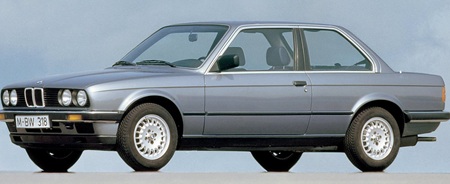
How wrong I was.  This was my first experience of driving a car which, when one floored the throttle at 50mph to overtake, caused the rev counter to climb but the speedometer needle to stay in exactly the same place.  (It did not help that my “home” car had been a BMW 3-series two-door, which was quick, nimble and fast.)

Compared to the little Beemer (okay, compared to every car I’d ever driven), the Olds handled like a frigging supertanker, with a turning circle to match.  I swear, I could make a full quarter-turn of the steering wheel before the car actually changed direction, and then it would do so only marginally.  Parallel parking was a complete bloody nightmare, and after a day or so of this silliness I made sure that I only parked in drive-in spaces.

In short, the car was a major disappointment — sarcastically, we christened it “The Silver Bullet” because it was anything but — and it colored my opinion of American cars until… well, I still feel the same way about them.
Anyway, we survived the trip.  The Bullet made up for its performance shortcomings in other ways:  the plush velour seats and comfortable drive seemed to impress the several ladies we had occasion to drive around in our travel stops, and amazingly for such an inefficient car, the gas mileage wasn’t too bad as long as I didn’t go much over 50mph — which, given the back roads we mostly drove along, wasn’t too difficult.  And even more so than on my previous trip, we were in absolutely no hurry to get anywhere, so we lollygagged all over the place, stopped in small towns and villages along the way, met some strange but interesting people;  and in short, we both fell in love with America all over again and pledged to each other that we would soon come back for good.
So there’s that.

In Part 3, I’ll talk about my next disappointment.


*the Bullet’s license plate was “VD 237”, which prompted the acidic comment from Maryann:  “VD?  They must have known you two guys were coming.”  She also warned us about New Orleans being the pox capital of the United States, whereupon one of us (probably me) replied, “Yeah?  Well after we’re done there, it’s going to be the pox capital of the world.”  (Sadly, ’twas not to be and we left The Big Easy unscathed.  Austin, however, would be another matter.)

My American Car Experience – Part 1: The K-Car

My very first experience driving an American car was in 1982, on my honeymoon with Wife #1.  Our itinerary was first to drive from Manhattan to Boston / New England and back to Manhattan via a different route:

…thence down to New Orleans, over to Disney World, and back up to Manhattan via the East Coast, likewise taking a different path:

This was not a brief visit — we had sufficient vacation time (in Seffrica, as in most places in the world, paid vacation time was three calendar weeks, and we’d both accrued a couple more thereof), so we took five weeks to complete the round-trip.

On arrival at JFK, we spent a few days in Manhattan to get over jet lag and to see the World’s Greatest City.  Unfortunately, we arrived in late September during a) the hottest summer of the decade and b) a NYC garbage workers’ strike, so when it came time to leave, we did so with some relief because when it came to searing heat in city streets and an unbearable smell of rotting garbage, I wasn’t to encounter anything similar until I went to India, many years later.

We’d accumulated considerable coinage during those early days, mainly because I couldn’t count change quickly enough for impatient New Yokkers, so I just threw bank notes around at every purchase.  But when I tried to convert the coins back into dollar bills, the tellers at two banks told us to get stuffed because we weren’t customers.  As we weren’t customers (and unlikely to become such), therefore, I felt no shame in snarling at all of them for their shitty service.

But that was a blessing in disguise, because when we hit our first tollbooth getting out of Manhattan, I ended up in the cash-only lane, and was only able to get us out by flinging handfuls of change into the basket provided until the boom lifted.  (In fairness, it was the first tollbooth I’d ever encountered.)

We’d specified a compact car from Hertz — thinking we’d get the typical small car like a Mazda 323 (First Wife’s car) — but to our amazement, our “compact” car was a six-seater family saloon, a Plymouth Reliant.


(This is the actual color of the car we rented.)

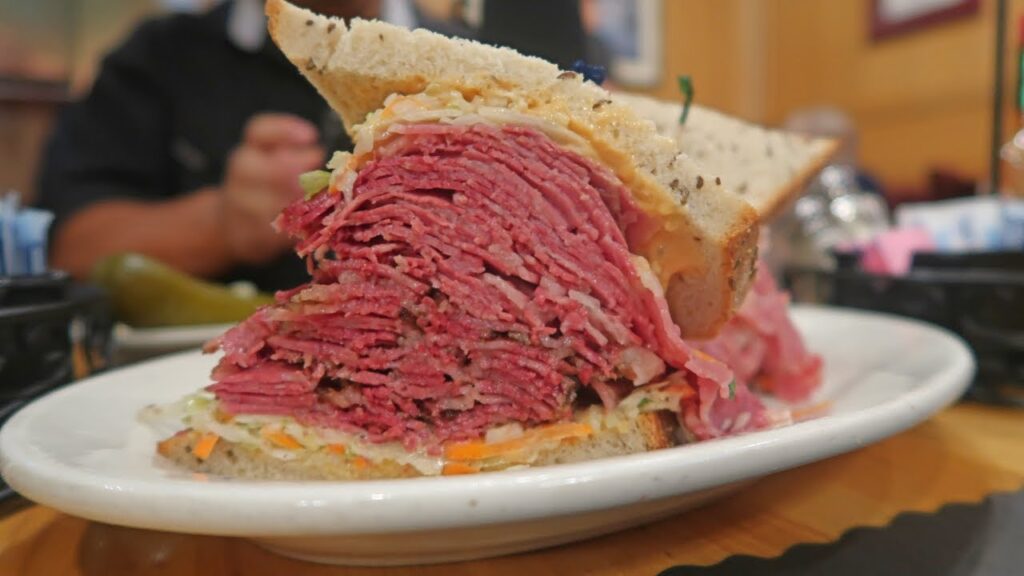
I thought we’d been given a large car by mistake, but was assured not by the rental clerk.  (I’d like to say that this was my first experience with American Portions, but we had been to Katz’s Deli and ordered their pastrami sandwiches.  We ended up eating less than half of one each, and took the remainder and the other one back to the room for road food.)

But on to the trip.

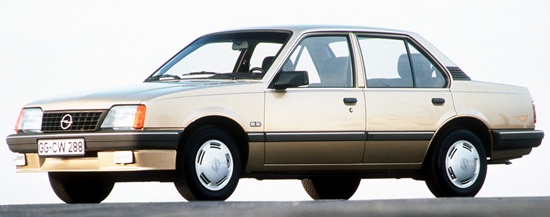
Amazingly, the car drove reasonably well — a little harshly over the concrete slabs on the interstate highways, but the 2.2-liter engine worked fine* and we weren’t in any hurry to get anywhere anyway, so the car was never called on to perform any heroics.  But the handling took a bit of getting used to;  my car back in Johannesburg was an Opel Ascona:


…which was a little bigger than a K-car, but having been built to German-GM standards and not U.S.-GM standards, it handled really well — almost to Mercedes levels.

So the K-car was an interesting drive, to say the least, but as I said, not being in a hurry, it was no problem and there were no mechanical issues.

*I did think that the engine was remarkably lifeless for one of 2.2-liter capacity;  the Opel had a 1.6-liter engine, and it had far more poke than the K-car.  (In retrospect, I think the crappy no-lead U.S. fuel may have been the principal culprit — how I missed, and still miss, the 100-octane no-ethanol rocket fuel of the old days.)

The trip concluded back in Manhattan, where we turned in the Reliant to the astonishment of the rental guy at the mileage we’d covered.  (In those days it cost a little extra to get “unlimited” mileage for a rental, but I paid it gladly, especially when I learned what the per-mile overage charge would have cost.)  I’d also heard horror stories about fill-up charges for gas, so I bought a 5-gallon gas can and filled it back somewhere in (I think) Delaware, and that was sufficient for us to top off and turn in the car with a full tank.  So the gas consumption wasn’t too bad either.

All in all, therefore, my first experience driving an American car wasn’t too bad, car-wise.  (Oh, and the front- and back bench seats were just ideal for honeymooners, if you get my drift.)

That would change in future trips, as you will see.

And So It Begins

Seems as though I’ve opened up a big ol’ can of Murkin worms in posting about the ’66 Mercury Comet last week.

Reader Brad_In_IL wrote:

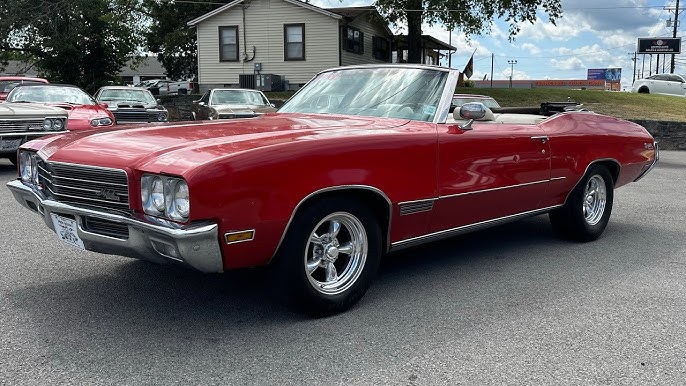
On the way home from work the other day, I was passed by what I’d call “Purty Car”. And what was that fine ride you ask? Something of an American Classic. Twas a 1971 Buick Skylark convertible:

Fucking hell, that’s an ugly barge of a car.  Sorry, Brad — but my taste runs towards this kind of 1971 convertible:

That’s the Fiat Dino, with its Ferrari-inspired 2.46-liter V6 engine.

And Reader Clem C. added his experience:

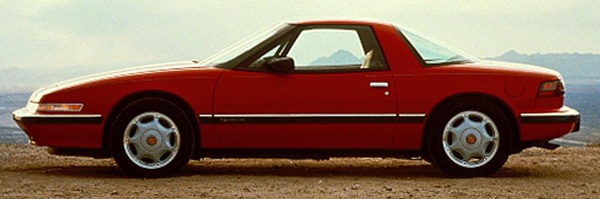
We owned a ’91 Buick Reatta coupe.  Maybe you’ve heard of it.  I look forward to your take on the car.  We enjoyed it.

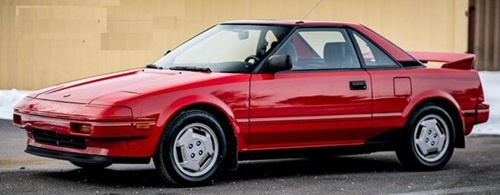
Actually, I don’t find that Reatta too appalling.  Although much larger, as is the American way, it compares quite favorably, shape-wise, to the 1990 Toyota MR2:

…although the actual performance of the Buick, when compared to that of the “Mister Two”, makes one understand why Buick only made the Reatta in small numbers for two years while Toyota made a zillion MR2 models over two decades.

(Actually, I prefer the chunkier 80s-style MR2:

…but that’s just me.  I’d drive one today, in original condition.  YMMV.)

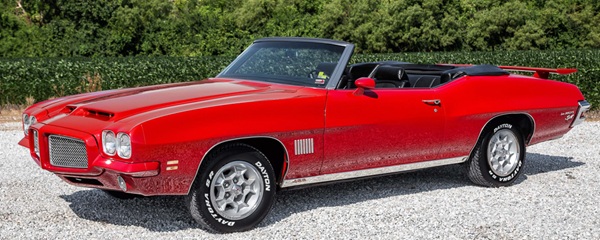
In Comments to last week’s post, Reader Don C. spoke of his love for the brawny ’71 PontiaG GTO convertible:

…which would be, I agree, a better choice than that overpriced Mercury Comet, although I still think it’s hideously bloated.  But #MuscleCar, so it can be forgiven.

Reader Topcat loved him his Chevy Nova SS back in the day:

…which I think is easily one of the ugliest cars ever made, but I’ll accept the #MuscleCar excuse here too.

Although I have to say that the more I look at these things, the more I prefer my compact and nimbler Euro cars…

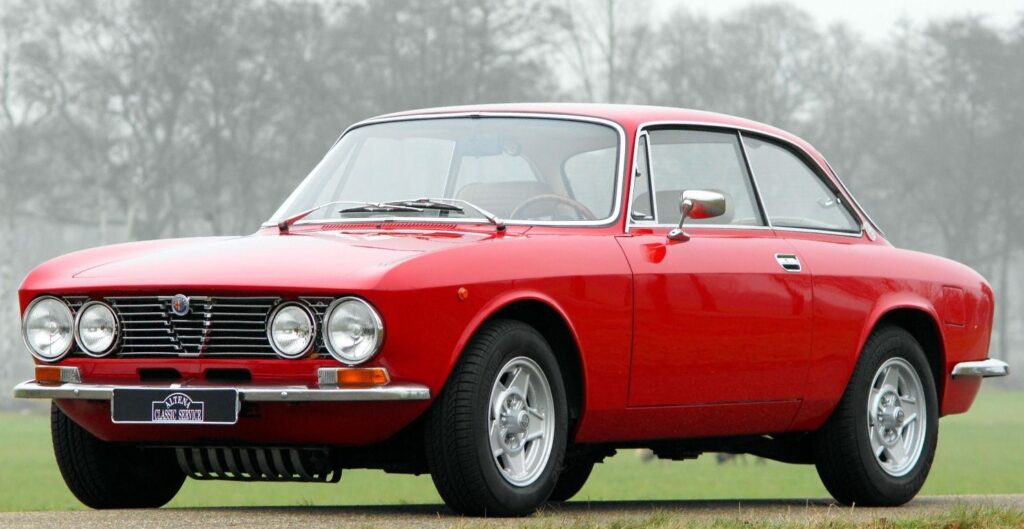
…and I’m not even talking about Ferraris, Lamborghinis or Maseratis.  That’s a 1971 Alfa Romeo Giulia GT 1750cc.

This topic is kinda fun, guys.  Keep them coming.

And tomorrow begins a weekly series of my personal experiences with American cars.

Crappy List Part Tre

Okay, after doing the Limeys and the Krauts, let’s do the Wops.  Here we have a problem because Italy has produced so many amazing cars that it’s difficult, nay almost impossible to keep it to only 25 great ones.  And for the purposes of simplicity, I’ve excluded Italian-styled cars which used off-brand engines, like those from Bizzarini, Intermeccanica, Pagani and De Tomaso.  Anyway, I’ve never been one to back down from a challenge, even if choosing the top 5 greatest Italian cars is really difficult.  Nevertheless, here we go…

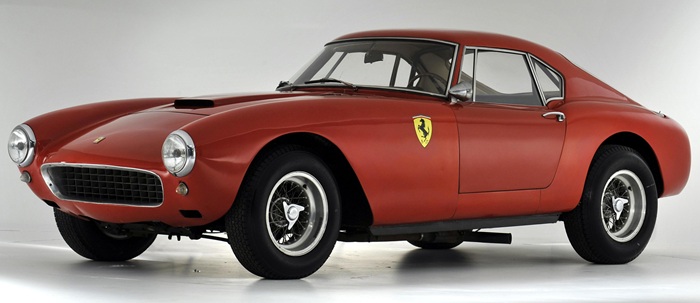
1) 1959 Ferrari 250 GT:  Certainly, the ’59 GT set the bar for all other sports cars of the era, and today it’s sought after more for its collector value.  Although as one sees several racing at Goodwood nowadays, the howls of their lively engines are almost drowned out by the collective thudding of the heartbeats of their insurance agents.

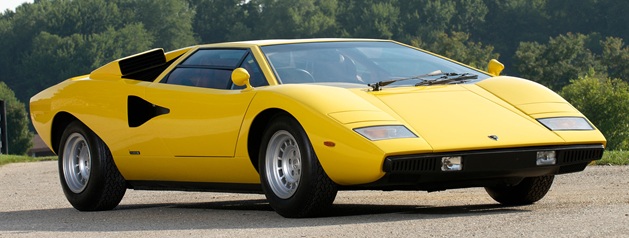
2) 1976 Lamborghini Countach LP400:  I don’t know if any other car’s picture has graced more teenage boys’ bedroom walls, and even though the Countach is an absolute pig to drive, to park, in the rain and all that, people love this Lambo with a passion.  Even though some earlier cars can claim to be “supercars”, this one was the first:  impractical, over the top and utterly gorgeous.

3) 1975 Lancia Stratos HF Stradale:  “I know!  we’ll make a car the size of a skateboard and slap a modified Ferrari V6 engine right behind the driver’s head — and then we’ll go and win some World Rally Championships!”  Only Lancia could even have conceived such a concept.

4)  1956 Maserati 450 S:  Take a car that’s won some Formula 1 races, make it street legal and release it to the public almost unchanged.

5) 1969 Dino 246 GT:  One of the top 3 most beautiful sports cars Ferrari ever made, and it’s in almost everyone’s top 5 most beautiful of all cars ever made.

I know, I know… “But Kim, what about…[endless list follows]?”  See if you find yours in the next twenty…

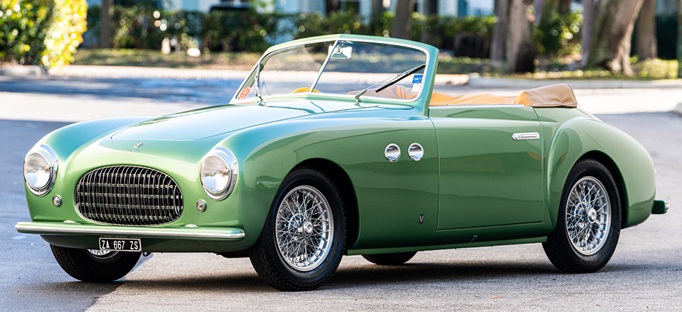
6) 1947 Cisitalia 202:  The very first car made with “single-shell” coachwork, the 202 changed the entire face of the automobile industry.  As each car was handmade, the cost was astronomical and only a couple hundred were ever made.  Still lovely, especially the 1951 Cabriolet…

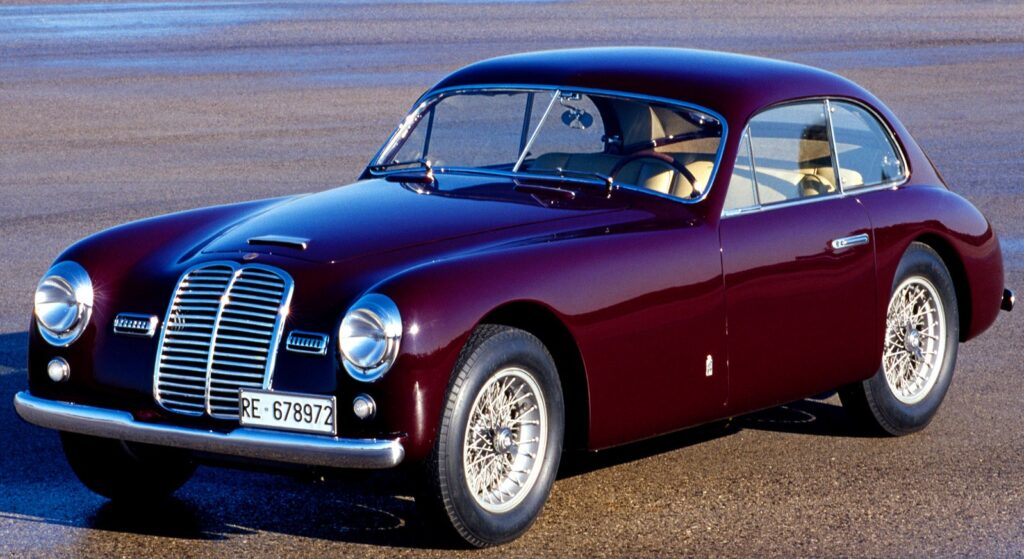
7) 1946 Maserati A6 1500:  With its post-war Italian design, the A6 set the scene for a huge number of sports cars (especially Aston Martin) to follow in the 1950s.

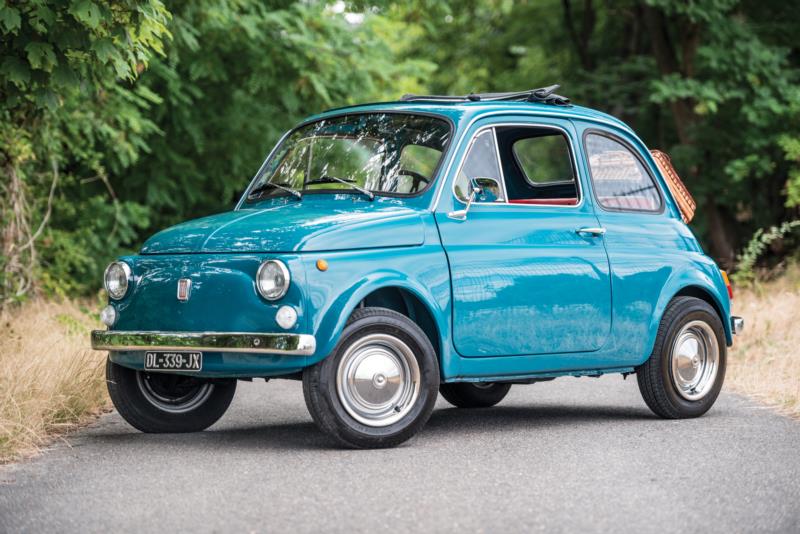
8) 1957 Fiat Nuovo 500:  The first actual purpose-built “city” car, the 500 went on to sell just under 4 million units over its 18-year lifetime.  Amazingly (by today’s standards), it was first marketed as a “family” car.

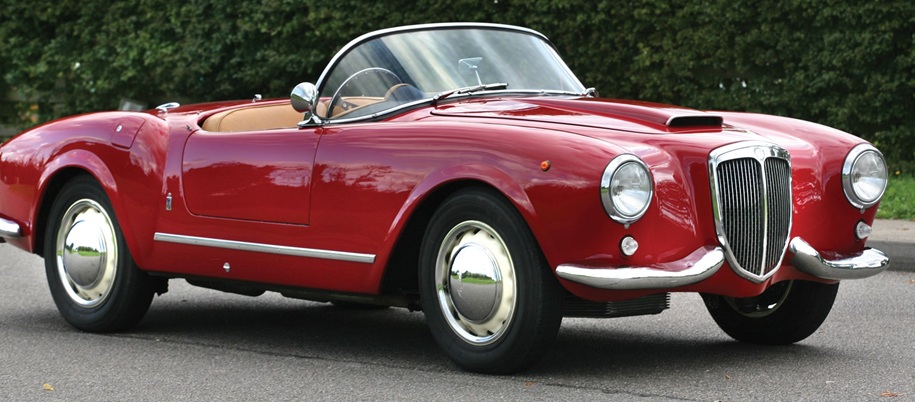
9) Lancia Aurelia B24 Spider:   The list of “first to market” features introduced by Lancia is staggering.  The Aurelia B24, for example, was powered by the first production V6 engine and was the first car to use radial tires. And was it beautiful?

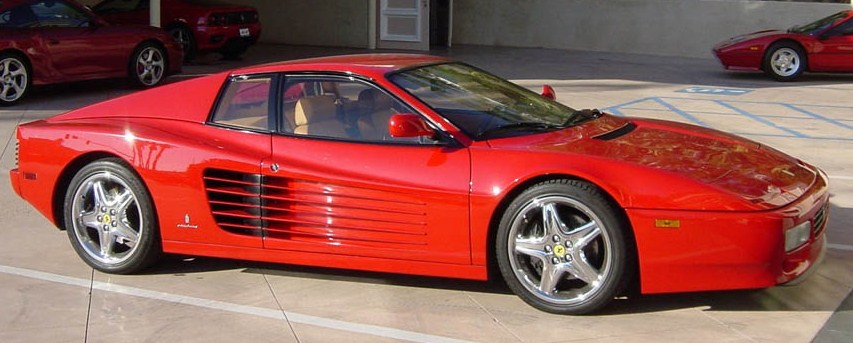
10) 1986 Ferrari F110 Testarossa:  The only competitor to the Countach for “posters on the wall”, the Testa is still seriously popular among the Ferrari tifosi.

11) 1938 Alfa Romeo 8C 2900B Spider:  Whether you wanted to race it or just take it for a long road trip through Tuscany, the 8C line could do either with aplomb.  In the late 1930s.

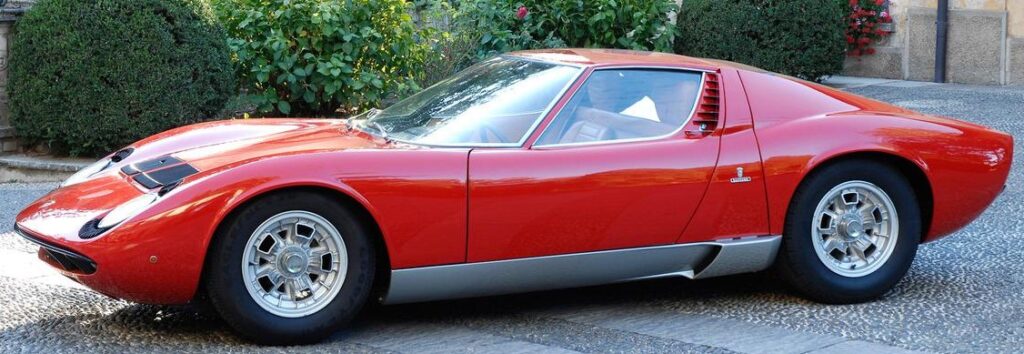
12) 1968 Lamborghini Miura P400:  Some say the Miura is the most beautiful Italian car ever.  I don’t agree, but I can see their point.

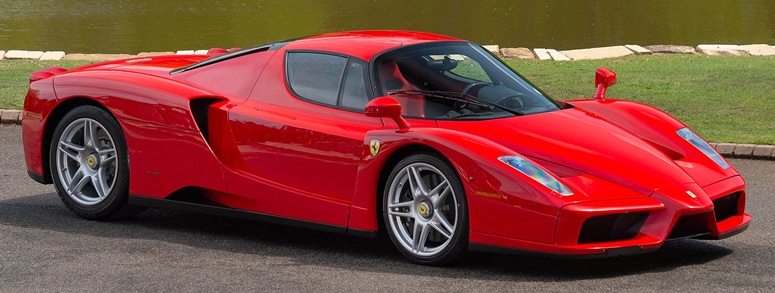
13) 2002 Ferrari Enzo:  When you build a car dedicated to the company’s founder, it better be good.  It was, and still is.

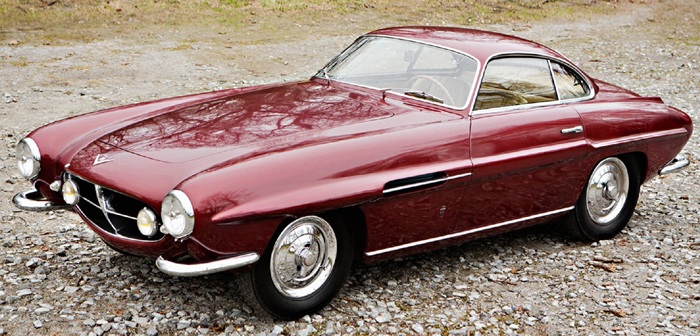
14) 1955 Fiat SuperSonica:  Way ahead of its time, the SuperSonica showed that Fiat wasn’t all about the mass market.

15) 1965 Alfa Romeo Spider 1600:  During its eighteen years of production over four distinct styling generations, every single sports car fan, male or female, wanted to own one of these lovely little creatures — hell, it’s probably still true today.  With good reason.

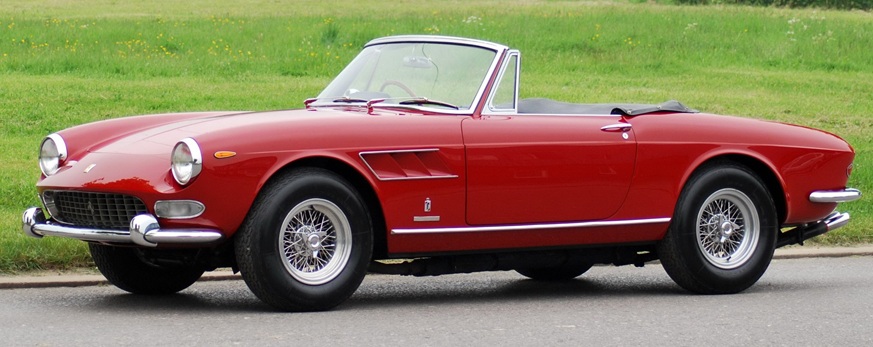
16) 1965 Ferrari 275 GTS:  Pinifarina design, 3.3-liter V12, ’nuff said.

17) 1967 Lamborghini 400GT:  The 350 — Ferruccio’s first car after his argument with Enzo —  was good, the 400 much better.  And much less likely to break down than any Ferrari of the time, too.

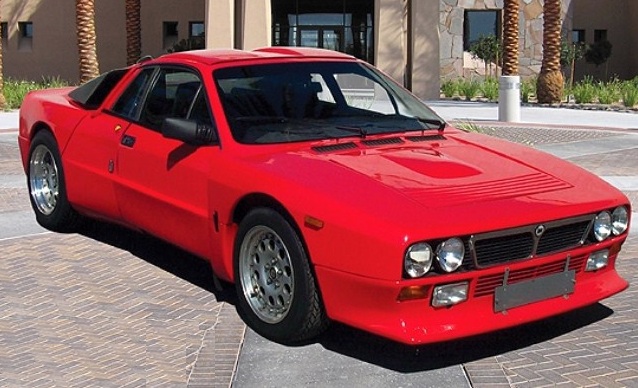
18) 1982 Lancia 037 Stradale:  Like the earlier Stratos, this is Lancia’s street version of a monster Group B rally car, and the 037 was the last rear-wheel drive to win the WRC.  And one of the best-looking examples of 1980s automotive styling.

19) 2022 Maserati MC20 Coupé:  When they think that Ferrari has worn the “supercar” mantle for long enough, Maserati steps up with this 3-liter 600hp V6-powered beast, just so that people can remember that they too have a racing heritage.

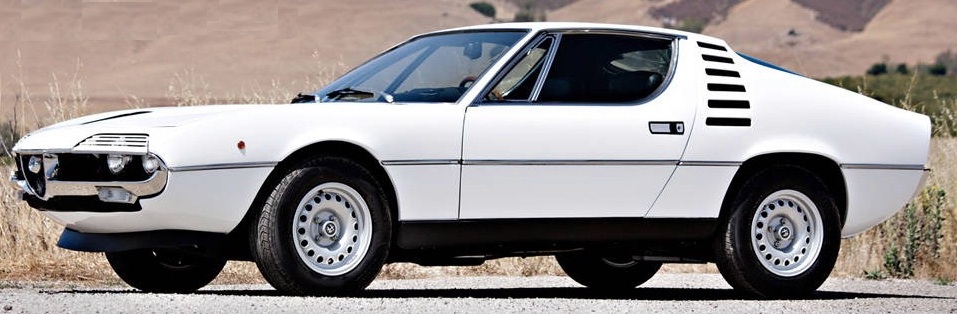
20) 1973 Alfa Romeo Montreal:  An absolutely stunning sports car, powered by a 2.5-liter V8 (!), it is still the only car I’ve ever driven over 125mph — and I backed off before the engine did.

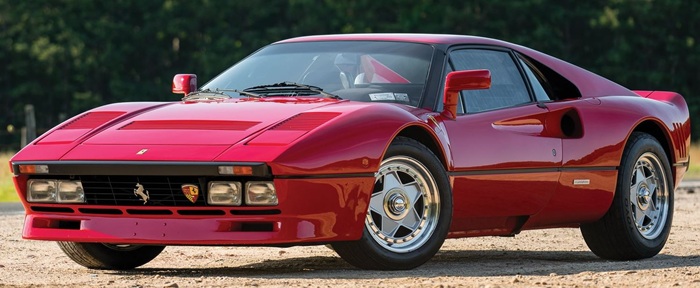
21) 1984 Ferrari 288 GTO:  While its “parent” 308 GTB was a good sports car, the 288 GTO was a missile.  Its 300+km/hr top speed was the fastest of any non-racing car of the time, much faster than anything made by its competitors and only 3km/hr less than the Enzo.  And it was gorgeous, too.

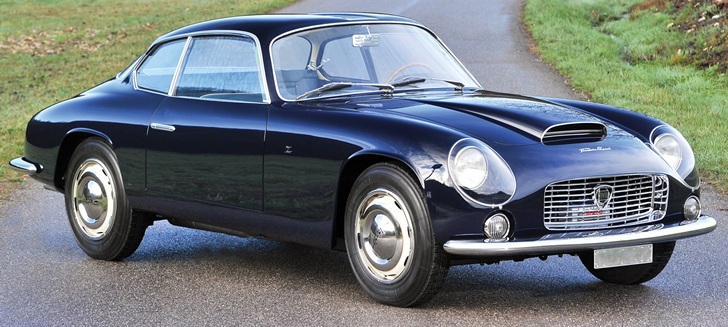
22) 1964 Lancia Flaminia Sport:  The Flaminia was Lancia’s luxury saloon line, but the Sport model was the more beautiful.

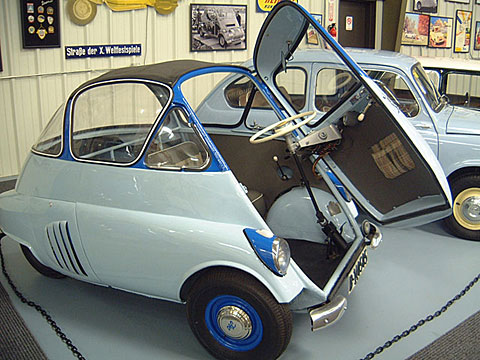
23) 1953 Iso Isetta:  The Fiat 500’s only competition in the “super economy” market, the Isetta’s 236cc (!) motorcycle engine got between 70 and 90 miles per gallon, and actually won the Mille Miglia race twice in the “Economy” class.  Top speed was about 47mph, but it took over half a minute to get there (unless you were on a downhill road with a strong tailwind).  Still, so popular was the Isetta during the mid- to late 1950s that it was made under license in seven other countries.

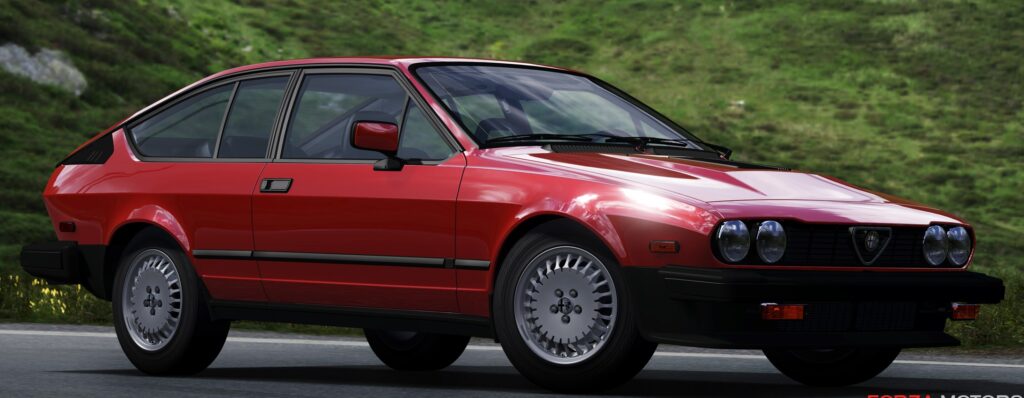
24) 1985 Alfa Romeo GTV6:  Best of the 1980s Alfas, the GTV6 was powered by the 2.5-liter V6, which is arguably one of the best Alfa engines of all time, giving incredible performance for a non-racing powerplant.  And it looked pretty good too (like the Lancia 037), in an era in which car designs were kinda blah;  and unlike most sporty cars, the GTV6 could carry a massive amount of luggage in its cavernous trunk.

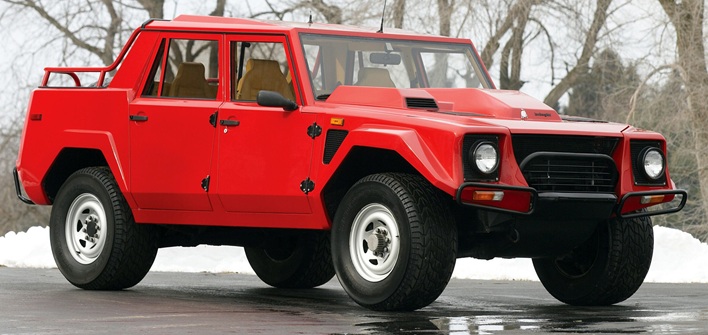
25) 1986 Lamborghini LM002:  “We have to make-a the truck-a for the militaria.  So we make a truck-a, and drop in the 5.3-liter V12 engine from a Countach.  Should-a work-a.”

And that’s my list of 25 great Italian cars.  And incidentally, I’ve actually driven six of them myself.